MECHANICAL CONTRACTORS
Commercial mechanical contractors.
Plumbing, piping, HVAC, ductwork, refrigeration, and design-build. The full mechanical scope for commercial and industrial buildings.
Mechanical work that hits the date.
Whether a build-out needs mechanical from scratch or one system reached its end, the schedule is the job. One request covers plumbing, HVAC, boilers and chillers, and ductwork with the coordination that keeps other trades moving.
Industrial work is its own discipline: process piping, sheet metal and pipe fabrication, and design-build engineering when the drawings don't exist yet. One point of contact from scope to commissioning, and a number that doesn't move after signing.
START HERE
What do commercial mechanical contractors do
Mechanical contractors build and install the systems that make a building work: heating and cooling, plumbing, process piping, ductwork and the sheet metal behind it, refrigeration, and the controls that tie them together.
One trade family, many systems. That range is the point: on a real project, the pipe crew, the duct crew, and the equipment setters have to work from one coordinated plan. This page maps the whole territory. Each child page prices its own trade.
AT A GLANCE
Commercial mechanical work at a glance
5 trades
ONE CONTRACT
HVAC, plumbing, piping, sheet metal, and refrigeration typically run under one mechanical scope.
3 phases
PLUMBING BUILD
Underground, rough-in, then trim. Each phase gets tested and inspected before the next hides it.
B31.3
THE PIPING LINE
The ASME code that separates process piping from building plumbing. Different rules, different certs.
$15-34
PER SQ FT
Typical installed range for complete commercial mechanical systems.
THE USUAL EMERGENCY
How fast can commercial equipment be replaced
Every mechanical system picks its moment: the boiler in January, the walk-in in July, the rooftop unit in August. Replacement under pressure is normal, and it still deserves three checks.
Confirm the size against how the space is used now. Confirm the connections the new equipment needs. Get availability in writing, because the honest variable is always lead time. A planned replacement beats an emergency one on price every time, which is the best argument for replacing on your schedule instead of the equipment's.
READING THE QUOTE
What should a mechanical quote include
The equipment price is the start, not the total. Real quotes list the rest: rigging or crane time, adapters and connections the swap triggers, electrical changes, permits, disposal of the old unit, and startup testing.
On plumbing and piping work, the same rule reads as fixture counts, pipe spec, and testing. A quote missing those lines is not cheaper. It is incomplete, and the missing lines come back later as change orders. Compare bids by what they include.
BELOW THE SLAB
The three phases of commercial plumbing installation
Commercial plumbing goes in three passes. Underground comes first: water and sewer lines set before the slab pours, pressure-tested while they're still reachable. Rough-in follows: drain, waste, and vent stacks, water distribution, and gas lines run through open walls, then tested and inspected again.
Trim comes last, after the walls close: fixtures, connections, and the final test. The order is the discipline. Every line gets proven tight before construction buries it, which is why good plumbing construction is scheduled around inspections, not around convenience.
WORTH KNOWING FIRST
What to know before hiring a mechanical contractor
01
Hidden lines sink RTU budgets
Curb adapters add $800-$3,000, electrical upgrades $500-$3,500, crane mobilization $1,500-$4,500. A quote without those lines isn't complete — it's optimistic.
02
Tonnage sets the ballpark
A 4-5 ton unit lands $9k-$14.5k installed; 15-20 tons runs $24k-$41k. Know your tonnage before comparing bids.
03
Ductwork is fabricated, not bought
Commercial duct comes off a shop floor — cut, formed, sealed to SMACNA standards — then hangs from structure. Shop quality shows up as leakage and noise later.
04
Boiler swaps are decision points
A dying boiler is the moment to check sizing, fuel, and venting, not just clone the nameplate. Efficiency gains hide in the re-selection.
05
Walk-ins are mechanical projects
A walk-in cooler is refrigeration, electrical, and drainage in one box. Installation quality decides whether it holds temperature or bleeds money.
PIPE TWO WAYS
Process piping vs plumbing: the difference
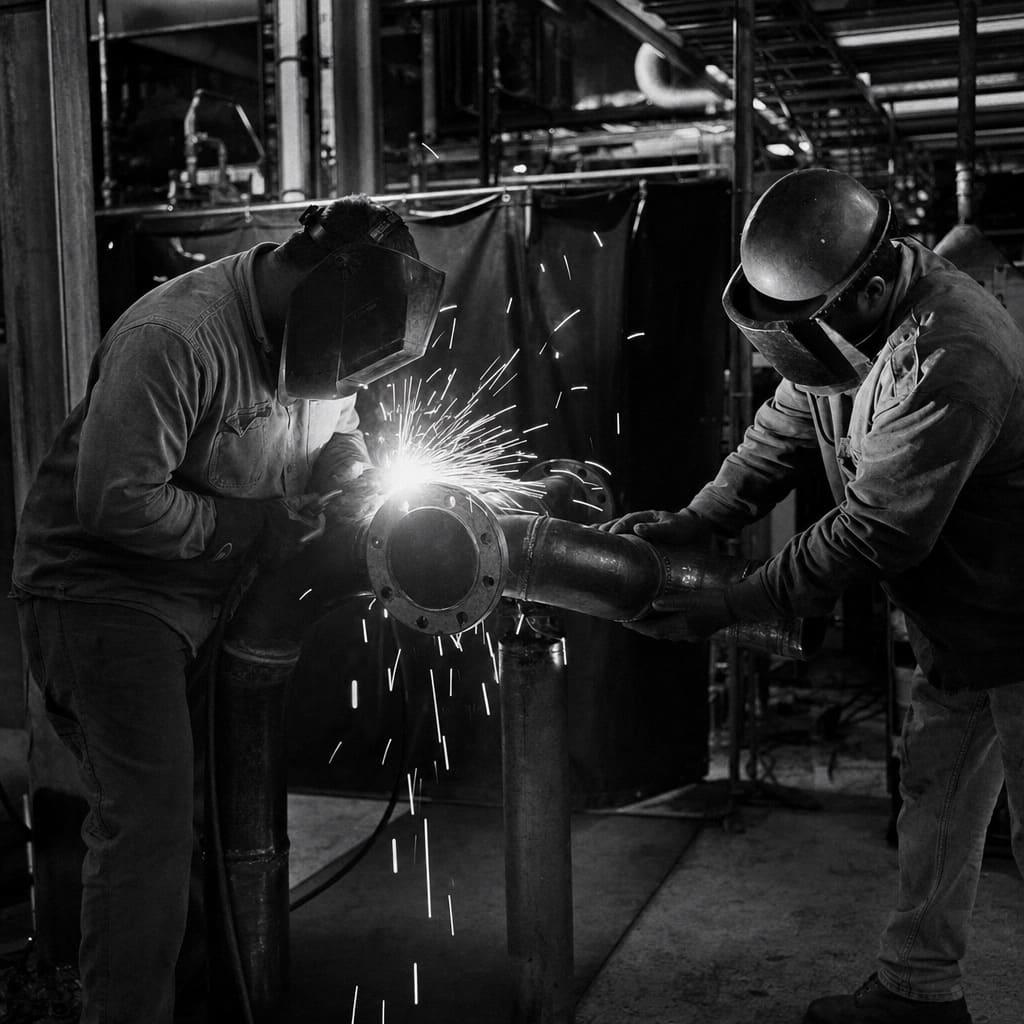
Building plumbing moves water and waste, and it answers to the local plumbing code. Process piping moves what a facility MAKES: chemicals, gases, food product, pharma ingredients. It answers to ASME B31.3, a stricter national standard, and the welders carry certifications plumbing crews don't need.
The test is simple. If the pipe serves the building, it's plumbing. If it serves production, it's process piping, and it should be bid that way.
WATER, NOT AIR
How hydronic heating and cooling works
Hydronic systems move heat with water instead of air. Boilers or chillers condition a water loop; pumps push it to the spaces; coils hand the heat over. Water carries energy far better than air, so hydronic buildings zone tighter, run quieter, and pair naturally with heat pumps.
Most larger buildings already run this way. It's why the plant room is the building's heart, and why pump and loop decisions deserve real engineering.
BOILERS AND CHILLERS
Planning a boiler room upgrade
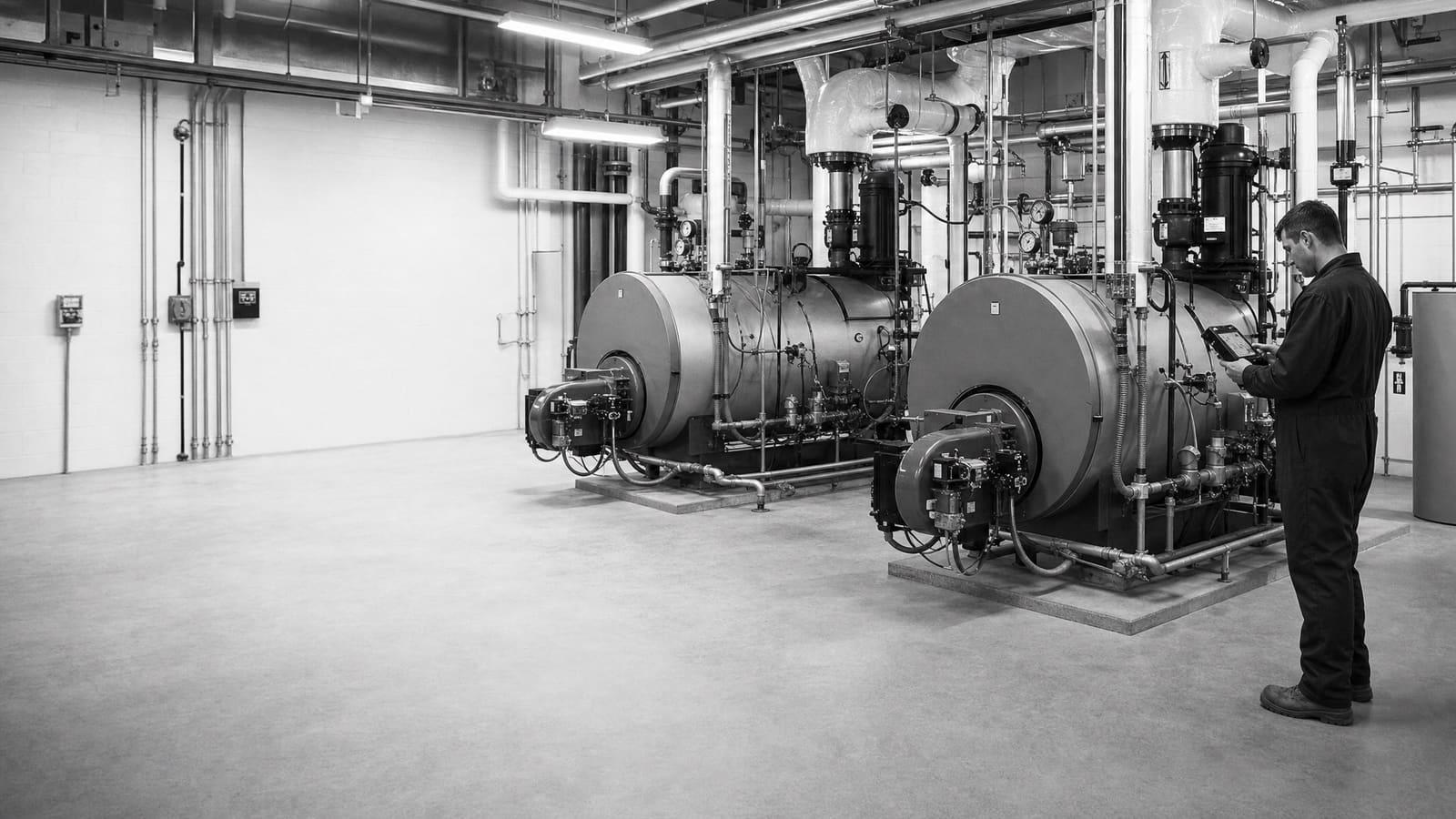
Boilers and chillers are the building's biggest mechanical assets, and their replacements are planned projects: rigging equipment through doorways, new piping connections, controls integration, and commissioning.
A replacement is also the one moment the plant can get smarter. Right-sizing against today's actual load, staging multiple smaller units instead of one giant, and modern controls all get decided at swap time, then locked in for 20 years. That's why the boiler and chiller conversation should start a season before the failure, not the week of. Plants that plan the swap choose their price. Plants that wait accept whatever's available.
DRAWN BEFORE BUILT
What is MEP coordination
On a coordinated project, the duct, pipe, and conduit fight for the same ceiling. The fight is supposed to happen on screen. Shop drawings built from a 3D model let every trade's routing collide digitally, get resolved, and only then get fabricated.
That's why serious mechanical bids include drawing and coordination time. It looks like overhead until you've watched a field crew discover that the duct trunk and the sprinkler main want the same space. Clashes cost dollars on screen and thousands in the ceiling. Design-build teams take this furthest: one model, one team, one accountable schedule.
WHAT WE HANDLE
Everything under the mechanical door.
CONSTRUCTION & INSTALLATION
DESIGN & PRECONSTRUCTION
WHAT MOVES THE NUMBER
Mechanical project cost factors
- Equipment tonnage and efficiency tier
- Crane requirements: height, reach, and lot access
- Fixture and connection count on the plumbing side
- Pipe material and code class: copper, PEX, or ASME-spec welds
- Shop fabrication scope for duct and fittings
- Coordination and drawing time the schedule demands
WHERE DUCT COMES FROM
How commercial ductwork is fabricated
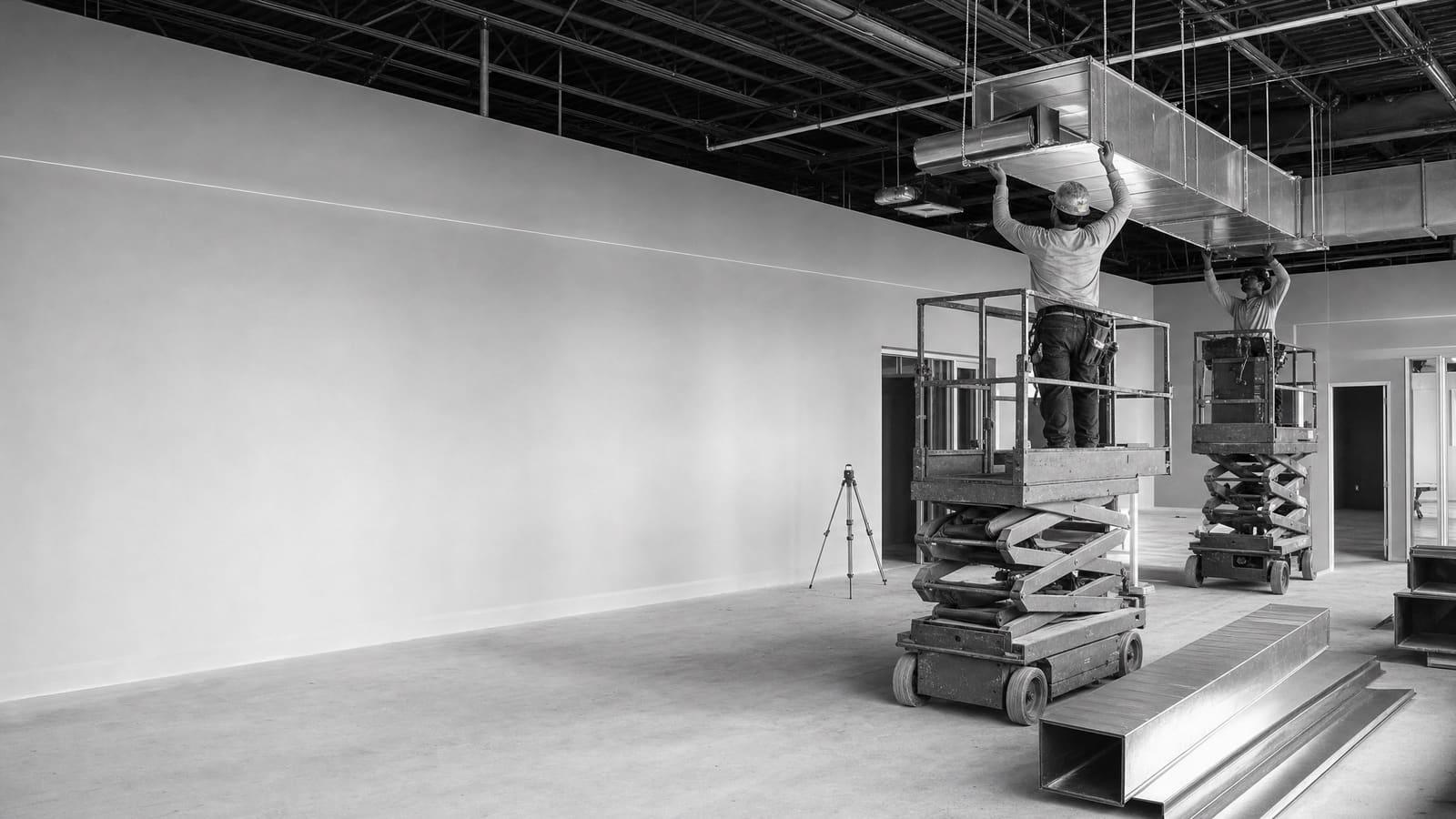
Commercial duct is manufactured to order. Sheet metal arrives at a fabrication shop in coils, gets cut and formed into trunks and fittings, and ships to the job. Installers hang it from the structure and seal every joint. Standards from SMACNA govern gauge, sealing, and support.
Why care where duct comes from? Because shop quality decides system quality. Leaky duct means rooms that never balance and fans working overtime forever. When you buy ductwork, you're buying the shop as much as the crew. Ask who fabricates, to what standard, and how joints get sealed. The answers separate real bids from cheap ones.
PAPER FIRST
Mechanical permits and inspections explained
Mechanical work runs on separate permits: mechanical for HVAC, duct, exhaust, and gas piping; plumbing for water and waste; electrical for power. Plans get approved before permits issue, and inspectors visit mid-build to check the work against those plans.
The schedule lives and dies on this. Underground can't pour until it passes. Walls can't close until rough-in passes. A contractor who runs inspections tightly keeps the whole project moving; one who doesn't donates your schedule to the permit office. Ask any bidder how they sequence inspections. The good ones answer in detail.
GOOD TO KNOW
Mechanical facts worth knowing
- Mechanical, plumbing, and electrical are separate permits in most jurisdictions. One project routinely carries all three.
- ASME's B31 code family splits piping by duty: building systems, power piping, and process piping each play by different rules.
- Every plumbing phase is pressure-tested before the next phase hides it. Underground lines get proven before the slab pours.
- Commercial kitchen hoods are engineered fire-safety systems moving grease-laden vapor. They carry their own codes and their own inspections.
THE SPECIALTY CORNERS
Commercial kitchen hoods and walk-in coolers
Some mechanical work is its own world. Commercial kitchen ventilation moves grease-laden vapor, so hoods and their duct runs are engineered fire-safety systems with dedicated codes and cleaning schedules. Walk-in coolers and freezers are refrigeration projects wearing a box: compressors, insulated panels, drainage, and controls that must hold temperature every hour of the year.
The pattern with specialty systems: the install quality is invisible until it isn't. A hood that passes inspection and a walk-in that holds temp both trace back to who built them.
Planning a mechanical project?
Send the plans or the nameplate photo and get a complete installed price: real scope, real lead times.
DESIGN FIRST
What is design-build construction
Bigger mechanical projects have a chicken-and-egg problem: you can't price what isn't designed, and design costs money before any bid exists. Design-build collapses that. One team designs the system and commits to build it, so the price forms alongside the drawings.
For build-outs, additions, and plant overhauls, it usually means faster schedules and fewer surprises, because the designer and installer stopped blaming each other by being the same team. Estimating support fits the same slot earlier: real numbers from drawings before anything is committed. Either path beats bidding a guess.
THE JUDGMENT CALL
Should you repair or replace commercial equipment
Commercial equipment usually lives 12 to 20 years, and the question near the end is always the same: fix it again or swap it. The call comes down to three things. The age of the equipment. The size of this repair. And what the old unit costs to run every month.
A young system with one bad part gets repaired. An old one with a dying compressor or a cracked heat exchanger is money down the drain. When a repair bill reaches a third of replacement cost on old equipment, price the swap. The math applies to rooftop units, boilers, and walk-ins alike. And when the verdict is replace, check whether commercial heat pump conversion beats another gas unit before ordering.
Want a complete quote, not a teaser?
Request an estimate and get the whole number: crane, curb, electrical, permits, and startup included from the first version.
QUESTIONS
Straight answers.
How fast can you replace a failed rooftop unit?
Equipment availability sets the pace. Lead times come with the price, and when a unit is down in season, temporary cooling or heat can usually bridge the gap while the replacement ships.
Do you do design-build?
Yes. If all you have is a problem and a floor plan, we engineer the system, price it, and build it, one contract instead of three.
What size projects do you take?
From a single RTU swap to full mechanical packages on new build-outs. If it moves air, water, or process fluid in a commercial building, it fits here.
Which brands do you install?
We're not tied to one manufacturer. We spec what fits the building, the budget, and the parts availability in your market, and we tell you why.
GET STARTED
Plan it once. Build it right.
Send the plans or the nameplate and get a complete installed price: real scope, real lead times, no surprises on the back end.