EV CHARGING INSTALLATION
Commercial EV charging installation.
Level 2 and DC fast charging for workplaces, tenants, and fleets. Design, utility coordination, installation, and the service that keeps chargers actually working.
Chargers that show up on time.
The hard part of EV charging installation isn't the charger, it's the power: service capacity, panel upgrades, trenching, and utility make-ready programs that can cover a surprising share of the cost. Good designs start from your electrical reality, not a brochure.
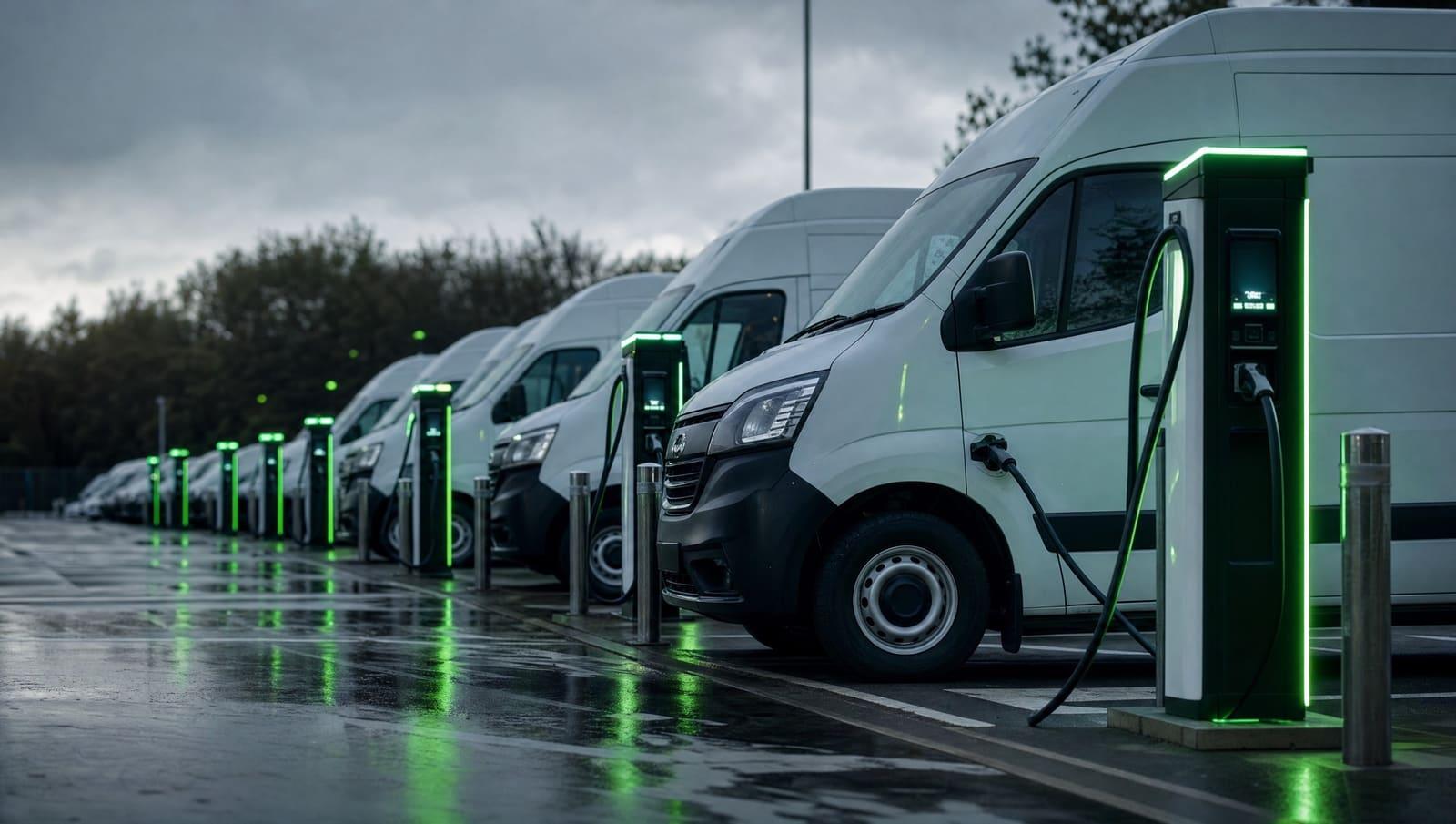
Good fleet charging plans start from routes and dwell times so vehicles are charged when they roll, and workplace charging gets managed loads so your demand charges don't eat the benefit. Broken chargers kill adoption, so service is part of every proposal.
START HERE
What is commercial EV charging
Commercial EV charging is chargers installed where cars already park: workplaces, apartments, retail lots, hotels, and fleet depots. The hardware comes in two speeds. Level 2 fills a battery over hours. DC fast charging fills one in under an hour.
But the chargers are the visible half. The invisible half is electrical: panel capacity, conduit runs, sometimes a new transformer. That side is called make-ready, and it decides most of the budget. This door covers the whole path: cost, installation, incentives, and the operating decisions after the chargers light up.
AT A GLANCE
Commercial EV charging station costs
$4.5-12k
LEVEL 2, PER PORT
Installed, all-in. The charger itself is only 20-35% of it — electrical and civil work carry the rest.
$90-200k
DC FAST, PER PORT
A 150 kW port installed commonly lands $90k-$150k; 350 kW reaches $200k+ with utility service upgrades.
30-90%
OFFSET AVAILABLE
NEVI grants, state programs, and utility make-ready rebates can cover much of the installed cost.
$45k
MAKE-READY CAPS
Utility make-ready programs run as high as $45k per DC fast port and $6.5k per Level 2 port in some territories.
THE BIG CHOICE
Which EV charger speed do you need
Level 2 chargers are the workhorses. They fill a car in hours, which is perfect for workplaces, tenants, and fleets that park overnight. They are also far cheaper. A Level 2 port installs for $4,500 to $12,000 in most lots.
DC fast chargers fill a car in under an hour. Drivers passing through will pay for that speed. But the power they pull is heavy, so one port can run $90,000 to $200,000 installed. The honest question is dwell time. If cars sit for hours anyway, Level 2 wins. If minutes matter, price DC fast.
MONEY ON THE TABLE
Who pays for charger installation
Chargers look expensive until the incentives land. Utility make-ready programs pay for the electrical work: the service upgrade, the conduit, the panels. Some cover up to $45,000 per fast-charge port and $6,500 per Level 2 port. New York's program alone set aside over $885 million.
On top of that sit state grant programs - and until mid-2026, a federal charger credit that has now expired. Stacked well, the surviving layers still cover 30% to 90% of a project. The catch: most money must be approved before you build. Apply first, buy second. Start at incentives.
WORTH KNOWING FIRST
What to know before EV charger installation
01
The hardware is the small line item
A Level 2 charger lists for $700-$3,500, but the installed port costs $4,500-$12,000. Trenching, panel capacity, and concrete drive 50-70% of every project.
02
Two identical sites can differ 3x
Distance from the electrical room, existing panel headroom, and pavement between them decide the price. The site walk matters more than the charger brochure.
03
Make-ready money is real
Utilities fund the infrastructure side — service upgrades, conduit, panels — through make-ready programs before you buy a single charger. New York's program alone allocated over $885 million.
04
Networked or not is a business choice
Networked chargers bill drivers, report usage, and manage load for a monthly fee; non-networked are cheap and silent. Choose by whether you charge employees, tenants, or the public.
05
Fleets plan depots, not chargers
Fleet electrification starts from routes and dwell times, then sizes power. Overnight Level 2 covers most depots at a fraction of DC fast cost.
IN PRACTICE
The commercial EV charger installation process
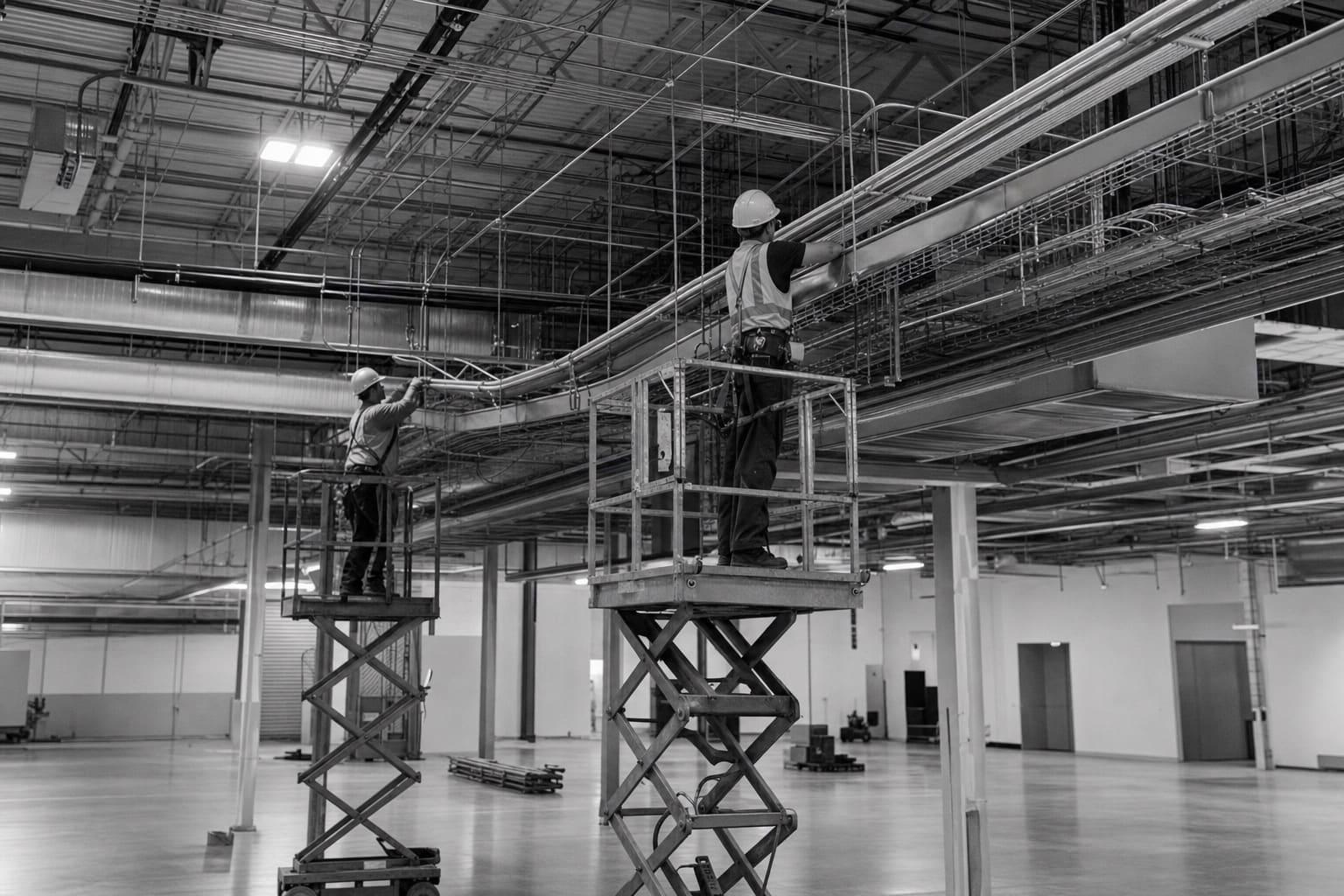
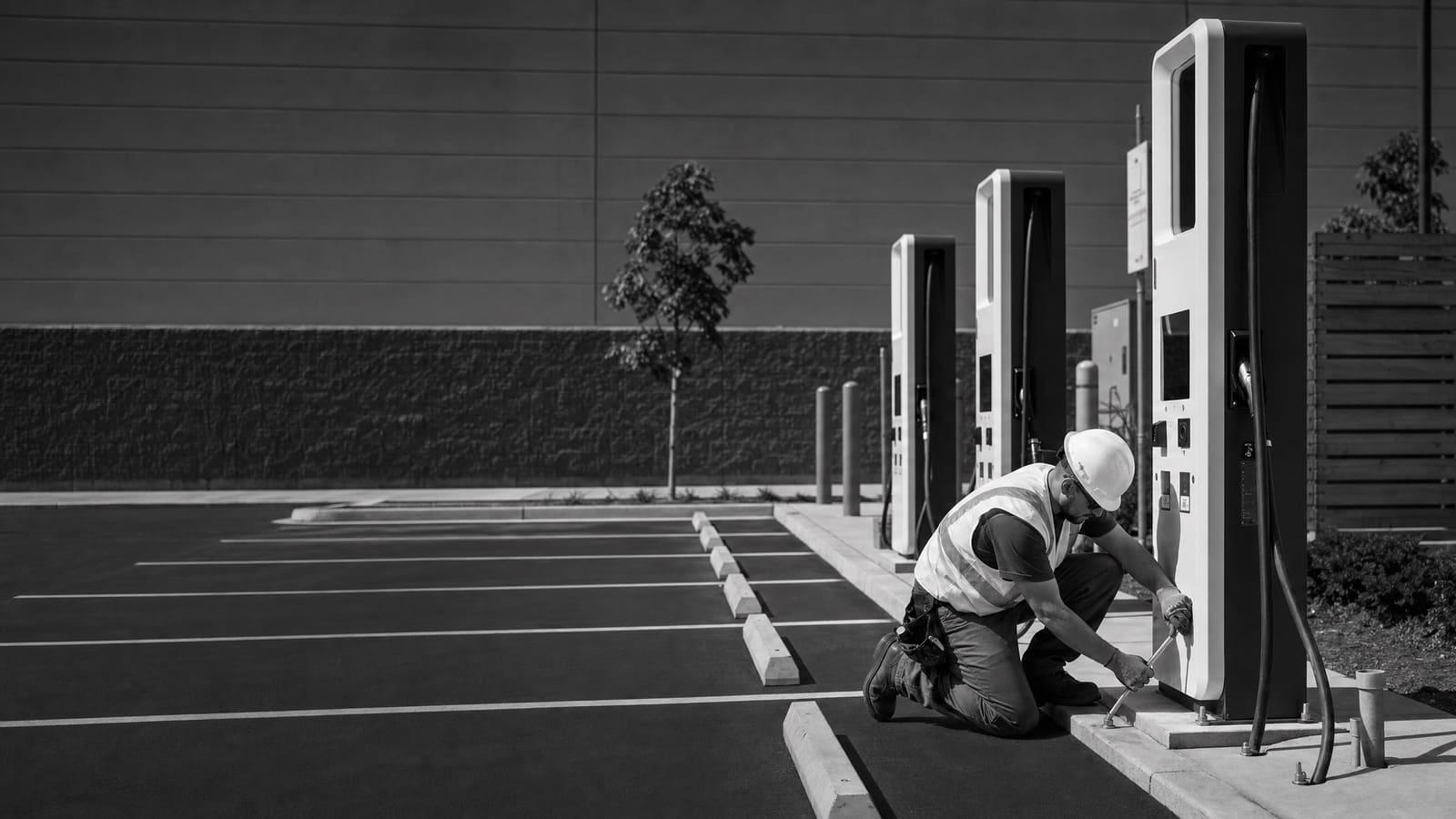
The sequence that keeps budgets honest: confirm panel capacity, walk the conduit route, apply for make-ready funding, then order equipment. Installation itself is short; the utility coordination and incentive paperwork are the long poles.
Price a project at installation, or start from cost if you're still budgeting.
WHO INSTALLS AND WHY
Why businesses install EV charging stations
Different buildings buy charging for different reasons. Workplaces add it because employees ask, and because it reads as a modern benefit. Apartments add it because renters with EVs filter for it. Retail adds it to hold shoppers on site longer. Hotels add it because road-trippers book around it.
Fleets are the biggest case: depot charging replaces fuel entirely, and fuel is a fleet's largest cost after payroll. In every case the property is answering the same question: will the people who park here drive electric? Registrations keep saying yes, a little more each year. The buildings adding workplace charging now are early, not late.
WHAT WE HANDLE
Everything under the EV door.
THE SITE DECIDES
Why EV charger installation costs vary
Same chargers, same count, and one lot pays triple. The difference is always the site. How far is the parking from the electrical room? Every foot is conduit, and pavement between them means saw-cutting and patching. Does the panel have spare capacity? If not, a service upgrade enters the budget.
Is there room on the wall for new equipment? Is the utility transformer big enough? These questions are why serious pricing starts with a site walk, not a brochure. The good news: the same questions are where savings hide. Chargers placed near existing capacity cost a fraction of chargers placed far from it.
RUNNING THE NUMBERS
Networked vs non-networked EV chargers
A networked charger reports usage, bills drivers, and talks to the other chargers. That last part matters most. Load management lets ten chargers share a panel that could only feed six at full blast, by trimming speed when everything charges at once. That software trick often saves a five-figure service upgrade.
Non-networked chargers are cheaper and silent: no fees, no dashboards, no billing. They fit small teams where nobody pays per session. The choice is a business question. Charging employees for power? Networked. Four spots behind a small office? Simple wins.
WHAT MOVES THE NUMBER
EV charging station cost factors
- Distance from the electrical room to the stalls
- Spare panel capacity, or the upgrade to create it
- Trenching through pavement vs landscaping
- Level 2 vs DC fast: a different order of magnitude
- Networked features: billing, access control, load management
- How much of it make-ready funding covers before you pay
THE FLEET CASE
How to plan depot charging for fleets
Fleet charging starts with routes, not chargers. How far does each vehicle drive daily? How long does it sit at the depot? Most fleet vehicles park all night, and a night is enough for Level 2 to fill them at a fraction of DC fast cost.
The plan maps vehicles to dwell times, sizes power for the worst day, and phases the build so the depot grows with the fleet. Utilities like fleets because the load is predictable, which is why fleet projects often get the best make-ready terms. Diesel spend converts to a power bill you can actually manage.

AFTER THE INSTALL
EV charger maintenance and uptime
A dead charger is worse than no charger: it advertises that the building doesn't maintain things. Uptime is the whole game after install. Cables get dragged, connectors get dropped, screens fail, software needs updates.
Maintenance plans cover inspections, parts, and response times, and networked chargers report faults the moment they happen. Budget a small annual number per port and the chargers stay earning. Skip it and the reviews arrive before the repair does. Like every asset on the property, chargers reward the owner who plans for year five on day one.
Want per-port numbers for your property?
Request an estimate. You'll get Level 2 and DC fast options priced for your actual site, not a national average.
QUESTIONS
Straight answers.
What does it cost to install EV chargers?
Level 2 stations are a fraction of DC fast charging, and site electrical work usually decides the budget either way. The free site visit gets you a real number, including any utility make-ready money you qualify for.
Level 2 or DC fast charging?
Level 2 covers employees and tenants who park for hours. DC fast is for fleets on tight turnarounds and public-facing sites. Most properties end up with a mix, and the math is part of our proposal.
Can our electrical service handle it?
That's the first thing we check on site. Managed charging often fits more stations on existing service than owners expect, before any panel upgrade is on the table.
Who maintains the chargers?
We do. Uptime service, parts, and network management are in the proposal, because a dead charger is worse than no charger.
GET STARTED
Put a real number on your chargers.
Free site visit, make-ready money screened, and a price that covers the whole job, not just the hardware.