EV CHARGING
Fleet EV charging.
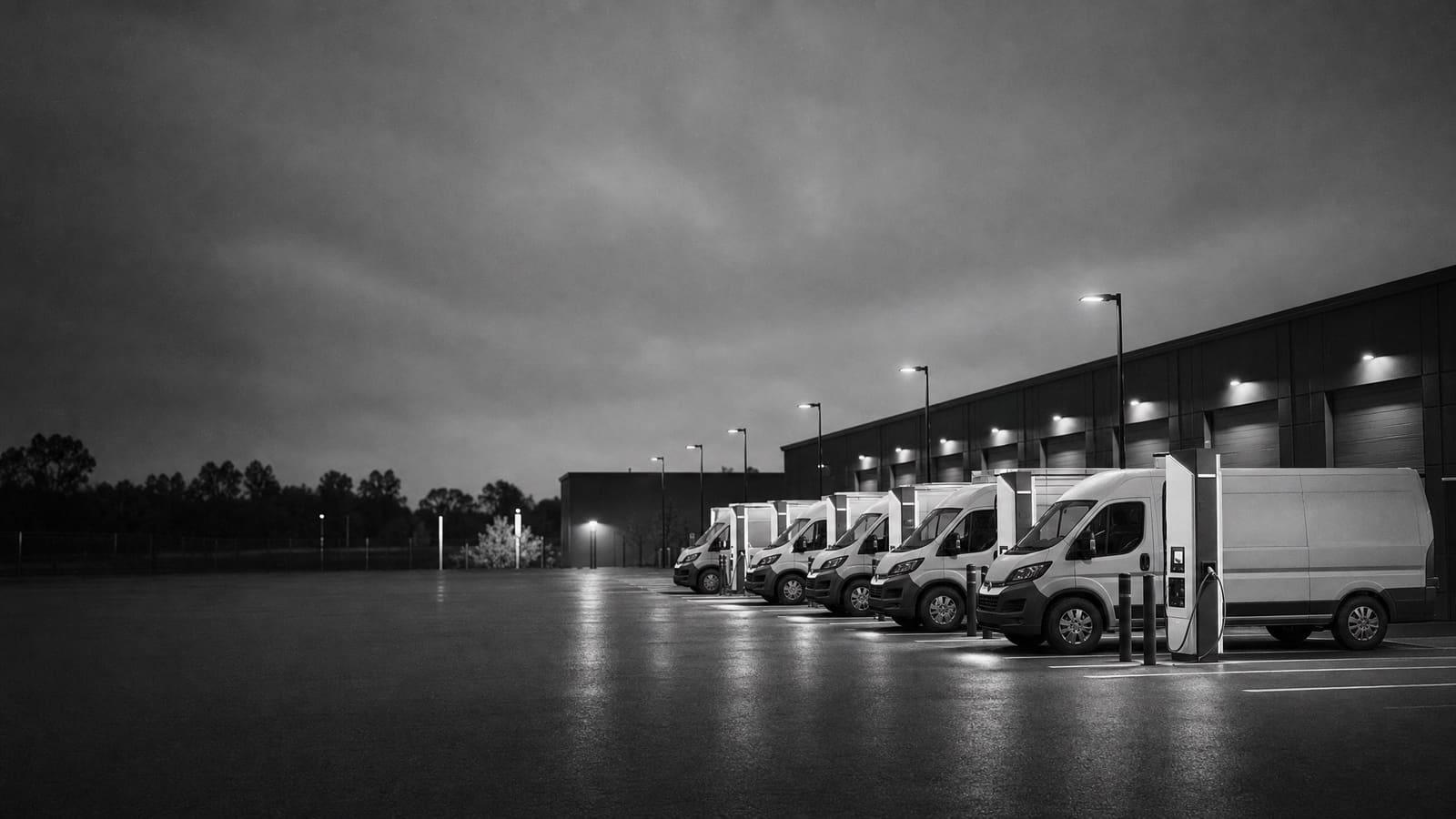
Depot charging designed around routes and dwell times, so vehicles are full when they roll.
THE DEPOT
How fleet charging depots come together
Fleet EV charging is a schedule problem wearing an electrical costume. Vans return at six, leave at seven the next morning, and every battery has to be full by then. The depot's job is making that happen every night without buying more power than the site can carry.
Most fleets build their own depot charging rather than rely on public stations, because public charging costs more and promises less. The build follows a known path: assess the site, design the charging plan, construct, commission, and then operate. Done in that order, diesel spend converts into a power bill you can actually manage.
THE PLAYBOOK
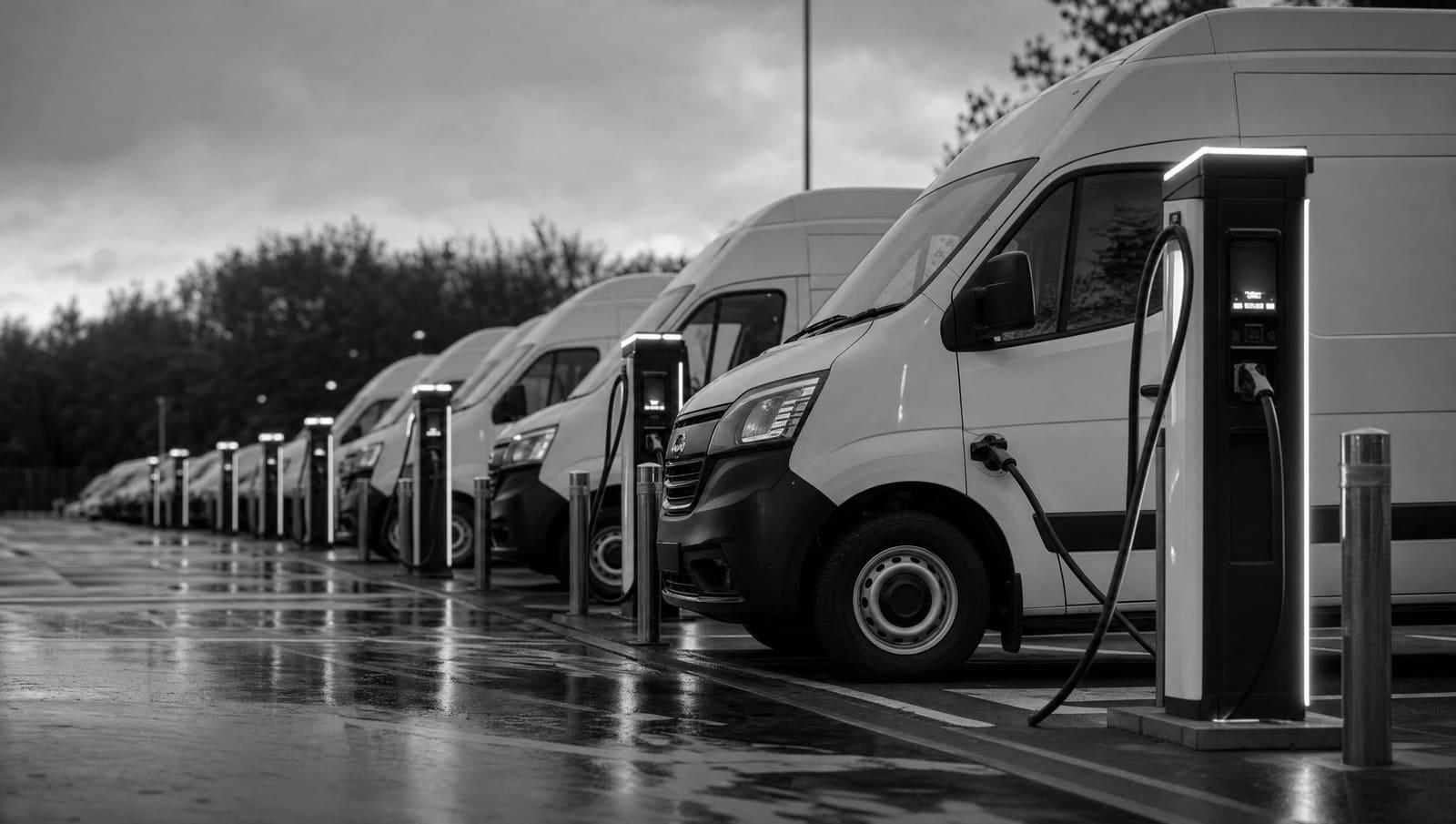
Planning depot charging that scales
01
Map the duty cycle
Routes, return times, and dwell windows decide how much charging each vehicle actually needs. Most need less than owners assume.
02
Size for the worst day
The depot gets designed for the hardest night of the year, not the average one, with load management smoothing the draw.
03
Phase the buildout
Conduit and capacity go in for the full fleet; chargers install for the vehicles that exist. Adding ports later is cheap when the pipe is already there.
04
Commission and operate
Software schedules sessions overnight for the cheapest rates, flags faults, and proves every vehicle is ready before dawn.
CAPEX
Utility make-ready programs for fleets
Fleets are the load utilities can predict, so make-ready programs often treat depot projects well: the panels, conduit, and trenching get covered while the fleet buys chargers. Grant programs for fleet electrification stack on top in many states.
Applications go in before construction. Programs rarely pay backward.
OPEX
Managed overnight charging for fleets
Plugging in at return and charging immediately hits the evening peak, the most expensive power of the day. Managed depots wait: sessions run after the rates drop, finishing just before departure.
Same electricity, same full batteries, meaningfully smaller bill. Software does this automatically once the rate plan is loaded.
Electrifying a fleet?
Request an estimate. Duty cycles mapped, depot sized, make-ready programs applied - a depot plan that grows with the fleet.
QUESTIONS
Straight answers.
Should a fleet use public charging instead of building a depot?
Return-to-base fleets almost always come out ahead with their own depot. Public charging costs more per session and isn't guaranteed available when routes depend on it.
How many chargers does a fleet need?
Usually fewer than one per vehicle. Overnight dwell means vehicles can share ports on a schedule. The duty-cycle math decides.
What does depot charging cost?
It scales with fleet size and site power. Make-ready funding often covers much of the infrastructure; phasing keeps early cost tied to vehicles actually on the ground.
What happens when the fleet grows?
A depot designed right grows by adding chargers to conduit that already exists. That's why the buildout phases infrastructure first.
GET STARTED
Ready to price your chargers?
Request an estimate. A depot plan sized to your routes, phased to your budget.