FACILITY ROBOTICS
Facility robots.
Cleaning, security, and delivery robots that pay for themselves in labor, plus the integration, repair, and building automation behind them.
Automation that earns its floor space.
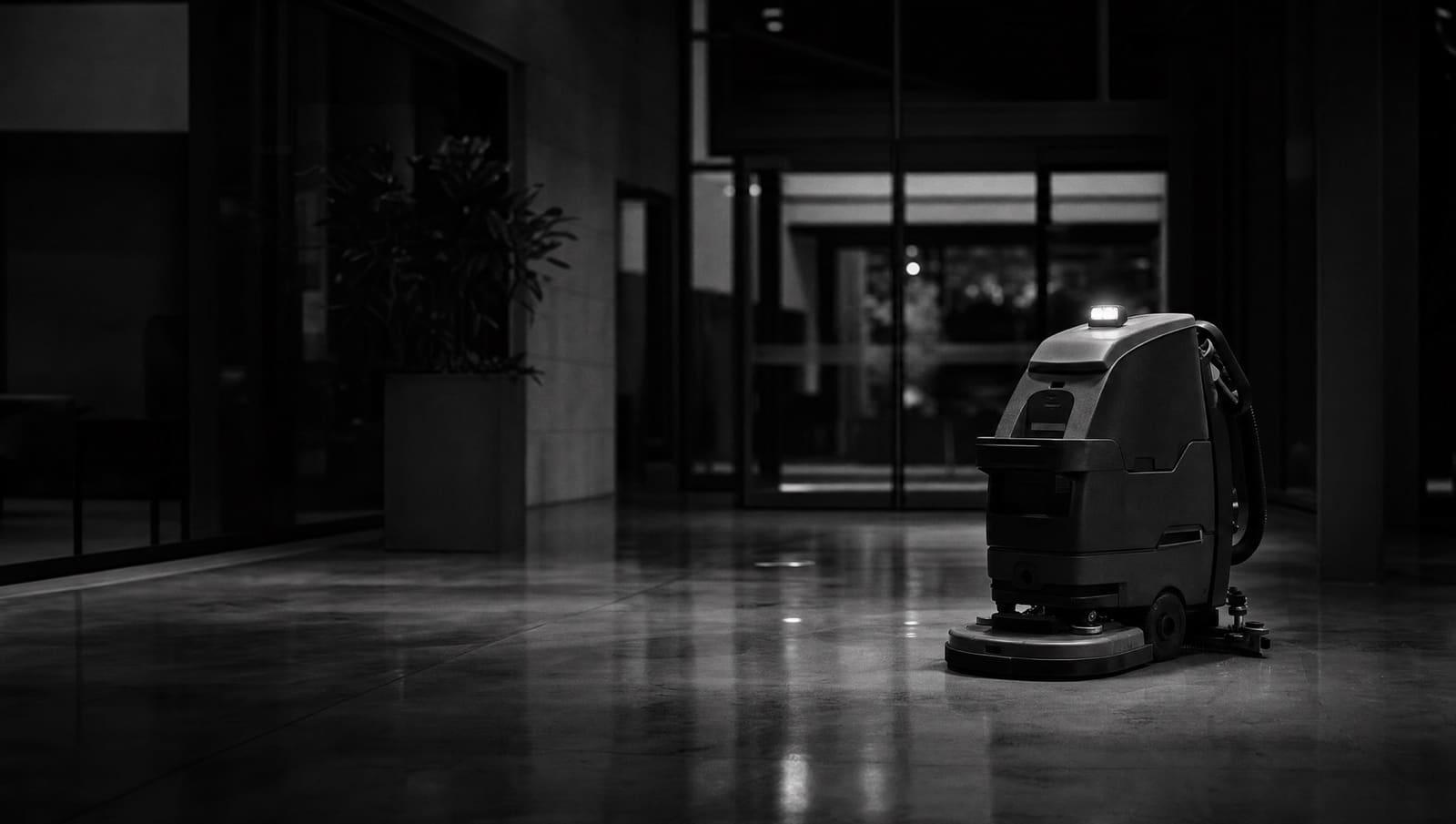
Labor is the biggest line in most facility budgets, and it's the hardest to staff. Commercial cleaning robots and autonomous floor scrubbers take over the square footage; your crew keeps the detail work. Security robots patrol around the clock without overtime.
We pick machines for your floors and your layout, run the pilot, train your team, and keep everything running with robot repair and support. Deeper needs like robotics integration and building automation live under the same roof.
START HERE
What are commercial facility robots
Facility robotics is machines doing the building's repetitive work. Cleaning robots scrub floors on a schedule. Security robots patrol garages and lots. Delivery robots run items through hotels and offices. On the industrial side, robot arms handle production tasks, and building automation runs the building's own systems on logic instead of habit.
The common thread: each machine owns a repeating task, does it every time without being reminded, and logs proof it happened. The question for any building is simple. Which of your repeating tasks is big enough to hand to a machine?
AT A GLANCE
Commercial robot costs at a glance
Overnight
SCRUBBER ROI
Autonomous scrubbers pay back by owning a repeatable daily route — big floors, off-peak runs, staff shifted to detail work.
$50-400k
ROBOT CELLS
Complete industrial arm systems integrated into a working cell; bare arms start around $25k before tooling and integration.
24/7
SECURITY PATROLS
Patrol robots run continuous routes with cameras and sensors, feeding a monitored stream instead of replacing response.
RaaS
LEASING EXISTS
Robots-as-a-service pricing turns scrubbers and patrol units into a monthly cost instead of capital.
THE REAL MATH
Cleaning robot ROI for commercial buildings
A cleaning robot earns its price on one thing: a route it can run every day. Big open floors. Long aisles. The same loop, night after night. The robot covers that floor while your crew handles the work that needs hands and judgment: edges, restrooms, spills.
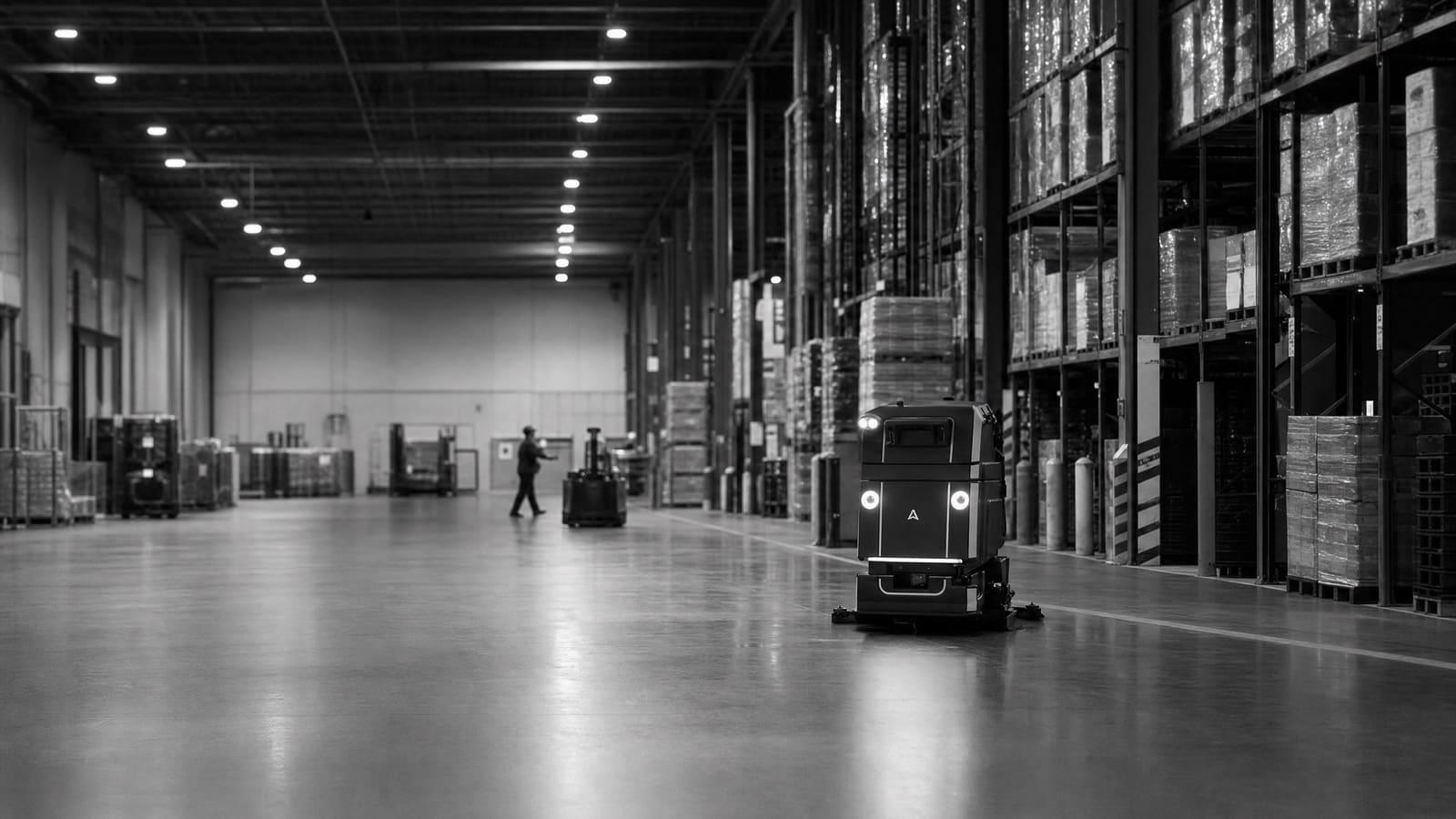
That is why warehouses, groceries, schools, and terminals buy them first. The floors are large and the schedule repeats. A robot cleaning an hour a day never pays back. A robot that owns the night shift does. The robot also logs proof it cleaned, with route maps instead of a clipboard. See floor scrubbers.
BUY OR SUBSCRIBE
Robots as a service vs buying a robot
You do not have to buy the robot. Robots-as-a-service plans rent them monthly: machine, software, and support in one payment. That turns a capital purchase into an operating cost, which many budgets prefer.
Buying still wins when the route is proven and the machine will run for years. Renting wins when you want to test the fit first, or when cash is better spent elsewhere. Either way, the route decides. Map the floors first, then pick the payment. Repair coverage matters in both cases: ask who fixes it, and how fast.
WORTH KNOWING FIRST
What to know before buying commercial robots
01
The route decides the ROI
A scrubber that owns a nightly warehouse loop pays for itself; one that cleans an hour a day doesn't. Map the repeatable square footage before pricing units.
02
Integration is most of the invoice
An industrial arm is $25k; the working cell around it — tooling, safety fencing, programming, conveyance — takes systems to $50k-$400k+. Budget the cell, not the arm.
03
Robots shift labor, they don't erase it
Cleaning crews move to edges, restrooms, and spills while the robot covers open floor. Security teams monitor feeds instead of walking loops. Plan the redeployment.
04
Hospitality robots are proven
Delivery robots run hotel corridors and elevators today, handling guest deliveries around the clock. The novelty is gone; the labor math is what's left.
05
Automation needs a building that cooperates
Elevators, door thresholds, floor transitions, and Wi-Fi coverage make or break deployments. The site survey matters as much as the robot spec.
IN PRACTICE
Best applications for commercial cleaning robots
Large open floors with predictable schedules: warehouses, campuses, groceries, terminals. The robot takes the repetitive coverage overnight; people handle judgment work.
Start with floor scrubbers — the most proven category — or see security robots if patrol coverage is the gap.
GOOD TO KNOW
Commercial robotics facts worth knowing
- Autonomous scrubbers log cleaning proof automatically — route maps and coverage reports replace the checklist on a clipboard.
- Building automation ties in: robots that talk to elevators and access control cover multi-floor buildings; ones that don't stay on one level.
- Refurbished industrial arms cut cell costs substantially when the application tolerates a previous-generation controller.
- Service robotics is a growing industrial category tracked by the International Federation of Robotics — commercial cleaning and delivery lead adoption.
WHAT WE HANDLE
Everything under the robots door.
FACILITY ROBOTS
INTEGRATION & REPAIR
SMART BUILDING
THE LABOR REALITY
Why businesses use cleaning and security robots
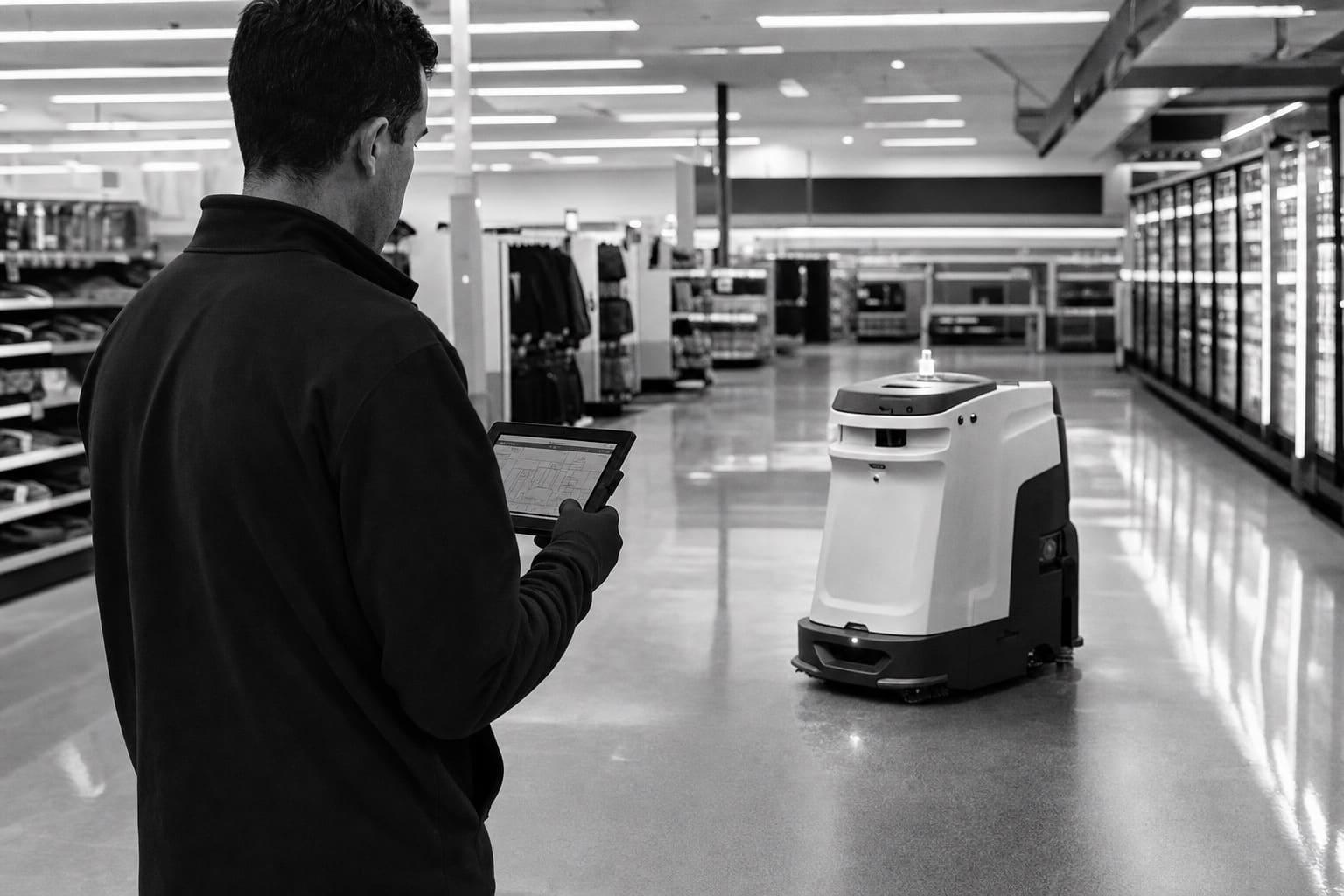
Cleaning and security run on labor, and labor is the hard part: hiring, turnover, night shifts nobody wants, and coverage gaps when someone quits. Robots don't solve labor. They absorb the repetitive share of it.
A scrubber covers the open floor nightly, so a smaller crew handles detail work. A patrol robot covers the garage loop at 3 a.m. without a scheduling problem. The machines also never skip the log: route maps and timestamps replace the clipboard. Buildings aren't buying robots to be futuristic. They're buying coverage that doesn't call in sick.
WILL IT WORK HERE
What makes a building robot-ready
Robots have site requirements the brochure skips. Floors: scrubbers want open runs without tight thresholds or steep transitions. Connectivity: most machines need Wi-Fi coverage across their route to report and be managed. Elevators: multi-floor delivery needs elevator integration, which is its own small project.
Charging: every robot needs a home base with power near the route. Lighting and layout affect navigation. None of these are dealbreakers, but each one is cheaper to answer before purchase than after. A short site survey against the route map answers all of them. That survey is the first real step of any deployment.
THE INDUSTRIAL SIDE
Industrial robot arm integration costs
An industrial arm is a component, not a solution. The arm needs a gripper or tool for the task, safety fencing or sensors so people can work near it, a controller programmed for the job, and conveyance moving parts in and out. That package is a work cell.
It's why a $25,000 arm becomes a $50,000-to-$400,000 system, and why integration is its own trade. Refurbished arms cut the hardware line hard when the task tolerates an older controller. The spec that matters isn't the arm's reach. It's cycle time, uptime, and how fast the cell pays for the labor it replaces.
WHAT MOVES THE NUMBER
Commercial robotics cost factors
- Route size: machines are priced to coverage, not vanity specs
- Purchase vs robots-as-a-service monthly plans
- Integration depth: elevators, access control, and alarms add scope
- For arms: tooling, fencing, and programming beyond the arm itself
- Support plan: parts, batteries, and response time
- How many buildings share the fleet and its management
THE BUILDING'S BRAIN
What is building automation
The biggest robot in most buildings has no wheels. A building automation system runs HVAC, lighting, and schedules on sensors and logic: warm the offices before people arrive, dim empty floors, flag equipment that's misbehaving.
It's the same promise as the rolling robots: repetitive decisions made correctly every time, with a log. It's also where energy savings live, because drift in schedules and setpoints is the quietest money leak in commercial buildings. PLC and controls work sits next to it on the industrial side. If the building still runs on wall switches and habit, this is usually the highest-return automation of all.
Want a robot priced for your building?
Request an estimate with your square footage and schedule. Purchase and monthly options come back side by side.
QUESTIONS
Straight answers.
What do cleaning robots actually cost?
Most run as a monthly subscription rather than a purchase, sized to your square footage. On big open floors the machine typically costs less than the labor hours it absorbs.
Do robots replace our cleaning staff?
In practice they absorb the repetitive square footage and open up your people for detail work, restrooms, and the jobs robots can't do. Most buildings redeploy, not cut.
Which buildings are a good fit?
Open floor plans earn the fastest payback: warehouses, offices, retail, schools, healthcare corridors. Tight, cluttered spaces are usually better left to your crew, and we'll say so on the site visit.
What happens when a robot breaks?
Repair coverage extends to machines you already own, not just new deployments. Parts, batteries, and software updates belong in any support plan you sign.
GET STARTED
Run the robot math on your building.
Square footage and hours in, labor math out. Pilot it on your worst floor, and if it doesn't pencil, we'll say so.