FACILITY ROBOTICS
Commercial delivery robots.
Carts that run the errands: mail, supplies, and materials moving themselves between floors and buildings.
THE SHORT VERSION
How commercial delivery robots work
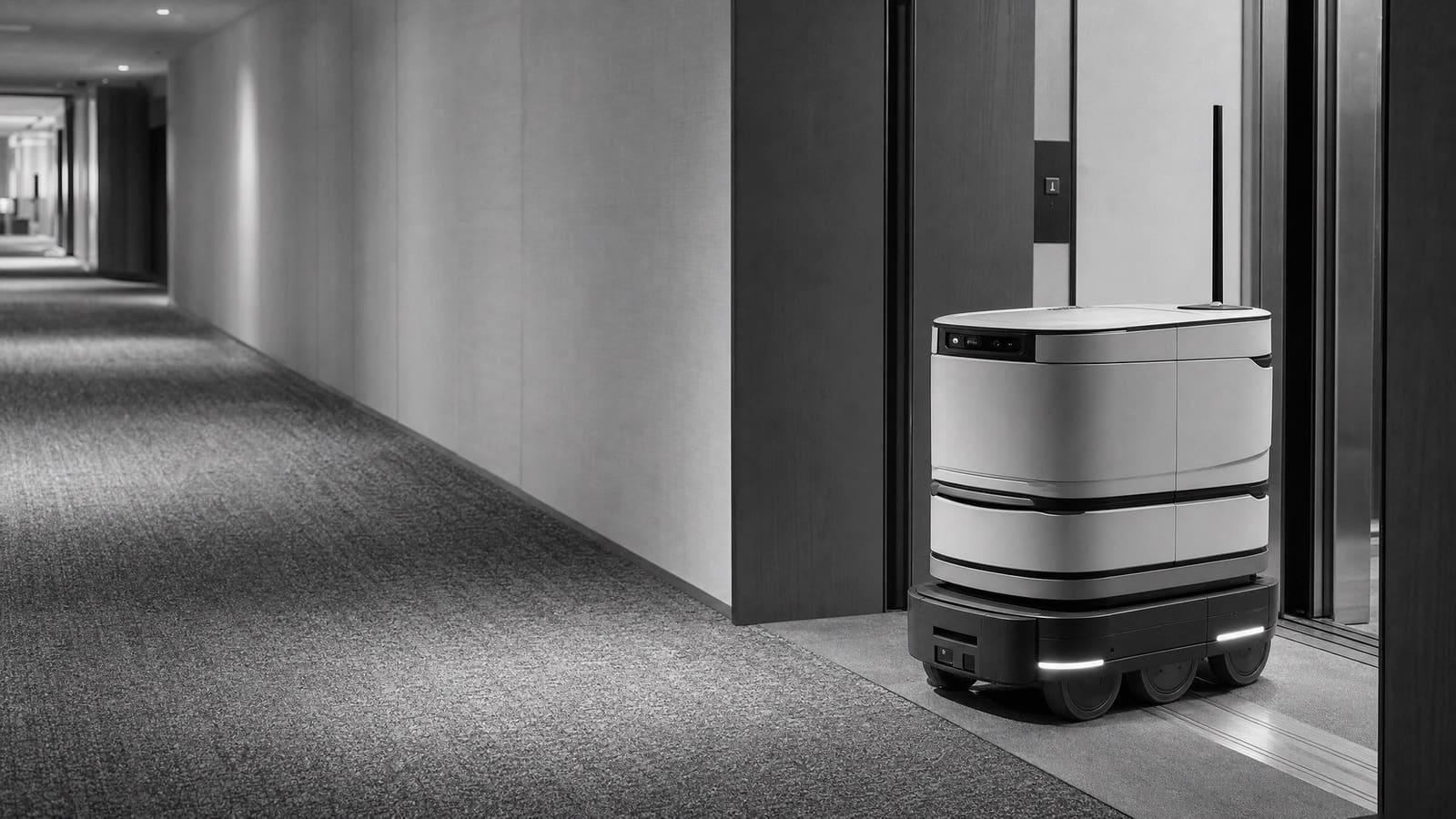
Commercial delivery robots move items between fixed points all day: room service to hotel floors, food from kitchen to table, parts between service bays, documents between departments. They navigate hallways and people, ride integrated elevators, and announce arrival, contact-free.
The economics are labor math: vendors report per-day robot costs competing with per-hour staff time for the same errands. What that really buys is your people staying where their value is, at the desk, the table, the workbench, while the robot walks the miles.
WHAT MOVES THE NUMBER
Delivery robot cost factors
- Route scope: single floor or multi-floor with elevator integration
- Capacity class: trays and totes up to heavy payloads
- Fleet size the delivery volume demands
- Building integration: elevators, doors, and access control
- Connectivity along every corridor the route touches
- Subscription versus purchase, with support terms
WHERE THEY WIN
Best uses for delivery robots in buildings
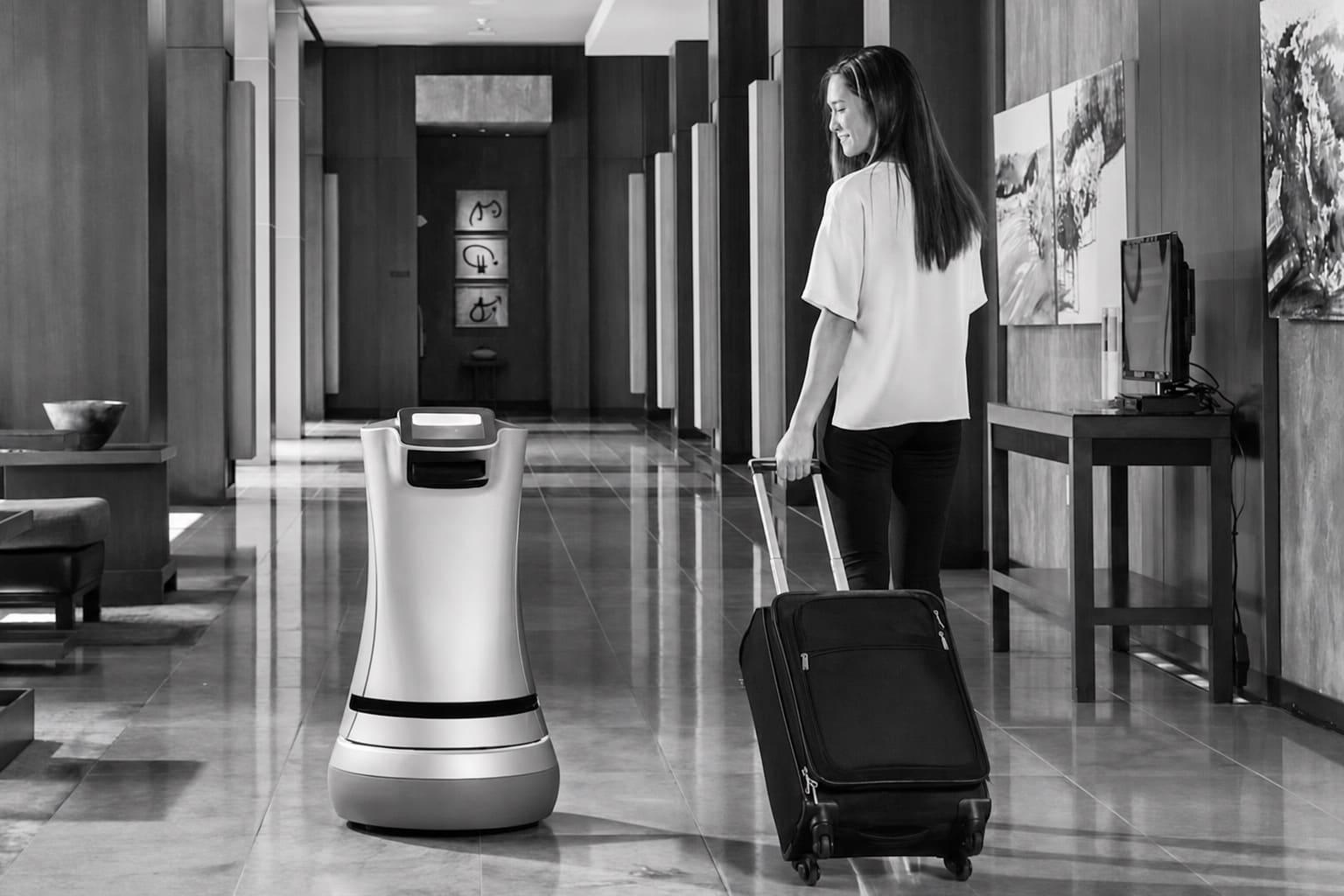
Hotels run amenities and room service at 2 a.m. without a night runner. Restaurants run food while servers sell. Dealerships and warehouses shuttle parts so techs stay at the bench. Offices move mail and supplies on schedule.
The pattern: fixed points, repeated trips, and staff whose time is worth more than walking. If your people log miles indoors, a robot wants those miles.
THE BUILDING TEST
What delivery robots need from a building
Corridors the robot's width, thresholds it can cross, connectivity everywhere it goes, and, for multi-floor work, elevator integration, which is its own small project with the elevator vendor.
None of it is exotic, but all of it is site-specific. The survey walks the actual route before anyone commits, which is why quotes follow surveys.
Staff walking miles indoors?
Count the trips for one day. Then send the number and see what a robot does to it.
QUESTIONS
Straight answers.
What does a delivery robot cost?
Subscription pricing dominates: machine, software, and support in a daily or monthly rate that competes with a slice of the labor it replaces. Fleet size and integration set the total.
How does elevator integration work?
The robot talks to the elevator system to call and select floors, set up with the elevator vendor during deployment. Single-floor routes skip it entirely.
What if someone blocks or bothers the robot?
It navigates around people, waits politely when blocked, and reports persistent obstruction. Tampering is recorded, which discourages most of it quickly.
How do guests and customers react?
Mostly delight, which fades into normalcy fast. The novelty wears off; the 2 a.m. delivery coverage doesn't.
GET STARTED
Put the miles on a robot.
Describe what moves through the building all day. Delivery robot options come back with elevator integration scoped.