BUILDING MAINTENANCE
Commercial building maintenance.
HVAC service, electricians, roofing, fire and life safety, landscaping, and snow. One number for the work that never stops.
One call, whatever breaks.
Buildings don't break politely. One month it's an HVAC service call, the next it's a roof leak or a panel that needs a licensed electrician. Instead of keeping six vendors on speed dial, you keep one number, and we put the right crew on it.
The calendar work matters too: roofing inspections before storm season, fire and life safety testing on schedule, landscaping that keeps the property leasing, and snow removal contracted before the first storm, not after.
START HERE
What is commercial building maintenance
Maintenance is everything a building needs on repeat: HVAC service, electrical, plumbing, roof care, fire and life safety, landscaping, snow, and the lot itself. Any one of them is easy. All of them, on the right schedule, across seasons, is the actual job.
That's why the winning setup is a program: every system on one calendar with one point of contact. This page covers how the pieces fit and what the whole thing should cost. Each child page prices its own trade.
AT A GLANCE
Commercial building maintenance costs at a glance
$2.50-5.59
PER SQ FT / YR
IFMA's median maintenance cost range across facility types — the benchmark to hold your budget against.
2x + storms
ROOF CHECKS
Semiannual inspections plus after major weather is the standard preventive roof cadence.
$1.5-20k
SNOW SEASON
Seasonal contracts by lot size, from small commercial to large sites; per-event runs $150-$1,500.
PM first
THE MODEL
Preventive maintenance on a calendar beats reactive repair on a crisis — cheaper per year, and the building shows it.
THE BENCHMARK
Building maintenance cost per square foot
Maintenance has a measurable budget. Across facility types, the median spend runs about $2.50 to $5.59 per square foot per year. A 50,000 square foot building sits roughly in the $125,000 to $280,000 range, moving with building type, age, and climate.
Use the benchmark two ways. Spending far above it? Look for waste and overlapping vendors. Spending far below it? You are not saving money. You are borrowing from the building, and the loan comes due as failures. A priced maintenance program makes the number visible and steady.
PLANNED BEATS PANICKED
Preventive vs reactive building maintenance
There are two ways to maintain a building. Fix things when they break, or check things so they don't. Reactive repair feels cheaper because you only pay when something fails. It isn't. Failures come with downtime, emergency rates, and damage that spreads.
Preventive maintenance puts every system on a calendar. Filters changed on time. Roofs inspected twice a year and after storms. Drains cleared before the freeze. Small problems get caught at small prices. The building runs, tenants stay happy, and the budget stops surprising you. Start with HVAC service or roofing.
WORTH KNOWING FIRST
What to know before signing a maintenance contract
01
Benchmark the budget first
Maintenance spend is measurable: $2.50-$5.59 per square foot per year is the median band across facility types. Way over means waste; way under means deferred failures.
02
Snow pricing has three shapes
Per-event, seasonal flat, and per-inch each shift risk differently. Seasonal buys certainty in heavy winters; per-event wins in light ones. Pick by your tolerance, not the vendor's.
03
Roofs die of neglect, not age
The standard program is semiannual inspection plus post-storm checks, with drains cleared and small repairs logged. Every skipped year shortens the membrane's life.
04
Landscaping contracts hide scope
Mowing is the visible line; the contract lives in edging, beds, irrigation checks, and seasonal cleanups. Itemized scope is what makes bids comparable.
05
One vendor per trade ages badly
Buildings accumulate vendors until nobody owns the calendar. Consolidated maintenance with one accountable schedule is what keeps small problems small.
IN PRACTICE
What a facility maintenance program includes
A real program puts every system on a calendar — HVAC filters and coils, roof inspections, electrical checks, landscaping, snow response — with one point of contact and a log that proves the work happened.
Start where the pain is: HVAC service, roofing, or snow removal before the season starts.
WHAT WE HANDLE
Everything under the maintenance door.
ELECTRICAL & POWER

THE SEASONAL RHYTHM
Commercial building maintenance schedule by season
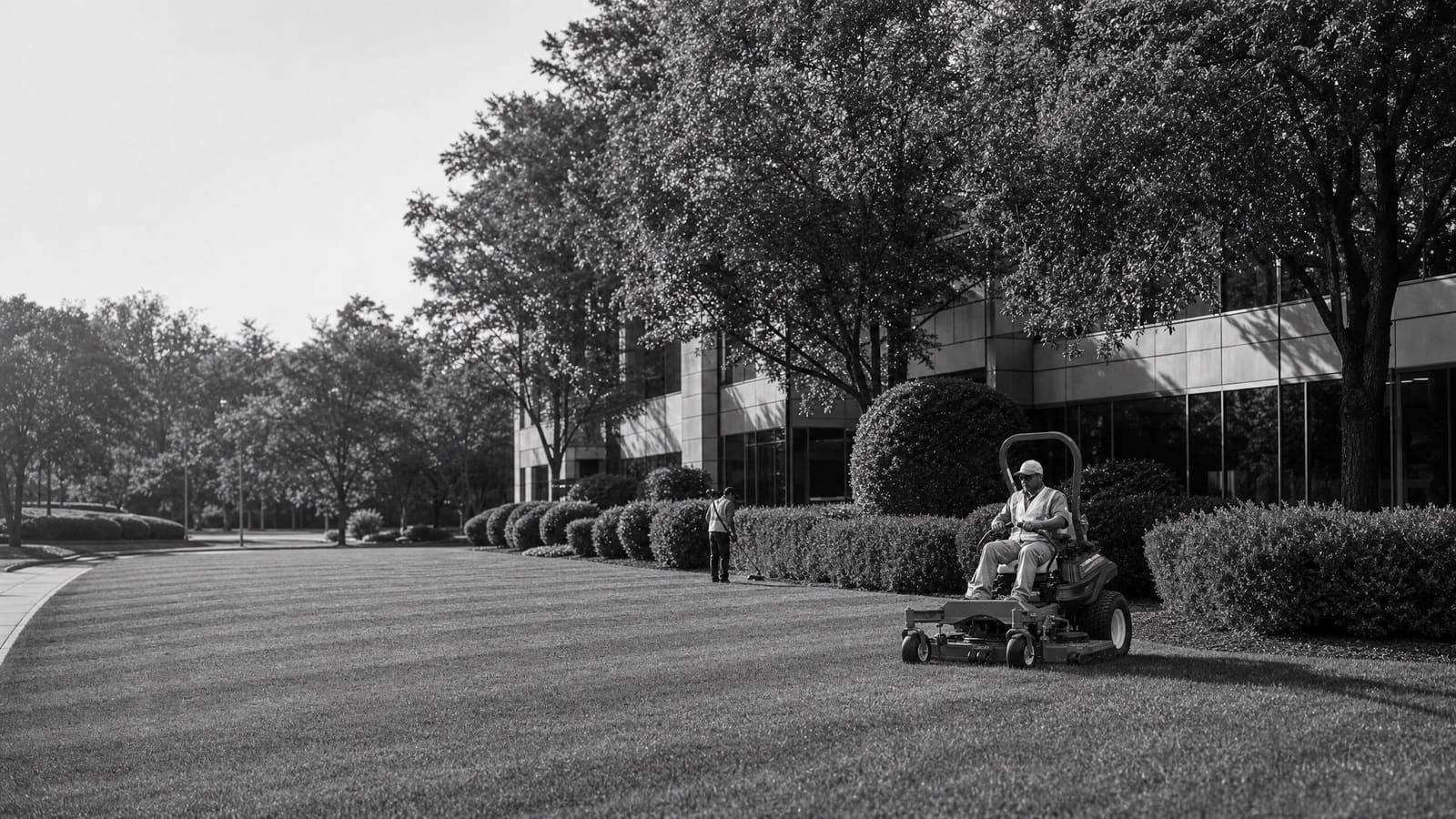
Buildings run on a seasonal clock. Spring: roof inspection after winter, irrigation startup, cooling tune-up before the heat arrives. Summer: landscaping in full swing, pavement work in the dry months, cooling carrying its load.
Fall: heating tune-up before the cold, gutters and drains cleared, snow contracts signed before the first storm, irrigation blown out. Winter: snow response, heating watched, and everything else planned for spring. Miss a season's window and you pay peak rates in the panic. The whole point of a program is that the calendar, not the weather report, drives the work.
THE ROOF RULE
Why commercial roofs fail early
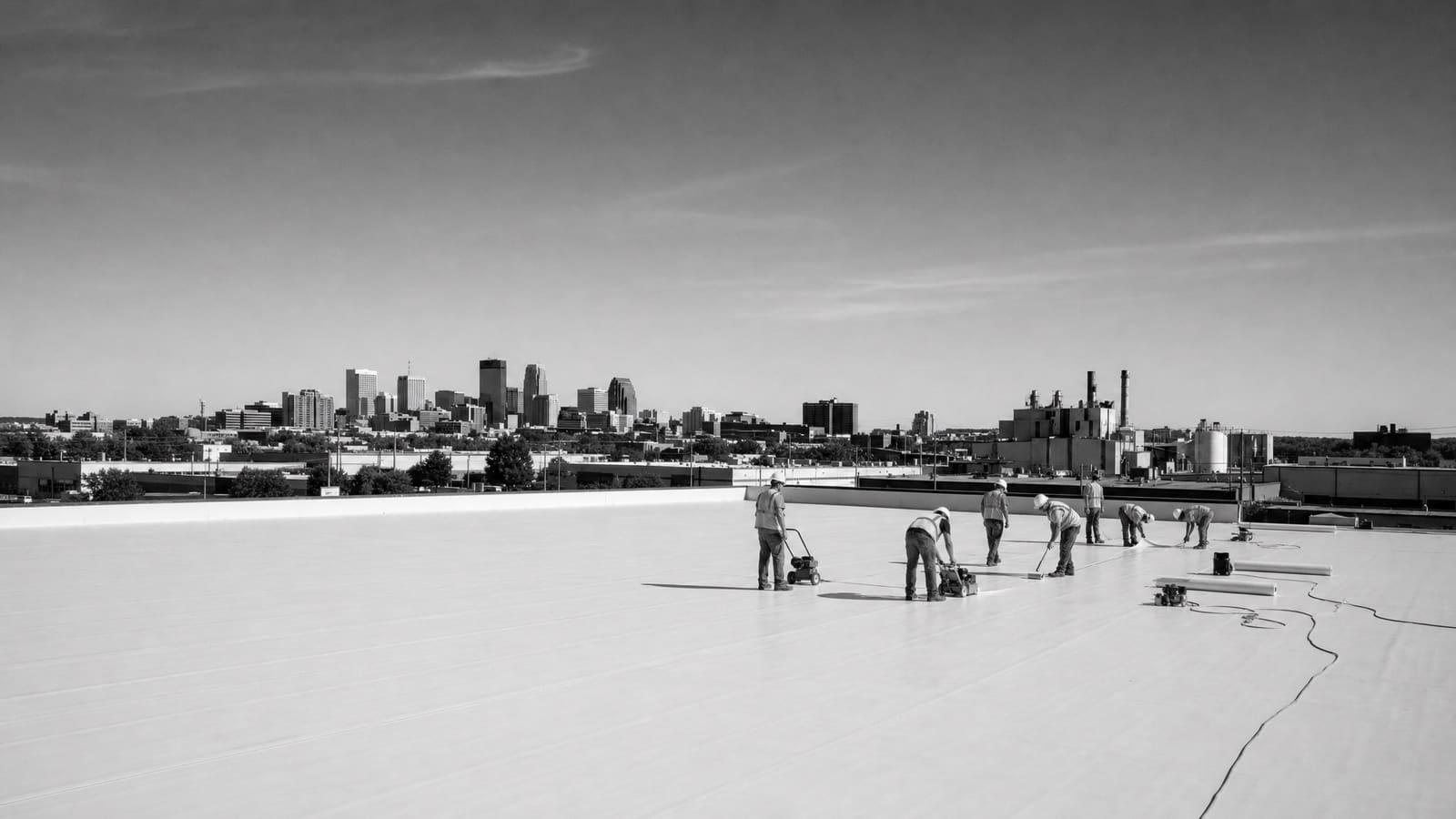
Nothing on the maintenance list protects more value than the roof. A membrane failure doesn't just cost a roof: it costs ceilings, inventory, tenants, and sometimes the electronics under the leak.
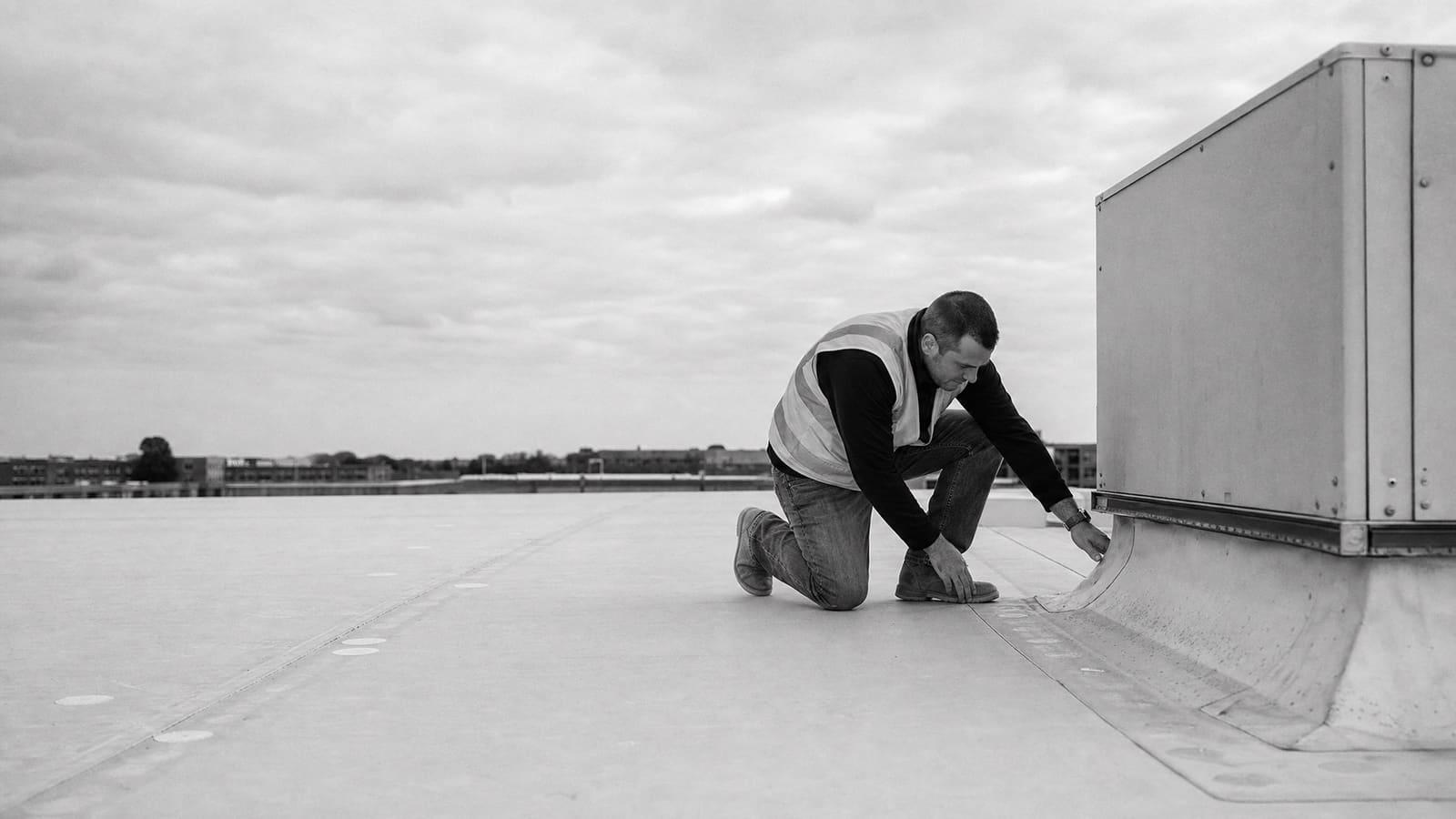
The standard program is simple. Inspect twice a year, and again after major storms. Keep drains clear so water never ponds. Fix small punctures and seams while they're small. Document everything, because roof warranties love a paper trail. A maintained membrane reaches deep into its rated life. A neglected one fails a decade early, and the flat roof repair that follows costs more than years of the program that would have prevented it.
WHAT MOVES THE NUMBER
Building maintenance cost factors
- Square footage and how many buildings share the contract
- Building type: healthcare runs harder than warehouse
- Systems included: full program vs a few trades
- Response terms: emergency coverage costs more than scheduled-only
- Snow model: per-event, seasonal flat, or per-inch
- Age of equipment: old gear needs more visits
THE WARNING SIGNS
Signs of deferred maintenance in commercial buildings
Deferred maintenance hides in plain sight. Stained ceiling tiles that come back after every rain. Filters that look gray instead of white. Doors that need a shoulder. Parking lot cracks that grew this year. Each one is small. Together they say the calendar stopped.
The costly part is what they predict. A roof leak becomes a ceiling replacement. A screeching belt becomes a dead motor. Walk the building twice a year, list what you see, and fix items while they are cheap. A building that looks maintained usually is. One that does not is borrowing against next year's budget.
ONE THROAT TO CHOKE
Benefits of consolidated facility maintenance
Buildings accumulate vendors: one for HVAC, one for plumbing, two for landscaping, someone's cousin for snow. Every vendor is fine. The building still suffers, because nobody owns the calendar and small things fall between contracts.
Consolidation fixes the ownership problem. One program, one schedule, one number to call, one log proving what happened. Overlaps disappear, gaps get caught, and pricing improves because the work is bundled. The building gets what it never had with nine vendors: a single party accountable for the whole thing running.
Tired of juggling vendors?
Request an estimate for a consolidated program: every system, one calendar, one accountable number.
QUESTIONS
Straight answers.
How fast do you respond?
Urgent calls move to the front of the line, and most routine service gets scheduled within a few days. Tell us it's an emergency and we treat it like one.
Do you do service contracts?
Yes. Recurring maintenance, seasonal work like snow and landscaping, and scheduled inspections can all run on one agreement with one point of contact.
Is a job ever too small?
No. Small repairs are how we earn the big ones. If it needs a licensed trade, send it over.
Which trades do you cover?
HVAC, electrical, plumbing, roofing, fire and life safety, landscaping, and snow, plus the odd jobs between them. If it's not on the list, ask; the answer is usually yes.
GET STARTED
Get on the service list.
Tell us the building and what keeps breaking. Urgent work jumps the line; everything else gets scheduled like clockwork.