MAINTENANCE
Commercial roofing contractors.
Repairs, replacements, and the inspections that catch leaks while they're still cheap.
THE SHORT VERSION
What commercial roofing contractors do
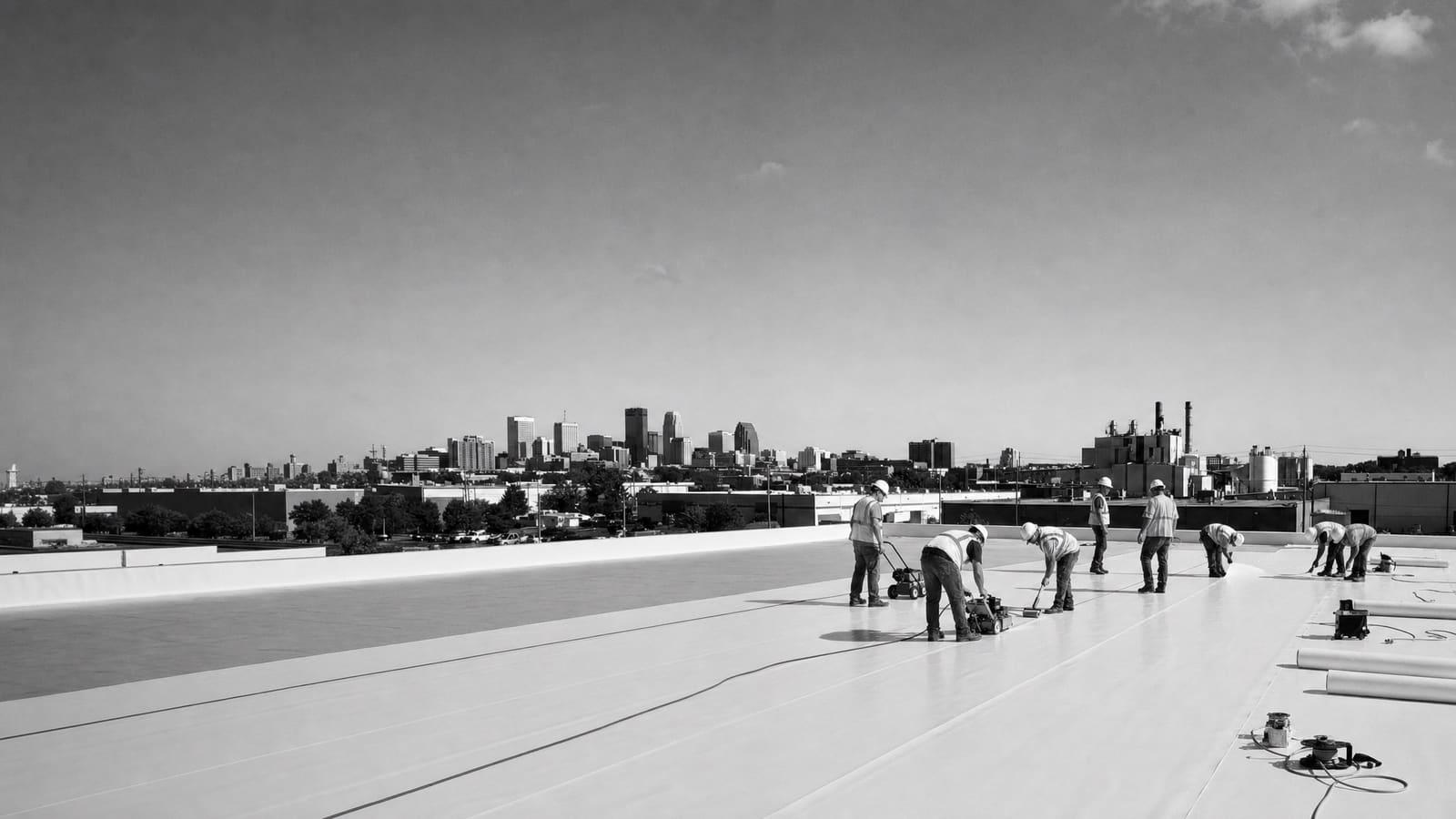
Commercial roofing contractors install, repair, and maintain the flat and low-slope systems that cover offices, warehouses, retail, schools, and industrial buildings. The materials are their own world: TPO and EPDM membranes, modified bitumen, built-up roofing, and metal, each with its own install method, lifespan, and price.
The work splits into three buckets: new installs and replacements, repairs when something fails, and the maintenance programs that keep both from being emergencies. Buildings that treat the roof as a system with a schedule get decades from it. Buildings that only call when it leaks pay for the difference.
AT A GLANCE
Commercial roofing by the numbers
$4-15
PER SQ FT
Typical installed range for commercial roofing systems, moving with material and roof complexity.
20-60 yrs
SYSTEM LIFE
Lifespan by material, from single-ply membranes up to metal. Maintenance decides which end you get.
TPO
MOST INSTALLED
The most popular commercial membrane going into 2026: white, heat-welded seams, strong reflectivity.
2x + storms
INSPECTIONS
The standard cadence: semiannual checks plus after major weather, with drains cleared every visit.
PICKING A SYSTEM
Types of commercial roofing systems
TPO leads today's installs: a white, reflective membrane with heat-welded seams that cuts cooling loads. EPDM rubber is the economical workhorse with a long track record. Modified bitumen and built-up roofing layer redundancy onto high-traffic roofs. Metal costs more up front and runs the longest.
The right answer follows the building: its structure, its traffic, its climate, and how long you plan to own it. A good proposal explains the choice; a bad one just names a product.
PICKING A CONTRACTOR
What to ask a commercial roofing contractor
Four questions separate bids fast. Is the crew certified by the membrane manufacturer, since certification is what makes the long warranty real? What exactly does the warranty cover, labor or just material? How do they document the work, because roof warranties live on paper trails? And who handles the details: flashings, drains, and penetrations, where nearly every future leak starts.
The cheapest bid that can't answer those four is the most expensive roof on the table.
WHAT'S COVERED
What a commercial roof maintenance program includes
Semiannual inspections
SPRING + FALL
The full walk: membrane, seams, flashings, and every penetration, with findings written down.
Drain clearing
EVERY VISIT
Ponding water finds every weakness. Clear drains are the cheapest roof protection there is.
Small repairs as found
SAME VISIT
Minor seam and flashing fixes happen on the spot, while they are still minor.
Storm checks
AFTER WEATHER
Major wind or hail gets its own inspection, because storm damage claims run on dates and photos.
Documentation
ALWAYS
Reports and photo logs that keep warranties alive and make budget planning honest.
READING THE BIDS
How to compare commercial roofing proposals
Roofing proposals are only comparable when the scope lines match. Check what each bid says about tear-off versus overlay, insulation, and the detail work at drains and penetrations, where future leaks start.
Then check the paper: manufacturer certification, what the warranty covers, and who stands behind labor. The cheapest number with the thinnest scope is the most expensive roof on the table. A repair history worth reading helps too.

Roof past due for a look?
Tell us the building and the roof's age. An inspection with a written report gets priced flat.
QUESTIONS
Straight answers.
How much does a commercial roof cost?
Installed systems commonly run $4 to $15 per square foot, with material choice, insulation, tear-off, and roof complexity moving the number. A real quote follows a real roof visit.
How long does a commercial roof last?
From about 20 years for single-ply membranes to 60 for metal, with maintenance deciding whether a roof reaches its rated life. Inspected, drained, and repaired roofs age slowly; neglected ones don't.
What is the most common commercial roofing material?
TPO single-ply membrane leads current installs. It's white and reflective, which trims cooling costs, and its seams are heat-welded rather than glued, which is where membranes usually fail.
Do you handle roof maintenance programs too?
Yes. Semiannual inspections plus post-storm checks, drain clearing, small repairs, and documentation come as a program, priced by roof size. It's the cheapest insurance a building can buy.
GET STARTED
Get your roof looked at.
Tell us the building and what the roof is doing. Inspection, repair, or a full program: it comes back priced, not pitched.