EV CHARGING
EV charging site design.
Stall layout, power routing, and future-proofing, decided before anyone digs.
THE LAYOUT
Designing a charging site that works
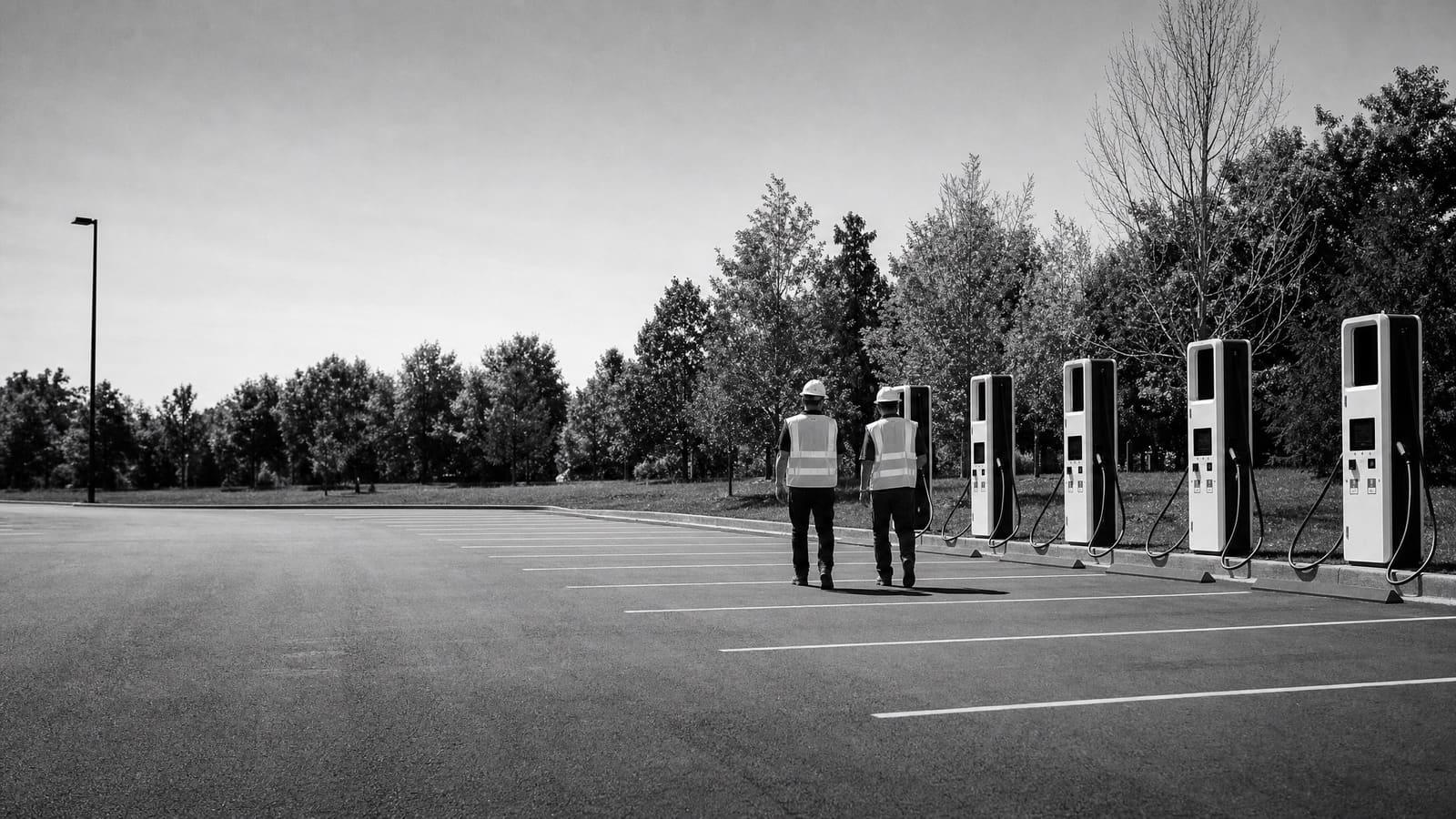
EV charging site design decides most of the project's cost and all of its daily experience before any hardware is chosen. Where stalls sit relative to power, how cables reach cars, who can access which ports, and what happens when the site doubles its EV count - all of it is layout.
Good design has a look: stalls near the electrical room when possible, conduit runs shared and oversized, accessible stalls placed on the shortest path, and equipment protected from the cars it serves. Bad design has a look too, usually involving a cable that does not reach.
IN PRACTICE
What a charging site plan covers
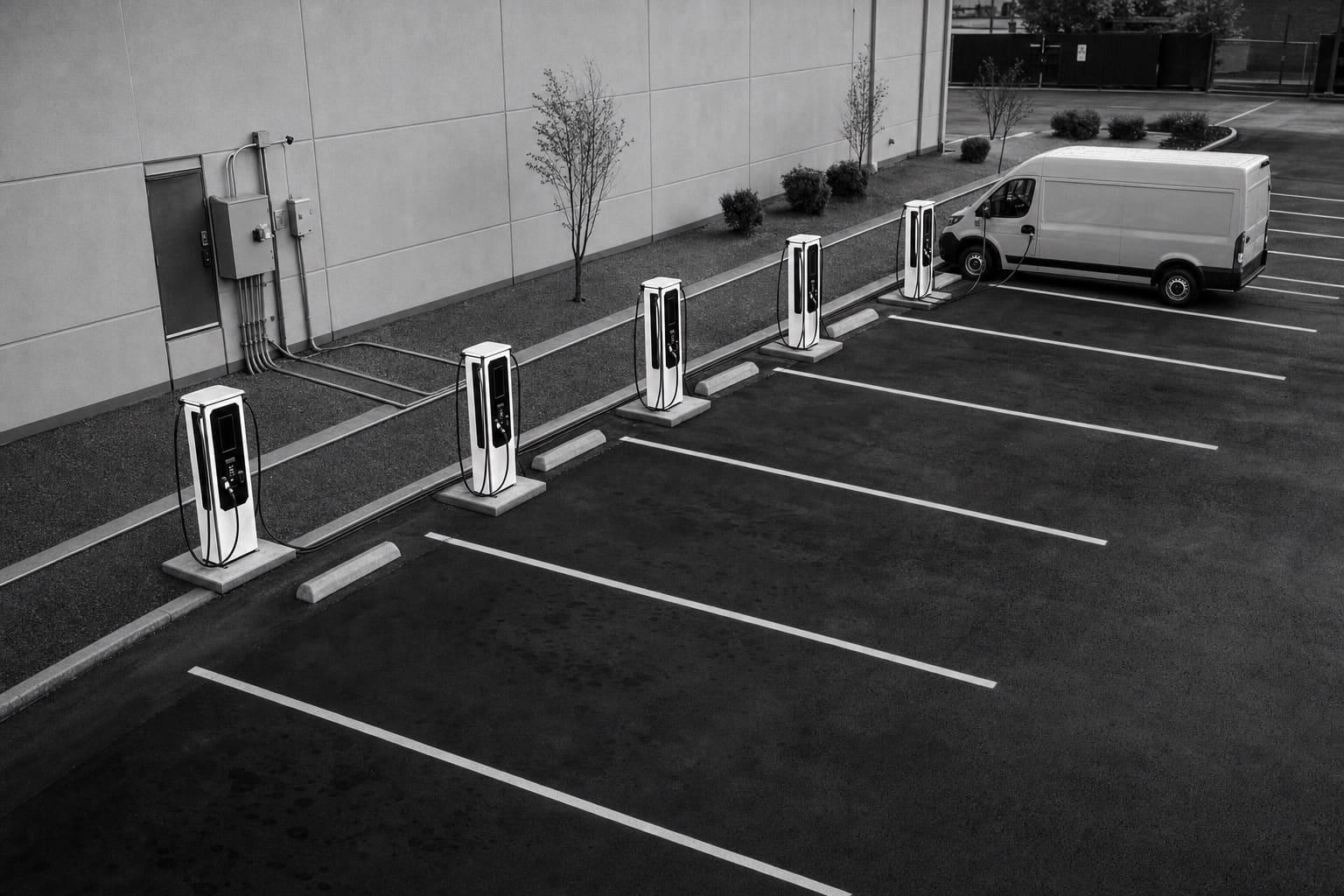
- Stall selection: distance to power, drainage, lighting, and sight lines
- ADA-accessible charging stalls with compliant clearances and routes
- Bollards and wheel stops protecting equipment from vehicles
- Conduit sized and routed for the ports you'll add later
- Cable reach verified for every stall geometry
- Signage and striping that make the rules obvious
FUTURE-PROOFING
Future-proofing EV charging conduit
The cheapest port is the one whose conduit already exists. Charging demand only moves one direction, so the trench dug this year gets sized for the ports of a few years from now: bigger pipe, spare capacity in the panel schedule, stub-outs at the next stalls.
The cost difference at trench time is small. The cost difference later - reopening pavement versus pulling wire - is not.
PLACEMENT
Where to locate EV charging stalls
The stalls closest to the electrical room are the cheapest to serve, but they are not always where charging belongs. Visitor charging wants visibility; tenant charging wants assigned convenience; fleet charging wants the yard.
The design job is balancing trench feet against daily use. Sometimes the right answer costs more pipe and earns it back in utilization.
Planning stall locations?
Request an estimate. A site plan with stall placement, ADA routes, and conduit sized for the ports you'll want next.
QUESTIONS
Straight answers.
Do charging stalls have ADA requirements?
Yes. Accessible charging stalls need compliant clearances, routes, and mounting heights. Retrofitting compliance costs more than designing it in.
What protects the chargers themselves?
Bollards and wheel stops, placed where cars actually travel. Charger-versus-bumper is a common, avoidable repair.
How much extra conduit should go in?
Size for roughly double today's ports. Pipe is cheap while the trench is open and expensive forever after.
Which stalls should get chargers first?
Balance distance to power against who charges. Near-room stalls install cheapest; visibility and convenience sometimes justify longer runs.
GET STARTED
Ready to price your chargers?
Request an estimate. A layout that works on day one and scales without new trenches.