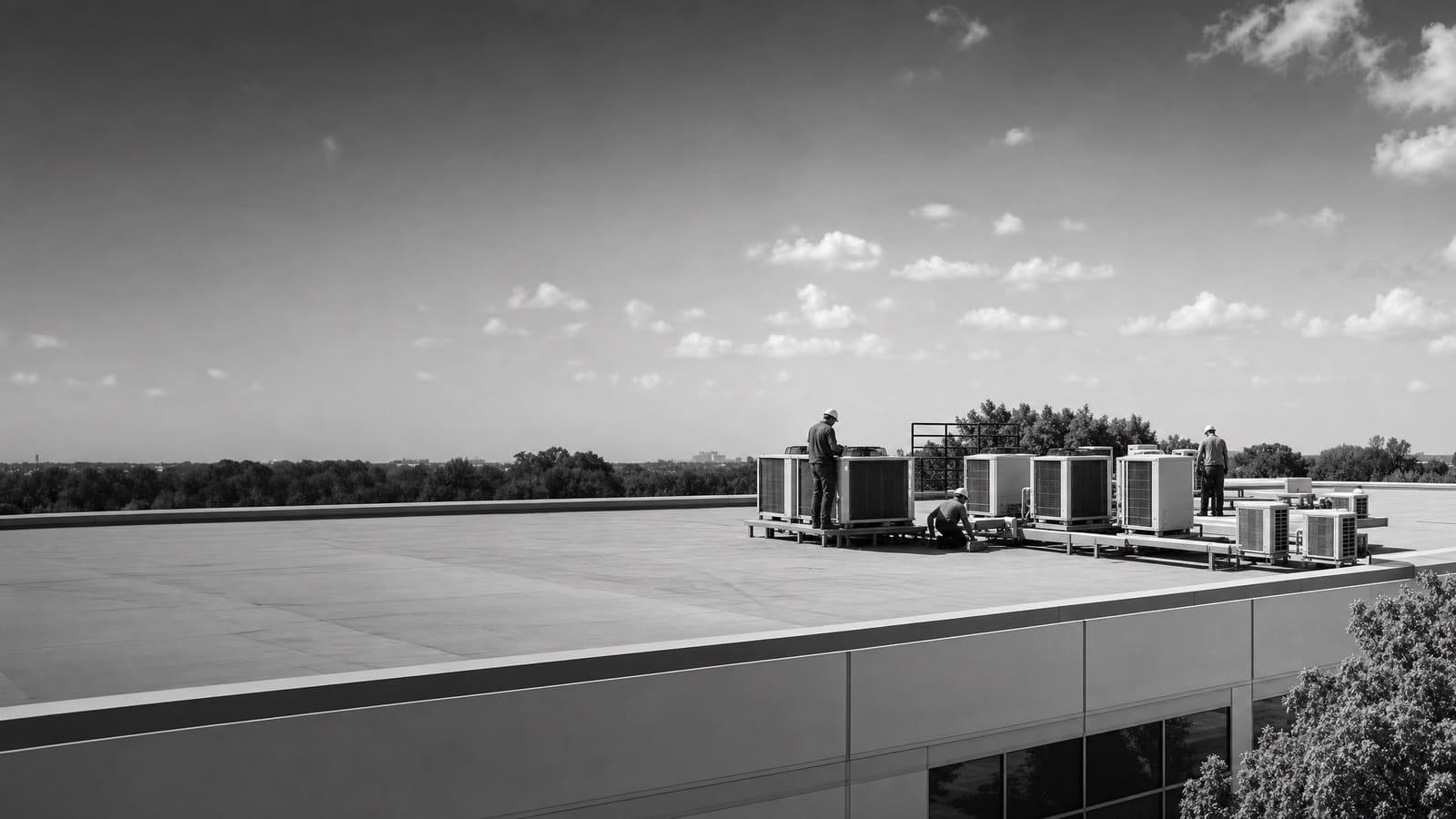
MECHANICAL
Commercial HVAC installation.
Rooftop units, splits, and VRF systems, sized right, craned in, and commissioned by licensed crews.
THE SHORT VERSION
What commercial HVAC installation involves
Commercial HVAC installation is more than swapping a box on a roof. The load gets confirmed against how the space is used today, and equipment is selected against real lead times. The crane day is planned around your parking lot, and the system is commissioned so it performs to spec instead of just turning on.
Most of the work is replacement under pressure: a rooftop unit dies in season and the building needs it handled without drama. The rest is planned: build-outs, additions, and end-of-life swaps done on your schedule instead of the equipment's.
One more 2026 reality: many replacements now weigh an electric option. If the old unit burned gas, commercial heat pump conversion shows when the switch pays and when like-for-like still wins.
AT A GLANCE
Commercial HVAC installation costs at a glance
1-2 days
ON-SITE SWAP
Typical crane-set and connection time for a single packaged rooftop unit.
2-8 wks
EQUIPMENT LEAD
Common lead times for commercial units; specials and large tonnage run longer.
15-25 yrs
SERVICE LIFE
What a maintained commercial unit usually gives before replacement beats repair.
10-40 tons
TYPICAL RANGE
The packaged-unit sizes most commercial roofs carry; larger plants get engineered.
THE PROCESS
The commercial HVAC installation process
01
Confirm the load
Sizing should come from how the space is used now, not the old nameplate. Twenty years changes occupancy, equipment, and envelope.
02
Select against lead times
Equipment options come with real availability and an installed price, so the decision is schedule-aware from day one.
03
Plan the crane day
Rigging plan, lot closures, curb adapters staged, weather call made early. Set and connected in a morning, not a week.
04
Commission the system
Startup, refrigerant charge, airflow, and controls verified against spec, then documented so the warranty stands.
Unit down in season?
Call with a photo of the nameplate and get replacement options with real lead times the same day.
IN PRACTICE
HVAC crane lift planning
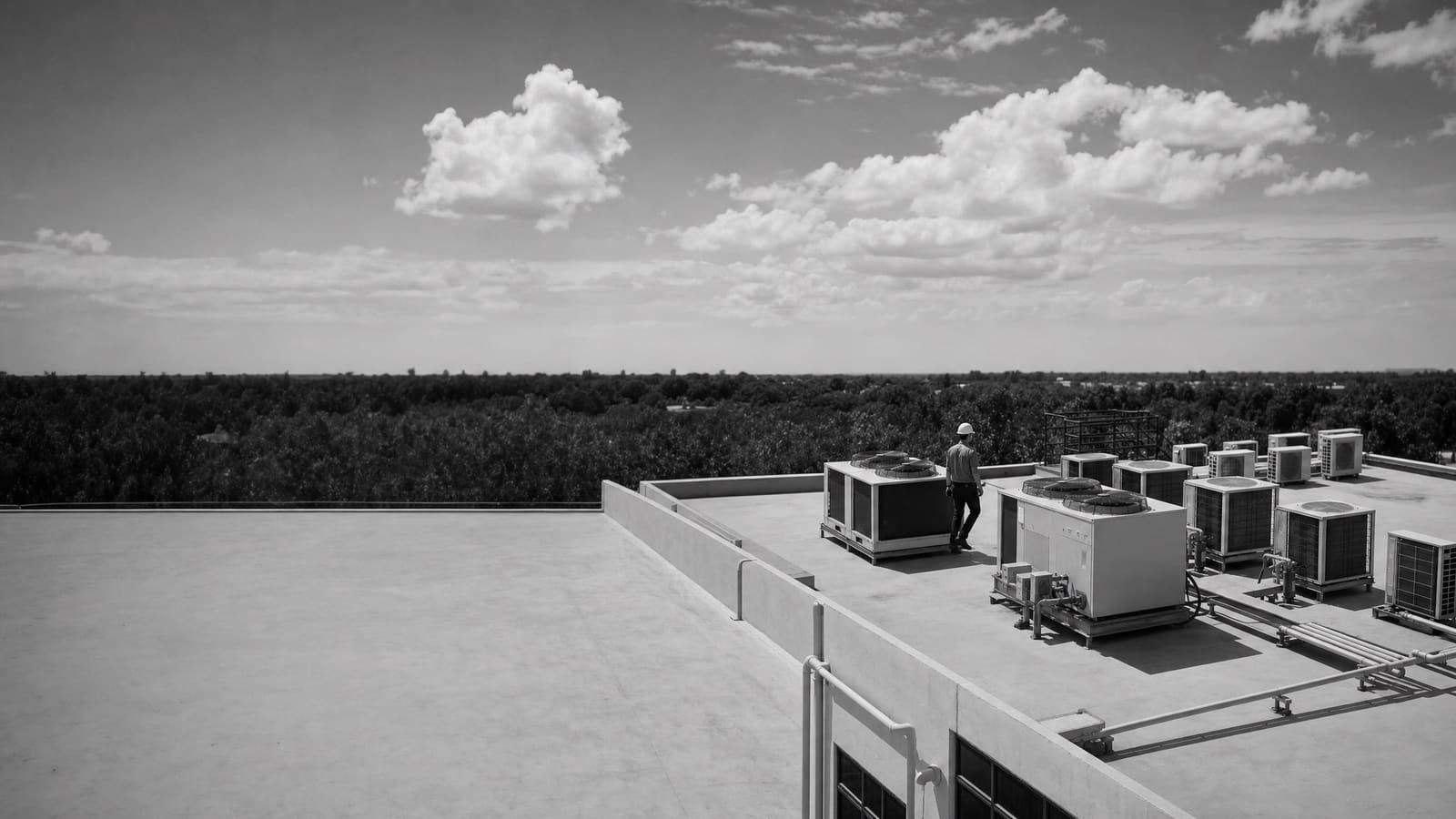
The visible part of a commercial HVAC installation is one morning. The crane arrives, stalls are coned, the old unit comes off, and the new one lands on a curb adapter measured weeks earlier.
Everything that makes that morning boring happens in advance: rigging plan, structural check on the curb, gas and electric confirmed, and a weather call the day before. Tenants notice the parking cones, not the outage.
SIDE BY SIDE
Like-for-like vs right-sized replacement
Like-for-like swap
- Fastest path back to cooling: same curb, same connections
- Right call when the space and its use haven't changed
- Lowest engineering cost; permits are usually simple
- Carries forward any sizing mistake the old unit had
Right-sized replacement
- Load calculated from today's occupancy and equipment
- Fixes the comfort complaints the old unit never could
- Usually trims utility spend for the life of the unit
- Worth the extra step when use changed or bills crept up
WHAT MOVES THE NUMBER
What drives commercial HVAC installation cost
- Tonnage and efficiency tier of the unit selected
- Curb adapter and any structural work the roof needs
- Crane access: lot layout, reach, and closure time
- Gas, electric, or refrigerant line changes on the way in
- Controls and building automation integration
- Code items triggered by replacement, like economizers
GOOD TO KNOW
Commercial HVAC facts worth knowing
- Most energy codes require economizers above a tonnage threshold. An old unit without one usually can't be replaced without adding it.
- The refrigerant transition is real: new equipment ships on newer low-GWP refrigerants, which affects parts and service planning for mixed fleets.
- Replacement permits are typically mechanical plus electrical; structural review appears when tonnage or footprint grows.
- Commissioning catches the issues that show up as comfort complaints in month two: charge, airflow, and controls settings, verified before handoff.
Ready to see the number for your roof?
Send the nameplate photo or the plans with your request and get an installed price with real lead times.
QUESTIONS
Straight answers.
How fast can a dead rooftop unit be replaced?
If a matching unit is in stock regionally, the swap itself is one to two days on site. The honest variable is equipment lead time. That is why availability belongs on the quote, next to the price.
Should you replace like-for-like or resize?
Confirm the load either way. If the space and its use haven't changed, like-for-like is often right. If occupancy or equipment changed, right-sizing fixes problems the old unit caused.
Who handles the crane and permits?
The installing contractor should own the rigging plan, lot coordination, permits, and inspections as part of the installed price. Make sure the quote says so before you sign.
How much does commercial HVAC installation cost?
A single packaged rooftop replacement commonly runs in the low tens of thousands installed. Tonnage, curb work, and crane access move the number, which is why quotes follow a real look at the roof.
Will a new unit need different refrigerant?
New commercial equipment ships on newer low-GWP refrigerants. It changes nothing about day-one operation, but it's worth planning for in service contracts and spare-parts strategy on mixed fleets.
GET STARTED
Price your installation.
Send the nameplate photo or the plans. You'll get equipment options with real lead times and a firm installed price, usually within a couple of days.