MECHANICAL · ELECTRIFICATION
Commercial heat pump conversion.
Replacing gas heating with heat pump systems when the old equipment retires. Sizing, electrical capacity, incentives, and honest math.
THE SHIFT
What a commercial heat pump conversion is
A commercial heat pump conversion swaps gas-fired heating for electric heat pump equipment - usually at replacement time, when the old rooftop unit or boiler is done anyway. Heat pumps have outsold gas heating in American homes for several years running, and commercial buildings are following the same road: heat pump rooftop units, VRF systems, and heat pump water heating.
The drivers are practical. Heat pumps deliver two to four units of heat per unit of electricity, where even a good gas furnace loses energy up the flue. Big-city carbon laws now fine buildings that keep burning gas. And the same unit cools in summer, so one machine replaces two. The conversion question shows up exactly once per equipment lifetime - which is why it belongs in every replacement conversation.
AT A GLANCE
The conversion math at a glance
2-4x
HEAT PER KWH
Heat pumps move heat instead of making it, multiplying every unit of electricity.
1
SYSTEM, BOTH SEASONS
The same equipment heats in winter and cools in summer.
REBATES
STATE MONEY LEADS
Utility and state rebates carry the stack since the federal 179D window closed mid-2026.
SIDE BY SIDE
Heat pump conversion vs like-for-like gas replacement
CONVERT TO HEAT PUMP
- Heating and cooling in one unit
- Two to four times the heating efficiency
- Satisfies city carbon laws as they tighten
- Rebates, deductions, and utility programs apply
- Needs an electrical capacity check first
REPLACE GAS WITH GAS
- Lower equipment price up front
- No electrical service questions
- Familiar maintenance and parts
- Carbon-law exposure grows every year
- Locks in gas costs for 15-20 more years
COLD WEATHER
Do heat pumps work in cold climates
The old objection was cold mornings, and it is out of date. Cold-climate heat pumps hold useful capacity well below freezing, and modern commercial units are rated and tested for it.
For buildings in hard-winter markets, the standard design answer is dual-fuel: the heat pump carries the season, and a gas or electric backup covers the coldest few days. You electrify most of the heating hours without betting the building on the worst night of the year.
THE PANEL
Do heat pumps need an electrical upgrade
Heating with electricity means asking the building's electrical service to do more. Some buildings have the headroom; some need a panel or service upgrade, and that changes the project math.
This is the first thing a real conversion quote establishes - before equipment gets named. It is also why conversions pair well with other electrical planning: EV charging, battery storage, and heat pumps all draw on the same capacity budget, and smart buildings plan them together.
IN PRACTICE
What drives heat pump conversion cost
- Equipment class: heat pump rooftop units, VRF, or split systems
- Electrical capacity: spare amps vs panel or service upgrades
- Cold-climate rating and whether dual-fuel backup is designed in
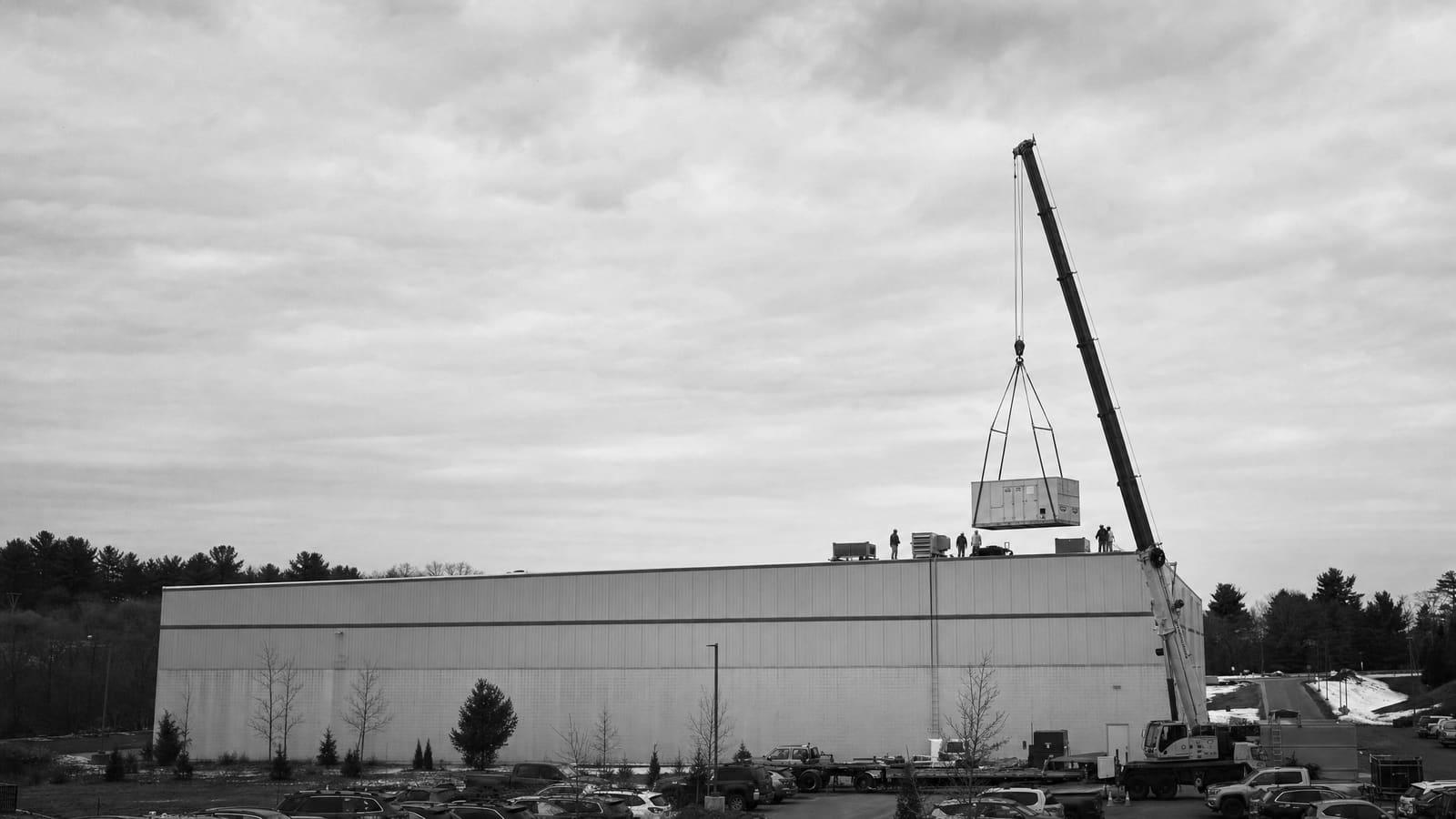
- Curb adapters and structural fit on rooftop swaps
- Controls integration so the new equipment runs as designed
- Incentives captured: utility rebates and state programs (federal 179D closed mid-2026)

How the refrigerant phase-out affects replacements
New cooling equipment now ships on next-generation A2L refrigerants under the federal phasedown, and old-generation units are working through their last inventory. Any replacement quote in 2026 sits inside that transition - one more reason the swap decision deserves a real comparison instead of a reflex reorder. See how the pieces fit in commercial HVAC installation and boiler and chiller replacement, or start with an energy audit to size the opportunity.
State programs, page by page
Two states pay enough to earn their own guides: Massachusetts (Mass Save's $2,000-per-ton commercial rebates) and Maine (Efficiency Maine's per-unit incentives and $1M custom program). More land here as programs earn pages.
Old unit on its last season?
Request an estimate. We price the heat pump conversion and the like-for-like swap side by side, with incentives netted in - so the decision is math, not guesswork.
QUESTIONS
Straight answers.
Do heat pumps really work for commercial buildings in cold climates?
Yes. Cold-climate units hold useful capacity well below freezing, and dual-fuel designs keep a backup for the coldest days while the heat pump carries the rest of the season.
What does a commercial heat pump conversion cost?
More than a like-for-like gas swap up front - the premium varies with equipment class and electrical work. Utility and state rebates close much of the gap - the federal 179D deduction closed to new construction starts on June 30, 2026, but Section 179 expensing still lets businesses write off HVAC equipment on commercial buildings in year one, up to a multimillion-dollar cap - and operating savings do the rest. Confirm the tax treatment with your accountant; the rebates need no such asterisk.
When is the right time to convert?
At replacement. Converting working equipment rarely pays; converting when the old unit dies costs only the difference between options, and it's the moment carbon-law compliance is cheapest to buy.
Will the building's electrical service handle heat pumps?
Many buildings have the headroom; some need panel or service upgrades. The capacity check is the first step of any honest conversion quote.
Do carbon laws actually require this?
In a growing list of cities, buildings that keep burning gas face escalating fines - New York's Local Law 97 is the famous one. Elsewhere it's optional but the trend line is one direction.
GET STARTED
Ready to price the conversion?
Request an estimate. Heat pump and like-for-like options priced side by side for your building, incentives included.