MECHANICAL
Commercial boiler and chiller installation.
Plant work for buildings that run on water: engineered, rigged, piped, and commissioned.
THE SHORT VERSION
What commercial boiler and chiller installation involves
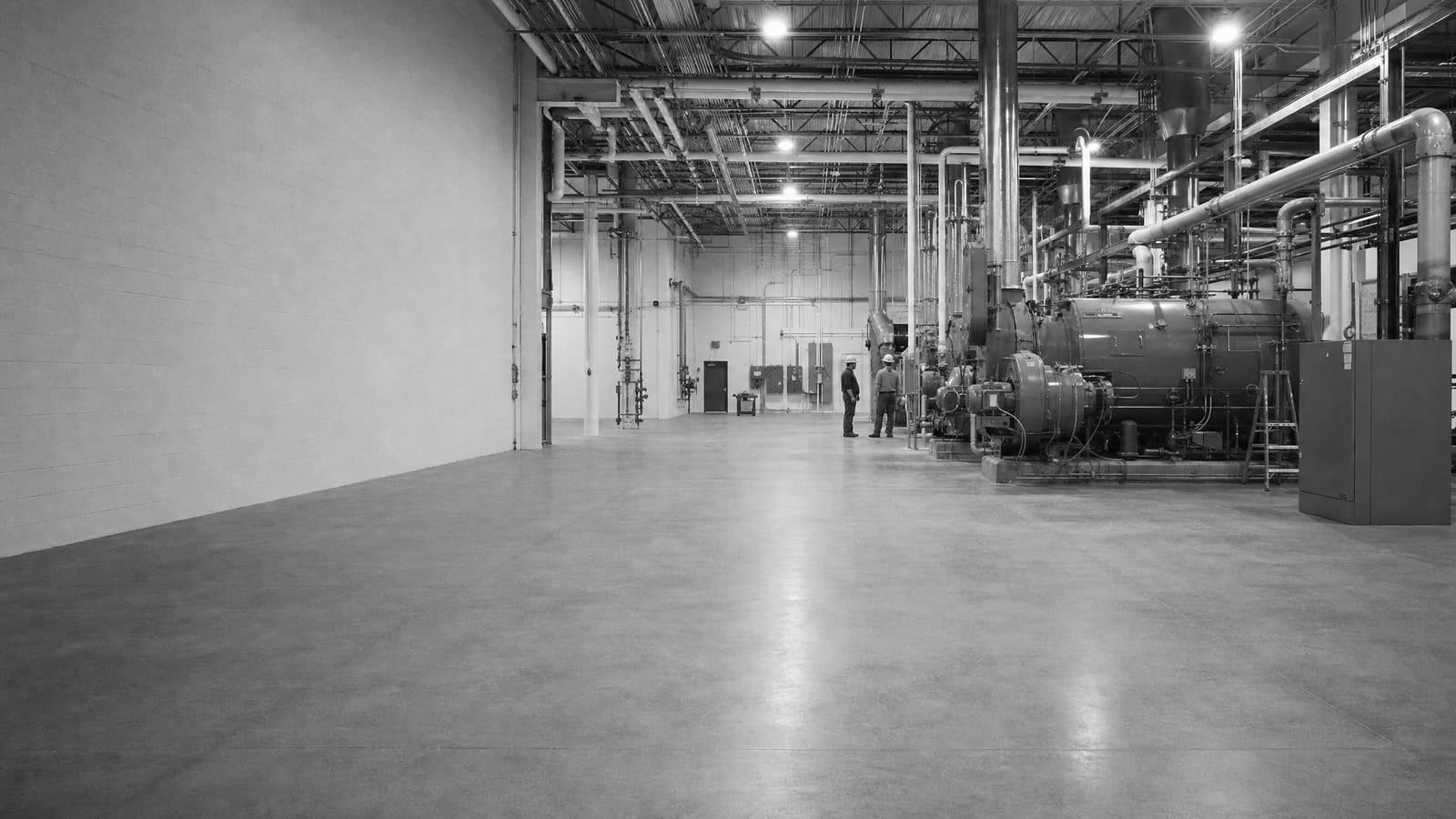
Boiler and chiller installation is plant-room surgery: rigging heavy equipment through spaces never designed for it, connecting new piping, integrating controls, and commissioning until the numbers match the spec. The classic plant pairs a gas-fired boiler heating water to around 180°F with a chiller cooling it to around 44°F, feeding the loops that condition the whole building.
Offices, schools, hotels, and condo towers run on this setup, which is why the installation is planned like the capital project it is: engineering first, equipment against real lead times, rigging plan, then a changeover window the building can survive.
Replacing a gas boiler is also the one cheap moment to consider going electric. commercial heat pump conversion covers when heat pump equipment can take the load instead.
WHAT MOVES THE NUMBER
Boiler and chiller installation cost factors
- Equipment size and type: gas, electric, or heat-pump-based plant
- Rigging path: how the old unit leaves and the new one enters
- Piping scope: reuse, modify, or replace the connections
- Controls integration with the building's existing systems
- Code items triggered at replacement: venting, efficiency, safety
- Season and changeover window the building can tolerate

THE DECISION WINDOW
Right-sizing a boiler or chiller replacement
A replacement is the one moment the plant can get smarter for twenty years. Loads change: buildings gain insulation, lighting sheds heat, occupancy shifts. Cloning the old nameplate clones its mistakes.
Staging multiple smaller units instead of one giant adds redundancy and lets the plant match partial loads efficiently. The engineering to decide costs little against equipment this size.
NEW OPTIONS
Heat pump alternatives to boilers
The classic gas-boiler-plus-chiller pairing now competes with heat pump plants that do both jobs electrically. Electric boilers run cleaner but cost more per unit of heat; heat pump chillers are gaining ground fast.
The right answer follows fuel prices, electrical capacity, and the building's goals. What matters is that the options get priced, because replacement day is when they're cheapest to choose.
Plant on its last seasons?
The best replacements are planned ones. Send the nameplates and get options before the failure picks the date.
QUESTIONS
Straight answers.
How long does a boiler or chiller replacement take?
Equipment lead time sets the calendar; the on-site work runs days to weeks depending on rigging and piping scope. Planned swaps schedule around the off-season, which is the whole trick.
Can new equipment use the existing piping?
Often, with modifications at the connections. The engineering review answers it early, because piping scope is a major cost line either way.
Gas boiler or heat pump plant?
It's a numbers question: fuel prices, electrical capacity, and efficiency targets. Both get priced at replacement, when choosing costs the least.
What happens to heating during the swap?
Changeover windows are planned for the off-season, and temporary equipment bridges the gap when a building can't wait. It's part of the plan, not an afterthought.
GET STARTED
Plan the plant swap.
Tell us what's in the plant room and its age. Replacement options come back with real lead times, a season ahead of the failure.