THE DIRECT ANSWER
What commercial HVAC replacement includes
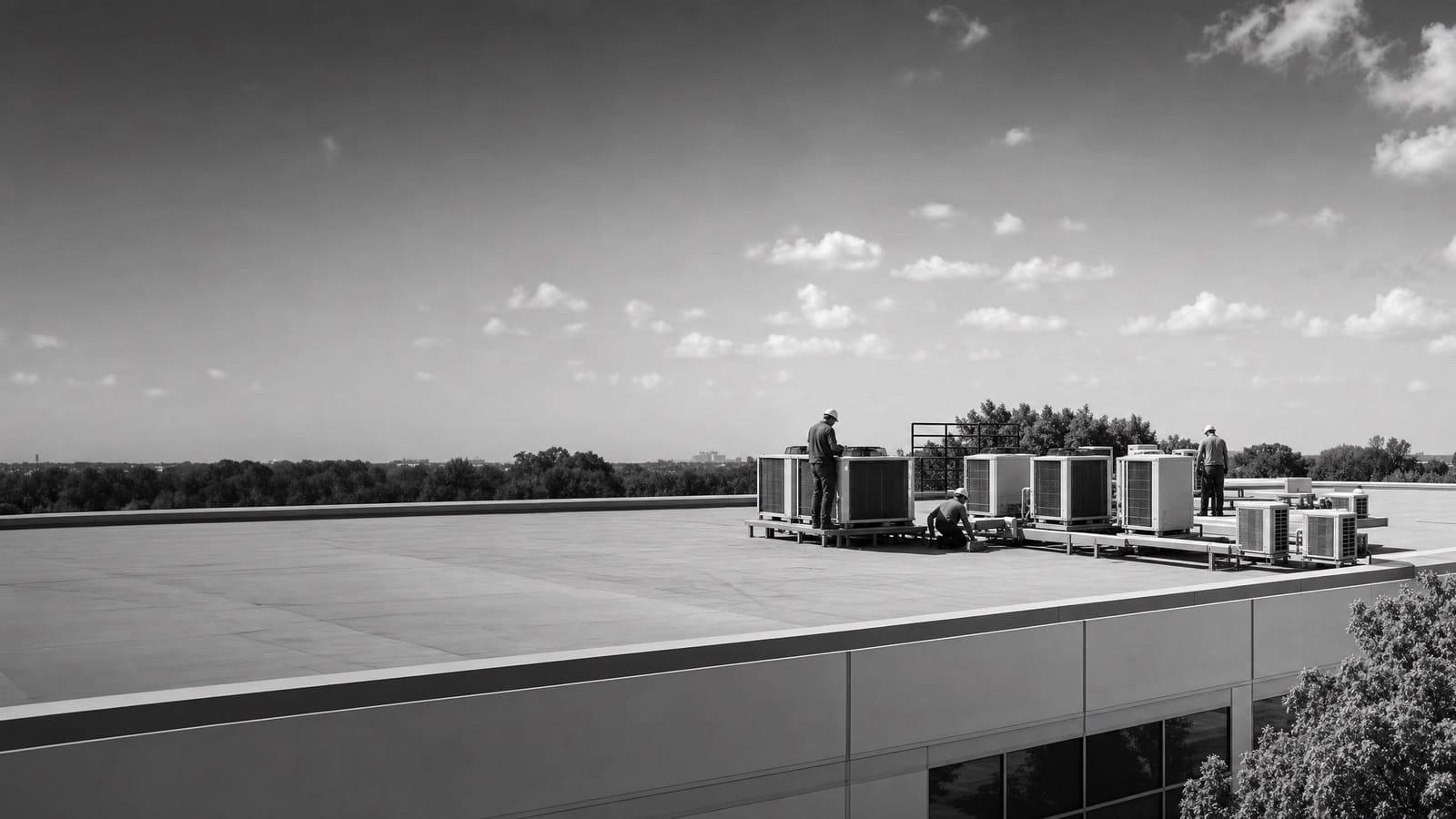
Commercial HVAC replacement includes load review, equipment selection, permits, removal, rigging, utility connections, controls, startup, testing, and refrigerant handling. Replacement becomes more useful than another repair when an older unit breaks often, cannot hold comfort, uses too much energy, or risks failing during critical operating hours. Rooftop units more than 15 years old deserve a planned replacement review.
A site review must verify load, curb dimensions, roof condition, electrical capacity, gas service, ventilation, controls, crane access, and equipment availability.
THREE OPERATING CHOICES
Choose the project path before choosing the model
The best replacement path depends on why the project exists. A failed unit may call for a fast, compatible swap. A building with uneven temperatures, changed occupancy, or new process loads needs a fresh load review. An owner with electrification goals may want a heat pump rooftop unit instead of another gas-heating package.
Do not treat the old nameplate as proof of the correct size. The old unit may have been oversized, undersized, or selected for a use that no longer exists. Compare choices using installed scope, expected operation, electrical needs, service support, and delivery date. DOE guidance also points to climate, utility rates, emissions goals, physical constraints, gas lines, contractor knowledge, and incentives as heat-pump decision factors. Any incentive should be confirmed when the quote is prepared because programs and deadlines can change.
BUDGET STRUCTURE
What moves an installed HVAC price
A useful budget separates the equipment from the work needed to make it fit, run, and pass inspection. Ask for allowances and exclusions where conditions are still unknown.
EQUIPMENT CHOICES
Compare systems by how the building operates
Packaged rooftop units combine cooling, heating, ventilation, and controls in one roof-mounted cabinet. They are common in commercial buildings and can simplify replacement when the existing curb, ducts, utilities, and controls are compatible. A high-efficiency rooftop unit may lower energy use, but the result depends on sizing, schedules, ventilation, controls, maintenance, and the unit being installed and commissioned correctly.
A heat pump rooftop unit uses reverse-cycle heating as well as cooling. DOE guidance says heat pump RTUs are well suited to mild-to-moderate winter heating and can serve much of the South and West. That does not make every building an automatic fit. The comparison should model electricity and gas use, confirm available electrical capacity, and identify any resistance heat or dual-fuel strategy. Physical space, gas removal, equipment availability, and service knowledge also matter.
Split systems and more complex central plants may fit buildings with indoor air handlers, separate zones, specialized loads, or limited rooftop options. These projects need more design coordination than a packaged swap. The buyer should first define zones, ventilation, temperature needs, operating hours, and redundancy. Equipment should follow those needs, not lead them.
PROJECT COMPLEXITY
A simple swap and a redesign are different jobs
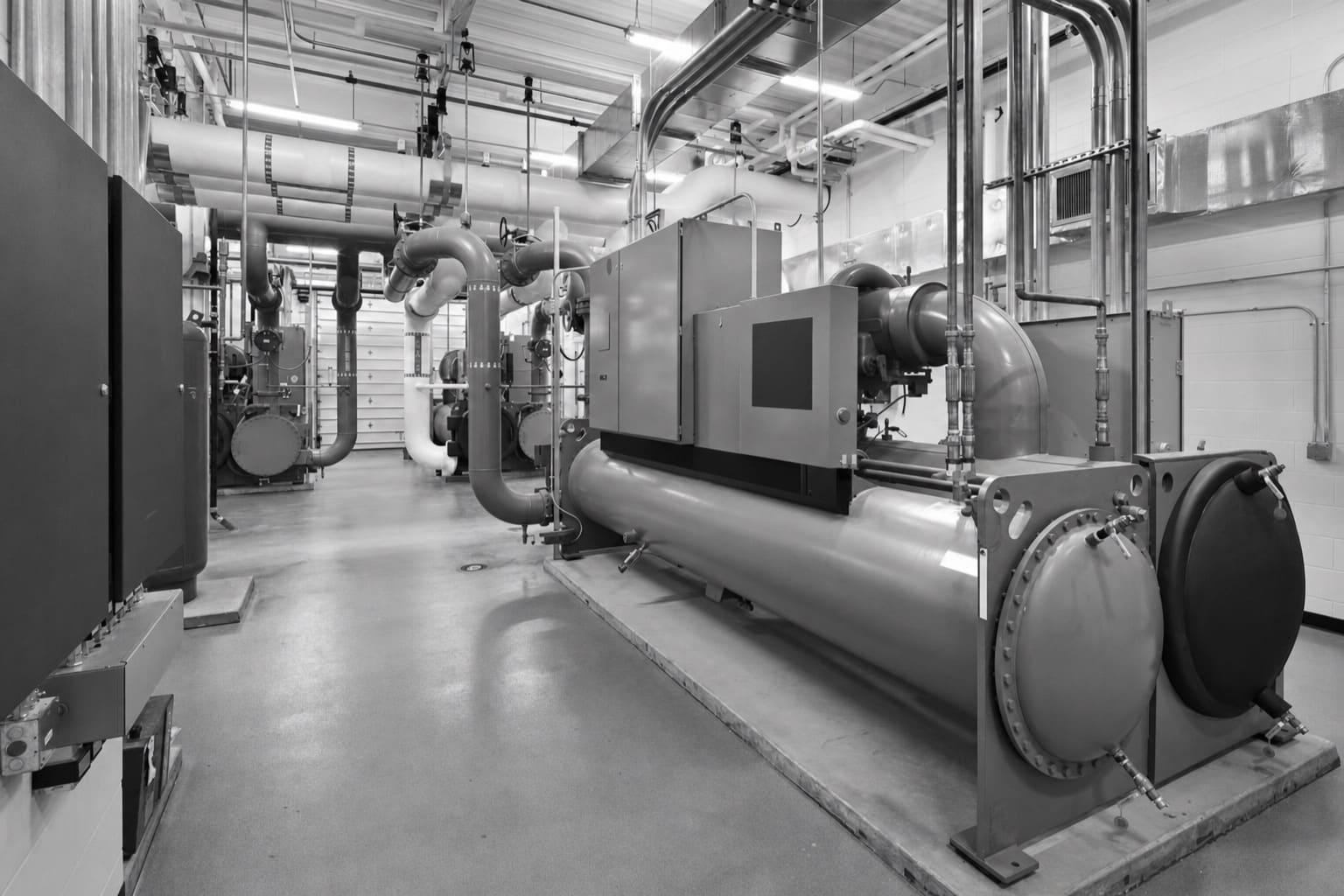
Both projects can end with a new rooftop unit, but they carry different design work, schedule risk, and unknown conditions. The proposal should clearly name which project is being priced.
LOWER COMPLEXITY
Compatible rooftop replacement
The load remains suitable, and the new unit works with the existing curb, ducts, voltage, gas, controls, and roof structure. The main work is procurement, rigging, connections, startup, and inspection.
HIGHER COMPLEXITY
Replacement with system changes
Capacity, fuel, voltage, weight, ventilation, zoning, controls, or ductwork changes. The job may need engineering, structural review, utility work, longer shutdowns, and phased commissioning.
SITE REVIEW
Measure the conditions that can change the quote
Start with the equipment nameplate, age, repair history, utility information, operating schedule, and a list of comfort complaints. Then inspect the unit, curb, roof, duct connections, drains, electrical disconnect, feeders, gas piping, outside-air path, thermostats, sensors, and automation points. Roof access and crane reach should be checked before the lift is priced.
The load review should reflect current use. Count occupied hours and note heat from people, lighting, cooking, computers, production equipment, open doors, and outside air. Ask whether future tenant work or process changes could alter the load again. A right-sized unit can run longer, steadier cycles and control comfort better than an oversized unit, while an undersized choice can struggle during peak conditions.
Also document the shutdown plan. Identify which areas lose cooling, heating, or ventilation and whether temporary service is needed. Plan how occupants, deliveries, parking, security, and roof work will be managed. If several units are near the same age, review them as a group. Planned phases can reduce emergency replacements and help standardize controls, filters, service parts, and staff training.
Bring four things to the first review
Provide nameplate photos, recent service records, operating hours, and known comfort problems. Add roof plans, controls information, or utility bills when available.
OWNERSHIP VIEW
Plan for uptime and lifetime operation
The purchase price is only one part of the decision. Compare expected energy use, maintenance access, filter and belt needs, controls support, warranty terms, refrigerant service, and the cost of a future outage. DOE has reported that older commercial rooftop units can waste substantial energy, while proactive replacement can be a stronger business choice than waiting for failure.
Refrigerant also belongs in the ownership plan. EPA rules govern refrigerant handling and recycling for stationary air-conditioning and heat-pump equipment. The proposal should identify the new refrigerant, recovery of material from the old unit, technician responsibilities, and closeout records. For a mixed fleet, ask how the new equipment changes technician training, tools, stored parts, and service contracts.
UPTIME
Replace before failure
Planned work allows time to compare equipment, arrange rigging, coordinate shutdowns, and avoid making the entire decision during a hot-weather breakdown.
LIFETIME COST
Buy the operating result
Compare efficiency, controls, maintenance, warranty, utility impact, and service support alongside the installed price and delivery date.
PHASING AND PROCUREMENT
Turn equipment availability into a workable schedule
A commercial HVAC schedule starts with approved equipment and confirmed availability. The proposal should state whether the unit is in stock, allocated, or subject to factory production. It should also identify what happens if the quoted model becomes unavailable. Do not accept an open substitution clause. Any alternate should preserve capacity, efficiency, heat type, voltage, ventilation, controls, dimensions, weight, warranty, and service access unless the owner approves a documented change.
Before ordering, confirm field measurements and submittals. Curb adapters, electrical gear, controls, roof materials, gas components, and rigging may follow different delivery schedules. Ordering the main unit without coordinating these items can leave equipment waiting while the building remains exposed to another failure.
For several units, phase the work by operational risk rather than age alone. Start with units that break often, serve critical areas, lack backup, or create repeated comfort complaints. Coordinate lifts to reduce mobilization and site disruption, but do not create too much simultaneous outage. Keep a clear weather plan and a recovery plan for unexpected curb, duct, electrical, or roof conditions. Final payment should follow startup records, training, warranties, permits, inspection closeout, and delivery of the owner documents.
QUOTE CHECKLIST
Five items every comparable quote should show
Give each bidder the same operating facts and ask for the same breakdown. A low total is hard to trust when equipment, access work, controls, or closeout duties are missing.
01
Exact equipment selection
Show model, capacity, efficiency, heating type, voltage, refrigerant, ventilation features, accessories, warranty, and stated availability.
02
Complete installed scope
List removal, recovery, disposal, curb work, ducts, drains, power, gas, controls, roof protection, startup, and testing.
03
Access and shutdown plan
Define crane work, closures, working hours, affected areas, expected outage, temporary service, weather decisions, and site restoration.
04
Permits and responsibilities
Name who prepares documents, secures permits, schedules inspections, handles corrections, and provides final approvals.
05
Assumptions and closeout
State allowances, exclusions, change-order rates, payment terms, commissioning records, training, warranty registration, manuals, and final schedule.
Get a defensible number
Price the equipment and the building together.
Send the address, operating target, and target opening date. Flux will identify what must be verified before the project can be priced.
Get a free estimateQuestions
Straight answers.
When should a commercial rooftop unit be replaced instead of repaired?
Review replacement when an older unit needs frequent repairs, cannot hold temperature, has declining efficiency, uses a hard-to-support configuration, or creates serious outage risk. DOE guidance notes that rooftop units over 15 years old can waste substantial energy and that proactive replacement may be smarter than waiting for failure. A single repair may still make sense when the unit is otherwise sound and the fix restores reliable operation.
Should the new HVAC unit match the old unit's capacity?
Not automatically. Use the old nameplate as a starting point, then check present occupancy, schedules, ventilation, internal heat, envelope conditions, and comfort history. Like-for-like capacity can be reasonable when the building use and performance remain stable. A fresh load review is more important when the space has changed or the old system never performed well.
Is a heat pump rooftop unit a good choice in Whittier?
It can be. DOE guidance says current heat pump rooftop units can address most or all winter heating demand in much of the South and West. The project still needs a site-specific review of electrical capacity, electricity and gas costs, heating needs, resistance or dual-fuel backup, physical constraints, equipment availability, and emissions goals.
How long does commercial HVAC replacement take?
The field replacement may be short, but the full schedule includes assessment, design when needed, equipment approval, procurement, permits, accessory delivery, rigging, installation, inspection, and commissioning. Equipment availability and site changes often control the date. A responsible quote should separate estimated lead time from the planned shutdown duration.
What should happen during commissioning?
The installer should verify startup data, airflow, temperature change, refrigerant operation, heating, ventilation, drains, safety devices, economizer or outside-air functions, schedules, sensors, and controls communication. The owner should receive results, operating guidance, warranty information, and a list of any unresolved items.
Who should handle the old refrigerant?
Qualified technicians should recover and manage refrigerant in line with EPA Section 608 requirements. The contract should state who performs recovery, documents the work, disposes of the old equipment, and provides any required records. Refrigerant should never be treated as ordinary demolition debris.
How can buyers compare HVAC installation bids fairly?
Require the same equipment details, installed scope, access plan, shutdown assumptions, permits, controls, testing, warranty, schedule, exclusions, and closeout documents from every bidder. Separate alternates from the base price. If one bid is much lower, check whether curb work, electrical changes, crane service, controls, commissioning, or permit duties are missing.
Sources used for this guide
- [1]betterbuildingssolutioncenter.energy.gov — DOE Advanced Rooftop Unit Replacement Guidance
- [2]betterbuildingssolutioncenter.energy.gov — DOE Commercial Heat Pump Rooftop Unit Replacement Guidance
- [3]betterbuildingssolutioncenter.energy.gov — DOE High-Efficiency Commercial Rooftop Unit Toolkit
- [4]energy.gov — DOE Efficient Commercial Rooftop Air Conditioner Program
- [5]epa.gov — EPA Stationary HVAC Refrigerant Management
- [6]californiacity-ca.gov — HVAC Permits