DIRECT ANSWER
HVAC replacement in Houston.
A commercial HVAC replacement includes equipment selection, removal, setting, electrical and control connections, refrigerant work, drainage, startup, testing, and closeout. Replacement is often more useful than another repair when an aging unit fails often, cannot hold setpoints, or keeps adding maintenance risk. DOE guidance flags rooftop units over 15 years old for closer replacement review.
A site review must verify the actual load, unit condition, curb or pad, service capacity, ductwork, controls, access route, drainage, and required permits.
MAKE THE FIRST DECISION
Repair, replace in kind, or improve the system?
Start with the business problem, not a model number. A repair may be reasonable when the failure is isolated, parts are available, and the rest of the unit remains sound. Replacement becomes easier to justify when failures repeat, comfort slips, or the building depends on equipment near the end of its useful service life.
A like-for-like replacement can simplify design, but “same size” does not prove the old selection was right. Changes in tenants, hours, people, lighting, equipment, outside air, or space layout can change the load. An efficiency upgrade or heat-pump rooftop unit deserves a wider review because controls, electrical demand, heating strategy, and utility costs may change.
Ask each bidder to state which path the quote follows. Without that statement, one proposal may cover a basic swap while another includes system corrections, making the totals hard to compare.
BUILD THE BUDGET
What changes a commercial HVAC replacement price?
The supplied research does not support one universal installed price. Build the budget from the equipment and the work required to place it into reliable service.
COMPARE EQUIPMENT
Choose the unit around the building, not the label
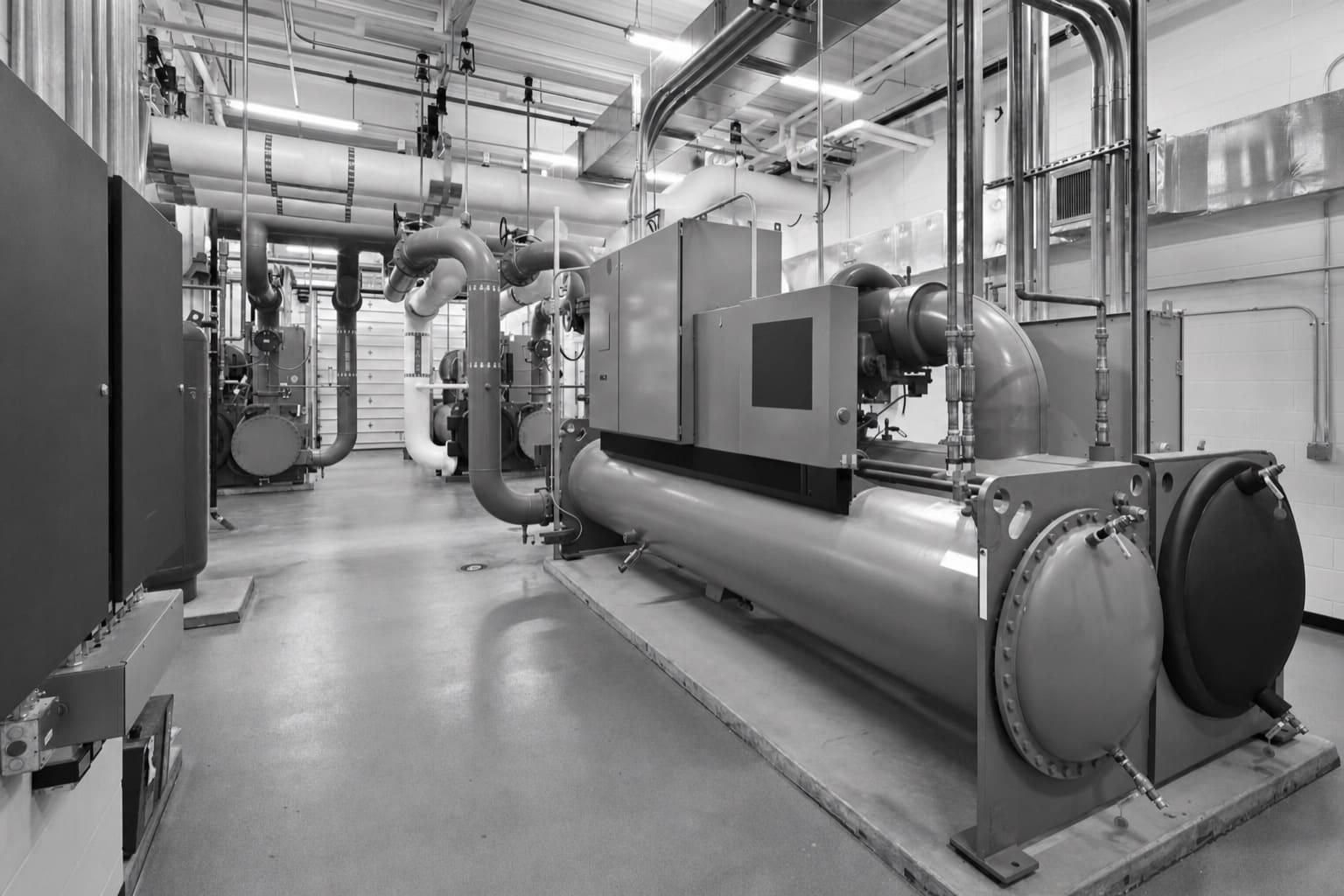
Packaged rooftop units combine major heating and cooling parts in one cabinet. They are common in commercial buildings and can make replacement direct when the roof, curb, ducts, utilities, and access all fit. A split system places indoor and outdoor sections apart. It may suit a building where roof loading, equipment location, or distribution makes a packaged unit less practical. Larger central systems need a broader plant and distribution review; related work may involve boiler and chiller installation.
Do not select capacity only from the old nameplate. Confirm the spaces served, operating hours, occupancy, internal heat, ventilation needs, envelope, and zoning problems. Oversized equipment can still deliver poor control, while undersized equipment may miss the load. The review should also separate equipment trouble from distribution trouble. Damaged, restricted, or poorly balanced ductwork can remain a problem after a new unit starts.
Efficiency matters, but so do fan control, compressor staging, economizer operation, sensors, and scheduling. Ask how the proposed unit performs at part load, how it connects to the building controls, and what the team will measure during startup. A high-efficiency cabinet cannot correct a weak sequence or an unverified airflow path by itself.
KNOW THE COMPLEXITY
A direct swap and a system change are different projects
The apparent unit count does not define the full job. Existing conditions determine whether replacement stays compact or grows into coordinated design and construction.
LOWER COMPLEXITY
Compatible replacement
The new unit fits the support, capacity, voltage, ducts, controls, drainage, and access plan with limited changes. Work can center on removal, setting, connections, startup, and closeout.
HIGHER COMPLEXITY
System or infrastructure change
Capacity, fuel, voltage, footprint, controls, ventilation, structure, or distribution changes. The quote should identify design responsibility, enabling work, shutdowns, inspections, and commissioning.
VERIFY THE SITE
What should happen before a commercial HVAC quote?
Begin with equipment records and a physical walk. Record model and serial information, capacity, heating type, refrigerant, voltage, controls, served zones, maintenance history, and known failures. Then inspect the support or curb, roof condition near the unit, duct connections, disconnect, feeders, gas or heating connections, condensate route, outside-air path, filters, and service clearances.
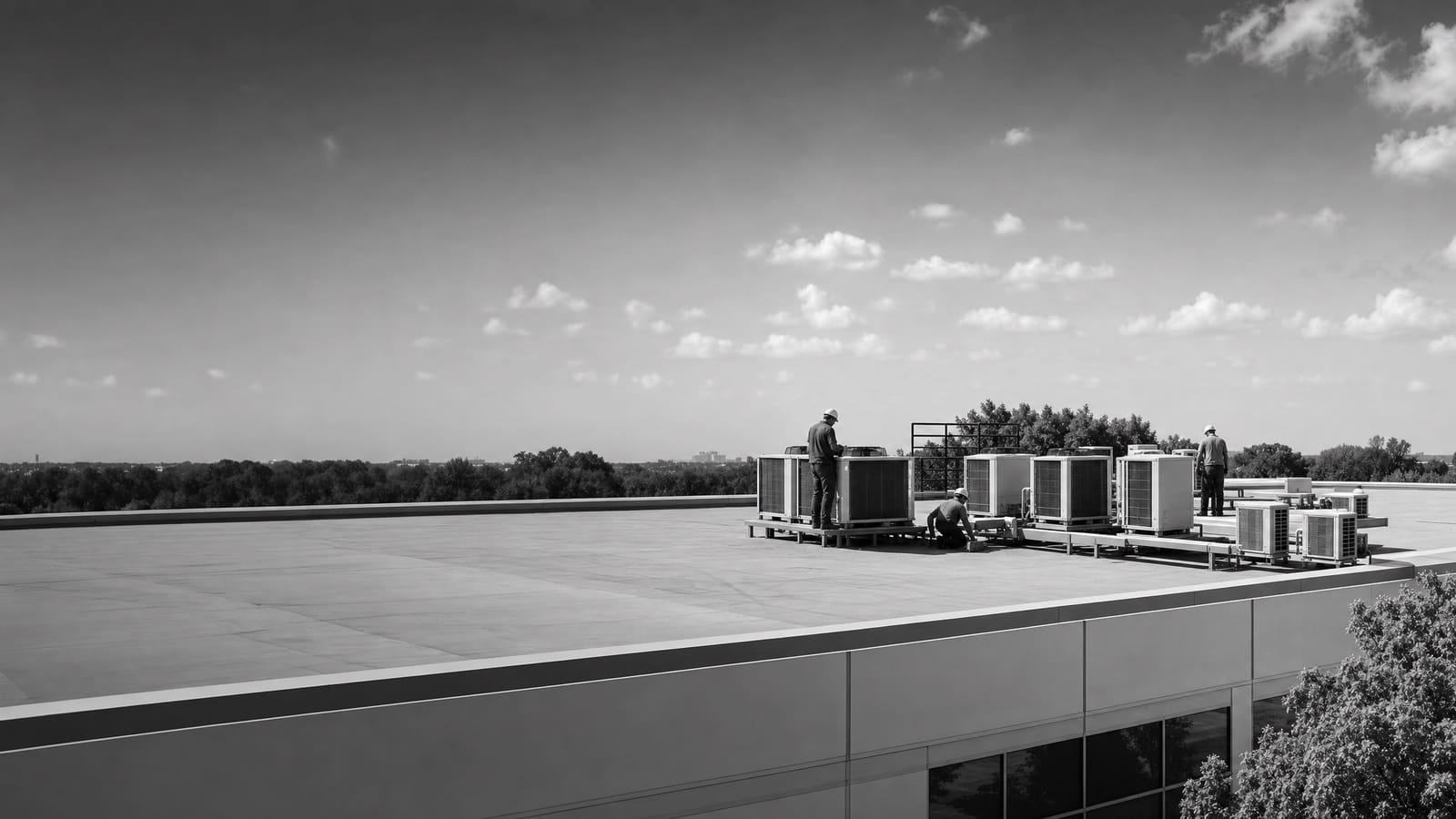
The team should trace how equipment will enter and leave the site. For rooftop work, that includes crane position, lifting path, roof protection, street or lot impacts, and weather limits. For indoor equipment, check doors, elevators, corridors, ceilings, and any demolition needed for access. Confirm who clears stored goods, protects occupied space, and restores finishes.
Finally, review operations. Mark the zones that can lose cooling, the acceptable shutdown period, and any areas that need temporary conditioning. Note alarm, access-control, fire-system, or production interfaces that require coordination. If several trades must work from one plan, a design-build mechanical approach can place design decisions, field checks, and installation scope under a clearer chain of responsibility.
Ask for assumptions in writing
The proposal should list what was inspected, what remains unverified, which existing parts will stay, and which concealed conditions can change the price or schedule.
HOUSTON PROJECT CONTROL
Put permits and inspections into the schedule
The City of Houston says its Permitting Center issues a majority of city permits and licenses, including commercial and building permits. Building Code Enforcement applies Houston construction codes to commercial work. Work that requires a permit is subject to inspection and must remain accessible and exposed until the building official approves it.
For an HVAC replacement, the practical lesson is simple: identify the permit path before ordering and scheduling the shutdown. The project plan should say who prepares and submits documents, who responds to review comments, which work must remain visible, and when inspections occur. Do not close ceilings, conceal connections, or release every trade until required inspections are complete. Current fees, forms, review steps, and applicable requirements should be verified for the exact address and scope.
Protect the turnover date
Place permit review, required inspections, correction time, startup, and owner training on the schedule instead of treating approval as an after-the-fact task.
LOOK PAST FIRST COST
Test heat-pump and high-efficiency options carefully
DOE guidance says modern heat-pump rooftop units can be suitable for much of the South, but suitability is still site-specific. Compare annual cooling and heating needs, electricity and gas costs, electrical capacity, physical space, gas infrastructure, equipment availability, and contractor knowledge. Texas can also face sharp winter demand, so the heating sequence and backup strategy deserve a clear design.
For any efficiency option, request an operating comparison based on the building rather than a broad savings promise. Include fan and compressor control, expected schedules, maintenance needs, replacement parts, and control integration. DOE has documented strong savings from high-efficiency rooftop equipment in past programs, but those results do not guarantee the same outcome at one Houston property. A heat-pump conversion should proceed only after load, utility, electrical, and heating checks.
OWNER VIEW
Measure total operating effect
Compare purchase, enabling work, energy, maintenance, expected service, controls, and downtime risk. Document assumptions so the business case can be checked later.
OPERATOR VIEW
Plan for real service conditions
Confirm filter access, alarms, sensor locations, replacement parts, training, heating sequence, and how technicians will isolate and service the unit safely.
PLAN THE INSTALLATION
Control downtime from purchase through turnover
Start procurement only after the basis of design is stable. Confirm the approved manufacturer, model, options, voltage, heat source, controls package, dimensions, weight, curb needs, and scheduled ship date. Require submittal review before release. If a substitution is offered, compare performance and every connection instead of accepting “equal” as a complete answer.
Build the field sequence backward from the required return-to-service time. Typical activities include permits, equipment delivery, staging, isolation, refrigerant recovery, removal, support or curb work, setting, duct and utility connections, controls, startup, testing, inspection, and cleanup. EPA refrigerant rules govern handling and recycling for stationary air-conditioning and heat-pump equipment, so the quote should assign recovery and documentation to qualified personnel.
For several units, phasing can keep more of the building usable and reduce one large failure point. It may also increase mobilization or temporary-work needs. Decide whether to replace the worst units first, group work by roof area, or align work with tenant and operating windows. Keep contingency time for delivery, weather, concealed damage, failed inspections, and startup corrections. Closeout should include approved submittals, startup records, control settings, warranties, maintenance information, training, and a final deficiency list.
COMPARE PROPOSALS
Five things every comparable quote should show
Normalize the proposals before choosing. Each bidder should price the same outcome and identify exclusions, allowances, assumptions, alternates, and owner responsibilities.
01
Equipment basis
List capacity, efficiency, heating type, voltage, refrigerant, options, controls, warranty, and lead-time assumptions.
02
Complete installed scope
Define removal, recovery, rigging, supports, ducts, electrical, controls, drainage, piping, insulation, startup, and cleanup.
03
Design and permit responsibility
Name who verifies loads, prepares documents, submits permits, answers comments, schedules inspections, and corrects rejected work.
04
Schedule and operating plan
Show procurement, shutdowns, phasing, temporary cooling, access limits, inspection points, testing, and return-to-service milestones.
05
Acceptance and closeout
State required airflow or performance checks, control tests, training, records, warranties, manuals, and final signoff.
Keep planning locally
Related mechanical pages in Houston
Get a defensible number
Price the equipment and the building together.
Send the address, operating target, and target opening date. Flux will identify what must be verified before the project can be priced.
Get a free estimateQuestions
Straight answers.
How much does commercial HVAC replacement cost in Houston?
There is no supported universal installed price for this page. Cost depends on equipment capacity and efficiency, heating type, availability, rigging, access, curb and duct changes, electrical work, controls, drainage, refrigerant work, permits, phasing, and temporary service. Compare quotes only after each contractor prices the same documented scope.
When should a business replace an HVAC unit instead of repairing it?
Replacement deserves serious review when an aging unit fails often, no longer holds setpoints, needs hard-to-source parts, or creates growing downtime and maintenance risk. DOE guidance notes that rooftop units over 15 years old can waste substantial energy compared with newer models. Age alone is not the decision; condition, repair history, load fit, and operating risk matter too.
Can a new rooftop unit be the same size as the old one?
It can be, but the old nameplate is not enough proof. Verify the present load, spaces served, hours, occupancy, internal equipment, outside air, envelope, and zoning. Also confirm the new footprint, weight, curb, ducts, voltage, heat source, controls, drainage, and service clearances.
Does commercial HVAC replacement in Houston require a permit?
Permit needs depend on the exact address and scope and should be confirmed with the current City of Houston process. The city states that permitted construction is subject to inspection and must remain accessible and exposed until approved. The quote should assign permit documents, submissions, inspections, responses, and corrections.
How can HVAC replacement be planned around business operations?
Map every served zone and agree on an acceptable shutdown window. Then sequence delivery, isolation, removal, setting, connections, startup, inspection, and testing around that window. Multiple units can be phased, and critical spaces may need temporary conditioning. State who has authority to release the system back to the building.
Should a Houston commercial building consider heat-pump rooftop units?
Yes, as an option to study rather than an automatic choice. DOE guidance says heat-pump rooftop units can suit much of the South. The decision still requires a review of cooling and heating loads, winter operation, electricity and gas costs, electrical capacity, physical constraints, existing gas lines, controls, equipment availability, and maintenance capability.
What should happen during HVAC startup and turnover?
The team should verify installation, airflow, temperatures, drainage, heating and cooling stages, sensors, alarms, schedules, safeties, and control communication. Turnover should include startup records, approved submittals, warranty details, operating information, maintenance needs, owner training, and a written list showing that remaining deficiencies were corrected.
Sources used for this guide
- [1]betterbuildingssolutioncenter.energy.gov — DOE Advanced Rooftop Unit Replacement Guidance
- [2]betterbuildingssolutioncenter.energy.gov — DOE Commercial Heat Pump Rooftop Unit Replacement Guidance
- [3]betterbuildingssolutioncenter.energy.gov — DOE High-Efficiency Commercial Rooftop Unit Toolkit
- [4]energy.gov — DOE Efficient Commercial Rooftop Air Conditioner Program
- [5]epa.gov — EPA Stationary HVAC Refrigerant Management
- [6]houstontx.gov — City of Houston eGovernment Center - Houston Business Portal