THE DIRECT ANSWER
What a commercial HVAC replacement should include
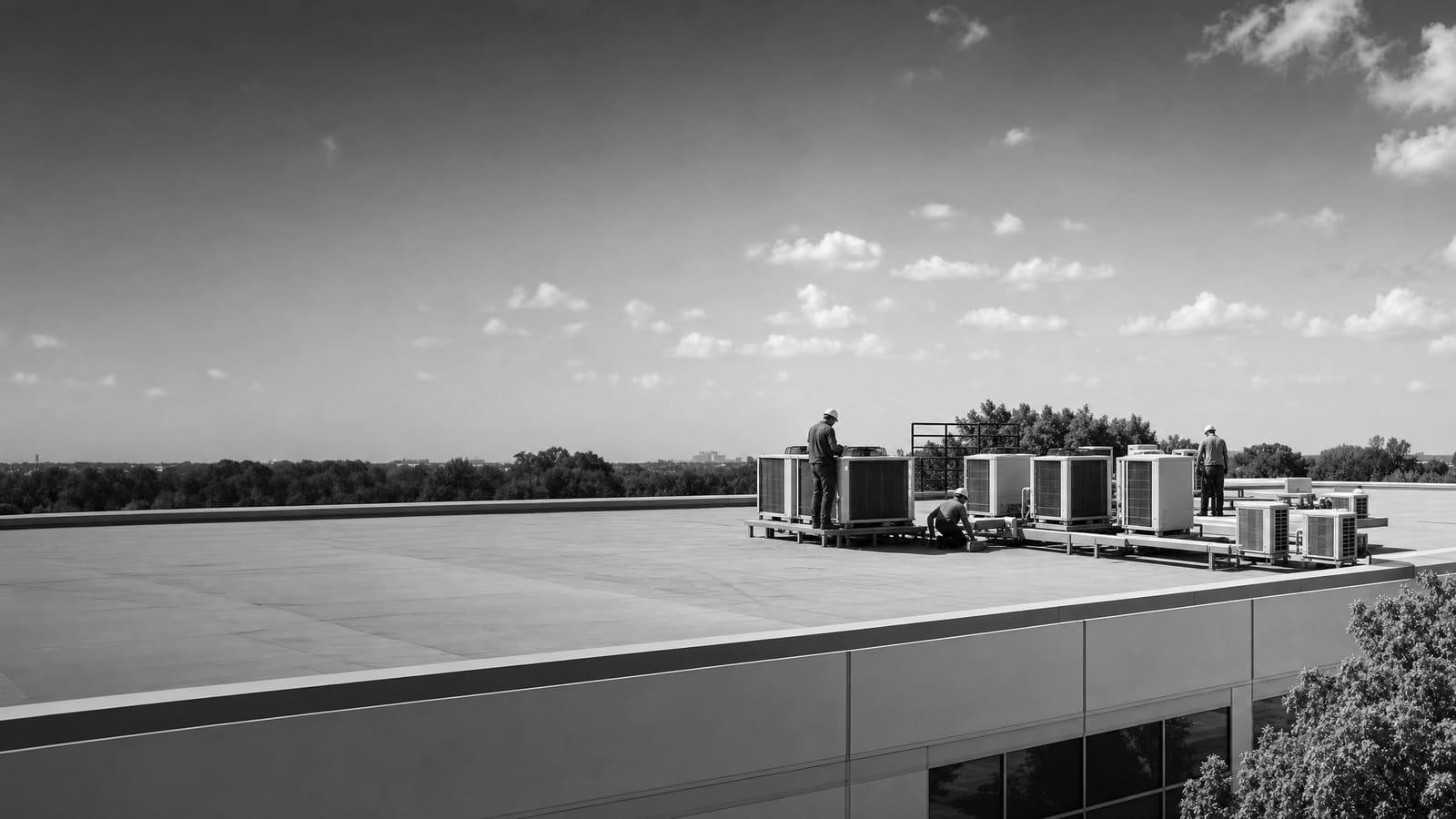
Commercial HVAC replacement includes load review, equipment selection, removal, rigging, connections, controls, startup, testing, and owner handoff. Replacement becomes more useful than another repair when an older unit needs frequent service, cannot hold the space conditions, or creates growing operating risk. DOE guidance notes that rooftop units over 15 years old can waste substantial energy compared with newer models.
A site review must verify the existing unit, present load, roof and curb conditions, utilities, controls, access, and required indoor conditions.
THREE OPERATING CHOICES
Choose the project path before choosing a model
Start with the business problem. A failed unit may call for a fast replacement, but speed should not erase basic checks. An aging unit that still runs gives you time to compare efficiency, heat sources, controls, and electrical needs. A changed building may need a fresh load review rather than a copy of the old nameplate.
DOE guidance supports planned replacement of inefficient or weak rooftop units instead of waiting for complete failure. Planned work gives the buyer more control over equipment availability, operating interruptions, and design choices. It also creates time to compare a standard rooftop unit with heat-pump options. The right path depends on the building load, utility costs, infrastructure, physical limits, equipment availability, and the owner's operating goals.
WHAT MOVES THE BUDGET
Price the installed project, not just the equipment
The supplied research does not support one universal installed price. A useful budget separates the equipment from the work needed to make it fit, run, and perform.
EQUIPMENT CHOICES
Compare rooftop systems by how they will operate
A packaged rooftop unit can combine cooling, heating, ventilation, and controls in one cabinet. That can make replacement direct when the existing curb, utilities, duct layout, and control plan remain suitable. A higher-efficiency unit may reduce energy use, but the buyer should compare expected operation instead of judging only by a product label. DOE has documented strong energy-saving potential from advanced commercial rooftop equipment, while actual results still depend on the building and how the unit is controlled.
A heat-pump rooftop unit provides cooling and reverse-cycle heating. DOE identifies several choices, including all-electric, dual-fuel, and cold-climate configurations. These are not interchangeable. Climate, heating load, electricity and gas prices, electrical capacity, physical space, gas connections, contractor knowledge, and equipment supply all affect the decision. Heat-pump efficiency also falls as outdoor temperature drops, so heating performance and backup heat must be reviewed for the actual application.
A like-for-like unit can be sensible when the space works well and speed matters. It can also repeat old sizing or control problems. Before copying the nameplate, ask whether hours, occupancy, process loads, ventilation, or space use have changed.
PROJECT COMPLEXITY
Know whether the job is a swap or a redesign
The equipment may look similar from the ground, but installation complexity changes when the new system affects the curb, structure, utilities, ductwork, controls, or heating strategy.
LOWER COMPLEXITY
Compatible replacement
The load remains suitable, connections align, the curb can be reused or adapted, electrical service is adequate, and controls need limited changes.
HIGHER COMPLEXITY
System-level change
Capacity changes, electrification, structural work, new distribution, automation integration, or phased occupied work requires added design and coordination.
SITE REVIEW
Build the scope from field conditions
Begin with the existing equipment record. Capture the model, capacity, voltage, heating type, refrigerant, curb dimensions, control connections, service history, and known comfort problems. Then look past the unit. Confirm which spaces it serves, when those spaces operate, what indoor conditions matter, and whether tenants or processes can tolerate an outage.
The review should also trace the installation path. Roof access, lifting reach, delivery staging, occupied areas, shutdown windows, and temporary protection can affect the work even when the replacement unit is simple. Inside the building, inspect the accessible duct connections, filters, drains, sensors, thermostats, and control points that influence performance.
Do not assume the old unit proves the correct capacity. An oversized unit can cycle poorly, while an undersized unit can fail to hold conditions. A load review should reflect present use. If a heat-pump option is being considered, verify electrical capacity, heating performance, backup strategy, utility-rate assumptions, and any gas work. Incentives should be checked separately at the time of purchase because availability, rules, and deadlines can change.
Bring evidence to the walkthrough
Provide nameplate photos, service records, utility history, operating hours, floor plans if available, control information, and a short list of unresolved comfort complaints.
OWNERSHIP VIEW
Protect operations now and over the equipment life
Installation day is only one part of the decision. The owner also inherits the new unit's service needs, controls, filters, refrigerant requirements, parts strategy, and energy use. EPA rules govern refrigerant handling and recycling for stationary air-conditioning and heat-pump equipment, so refrigerant recovery and proper service practices belong in the project scope.
Portfolio owners should also decide whether every site needs the same equipment standard. Standardization can simplify training, filters, controls, and spare parts. Site conditions may still justify different heat sources, capacities, or configurations. Record the reason for each exception so the next replacement does not begin from zero.
OCCUPIED BUILDING
Plan around interruption
Define shutdown limits, protected areas, tenant notice, delivery paths, work hours, and the response plan if startup takes longer.
LONG-TERM OWNER
Compare operating value
Review energy use, maintenance access, controls, warranty duties, parts support, and expected service needs alongside first cost.
PROCUREMENT AND PHASING
Turn one replacement into a controlled project
For one unit, procurement should still name the selected model, approved alternatives, expected availability, and the date through which pricing is valid. For several units, rank them by condition, service history, operating importance, and consequences of failure. This creates a replacement sequence instead of a string of emergencies.
Phasing can keep part of a building operating while work moves across the site. It can also spread capital spending and give the team a chance to learn from the first installation. The tradeoff is that repeated mobilization, changing equipment availability, and mixed controls may add cost or complexity. Set a common basis of design before requesting bids, then let each quote identify deviations.
Compare lifetime cost with stated assumptions. Include expected energy use, maintenance, filter and belt needs, controls support, warranty requirements, and any infrastructure work that serves future phases. Treat savings estimates as projections, not guarantees. DOE guidance recommends considering utility-bill effects, emissions goals, infrastructure, climate, equipment availability, and incentives when evaluating heat-pump rooftop units. Recheck time-sensitive programs before making the purchase decision.
COMPARABLE QUOTES
Five things every proposal should show
Give every bidder the same operating requirements and site information. Then compare scope, exclusions, assumptions, and performance—not just the bottom-line price.
01
The exact equipment
List capacity, efficiency, heating type, electrical data, controls, accessories, warranty, availability, and approved substitutions.
02
The complete installation scope
Show removal, refrigerant recovery, rigging, curb work, connections, drains, duct transitions, roof protection, and disposal.
03
Infrastructure and controls
Define electrical, gas, ventilation, sensors, thermostats, automation points, sequences, and work assigned to others.
04
Schedule and operating plan
State procurement timing, shutdowns, staging, access, phasing, weather limits, and occupied-space protections.
05
Testing and closeout
Require documented startup, airflow and control checks, training, manuals, warranty registration, and final equipment records.
Get a defensible number
Price the equipment and the building together.
Send the address, operating target, and target opening date. Flux will identify what must be verified before the project can be priced.
Get a free estimateQuestions
Straight answers.
When should a commercial rooftop unit be replaced instead of repaired?
Replacement deserves serious review when an older unit needs frequent repairs, fails to maintain required conditions, uses much more energy than newer options, has difficult parts support, or creates unacceptable failure risk. DOE guidance says rooftop units over 15 years old can waste substantial energy and notes that owners often wait until performance declines or failure occurs. Age alone does not settle the choice. Compare repair scope, recent service history, remaining equipment condition, business consequences of failure, and the value of correcting sizing or control problems.
Should the new HVAC unit match the old unit's capacity?
Not automatically. Matching capacity can shorten design work when the space use, envelope, ventilation, occupancy, internal loads, and operating hours are unchanged and the old system performed well. If any of those conditions changed, review the present load. The old nameplate shows what was installed, not what the building needs today. The selection should also account for heating performance, airflow, outside air, duct limits, and the way multiple units share the building.
Is a commercial heat-pump rooftop unit a good replacement choice?
It can be, but the choice needs a site-specific review. DOE identifies climate, heating demand, electricity and gas prices, emissions goals, electrical capacity, physical constraints, gas lines, equipment supply, contractor knowledge, and incentives as decision factors. All-electric, dual-fuel, and cold-climate units solve different problems. Ask for heating performance at relevant outdoor conditions, the backup-heat plan, electrical requirements, control sequence, and a utility-cost comparison with clear assumptions.
What work should be included beyond setting the new unit?
A complete scope can include equipment removal, compliant refrigerant recovery, lifting, curb or adapter work, duct transitions, electrical and fuel connections, drains, controls, sensors, ventilation setup, startup, testing, training, and closeout records. The quote should say what is included, excluded, or assigned to another trade. It should also identify roof protection, access limits, occupied-space precautions, disposal, and any temporary measures needed during the shutdown.
How can buyers compare commercial HVAC installation quotes?
First, give bidders the same basis: loads or sizing method, indoor requirements, operating hours, equipment preferences, control needs, shutdown limits, and known site conditions. Then compare the exact equipment, included labor, curb and structural assumptions, electrical work, controls, rigging, commissioning, schedule, warranty, exclusions, and substitutions. A lower price may cover less work. Ask bidders to separate allowances and identify conditions that could become change orders.
What commissioning should happen before the project is closed?
The team should verify that the installed equipment matches the approved selection and that startup requirements are complete. Testing should cover airflow, filters, refrigerant operation, heating stages, drains, safeties, sensors, thermostats, ventilation functions, and control sequences that apply to the project. The owner should receive startup records, manuals, warranty information, final settings, equipment data, and basic operating instruction. A unit that merely turns on has not necessarily been shown to perform as intended.
How should refrigerant be handled during replacement?
EPA Section 608 rules address handling and recycling refrigerants used in stationary air-conditioning and heat-pump equipment. The replacement scope should assign recovery, handling, and disposal responsibilities to properly qualified parties. The proposal should identify the new equipment's refrigerant and explain any service implications for the owner's equipment fleet. Mixed refrigerants can affect technician preparation, tools, parts planning, and service records, so the handoff documents should be clear.
How far ahead should a planned replacement begin?
Begin while the existing system can still support operations. A planned start allows time to document field conditions, review loads, compare standard and heat-pump options, verify infrastructure, obtain equipment, coordinate lifting, and schedule shutdowns. The supplied research does not establish one reliable lead time for every commercial unit. Availability varies by capacity, configuration, manufacturer, and market conditions, so the quote should state current availability and how substitutions will be approved.
Sources used for this guide
- [1]betterbuildingssolutioncenter.energy.gov — DOE Advanced Rooftop Unit Replacement Guidance
- [2]betterbuildingssolutioncenter.energy.gov — DOE Commercial Heat Pump Rooftop Unit Replacement Guidance
- [3]betterbuildingssolutioncenter.energy.gov — DOE High-Efficiency Commercial Rooftop Unit Toolkit
- [4]energy.gov — DOE Efficient Commercial Rooftop Air Conditioner Program
- [5]epa.gov — EPA Stationary HVAC Refrigerant Management