THE DIRECT ANSWER
Commercial HVAC replacement and installation in Warwick.
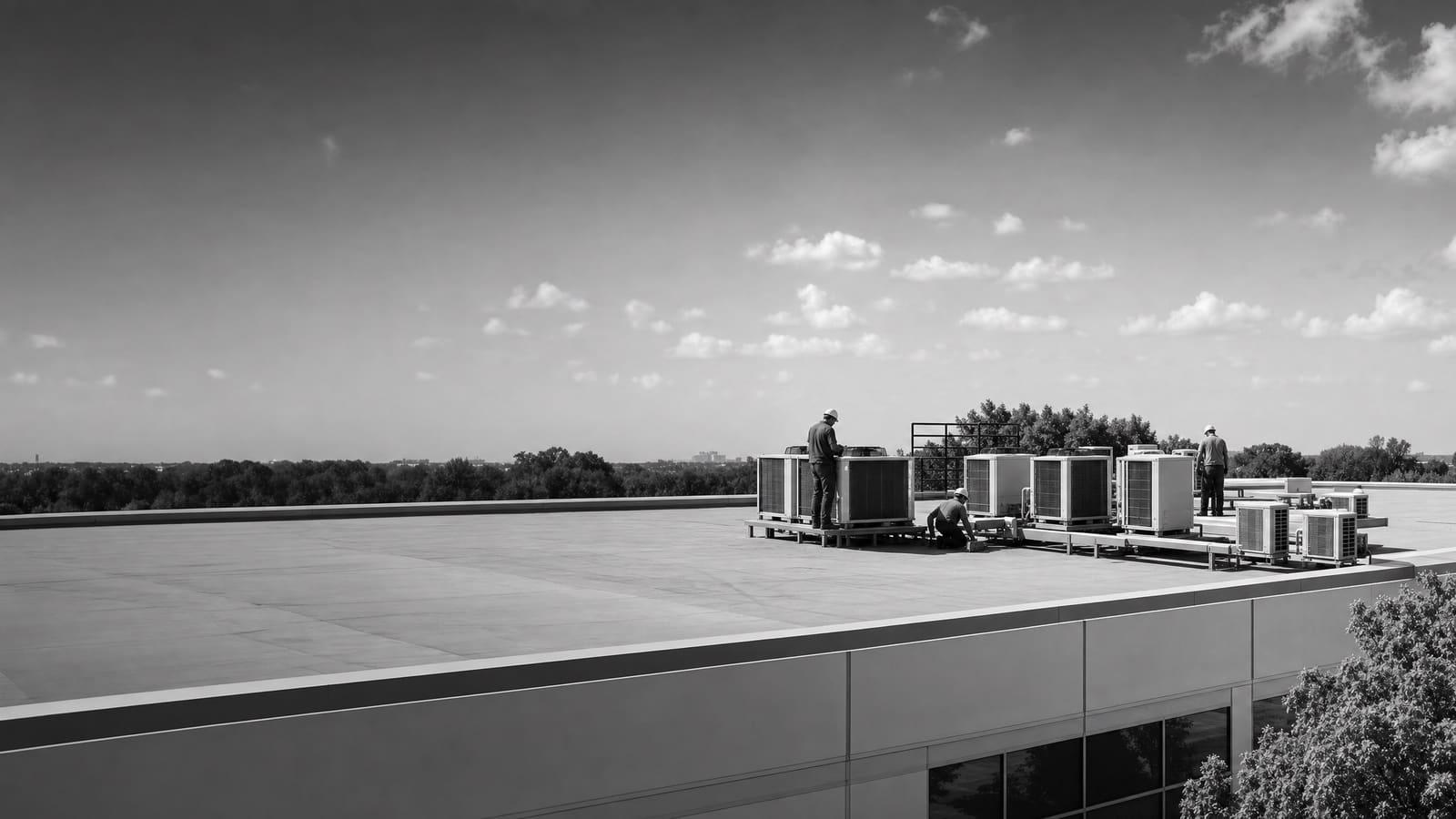
A complete commercial HVAC replacement covers load review, equipment selection, removal, rigging, connections, controls, startup, testing, and handoff. Replacement becomes more useful than another repair when an older unit cannot hold conditions, needs frequent service, or creates growing operating risk. DOE guidance notes that rooftop units over 15 years old may waste substantial energy compared with newer models.
A site review must verify the load, roof or equipment-room access, curb fit, electrical capacity, fuel connections, airflow, controls, and equipment availability.
THREE OPERATING CHOICES
Decide what the new system must improve
Start with the business problem, not a model number. A failed unit may call for a fast replacement, but speed should not hide a sizing error or missing scope. A planned project gives the owner more room to compare efficiency, heating type, controls, and phasing.
DOE guidance says proactive replacement can make business sense when rooftop equipment is inefficient or underperforming. Waiting for failure can shrink the available equipment list and force work into an inconvenient operating period. That does not mean every old unit needs immediate replacement. A sound decision compares condition, service frequency, comfort, energy use, and the cost of an unplanned outage.
The three choices below lead to different scopes. State the priority in the request for proposal so bidders solve the same problem.
BUDGET STRUCTURE
What moves the installed price
The supplied research does not support one universal installed price. Ask bidders to separate these scope lines so a low equipment number does not hide costly exclusions.
EQUIPMENT CHOICE
Compare systems by how the building operates
A packaged rooftop unit can combine cooling, heating, ventilation, and controls in one outdoor cabinet. Rooftop units condition nearly half of U.S. commercial floor area, so owners have many replacement choices. A like-for-like unit may simplify the curb, duct, fuel, and electrical work. It can also carry an old sizing mistake into the next equipment cycle.
A right-sized replacement starts with current use. Review occupancy, schedules, internal equipment, ventilation, envelope changes, and zones that miss setpoint. Larger is not automatically safer. Poor sizing can affect comfort, moisture control, cycling, and energy use. The quote should state the design basis and explain any change from the old nameplate.
Heating deserves its own comparison. Standard air-conditioning rooftop units may use a separate gas heat section. Heat-pump rooftop units provide reverse-cycle heating. DOE guidance says the choice among all-electric, dual-fuel, and cold-climate equipment depends on geography, heating loads, energy prices, emissions goals, electrical capacity, physical limits, gas infrastructure, availability, and contractor knowledge. A commercial heat pump conversion should therefore be modeled as a building decision, not treated as a simple product upgrade.
PROJECT COMPLEXITY
A box swap and a system change are different projects
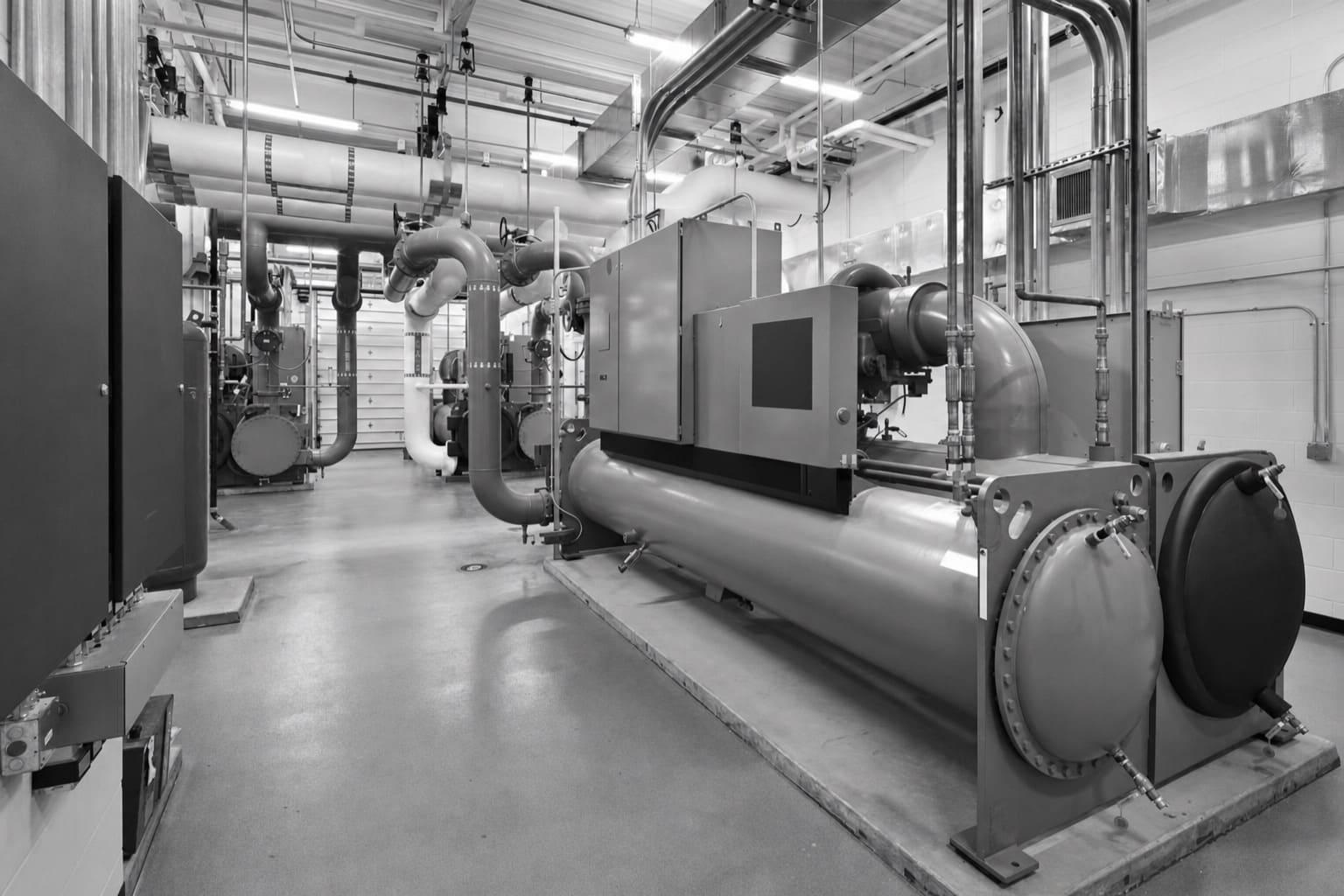
Both projects require safe removal, sound connections, startup, and documentation. Complexity rises when the new unit changes capacity, weight, footprint, fuel, power, airflow, ventilation, or control behavior.
LOWER COMPLEXITY
Compatible replacement
The new unit fits the existing arrangement, required capacity remains similar, utilities are adequate, and controls need limited changes. The bid should still verify curb fit, airflow, electrical data, rigging, and startup.
HIGHER COMPLEXITY
Redesign or conversion
Changed loads, electrification, added ventilation, new zoning, automation integration, or structural work requires more design. Define engineering, trade coordination, testing, and responsibility before comparing totals.
OWNER PRIORITIES
Protect operations now and serviceability later
Installation affects more than first cost. The project should protect people, occupied areas, critical processes, and revenue while equipment is offline. It should also leave the facility team with a system that can be maintained without guesswork.
Discuss temporary conditioning, outage limits, noisy work, access restrictions, and weather delays before award. Then look beyond turnover. Filters, belts, coils, panels, sensors, and control devices need safe access. Mixed equipment fleets may also require different refrigerants, tools, parts, and technician training. EPA rules govern refrigerant handling and recycling for stationary air-conditioning and heat-pump equipment, so recovery and disposal responsibilities should be explicit.
DURING THE WORK
Business continuity
Define outage windows, temporary measures, occupied-area protection, staging, communication, and restart responsibility. A short interruption still needs an owner-approved plan.
AFTER TURNOVER
Service readiness
Require accessible components, filter details, control backups, refrigerant data, startup reports, warranties, training, and a clear preventive-maintenance schedule.
PROCUREMENT AND PHASING
Compare lifetime value without losing schedule control
Send every bidder the same equipment data, operating goals, access information, and required deliverables. Ask for a base scope plus clearly priced alternatives. Useful alternates may include a higher-efficiency unit, heat-pump configuration, controls upgrade, added filtration, or phased replacement of similar units. Keep each alternate technically clear so the owner can compare value instead of marketing labels.
For a multi-unit property, condition and consequence can guide phasing. Replace the units with frequent failures, poor performance, or high outage impact first. Grouping compatible units may simplify design, mobilization, controls work, and staff training. Keeping unlike equipment in service can preserve capital, but it can also create more filters, parts, refrigerants, and control interfaces to manage.
Judge efficiency claims against actual operation. DOE reported that older commercial rooftop equipment could waste significant energy and that high-efficiency models achieved verified savings in real settings. Those historical results show the opportunity, not a guaranteed result for one Warwick building. Request an estimate based on present loads, schedules, utility assumptions, and proposed control sequences. Document every assumption, then compare first cost, expected use, maintenance, outage exposure, and replacement timing together.
COMPARABLE BIDS
Five items every commercial HVAC quote should show
A useful quote makes equipment, field work, risk, and handoff easy to compare. Ask each bidder to answer these five points in writing.
01
Exact equipment
List capacity, efficiency, heating type, refrigerant, options, controls, warranty, substitutions, and expected availability.
02
Complete installed scope
Include removal, recovery, rigging, curb or pad work, ducts, drains, power, fuel, insulation, controls, startup, and cleanup.
03
Design and assumptions
State load basis, ventilation needs, existing conditions, exclusions, allowances, engineering responsibility, and change-order rates.
04
Schedule and continuity
Show procurement milestones, outage duration, phasing, temporary measures, site protection, weather planning, and communication.
05
Testing and closeout
Provide airflow and control checks, startup records, training, manuals, warranty registration, refrigerant records, and final acceptance.
Get a defensible number
Price the equipment and the building together.
Send the address, operating target, and target opening date. Flux will identify what must be verified before the project can be priced.
Get a free estimateQuestions
Straight answers.
When should a commercial HVAC unit be replaced instead of repaired?
Replacement deserves serious review when an older unit no longer holds conditions, fails often, uses substantial energy, has difficult parts support, or creates unacceptable outage risk. DOE notes that rooftop units over 15 years old may waste substantial energy compared with newer models. Age alone does not settle the choice. Compare repair history, current performance, expected work, operating impact, and the value of planning the replacement before failure.
Should the new unit match the old unit’s capacity?
Not without checking the present load. A nameplate shows what was installed, not what the building needs today. Occupancy, schedules, internal equipment, ventilation, envelope work, and space use may have changed. Ask the designer or contractor to document the sizing basis and explain any difference. A compatible replacement can simplify construction, but it should not repeat an old comfort or sizing problem.
What is included in a commercial HVAC installation?
A full scope normally identifies the equipment and covers removal, refrigerant recovery, rigging, supports or curb work, duct connections, drainage, electrical work, fuel connections where used, controls, startup, testing, cleanup, training, warranties, and closeout records. The exact scope depends on the building. The quote should identify exclusions and allowances instead of leaving the owner to infer them.
Is a heat-pump rooftop unit a good replacement option?
It may be, but the answer depends on heating loads, energy prices, emissions goals, electrical capacity, physical space, gas infrastructure, equipment availability, and service support. Compare all-electric, dual-fuel, and cold-climate configurations where relevant. Model operating assumptions and price any electrical or control changes. Do not compare the equipment price alone.
Why does commissioning matter on replacement equipment?
A new unit can start without performing as intended. Commissioning checks items such as airflow, temperatures, sensors, dampers, operating modes, schedules, alarms, and control sequences. The exact tests should match the system. Require written startup and test records, correction of noted problems, owner training, and acceptance criteria before final payment.
How should refrigerant be handled when the old unit is removed?
EPA rules under Clean Air Act Section 608 address refrigerant handling and recycling for stationary air-conditioning and heat-pump equipment. The project scope should assign recovery, documentation, transport, and disposal responsibilities to qualified parties. The closeout package should also identify the refrigerant used by the new equipment so the service team can plan tools, parts, and procedures.
How can owners compare HVAC bids fairly?
Give bidders the same site information and require the same response format. Compare exact equipment, installation scope, design assumptions, exclusions, allowances, schedule, outage plan, testing, warranty, and closeout documents. Separate alternates from the base bid. A lower total may reflect missing controls, rigging, electrical work, startup, or restoration rather than a better value.
Sources used for this guide
- [1]betterbuildingssolutioncenter.energy.gov — DOE Advanced Rooftop Unit Replacement Guidance
- [2]betterbuildingssolutioncenter.energy.gov — DOE Commercial Heat Pump Rooftop Unit Replacement Guidance
- [3]betterbuildingssolutioncenter.energy.gov — DOE High-Efficiency Commercial Rooftop Unit Toolkit
- [4]energy.gov — DOE Efficient Commercial Rooftop Air Conditioner Program
- [5]epa.gov — EPA Stationary HVAC Refrigerant Management