THE DIRECT ANSWER
Commercial HVAC replacement and installation in Troy.
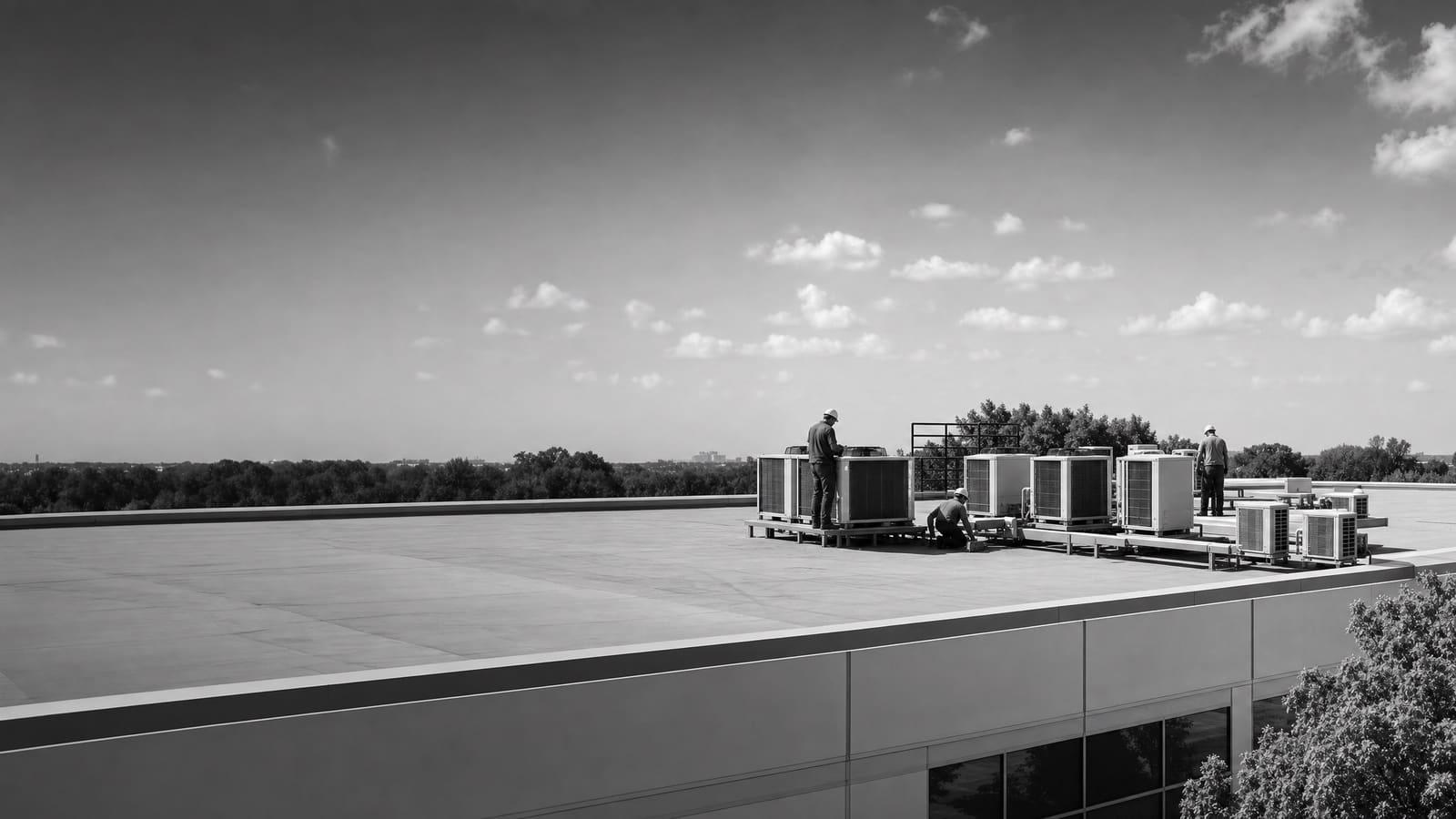
A complete commercial HVAC replacement covers load review, equipment selection, removal, rigging, connections, controls, startup, and commissioning. Replacement becomes more useful than another repair when an older unit fails often, cannot hold the space conditions, or creates growing maintenance risk. DOE guidance notes that rooftop units over 15 years old can waste substantial energy compared with newer equipment.
A site review must verify the present load, curb dimensions, structural conditions, electrical capacity, fuel connections, controls, outdoor-air needs, and equipment access.
THREE OPERATING CHOICES
Decide what the new system must improve
Start with the business problem, not a model number. A failed unit may call for a fast replacement, but speed should not hide a bad match. If occupancy, hours, process loads, or room layouts changed, the old unit size may no longer be right. A planned project creates more time to compare efficiency, heat-pump options, controls, and electrical needs.
DOE says proactive replacement can make business sense when an inefficient rooftop unit is underperforming, needs frequent service, or is nearing failure. It can also reduce the risk and disruption of an emergency swap. The right path depends on the condition of each unit and the cost of an outage. Use service history, comfort records, energy use, and operating plans to define the goal before requesting bids.
BUDGET STRUCTURE
What moves the installed price
The supplied research does not support one current universal installed price. Ask for a site-based total that separates equipment from the work needed to make it operate.
EQUIPMENT CHOICE
Compare systems by how the building operates
Packaged rooftop units are common across commercial buildings and condition nearly half of U.S. commercial floor area. Their compact form can simplify replacement when the roof opening, utilities, distribution, and controls remain suitable. A direct replacement may reduce design work, but it can also repeat an old sizing or comfort problem.
A high-efficiency air-conditioning rooftop unit can improve performance while keeping the existing heating approach. A heat-pump rooftop unit adds reverse-cycle heating. DOE identifies all-electric, dual-fuel, and cold-climate configurations. The comparison should include heating demand, electricity and gas prices, electrical capacity, physical space, gas infrastructure, equipment availability, and service support. Heat-pump efficiency falls as outdoor temperature drops, so the heating design and backup strategy need careful review.
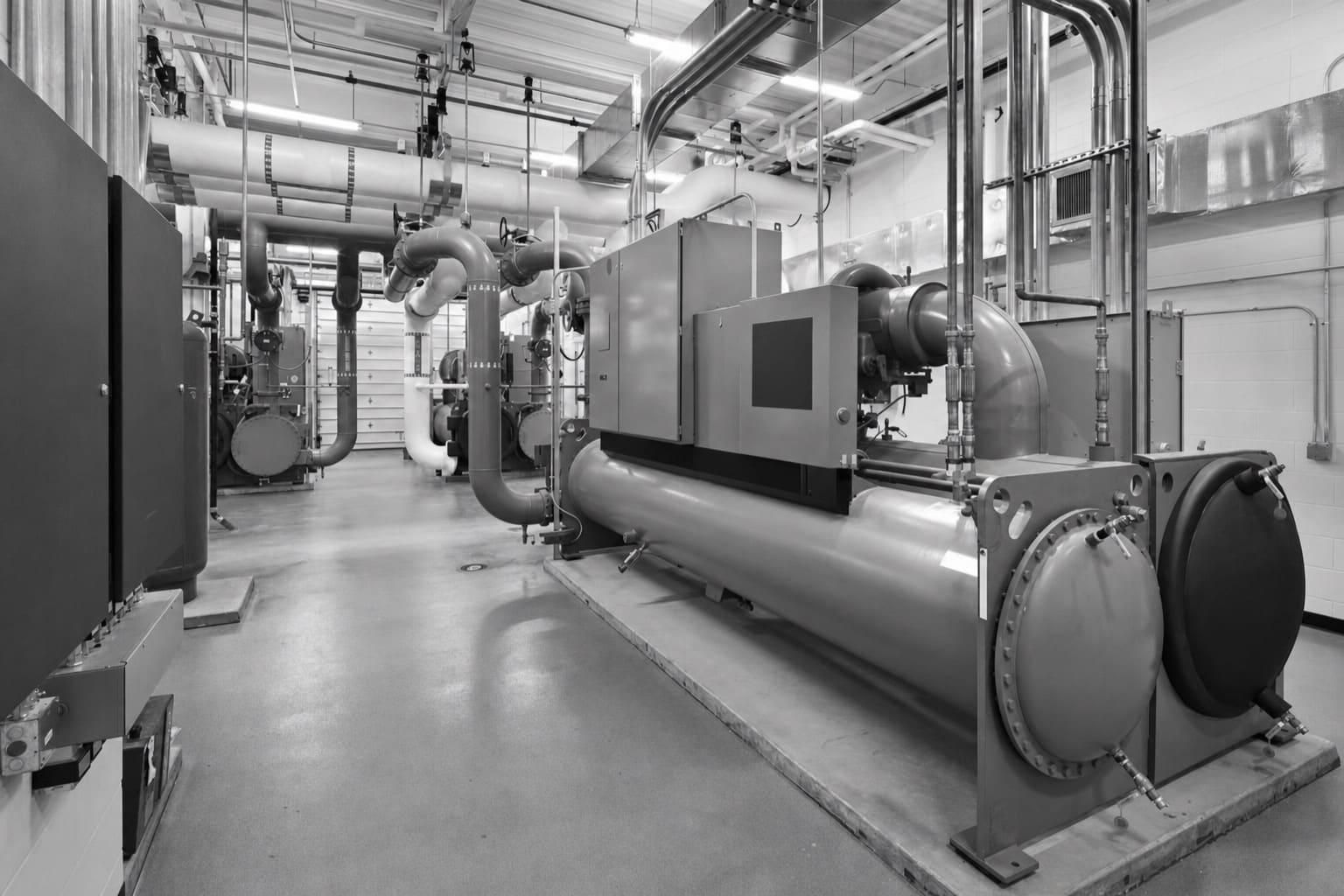
For buildings with central air handlers, boilers, chillers, split systems, or specialized zones, replacement may involve more engineering and sequencing. Compare full-system performance rather than a single efficiency rating. Part-load operation, ventilation, humidity control, schedules, zoning, noise, maintainability, and controls can matter as much as nameplate capacity.
SCOPE CHECK
Simple swap or engineered replacement?
Two projects with similar equipment can have very different risk. Classify the conditions before comparing price and schedule.
LOWER COMPLEXITY
Known load and compatible connections
The space use is stable, capacity is supported, the curb fits, utilities are adequate, controls are simple, and lifting access is clear.
HIGHER COMPLEXITY
Changed use or changed infrastructure
New loads, electrification, tight access, curb changes, automation integration, occupied work, or multiple dependent systems require deeper planning.
SITE REVIEW
Build the scope before asking for a final number
Begin with records. Gather equipment schedules, nameplate information, service history, comfort complaints, utility data, control drawings, roof plans, and operating hours. Then compare those records with field conditions. Confirm what each unit serves and whether the present layout still matches the original design.
The contractor or design team should inspect the equipment, curb, roof opening, duct connection, drainage, disconnects, wiring, fuel piping, outdoor-air path, smoke or safety interfaces, sensors, and controls. For a heat-pump option, DOE guidance calls for review of electrical capacity, physical constraints, gas lines, climate, utility costs, equipment availability, and contractor knowledge. These are practical screening items, not paperwork.
Define how the work will affect occupants. Identify shutdown windows, protected work areas, loading or parking conflicts, interior access, temporary conditioning needs, and weather limits. If several units serve the property, decide whether to replace them together or in phases. A written basis of design gives every bidder the same target and makes exclusions easier to spot.
Useful information for the first review
Provide unit photos, nameplates, roof access details, service records, occupied hours, known comfort issues, and any planned change in how the space will be used.
OWNERSHIP VIEW
Balance immediate continuity with long-term operation
The lowest first price is not always the lowest ownership cost. Compare expected energy use, routine maintenance, controls support, filter and belt access, parts availability, warranty terms, and the effect of another outage. DOE documented older commercial rooftop units wasting significant energy, while field programs showed that high-efficiency upgrades can produce real operating savings. Those historical results support careful analysis, not a guaranteed savings claim for one property.
Portfolio owners also need consistency. Standard equipment and controls can simplify training and parts, but one standard may not suit every building. Review each site, then standardize where loads, infrastructure, and operating needs truly match.
OWNER PRIORITY
Protect uptime
Plan high-risk replacements before failure and define temporary service where an outage would disrupt tenants, products, or operations.
OPERATOR PRIORITY
Make the system serviceable
Choose safe access, familiar controls, available parts, clear documentation, and maintainable filters, drains, sensors, and components.
PROJECT DELIVERY
Plan procurement, phasing, and the handoff
Do not set the shutdown date until the equipment and critical accessories are confirmed. The procurement plan should identify approved substitutions, factory options, curb or transition pieces, controls hardware, sensors, disconnects, and long-lead components. A nominally similar unit may still differ in dimensions, weight, electrical requirements, airflow arrangement, or control language.
For a multi-unit property, phasing can spread capital and protect operations. Rank units by condition, service history, consequence of failure, and opportunity for energy improvement. Grouping similar lifts may reduce disruption, while separating critical zones may preserve service. State who protects the roof, coordinates interior access, communicates with occupants, and restores affected finishes.
Commissioning turns installed equipment into an operating system. Startup should verify rotation, refrigerant condition, airflow, temperature response, heating and cooling stages, outdoor-air operation, drainage, safeties, sensors, schedules, alarms, and automation points that are included in the design. Closeout should include startup reports, warranty records, equipment data, control sequences, training, and updated asset information. Keep these records with the maintenance program.
QUOTE CHECKLIST
Five items every comparable quote should show
Ask each bidder to price the same basis of design. The quote should make included work, assumptions, allowances, exclusions, and owner responsibilities easy to compare.
01
Selected equipment
Show capacity, heating type, efficiency, accessories, availability, warranty, and approved alternatives.
02
Complete installation scope
List demolition, disposal, rigging, curb work, ductwork, piping, wiring, drainage, insulation, and roof protection.
03
Controls and ventilation
Define sensors, sequences, outdoor-air functions, automation points, programming, alarms, and testing.
04
Schedule and interruption plan
State procurement assumptions, site duration, shutdowns, staging, access limits, weather planning, and temporary service.
05
Commissioning and closeout
Include startup tests, balancing responsibilities, training, manuals, warranty documents, and final operating records.
Get a defensible number
Price the equipment and the building together.
Send the address, operating target, and target opening date. Flux will identify what must be verified before the project can be priced.
Get a free estimateQuestions
Straight answers.
When should a commercial rooftop unit be replaced instead of repaired?
Consider replacement when an older unit fails often, cannot maintain required conditions, uses excessive energy, or creates an unacceptable outage risk. DOE notes that rooftop units over 15 years old can waste substantial energy compared with newer models. A repair may still make sense when the problem is isolated, the unit otherwise performs well, and a planned replacement is not yet justified.
Should the new commercial HVAC unit match the old size?
Not automatically. Confirm the current building load before selecting capacity. Occupancy, operating hours, lighting, equipment, ventilation, layout, and envelope conditions may have changed. A like-for-like size is easier to defend when the use is stable and past performance supports it.
Is a heat-pump rooftop unit a good replacement option?
It can be, but the choice needs a site study. Compare heating demand, electrical capacity, physical constraints, existing gas service, utility costs, equipment availability, and service support. Also define how the system will meet heating needs as outdoor temperatures fall. All-electric, dual-fuel, and cold-climate configurations solve different problems.
What should commissioning include after installation?
Commissioning should verify airflow, heating and cooling response, refrigerant-related startup conditions, outdoor-air operation, drainage, sensors, safeties, schedules, alarms, and included automation points. The owner should receive test results, equipment records, warranty information, control sequences, and operating training.
How can owners compare commercial HVAC installation quotes?
Give every bidder the same equipment and performance basis. Then compare the full installed scope, not only the equipment price. Look for rigging, curb and duct work, utilities, controls, ventilation, roof protection, shutdowns, startup, commissioning, documentation, exclusions, and owner responsibilities.
Who is responsible for old refrigerant during replacement?
The quote should assign recovery, handling, transport, and disposal responsibilities clearly. EPA Section 608 rules govern refrigerant handling and recycling for stationary air-conditioning and heat-pump equipment. Ask the contractor to document the compliant process used for the removed equipment.
Sources used for this guide
- [1]betterbuildingssolutioncenter.energy.gov — DOE Advanced Rooftop Unit Replacement Guidance
- [2]betterbuildingssolutioncenter.energy.gov — DOE Commercial Heat Pump Rooftop Unit Replacement Guidance
- [3]betterbuildingssolutioncenter.energy.gov — DOE High-Efficiency Commercial Rooftop Unit Toolkit
- [4]energy.gov — DOE Efficient Commercial Rooftop Air Conditioner Program
- [5]epa.gov — EPA Stationary HVAC Refrigerant Management