THE DIRECT ANSWER
What a commercial HVAC replacement actually includes
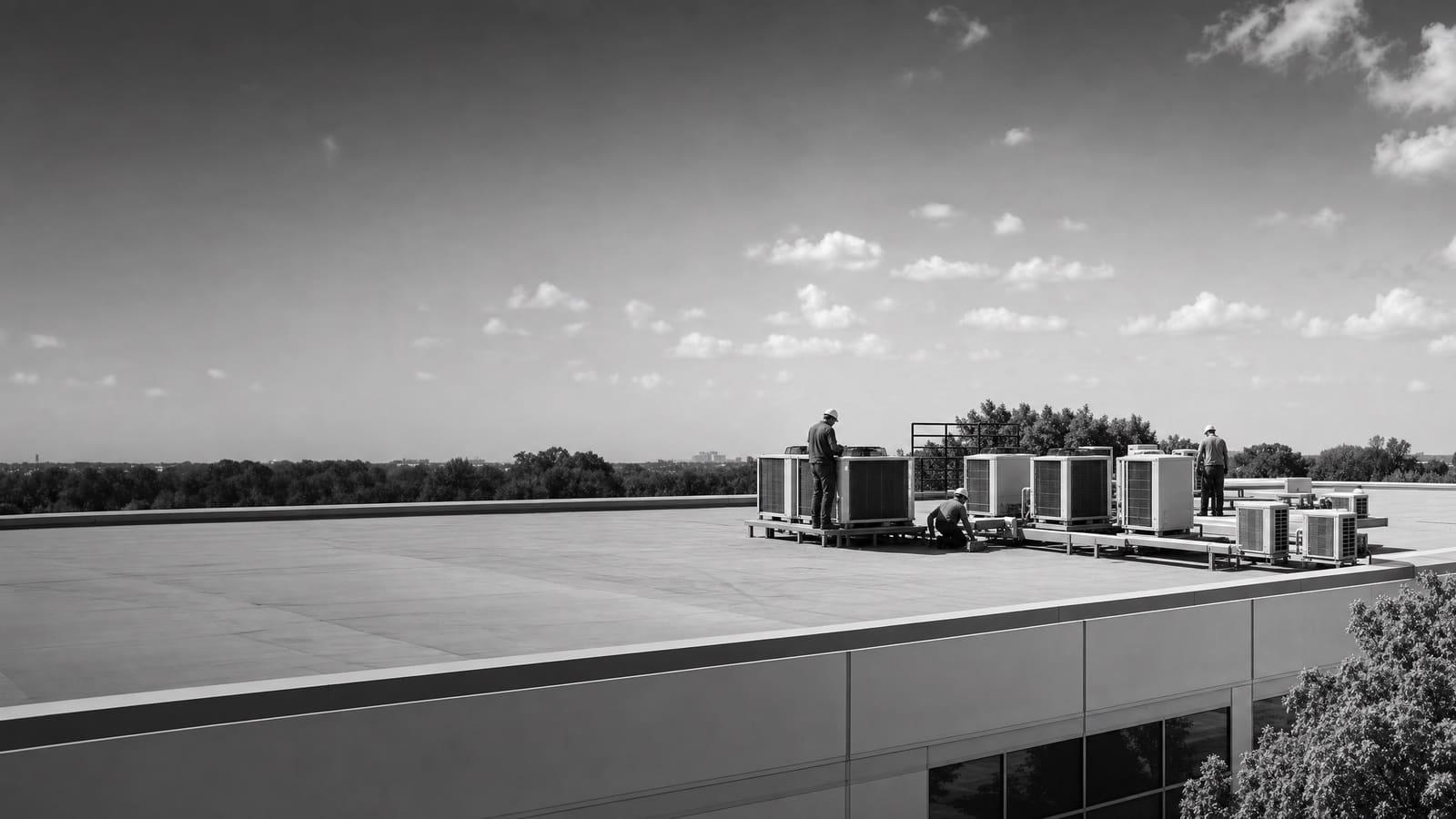
A commercial HVAC replacement covers a confirmed load calculation, equipment selection against real lead times, permitted mechanical and electrical work, certified recovery of the old refrigerant, the crane set, and commissioning before handoff. Replacement beats one more repair once a unit is past about fifteen years and no longer holds the space. Federal guidance puts the annual energy waste of an old, inefficient rooftop unit at roughly $900 to $3,700 per unit — before a single repair invoice.
A site review has to verify curb size and roof structure, electrical capacity at the unit, gas line status, and crane access. Any one of those can change which equipment is actually buyable.
THREE WAYS TO GO
Three operating choices for the replacement
The real choice is not which brand. It is whether the building still uses the space the way it did when the old unit was specified.
Like-for-like is fastest and cheapest to engineer, and it is the honest answer when nothing about the space has changed. Right-sizing re-runs the load against today's occupancy, equipment, and operating hours, so a twenty-year-old sizing mistake does not get bought a second time. The third path is a heat pump rooftop unit in place of a gas-heat unit. Federal guidance treats today's heat pump rooftop units as an appropriate solution across most of the West, where winters are mild enough that reverse-cycle heating can carry most or all of the heating demand. Whether it works on your roof usually comes down to electrical capacity, not climate.
WHAT MOVES THE NUMBER
Budget lines that actually swing the price
No two roofs price the same, so read a bid line by line instead of as one number. These are the items that move a commercial replacement most, roughly in the order they tend to surprise an owner.
IN PRACTICE
Buy the unit, not the emergency
The most expensive version of this project is the one nobody planned. A unit fails in August, the building needs cooling now, and the decision gets made from whatever is on a truck within driving distance.
Federal guidance is blunt about the pattern: facility managers often wait until a unit fails completely, and replacing an inefficient unit proactively is usually the better business move than replacement-on-failure — or even than a like-for-like swap at the end of the unit's service life.
Planning ahead buys three things. It buys equipment choice, because availability is a genuine constraint and the model that fits your load may not be the model sitting in a warehouse. It buys efficiency, because the high-performance rooftop units that came out of the federal RTU challenge were built to cut energy use by up to half against the older standard, and you only capture that if you had time to specify it. And it buys a contractor who has actually installed the equipment you selected, which matters more with heat pump units than with a straight air conditioner.
If a unit on your roof is past fifteen years and still running, that is the one to price now, while replacing it is still your decision.
COMPLEXITY CHECK
What makes a swap simple or hard
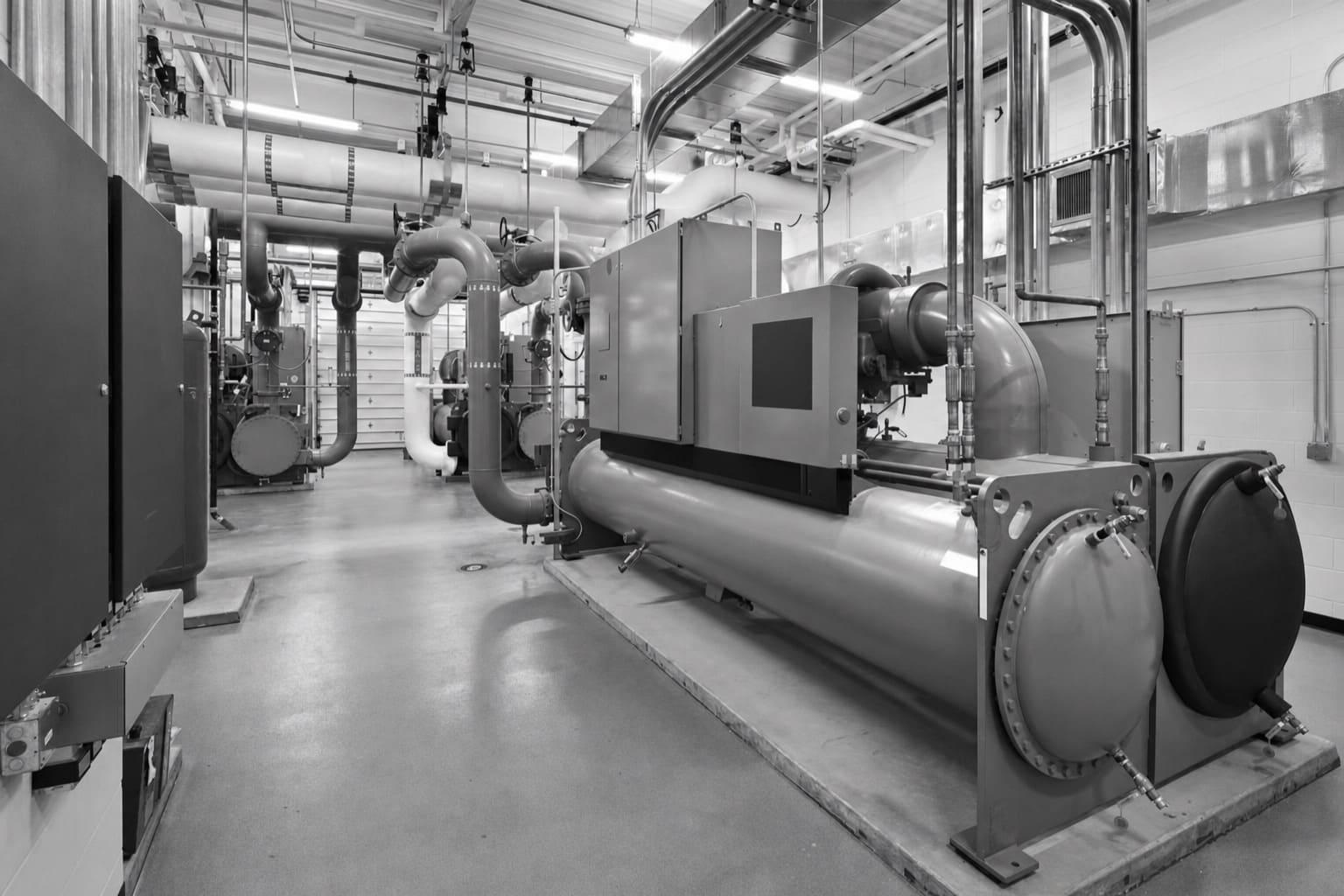
Two rooftop replacements that look identical from the parking lot can price very differently. What separates them is almost never the equipment. It is what has to change around it.
LOWER COMPLEXITY
A straight swap
Same tonnage, same fuel, same footprint on the existing curb. The roof structure already carries the load, electrical service is unchanged, and the crane has a clean shot from the lot. Scope is routine and the set happens in one planned window.
HIGHER COMPLEXITY
A swap that changes the building
A different footprint needs a curb adapter and sometimes structural review. Going all-electric needs panel capacity and feeder size verified at the unit. Tight access, occupied tenants, or a roof near end of life each add sequencing before anything gets set.
BEFORE YOU PRICE IT
What a site review has to settle
A number that arrives without anyone climbing on the roof is a guess. The site review exists to turn unknowns into line items, and there are five it has to close.
Start with the load. The nameplate tells you what someone specified years ago, not what the space needs now. Occupancy, plug loads, lighting, and operating hours all move it. Then the physical fit: curb dimensions, the roof structure under the unit, and whether the new footprint lands where the old one did.
Then infrastructure. Federal guidance for heat pump rooftop units calls out electrical capacity and gas lines specifically, because that is exactly where an easy-looking swap turns into an electrical project. Available panel space and feeder size decide whether an all-electric unit belongs on the table at all.
Then access. Crane reach, staging space, and how many stalls can close for how long is a cost, not a detail. Finally, refrigerant. Federal rules govern how the charge in the old unit is handled and recovered, so recovery is scheduled work with a price, not a favor.
The five answers to insist on
Confirmed load, curb and structure, electrical capacity at the unit, crane access and closure time, and refrigerant recovery. If the quote does not show what the reviewer found on those five, it is priced on assumptions you end up paying for.
IN TEMECULA
Permits, roofs, and the order you do the work
Two things about doing this work in Temecula are worth building into the schedule rather than discovering mid-project.
The first is permitting. California building departments treat mechanical and electrical upgrades and repairs as permitted work, and re-roofing is permitted separately from the mechanical scope. That matters for sequencing. If the roof under your unit is near the end of its life, running the rooftop replacement and the re-roof as one coordinated project saves a second mobilization, a second set of penetrations, and a second round of inspections. Doing them a year apart usually means paying twice to work in the same square of roof.
The second is climate. Southern California winters sit in the mild range where federal guidance says today's heat pump rooftop units can carry most or all of the heating demand. That makes an electric unit a real option here rather than a compromise — provided the electrical capacity at the unit supports it.
Confirm the permit scope before crane day
Ask the Temecula building division which permits your scope pulls and which inspections apply, and have the contractor carry permits and inspection coordination inside the installed price instead of billing them later as extras.
AFTER THE HANDOFF
Two things that outlive the install
The install takes days. The decisions inside it set your operating cost and your service exposure for as long as the unit is on the roof. Two of them are worth settling before you sign rather than after.
The first is how refrigerant gets handled across your building over time, because that is regulated work with real compliance weight. The second is how this unit fits the rest of your equipment, since almost nobody replaces one rooftop unit and then never touches another one.
REFRIGERANT
Regulated, not incidental
Federal Clean Air Act rules govern how refrigerant is handled, recovered, and recycled in stationary air conditioning and heat pump equipment. That covers the unit coming off your roof and every service call after it. Get in writing who owns that responsibility.
FLEET
One unit is rarely the whole story
If you own several rooftop units of similar age, the second replacement gets easier when the first one sets a standard. Matching controls, similar models, and one service relationship cut both truck rolls and spare-parts headaches down the line.
OVER THE FULL LIFE
Phasing, procurement, and what the unit costs to own
Purchase price is the least interesting number in this project. A rooftop unit runs for well over a decade, and the energy it burns across that span dwarfs the gap between two bids.
That is why the federal rooftop unit campaign framed this as portfolio work instead of a one-off purchase. More than two hundred organizations upgraded over forty-three thousand units and cut a combined thirty-seven million dollars a year from their energy bills. The math scales down to a single building: if an aging unit is wasting somewhere between nine hundred and thirty-seven hundred dollars a year, a replacement that slips two months has already cost you money before anyone quotes it.
Practical sequencing looks like this. Rank your units by age and complaint history. Price the worst one first and use that quote as the template for the rest. Order early, because equipment availability is a scheduling constraint rather than a formality. And confirm any utility or federal incentive before the purchase order goes out, since eligibility is tied to the specific equipment you selected. Learning afterward that a different efficiency tier qualified is the most avoidable loss in the whole process.
THE QUOTE
Five things a comparable quote should show
Bids only compare when they show the same things. Ask every contractor to structure the quote around these five items, in writing, before you put totals next to each other.
01
The load basis
The tonnage selected, and whether it came from a fresh load calculation or from copying the old nameplate.
02
Curb, structure, and roof scope
Curb adapter details, any structural review, and who patches and flashes the roof after the set.
03
Electrical and gas scope
Panel capacity, feeder and disconnect work, and any gas line changes — priced, not listed as by others.
04
Crane day and access plan
Rigging plan, lot closure hours, and the weather contingency, with the crane inside the installed price.
05
Refrigerant, startup, and permits
Certified recovery of the old charge, documented commissioning against spec, and permits and inspections carried by the installer.
Get a defensible number
Price the equipment and the building together.
Send the address, operating target, and target opening date. Flux will identify what must be verified before the project can be priced.
Get a free estimateQuestions
Straight answers.
When does replacement beat another repair?
Once a unit is past about fifteen years, no longer holds the space, and needs frequent service. Federal guidance puts the yearly energy waste of an old, inefficient rooftop unit at roughly $900 to $3,700 per unit, which is often more than the repair invoices that keep it limping.
Does a heat pump rooftop unit make sense in Temecula?
Usually it is worth pricing. Federal guidance says today's heat pump rooftop units are an appropriate solution across most of the West, where winters are mild enough for reverse-cycle heating to carry most or all of the heating demand. The deciding factor is electrical capacity at the unit, not the weather.
How long is the building affected?
The visible disruption is short. The crane set happens in one planned window with stalls coned off, and tenants notice the parking more than the outage. The real schedule risk is equipment availability, which is why lead time belongs on the quote next to the price.
What permits does a commercial rooftop replacement need?
California building departments permit mechanical and electrical upgrades and repairs, and re-roofing is permitted separately. Confirm the exact scope with the Temecula building division, and have the installer carry permits and inspections in the price.
What happens to the refrigerant in the old unit?
It has to be recovered and handled under federal Clean Air Act rules covering stationary air conditioning and heat pump equipment. That means certified recovery as a scheduled, priced part of the job — and the same rules apply to service on the new unit.
Sources used for this guide
- [1]betterbuildingssolutioncenter.energy.gov — DOE Advanced Rooftop Unit Replacement Guidance
- [2]betterbuildingssolutioncenter.energy.gov — DOE Commercial Heat Pump Rooftop Unit Replacement Guidance
- [3]betterbuildingssolutioncenter.energy.gov — DOE High-Efficiency Commercial Rooftop Unit Toolkit
- [4]energy.gov — DOE Efficient Commercial Rooftop Air Conditioner Program
- [5]epa.gov — EPA Stationary HVAC Refrigerant Management
- [6]californiacity-ca.gov — HVAC Permits