THE SHORT ANSWER
What a commercial HVAC replacement actually includes
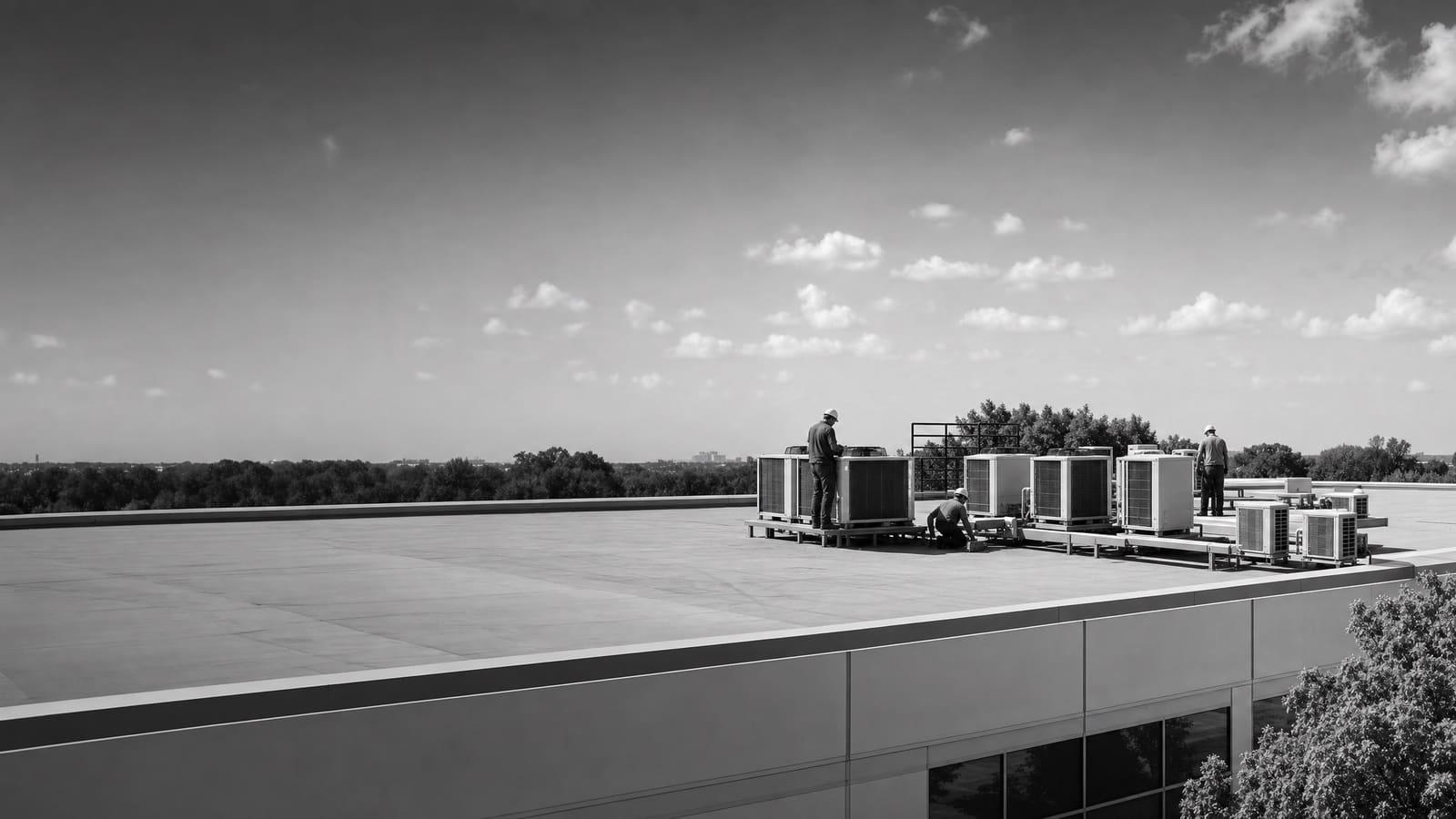
A commercial HVAC replacement covers the load check, the equipment selection, the rigging and set, the gas, electric, and control connections, and the startup that proves the unit performs. Replacement beats one more repair once a unit passes roughly fifteen years. Units that old waste substantial energy — the Department of Energy puts it at $900 to $3,700 per unit every year — and each in-season failure costs you again in downtime and emergency pricing.
No price is real until someone verifies tonnage, curb condition, roof structure, crane reach, and the electrical and gas service at the unit. Those five items move the number more than the badge on the equipment does.
THE DECISION
Three ways to handle an aging rooftop unit
Most commercial buildings run packaged rooftop units, which condition close to half of all U.S. commercial floor space. That makes this decision more repeatable than it feels. You are choosing between running the old unit until it quits, swapping it on your own schedule for the same thing, or using the swap to buy down operating cost with a high-efficiency unit, a heat pump, or advanced controls.
DOE guidance is blunt about the first option. Waiting for total failure usually costs more than replacing proactively, and it often costs more than a like-for-like swap done at the end of useful service life. An in-season outage removes your leverage on price, on equipment choice, and on when the crane shows up.
WHAT MOVES THE NUMBER
The lines that decide your installed price
No two roofs price the same, but the variables are knowable before anyone orders equipment. Each line below should appear on the quote with a number beside it, not a note saying it will be determined in the field.
EQUIPMENT
Pick the equipment class before you compare prices
Three quotes for three different machines are not three quotes. Settle the equipment class first, then compare.
The baseline has moved. DOE's high-performance rooftop challenge produced units designed to cut energy use by up to half against the standard in place at the time, and a final federal efficiency standard followed in December 2015. More than twenty models now exceed the original challenge specification. That means even a modest new unit outperforms a twenty-year-old one by a wide margin, and the real question is how far above minimum you want to go.
The second question is fuel. Heat pump rooftop units are technologically similar to air-conditioning rooftop units, with the addition of reverse-cycle heating. DOE's guidance says today's heat pump units are an appropriate solution across most of the U.S. South and West, capable of covering most or all of winter heating demand. Heating efficiency does fall as outdoor temperature drops, trending toward electric resistance performance in a hard cold snap — the February 2021 Texas freeze is the reference case people cite. That is why dual-fuel and all-electric versions both exist, and why the backup heat strategy is part of the equipment decision rather than a detail settled later.
SCOPE CHECK
What makes a swap simple, and what does not
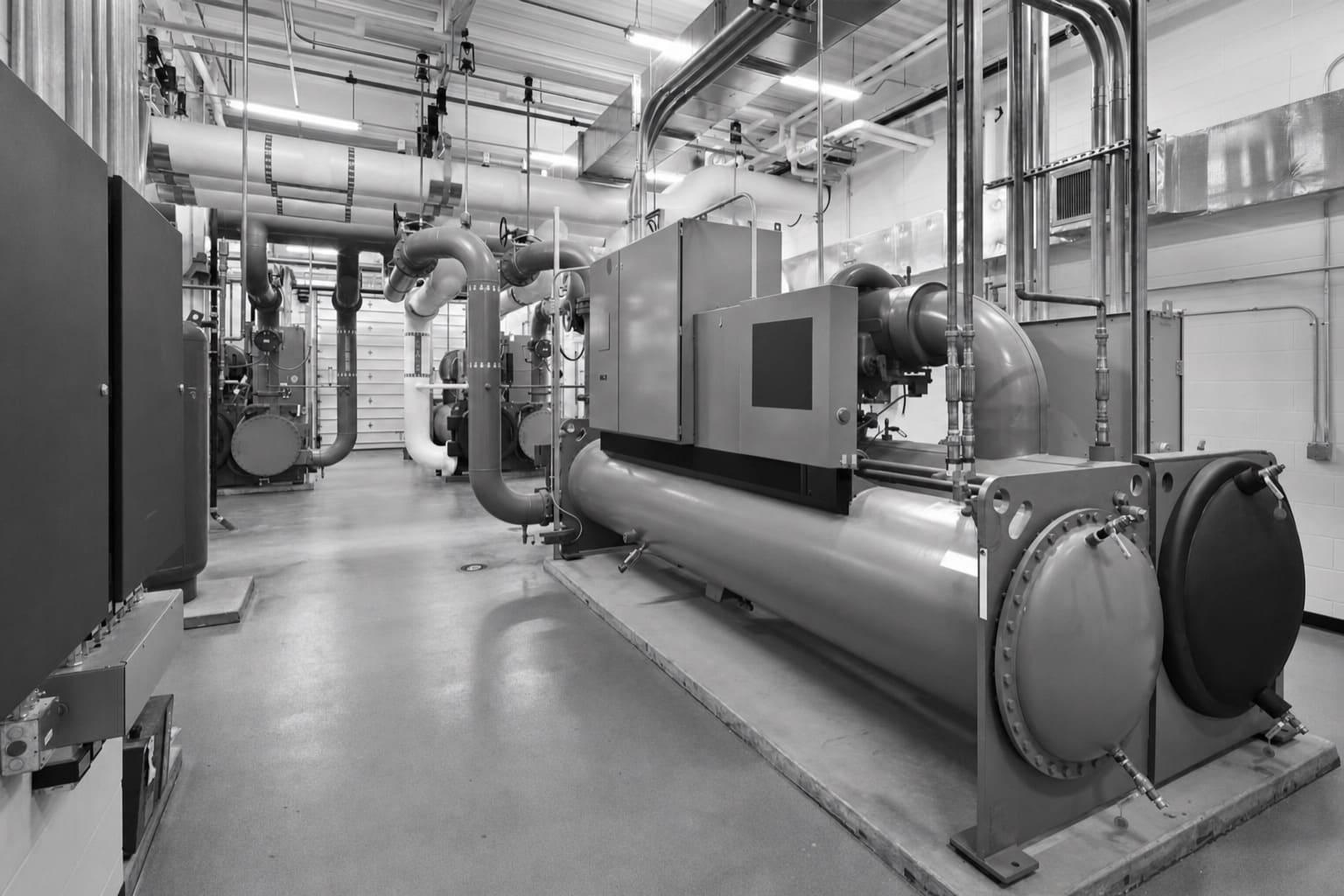
The same tonnage on two different roofs can be two different projects. Before you read a number, find out which one you have.
LOWER COMPLEXITY
Same fuel, same footprint, open access
Existing curb accepts an adapter, the electrical service already carries the load, occupancy and use have not changed, and the crane has a clear lot. Permits stay routine and the visible work is one morning.
HIGHER COMPLEXITY
New fuel, more capacity, tight site
Going all-electric, adding tonnage, or working a constrained lot pulls in electrical capacity checks, physical clearance review, gas line changes, possible structural work, and a longer permit path. DOE names each of these as an infrastructure consideration.
SCOPING
What an honest site review verifies
A site review is not a formality before a number gets typed. It is where the number comes from.
Start with the load. Sizing should follow how the space is used today, not the nameplate on a unit specified two decades ago. Occupancy, plug loads, lighting, and envelope all change, and carrying the old tonnage forward carries any earlier sizing mistake forward with it.
Then the infrastructure. DOE's checklist for rooftop replacements runs through electrical capacity, physical constraints, and gas lines, and any of the three can reshape a project. A unit that fits the curb may still not fit the clearances. A service that ran a gas-heat unit for twenty years may not carry an all-electric one.
Last, availability. Equipment availability and contractor familiarity with the technology you are choosing are listed considerations, not afterthoughts. A unit you cannot get for months is not the cheap option, and a technology your service contractor does not work on regularly costs you later.
Get these confirmed in writing
Load basis, tonnage, efficiency tier, curb and structural treatment, electrical service verdict, gas line disposition, crane plan and lot closure window, and the equipment lead time you are actually being quoted against.
OWNERSHIP
Two things owners underestimate
The install ends in a morning. The consequences of how it was scoped run for the life of the unit. Two of them deserve attention before you sign anything, because both are far cheaper to handle at the quote stage than after the new unit is set and running.
INFRASTRUCTURE
The service behind the unit
Electrical capacity is the item most likely to turn a clean swap into a bigger project, especially on an electric conversion. Confirm the panel, the feeder, and the disconnect before ordering, not after the crane is scheduled.
REFRIGERANT
Handling, recovery, and a mixed fleet
EPA Section 608 rules govern how refrigerant is handled and recycled in stationary equipment. Recovery from the old unit is regulated work for certified technicians, and a roof running two refrigerant types changes parts stocking and service planning.
PLANNING
Phasing, procurement, and lifetime cost
If your Sugar Land building carries several rooftop units of similar age, treat them as a fleet rather than a series of emergencies. Rank them by age, service history, and the load they carry, then replace on a schedule you set. The Advanced RTU Campaign moved more than 43,000 units this way across two hundred-plus organizations, and those upgrades cut a combined $37 million a year from participants' energy bills. The organizing idea was simple: decide in advance whether each unit gets replaced or gets advanced controls, based on which one pays better.
Procurement follows the same logic. Order against a confirmed load and a confirmed electrical verdict, so the lead time you are quoted is the lead time you get. Where the numbers are close between a like-for-like unit and a higher tier, run them over the expected service life rather than at purchase, and put the sourced annual waste of the outgoing unit on the same page.
Incentives sit inside that math, and DOE lists them as a live consideration for rooftop heat pump projects. Program terms, funding, and deadlines change, so confirm what is open and what it requires before you order equipment. An incentive assumed at quote time and unavailable at install time is a budget problem, not a rounding error.
BEFORE YOU SIGN
Five things a comparable quote shows
If two proposals do not show all five, you are not comparing them — you are guessing at the difference. Ask for the missing lines before you weigh the totals.
01
The load basis
Whether sizing came from a current load calculation or from the old nameplate, stated plainly.
02
The exact unit
Model, tonnage, efficiency tier, heating type, and refrigerant — not a category description.
03
Roof and rigging scope
Curb adapter, any structural work, crane plan, and how long the lot is affected.
04
Service connections
Electrical capacity verdict, any panel or feeder work, and what happens to the gas line.
05
Commissioning and lead time
Documented startup of charge, airflow, and controls, plus the equipment availability the price assumes.
Get a defensible number
Price the equipment and the building together.
Send the address, operating target, and target opening date. Flux will identify what must be verified before the project can be priced.
Get a free estimateQuestions
Straight answers.
When does replacement beat another repair?
Once a rooftop unit is past about fifteen years, DOE's guidance says it can waste substantial energy compared with a newer model — commonly $900 to $3,700 per unit each year. At that point the repair keeps the equipment running without addressing what it costs you to run. A planned replacement also usually costs less than a replacement forced by failure.
How much does commercial HVAC installation cost?
Not a number anyone can give honestly from a distance. The installed price is built from tonnage, efficiency tier, curb and structural work, crane access, electrical service, gas line changes, and commissioning. Any quote that skips those lines is estimating, not pricing. Ask for each item shown separately so two proposals can actually be compared.
Should you resize or replace like-for-like?
Confirm the load either way. If occupancy, equipment, and envelope are unchanged, like-for-like is often correct and is the fastest path back to conditioned space. If the way the building is used has changed, carrying the old tonnage forward carries the old sizing error forward too, along with the comfort complaints that came with it.
Is a heat pump rooftop unit a good fit here?
DOE says today's heat pump rooftop units are an appropriate solution for most of the U.S. South and West and can cover most or all of winter heating demand. Efficiency does drop in a hard cold snap, trending toward electric resistance heating, which is why backup heat and the dual-fuel option belong in the equipment decision.
What happens to the refrigerant in the old unit?
It is recovered, not vented. EPA Section 608 rules under the Clean Air Act govern how refrigerant is handled and recycled in stationary air-conditioning and heat pump equipment, and that work belongs to certified technicians. If your roof will run more than one refrigerant type, plan parts stocking and service coverage for both.
Can advanced controls replace a full swap?
Sometimes. DOE's Advanced RTU Campaign gave owners both paths: replace the old unit with a more efficient one, or retrofit it with advanced controls, depending on which makes better financial sense for that unit. Controls are worth pricing on units with remaining service life. On a fifteen-year-old unit, replacement is usually the stronger case.
Sources used for this guide
- [1]betterbuildingssolutioncenter.energy.gov — DOE Advanced Rooftop Unit Replacement Guidance
- [2]betterbuildingssolutioncenter.energy.gov — DOE Commercial Heat Pump Rooftop Unit Replacement Guidance
- [3]betterbuildingssolutioncenter.energy.gov — DOE High-Efficiency Commercial Rooftop Unit Toolkit
- [4]energy.gov — DOE Efficient Commercial Rooftop Air Conditioner Program
- [5]epa.gov — EPA Stationary HVAC Refrigerant Management