THE DIRECT ANSWER
What a commercial HVAC replacement includes
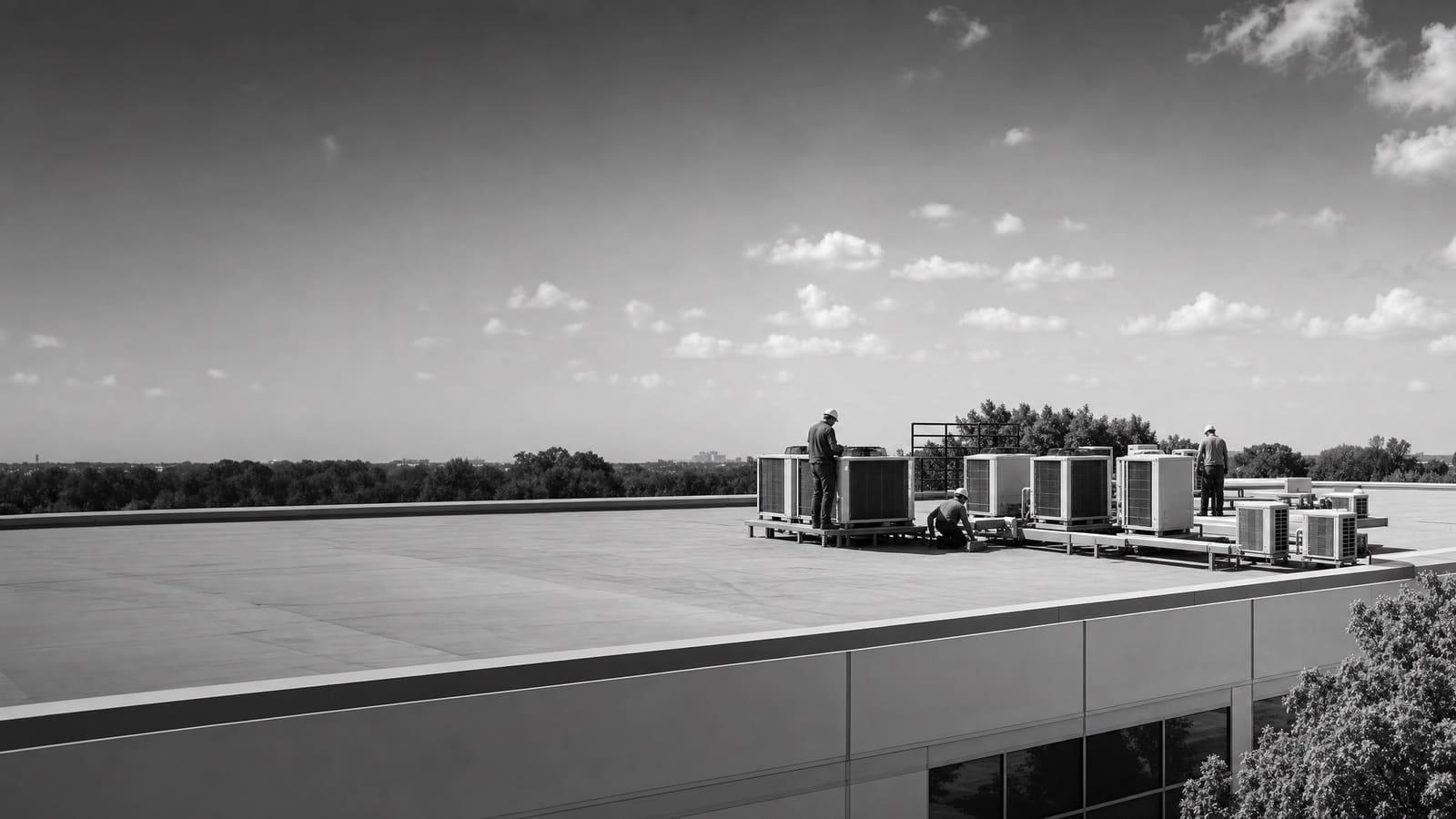
Commercial HVAC replacement covers more than the new unit. A complete project confirms the load, selects compatible equipment, plans access and rigging, removes the old system, changes connections as needed, starts the new unit, and verifies airflow and controls. Replacement becomes more useful than another repair when an older unit is unreliable, performs poorly, or needs frequent service.
A site review must verify capacity, curb dimensions, roof access, electrical service, heating source, controls, drainage, ventilation needs, and equipment availability.
THREE PATHS
Choose the operating result before choosing the unit
The best replacement path depends on what must improve. A direct swap can restore dependable service with fewer building changes, but it may repeat an old sizing or comfort problem. A right-sized replacement uses the building's present use, occupancy, internal equipment, ventilation needs, and operating schedule to guide selection. A heat pump rooftop unit can provide both cooling and reverse-cycle heating. DOE guidance says that decision should also consider climate, utility costs, emissions goals, equipment availability, electrical capacity, physical limits, gas service, and contractor knowledge. Ask for choices that explain the operating effect, not just different model numbers.
BUDGET DRIVERS
What changes the installed price
No supported universal installed price applies to every commercial project. These scope lines often create the largest difference between bids.
EQUIPMENT CHOICE
Compare systems by how the building must operate
Packaged rooftop units are common across commercial buildings because one cabinet can combine cooling, airflow, ventilation, controls, and heating. A conventional rooftop air conditioner may pair cooling with gas or electric heat. A heat pump rooftop unit uses reverse-cycle operation for heating and cooling, with equipment-specific backup or supplemental heat arrangements.
Start with the building load and operating pattern. Confirm occupied hours, temperature needs, outside-air requirements, internal heat from people and equipment, and any rooms with unusual loads. Then compare full-load and part-load operation, heating method, fan control, filtration, sound, service access, warranty terms, and controls compatibility. A higher-efficiency model has little value if it cannot maintain the required conditions or if its controls are never set up correctly.
Also compare availability and physical fit. The selected unit must reach the site, fit the roof or equipment area, connect to the distribution system, and work with available power or fuel. If electrification is being considered, review electrical capacity early. That check can reveal whether the project is a direct equipment replacement or a broader infrastructure upgrade.
SCOPE CHECK
A simple swap and a complex replacement are different projects
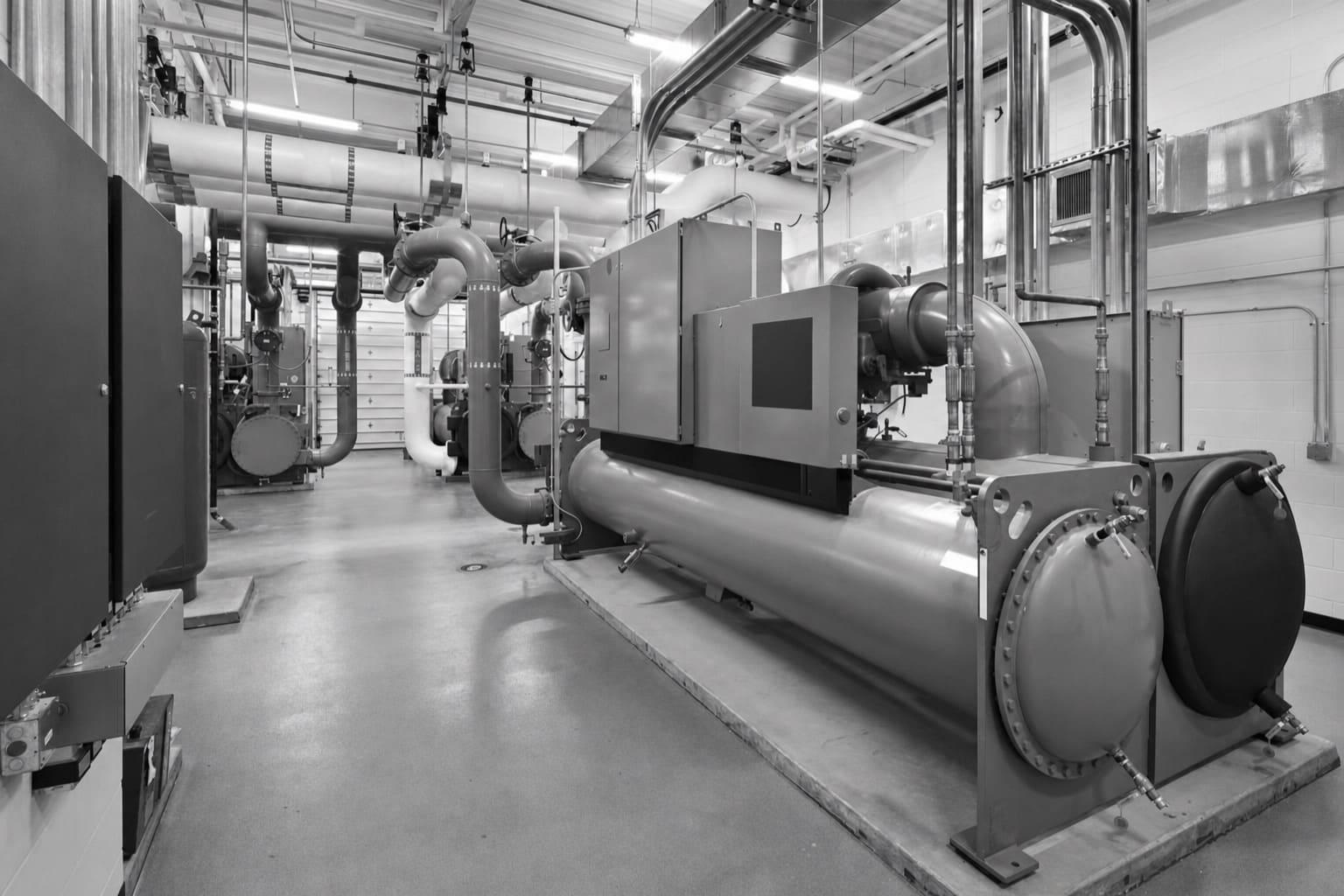
Two units with similar capacity can produce very different installed scopes. The difference often sits outside the equipment cabinet.
LOWER COMPLEXITY
Existing conditions still fit
The curb, duct openings, electrical service, heating source, controls, drainage, access, and required capacity remain compatible. Work can focus on removal, setting, connections, startup, and verification.
HIGHER COMPLEXITY
The building needs changes
Capacity, weight, footprint, power, fuel, ventilation, controls, roof framing, or duct layout must change. Engineering, trade coordination, temporary service, and phased work may be needed.
SITE REVIEW
Measure first so installation day is predictable
A useful site review starts with the existing unit data, but it does not end at the nameplate. The reviewer should document model and capacity, heating type, voltage, curb size, duct openings, filter arrangement, outside-air setup, controls, condensate path, gas connection, disconnect, and service clearances. Photos and field measurements help prevent assumptions from moving into the final quote.
The roof and delivery path need their own review. Confirm how people and tools will reach the work area, where equipment can be staged, how the old unit will leave, and whether a crane or other lifting method is needed. Note occupied areas below the work and any business hours that limit shutdowns or noisy work.
The mechanical review should also look for problems that a new cabinet will not fix. Poor duct distribution, failed dampers, blocked returns, weak controls, or a bad sensor location can survive a replacement. Record existing comfort complaints and test likely causes before final equipment selection. This creates a scope aimed at better operation, not merely a newer machine.
Bring useful records
Provide equipment labels, service history, recent repair findings, operating schedules, comfort complaints, control information, utility data if available, and any roof or building plans.
OWNER PRIORITIES
Protect operations now and over the unit's service life
The purchase decision has two time horizons. Installation planning protects the business during the change. Ownership planning affects energy use, maintenance, repairs, and future replacement work. DOE notes that commercial rooftop units older than 15 years can waste substantial energy compared with newer models, and that owners often delay replacement until performance falls, maintenance becomes frequent, or the unit fails. A planned review gives the owner time to compare options before an emergency narrows the choices.
DURING INSTALLATION
Control the disruption
Define shutdown windows, occupied zones, temporary conditioning needs, lift boundaries, roof protection, weather limits, tenant notices, and the person authorized to approve field changes.
AFTER HANDOFF
Make the result maintainable
Require model data, warranties, startup records, control settings, filter information, service clearances, refrigerant details, maintenance needs, and staff instruction in the closeout package.
PROCUREMENT
Compare total scope, schedule, and operating value
Ask each bidder to price the same written scope. An equipment-only number is not comparable to an installed number that includes rigging, adapters, electrical work, controls, refrigerant handling, startup, and closeout. Separate base work from allowances and options. Each allowance should state what has not been verified and how the final amount will be set.
The schedule should show more than a proposed workday. Confirm equipment availability, submittal review, field verification, adapter or accessory fabrication, delivery, lift planning, shutdown, startup, and final testing. If several units are involved, phasing can keep more of the building operational and let the team learn from the first replacement before repeating the work.
Review lifetime value without assuming that efficiency alone settles the decision. Compare expected operation, maintenance access, filter and belt needs, controls capability, warranty coverage, heating energy source, electrical upgrades, and the cost of business interruption. For older but functional units, planned replacement can be compared with continued maintenance. For a failed critical unit, availability and temporary service may carry more weight. Keep incentives outside the base decision until current eligibility, funding, deadlines, and application steps have been verified.
QUOTE CHECKLIST
Five things every comparable quote should show
A clear quote defines the equipment, installed work, exclusions, schedule, and proof that the finished system operates as intended.
01
Selected equipment
List capacity, heating type, efficiency, voltage, refrigerant, options, warranty, availability, and approved substitutions.
02
Complete installed scope
Include removal, recovery, rigging, curb work, duct transitions, power, fuel, drains, controls, ventilation, and weather sealing.
03
Access and operating plan
Show staging, lift limits, shutdown windows, occupied-area protection, temporary conditioning, phasing, and cleanup.
04
Testing and commissioning
Define airflow, temperatures, refrigerant checks, fan operation, heating and cooling tests, controls, alarms, and documented results.
05
Commercial terms
State price, allowances, exclusions, payment points, schedule assumptions, change-order rules, permits if applicable, and closeout documents.
Get a defensible number
Price the equipment and the building together.
Send the address, operating target, and target opening date. Flux will identify what must be verified before the project can be priced.
Get a free estimateQuestions
Straight answers.
When is replacement better than another commercial HVAC repair?
Replacement deserves serious review when an older unit needs frequent repairs, cannot hold required conditions, has major component trouble, wastes energy, or creates a high risk of business interruption. DOE guidance notes that owners often wait until a rooftop unit fails, needs frequent maintenance, or stops providing adequate conditioning. Compare the next repair with replacement cost, expected reliability, available equipment, operating impact, and the remaining condition of the full system.
Should a replacement match the old unit's capacity?
Not automatically. The old nameplate is useful for identifying the present system, but it does not prove that the capacity is correct today. Space use, occupancy, internal equipment, ventilation, schedules, and building changes may have altered the load. Confirming the present need can prevent another oversized or undersized unit. If the building and operating pattern are unchanged, a similar capacity may still be appropriate after verification.
What does commercial HVAC installation include?
A complete installed scope can include field measurement, equipment selection, removal, refrigerant recovery, delivery, rigging, curb or pad work, duct transitions, electrical and fuel connections, condensate drainage, controls, ventilation setup, startup, testing, and closeout documents. The exact list depends on the system and site. Ask the quote to name both included and excluded work so gaps do not appear after award.
Should we consider a commercial heat pump rooftop unit?
It is worth evaluating when the owner wants one rooftop system to provide cooling and reverse-cycle heating. The choice should consider heating demand, electrical capacity, electricity and gas costs, emissions goals, physical constraints, equipment availability, controls, backup heat, and contractor experience. Compare an all-electric or dual-fuel approach with the present heating method using site conditions rather than a broad rule.
How should refrigerant work be handled during replacement?
EPA Section 608 requirements address refrigerant handling and recycling in stationary air-conditioning and heat pump equipment. The project scope should identify who recovers refrigerant, how the old equipment is managed, what refrigerant the new unit uses, and whether piping or service procedures change. Keep recovery and startup documentation with the final equipment records, and use properly qualified personnel for regulated refrigerant work.
What should happen during startup and commissioning?
The team should do more than confirm that the fan starts. Testing should cover cooling, heating, airflow, temperature change, refrigerant condition, fan operation, outside-air functions, condensate drainage, sensors, schedules, setpoints, alarms, and building automation links where present. Results should be recorded. This process can catch setup problems before they become comfort calls, excess energy use, or repeated service visits.
How can an owner compare commercial HVAC bids fairly?
Give each bidder the same site information and request the same scope format. Compare the exact equipment, availability, rigging, curb and duct work, electrical and fuel work, controls, refrigerant handling, startup, warranty, exclusions, allowances, schedule, and closeout documents. A lower total may simply leave out work that another bidder included. Resolve those differences before choosing a proposal.
Are incentives available for commercial HVAC replacement in August 2026?
No current St. George incentive was established by the supplied research, so an incentive should not be assumed in the budget. Programs, tax rules, funding, equipment requirements, and application deadlines can change. Verify any claimed benefit with the current program administrator before ordering equipment, and confirm whether approval is required before purchase or installation.
Sources used for this guide
- [1]betterbuildingssolutioncenter.energy.gov — DOE Advanced Rooftop Unit Replacement Guidance
- [2]betterbuildingssolutioncenter.energy.gov — DOE Commercial Heat Pump Rooftop Unit Replacement Guidance
- [3]betterbuildingssolutioncenter.energy.gov — DOE High-Efficiency Commercial Rooftop Unit Toolkit
- [4]energy.gov — DOE Efficient Commercial Rooftop Air Conditioner Program
- [5]epa.gov — EPA Stationary HVAC Refrigerant Management