THE DIRECT ANSWER
Commercial HVAC replacement and installation in Springdale.
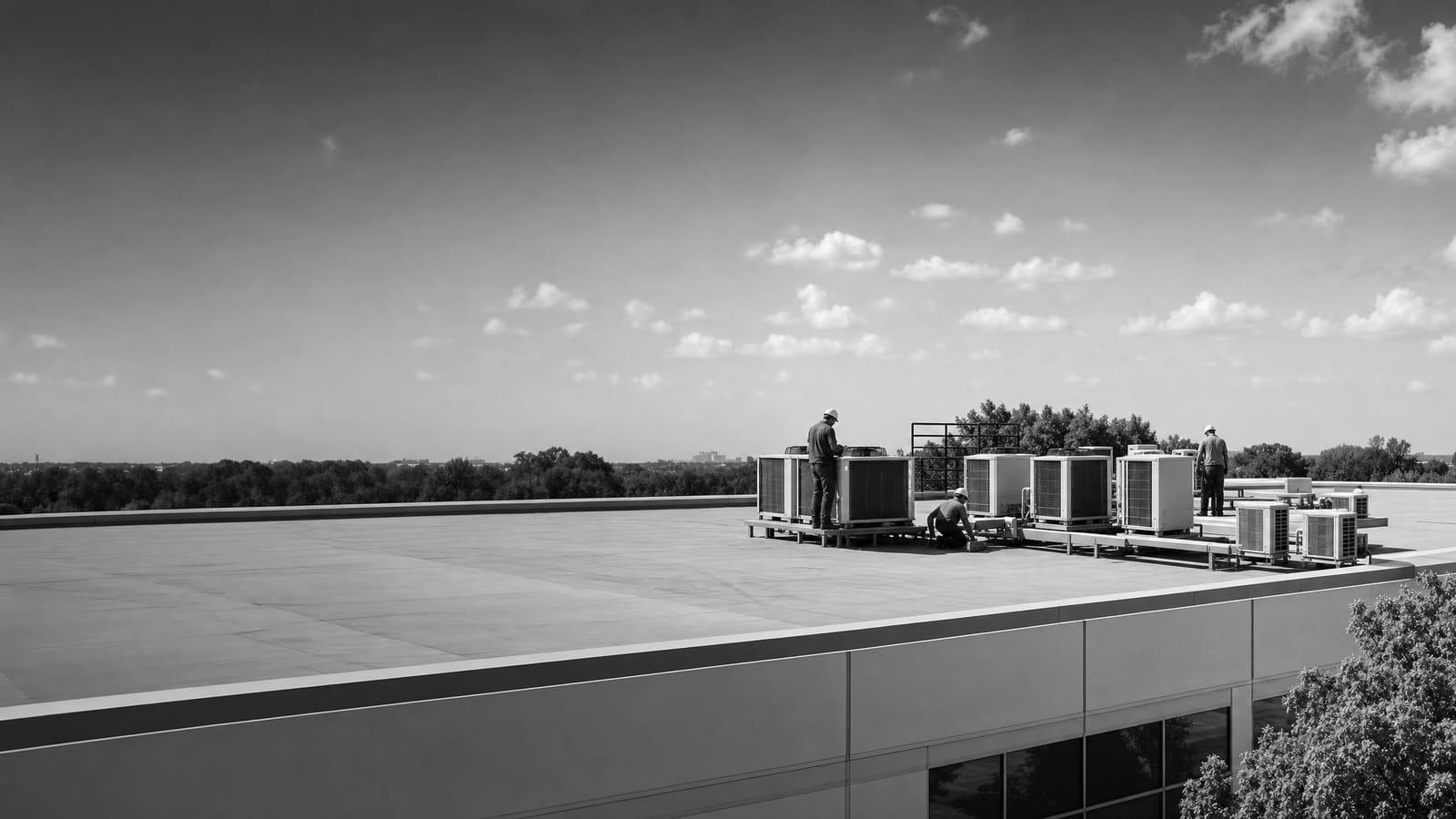
A commercial HVAC replacement includes load review, equipment selection, removal, rigging, required connection work, controls, startup, testing, and refrigerant handling. Replacement becomes more useful than another repair when an older unit cannot hold conditions, fails often, needs repeated maintenance, or wastes energy compared with a suitable new system.
A site review must verify capacity, curb fit, roof access, power, fuel, ventilation, drainage, controls, and the work needed to commission the system.
START WITH THE OPERATING DECISION
Choose what the new system needs to accomplish
Do not begin with a model number. Begin with the reason for the project. A failed unit may call for the fastest sound replacement. A building with uneven temperatures may need new load and airflow work. An owner planning for lower energy use or fewer fuel-burning assets may want to study a heat pump rooftop unit.
DOE guidance notes that rooftop units more than 15 years old can waste substantial energy compared with newer equipment. It also says owners often wait until performance falls, maintenance becomes frequent, or the equipment fails. A planned replacement gives the team time to compare capacity, efficiency, heating type, infrastructure, and availability. An emergency replacement leaves fewer choices. The best decision fits the building's real use, not merely the old unit's label.
WHAT SHAPES THE BUDGET
The unit price is only one part of the installed cost
A useful budget separates equipment from the work required to place it, connect it, control it, and prove that it operates correctly.
EQUIPMENT CHOICES
Compare systems by how the building operates
Packaged rooftop units are common in commercial buildings because one cabinet can contain cooling, airflow, controls, and a heating option. A compatible replacement may reduce field changes, but compatibility does not prove that the old capacity was correct. Occupancy, internal equipment, operating hours, ventilation needs, and space layout may have changed since the prior unit was selected.
A higher-efficiency rooftop unit can reduce energy use, especially when it replaces old and inefficient equipment. The result still depends on sizing, controls, maintenance, and actual hours of operation. Oversizing can cause short cycles and poor control. Undersizing can leave the building behind during demanding periods. Ask for the design assumptions, not just the nominal capacity.
Heat pump rooftop units provide cooling and reverse-cycle heating. DOE guidance says the choice among all-electric, dual-fuel, and cold-climate designs should consider geography, heating load, electricity and gas prices, emissions goals, equipment availability, electrical capacity, physical constraints, and existing gas service. That makes heat pumps a site decision rather than a universal upgrade. Compare projected operation, backup heat, electrical work, and service capability before choosing.
SCOPE COMPLEXITY
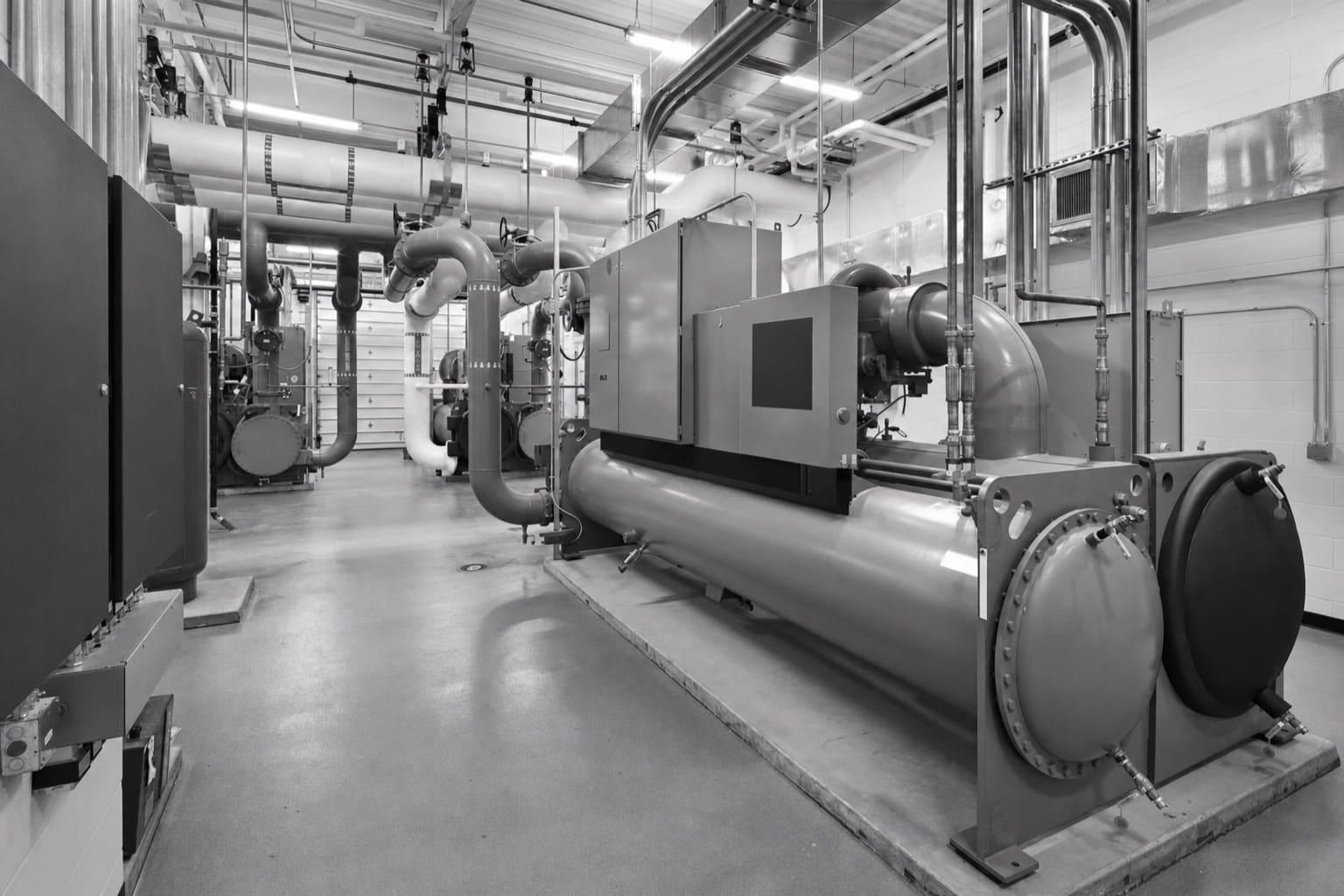
Some replacements are close matches; others are redesigns
The old and new units may look similar while requiring very different field work. Classify the project before comparing prices.
LOWER COMPLEXITY
Compatible replacement
The current capacity remains suitable, the curb and connections can be adapted, infrastructure is adequate, controls are simple, and access supports a planned lift.
HIGHER COMPLEXITY
Changed system
Capacity, heating source, voltage, weight, ventilation, controls, ductwork, roof support, or automation changes. Engineering and coordination become larger parts of the job.
THE SITE REVIEW
Verify the conditions that cannot be priced from a nameplate
A nameplate identifies the existing unit, but it does not show whether the unit serves the space well. The review should connect equipment data with service history and operating complaints. Note rooms that run hot or cold, recurring alarms, noisy zones, moisture concerns, failed compressors, refrigerant leaks, and repairs that return without solving the cause.
The team should inspect the roof or equipment room, curb, duct transitions, drains, outside-air path, filters, electrical service, disconnects, fuel connection, controls, and safe service clearances. Lift access also matters. The contractor needs a practical place for equipment delivery, crane setup, exclusion zones, and removal of the old unit. If work affects occupied areas, the plan should state which spaces lose conditioning and for how long.
For a heat pump option, the review must go further. Confirm electrical capacity, backup heat, low-temperature operation, gas-line impacts, physical fit, and whether existing controls can support the intended sequence. These checks keep an attractive equipment price from becoming an incomplete installed price.
Bring useful records
Provide nameplate photos, service reports, utility history, control information, roof plans, operating schedules, comfort complaints, and any planned change in occupancy or process loads.
REPAIR OR REPLACE
Use risk and remaining value to frame the choice
Age alone does not decide the project. A repair may be reasonable when the failure is isolated, the equipment still serves the building well, and parts and refrigerant support remain practical. Replacement becomes stronger when breakdowns repeat, performance falls, maintenance grows, or the owner faces a costly repair without gaining a dependable service horizon.
DOE guidance treats proactive replacement as a business option because waiting for failure can restrict equipment choice and planning time. EPA rules also govern refrigerant handling in stationary air-conditioning and heat-pump equipment. The quote should therefore identify who recovers refrigerant and how the old equipment is handled. Compare the next repair with the wider cost of downtime, emergency procurement, comfort complaints, and another disruption.
REPAIR CASE
Preserve useful equipment
Choose repair when the fault is limited, the unit still meets the load, and the work restores dependable operation without hiding a larger pattern.
REPLACEMENT CASE
Reset operating risk
Choose replacement when failures repeat, performance is weak, or planned work can avoid the tighter choices and disruption of a failure response.
PROJECT DELIVERY
Plan the outage, lift, startup, and handoff as one project
Procurement should begin only after the major scope assumptions are visible. Confirm the selected equipment, options, availability, approved substitutions, delivery point, storage needs, and responsibility for damage. A promised ship date is not the same as a complete installation schedule. The team also needs access dates, rigging coordination, connection work, startup labor, and time for corrective adjustments.
For an occupied building, phase the work around the spaces each unit serves. Decide whether temporary conditioning is needed and who can approve shutdowns. Protect entrances, parking, deliveries, employees, customers, and roof areas during the lift. State what happens if weather or equipment delivery changes the planned date.
Closeout should be more than a working thermostat. Record airflow and operating checks, confirm control sequences, test heating and cooling functions, label equipment, and deliver manuals, warranty information, filter data, and startup records. Train the facility contact on schedules, alarms, setpoints, and routine care. A complete handoff makes future service easier and gives the owner evidence that the installed system matches the accepted scope.
COMPARE THE QUOTES
Five items every commercial HVAC proposal should show
Compare scope line by line. A low total may reflect missing work rather than a better equipment or installation value.
01
The exact equipment
List capacity, efficiency, heating type, electrical data, options, controls, warranty, and approved substitutions.
02
The complete field scope
Show demolition, recovery, disposal, curb, duct, roof, drain, power, fuel, controls, and insulation work.
03
Access and operating plan
Define delivery, rigging, shutdowns, protected areas, temporary conditioning, schedule assumptions, and occupied-space coordination.
04
Testing and closeout
Include startup, airflow checks, sequence testing, corrections, training, manuals, records, and warranty support.
05
Exclusions and price risks
Identify concealed conditions, infrastructure upgrades, engineering, schedule limits, allowances, and change-order triggers.
Get a defensible number
Price the equipment and the building together.
Send the address, operating target, and target opening date. Flux will identify what must be verified before the project can be priced.
Get a free estimateQuestions
Straight answers.
When should a commercial rooftop unit be replaced instead of repaired?
Replacement deserves serious review when an older unit no longer maintains conditions, needs frequent maintenance, fails repeatedly, or uses much more energy than suitable new equipment. DOE guidance notes that rooftop units over 15 years old can waste substantial energy, but condition, load fit, repair history, downtime risk, and parts support should guide the final choice.
Can a new unit use the same capacity as the old one?
It can, but the old nameplate should not be the only sizing method. Confirm how the space is used now, including occupancy, operating hours, internal equipment, ventilation, and layout. A compatible replacement may simplify installation, while a right-sized selection can address comfort or operating problems carried by the old system.
Is a heat pump rooftop unit a good commercial replacement?
It may be. Compare the heating load, electrical capacity, existing gas service, physical space, equipment availability, controls, backup heat, utility rates, and organizational goals. All-electric, dual-fuel, and cold-climate units solve different problems, so the answer depends on the site and operating plan.
What should happen to refrigerant in the old unit?
EPA regulations under Clean Air Act Section 608 address refrigerant handling and recycling for stationary air-conditioning and heat-pump equipment. The proposal should assign responsibility for refrigerant recovery, equipment removal, documentation, and disposal rather than leaving those tasks unclear.
How can owners compare commercial HVAC installation quotes?
Make each bidder identify the exact equipment and the same field scope. Compare curb and duct work, electrical and fuel changes, controls, rigging, shutdown planning, refrigerant recovery, startup, testing, training, warranty support, exclusions, allowances, and change-order triggers. Equipment-only totals are not comparable installed proposals.
Does a higher-efficiency rooftop unit guarantee lower operating cost?
No. Higher efficiency can reduce energy use, especially when replacing old and inefficient equipment, but results also depend on sizing, heating type, controls, airflow, ventilation, maintenance, utility rates, and operating hours. Ask for the assumptions behind any projected savings.
Sources used for this guide
- [1]betterbuildingssolutioncenter.energy.gov — DOE Advanced Rooftop Unit Replacement Guidance
- [2]betterbuildingssolutioncenter.energy.gov — DOE Commercial Heat Pump Rooftop Unit Replacement Guidance
- [3]betterbuildingssolutioncenter.energy.gov — DOE High-Efficiency Commercial Rooftop Unit Toolkit
- [4]energy.gov — DOE Efficient Commercial Rooftop Air Conditioner Program
- [5]epa.gov — EPA Stationary HVAC Refrigerant Management