THE DIRECT ANSWER
Commercial HVAC replacement and installation in South Jordan.
A complete commercial HVAC replacement covers load review, equipment selection, removal, rigging, curb or pad work, utility connections, controls, startup, and commissioning. Replacement becomes more useful than another repair when an older unit needs frequent service, cannot hold comfort, wastes energy, or puts operations at risk. DOE guidance flags rooftop units over 15 years old for closer replacement review.
A site review must verify capacity, roof or pad conditions, access, electrical service, fuel connections, ventilation, controls, and the work needed around the new unit.
THREE OPERATING CHOICES
Decide what the new system must improve
The first choice is not a brand or model. It is the result the building needs. A direct replacement may restore service with fewer changes, but it can repeat an old sizing or control problem. A right-sized high-efficiency unit may lower energy use and improve comfort when the building use has changed. A heat pump rooftop unit can also provide heating, but it requires a wider review of climate, utility rates, electrical capacity, physical space, gas service, equipment availability, and contractor knowledge.
Start with operating facts. Note hot and cold areas, repair history, occupied hours, ventilation needs, tenant complaints, and any planned changes to the space. Then compare equipment on installed scope, expected performance, service support, and operating impact. This keeps the purchase tied to the facility instead of a sales label.
BUDGET CONTROL
What moves an installed HVAC price
The supplied research does not support one universal installed price. Ask each bidder to separate equipment from the work required to place, connect, control, test, and document it.
EQUIPMENT FIT
Compare commercial HVAC systems by the work they must do
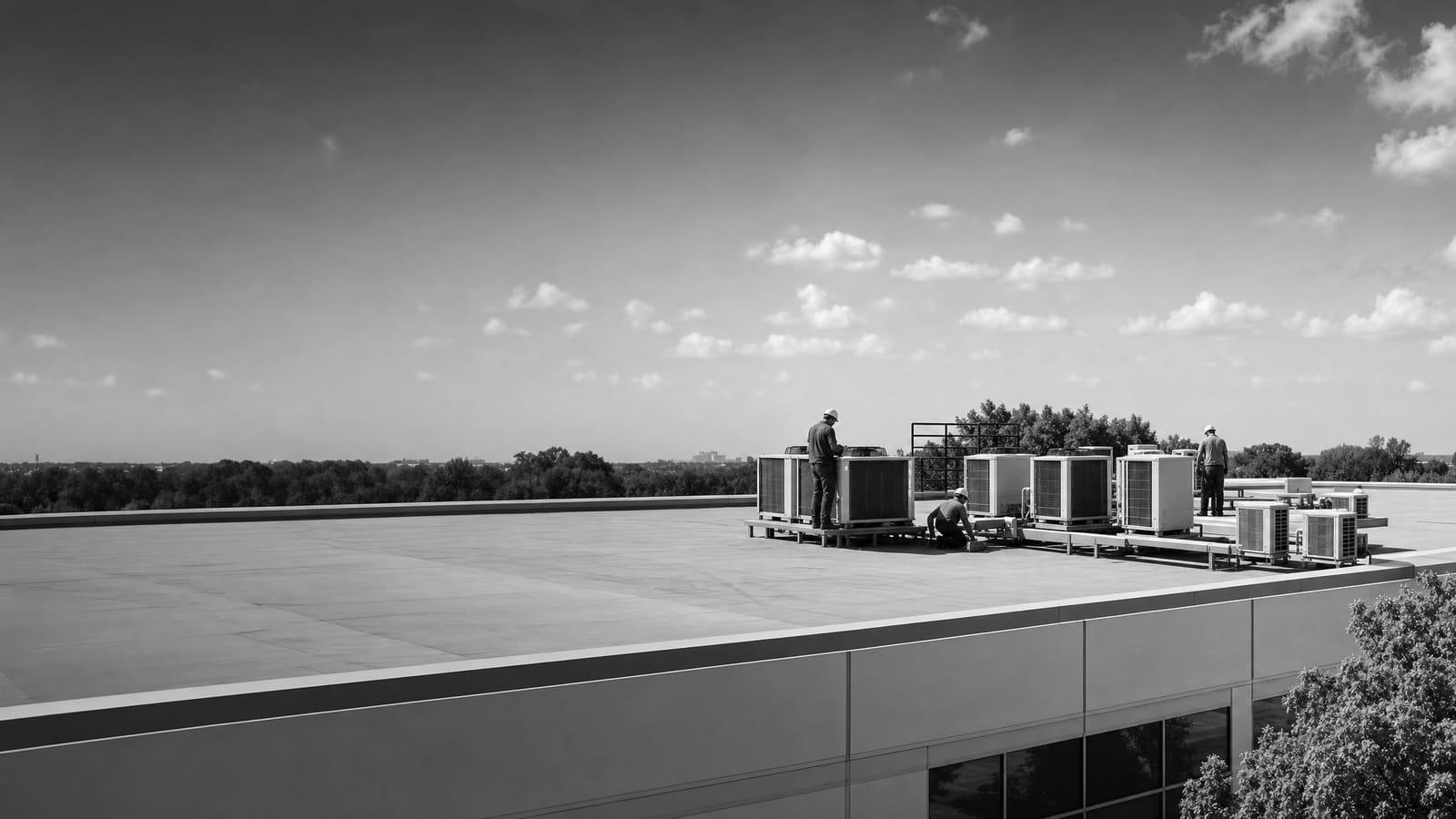
Packaged rooftop units combine major heating, cooling, and air-moving parts in one cabinet. They are common across commercial buildings and condition nearly half of U.S. commercial floor area. They can be practical when the building already has rooftop distribution, suitable structure, and a workable rigging path. A replacement still needs a check of airflow, outdoor air, curb fit, utilities, controls, and service clearances.
A conventional air-conditioning rooftop unit may pair cooling with gas or another heat source. A heat pump rooftop unit adds reverse-cycle heating. DOE guidance says the heat pump decision should account for geography, heating loads, electricity and gas prices, grid emissions, building type, availability, electrical capacity, physical constraints, gas lines, contractor knowledge, and incentives. All-electric, dual-fuel, and cold-climate configurations solve different problems. Do not treat them as interchangeable.
Split systems and larger central systems can suit buildings where rooftop packages do not fit the layout or loads. The buyer should compare usable capacity, part-load control, ventilation, heating performance, maintenance access, noise, redundancy, and control compatibility. Efficiency matters, but the best unit on paper can still perform poorly if airflow, sensors, or operating sequences are wrong.
PROJECT COMPLEXITY
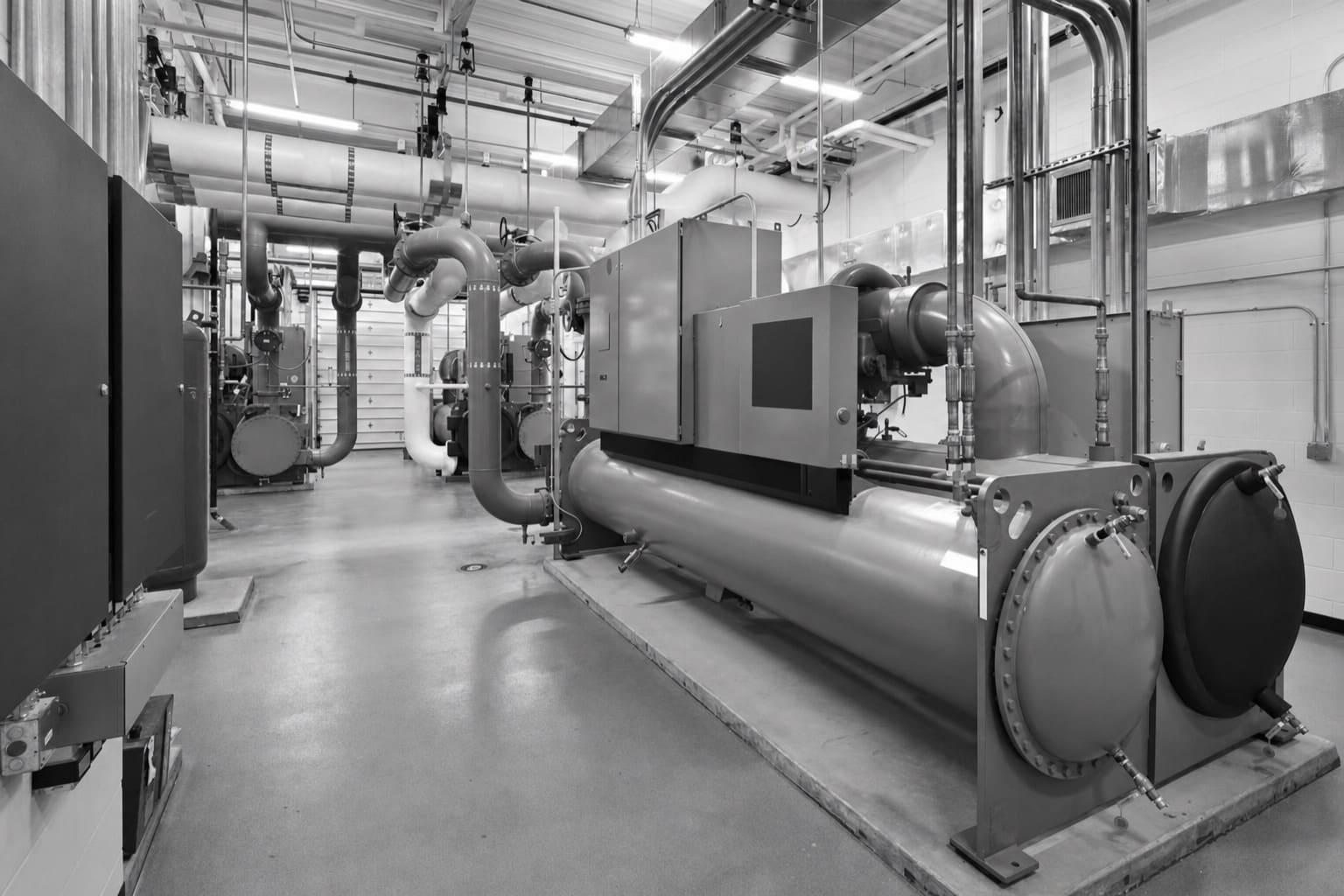
A box swap and a system change are different projects
Define the project type before comparing totals. A lower bid may cover a narrow exchange, while another includes design checks, utility work, controls, testing, and operational planning.
LOWER COMPLEXITY
Compatible replacement
Capacity remains suitable, the curb or pad works, utilities match, ducts are sound, controls are simple, and access allows a planned exchange.
HIGHER COMPLEXITY
Building or system change
Changed loads, electrification, added ventilation, structural work, limited access, automation integration, or phased occupancy require more design and coordination.
SITE REVIEW
Build the scope before requesting a final price
Begin with an equipment inventory. Record model and serial numbers, capacity, heating type, refrigerant, electrical data, controls, approximate age, condition, and service history. Pair that list with occupied schedules, comfort complaints, energy concerns, tenant requirements, and planned changes to the space. Nameplate capacity alone does not show whether the old unit still fits the building.
Inspect the installation path as carefully as the equipment. Confirm roof or ground access, lifting and staging limits, curb or pad condition, duct transitions, drainage, disconnects, gas connections, service clearances, and controls. For a heat pump option, verify available electrical capacity and how peak heating will be handled. DOE guidance also calls for reviewing physical constraints, existing gas lines, equipment availability, and contractor experience.
Set the operating plan before procurement. Identify acceptable outage windows, areas that need temporary conditioning, tenant notices, security rules, parking or loading conflicts, and weather limits. A clear phasing plan protects business operations and gives bidders the same assumptions. It also exposes exclusions before they become change orders.
Useful information for the first review
Provide nameplate photos, service records, occupied hours, problem areas, roof or equipment-room access, control details, and any planned change in tenants, process loads, or building use.
OWNER PRIORITIES
Balance uptime with long-term performance
Emergency failure changes the decision. Restoring safe space conditions may outweigh a longer equipment study, especially when operations, inventory, or occupants are exposed. Even then, compare available units for fit, controls, heating method, warranty, and service support. A fast replacement should not leave undocumented compromises.
Planned replacement gives the owner more choices. DOE notes that facility managers often wait until rooftop units cannot condition the space, require frequent maintenance, or fail. Proactive replacement can avoid replacement-on-failure and create room to evaluate higher-efficiency or heat pump equipment. Older DOE program results also show that high-efficiency rooftop units can deliver material energy savings, but those historical program figures are not a promise for one building. Use a site-specific operating model.
UPTIME
Protect the occupied building
Plan outages, temporary conditioning, tenant communication, safe access, staging, and startup around the hours and spaces that matter most.
OWNERSHIP
Protect the full investment
Compare energy, maintenance, expected repairs, controls, warranties, service access, and replacement timing instead of judging purchase price alone.
PROCUREMENT AND PHASING
Replace equipment in a sequence the facility can absorb
For several aging units, rank replacements by failure risk, comfort impact, repair history, operating hours, and the importance of the served area. The oldest unit is not always first. A newer unit serving a critical room may create more business risk than an older unit serving a space with backup capacity. Grouping similar equipment can simplify design, controls, training, and future maintenance, while separate phases can reduce simultaneous outages.
Ask how long the quoted equipment and pricing remain valid, what happens if the selected model becomes unavailable, and which substitutions require owner approval. Confirm dimensions, weight, curb compatibility, electrical characteristics, heating configuration, controls, and accessories before release. For portfolio work, use one equipment schedule and one written control sequence so sites do not receive inconsistent systems.
Commission each phase before moving to the next. Verify airflow, temperature response, heating and cooling operation, outdoor-air functions, alarms, schedules, sensors, and automation points. Record installed model and serial numbers, refrigerant, filter sizes, setpoints, warranty dates, and training. EPA rules govern refrigerant handling and recycling in stationary air-conditioning and heat pump equipment, so the closeout should identify who recovered refrigerant and how the work was documented.
QUOTE CHECKLIST
Five items every comparable proposal should show
Use one written scope for every bidder. The proposal should make included work, assumptions, exclusions, responsibilities, and closeout requirements easy to compare.
01
Selected equipment
List model, capacity, efficiency, heating type, refrigerant, options, availability, and approved substitutions.
02
Removal and installation
Define recovery, disposal, rigging, curb or pad work, duct transitions, drains, utilities, and weather protection.
03
Controls and operation
State sensors, schedules, sequences, ventilation functions, automation points, alarms, and who programs each item.
04
Testing and closeout
Include startup, airflow checks, functional testing, training, warranties, manuals, refrigerant records, and installed equipment data.
05
Schedule and commercial terms
Show lead time, outage assumptions, phasing, exclusions, allowances, payment terms, change-order rules, and quote validity.
Get a defensible number
Price the equipment and the building together.
Send the address, operating target, and target opening date. Flux will identify what must be verified before the project can be priced.
Get a free estimateQuestions
Straight answers.
When should a commercial rooftop unit be replaced instead of repaired?
Replacement deserves a close review when an older unit needs frequent service, cannot maintain the space, uses too much energy, or creates unacceptable failure risk. DOE guidance notes that rooftop units over 15 years old can waste substantial energy compared with newer models. Age alone does not decide the issue. Compare the next repair with the unit's condition, parts outlook, recent failures, comfort performance, and the business cost of another outage.
Should the new commercial HVAC unit match the old capacity?
Not automatically. A direct match may be reasonable when the building use, occupancy, envelope, internal equipment, ventilation needs, and operating hours remain similar. Recheck the load when any of those conditions changed or when the old system had comfort problems. Oversizing can weaken part-load performance and control, while undersizing can leave the building unable to meet its load. The quote should state how capacity was confirmed.
Is a heat pump rooftop unit a good replacement choice?
It can be, but the choice needs a building-specific review. Compare all-electric, dual-fuel, and cold-climate configurations against heating loads, utility rates, electrical capacity, peak demand, physical space, gas service, emissions goals, equipment availability, and contractor support. DOE says heat pump efficiency falls as outdoor temperature drops, so the design must explain low-temperature capacity and any supplemental or backup heat.
How much does commercial HVAC installation cost in South Jordan?
The supplied research does not establish a reliable local installed-price range, so a universal number would be misleading. Installed cost depends on capacity, equipment type, efficiency, curb or pad work, rigging, access, duct and utility changes, controls, testing, and phasing. Request an itemized proposal after a site review. Each bidder should price the same equipment schedule and work scope so the totals are truly comparable.
What should happen during commercial HVAC commissioning?
The contractor should confirm that the installed equipment matches the approved selection and operates through its required modes. The closeout should verify airflow, temperature response, heating and cooling, schedules, sensors, ventilation functions, alarms, and building automation points. The owner should receive startup records, warranties, manuals, installed model and serial numbers, refrigerant information, filter data, setpoints, and training.
How should refrigerant be handled during replacement?
The proposal should assign responsibility for refrigerant recovery, handling, recycling or disposal, and documentation. EPA Section 608 rules apply to stationary air-conditioning and heat pump equipment and are intended to prevent releases of ozone-depleting substances while governing refrigerant handling and recycling. Ask who performs the work, what credentials are required, and which records will be delivered at closeout.
Sources used for this guide
- [1]betterbuildingssolutioncenter.energy.gov — DOE Advanced Rooftop Unit Replacement Guidance
- [2]betterbuildingssolutioncenter.energy.gov — DOE Commercial Heat Pump Rooftop Unit Replacement Guidance
- [3]betterbuildingssolutioncenter.energy.gov — DOE High-Efficiency Commercial Rooftop Unit Toolkit
- [4]energy.gov — DOE Efficient Commercial Rooftop Air Conditioner Program
- [5]epa.gov — EPA Stationary HVAC Refrigerant Management