THE DIRECT ANSWER
Commercial HVAC replacement and installation in Somerville.
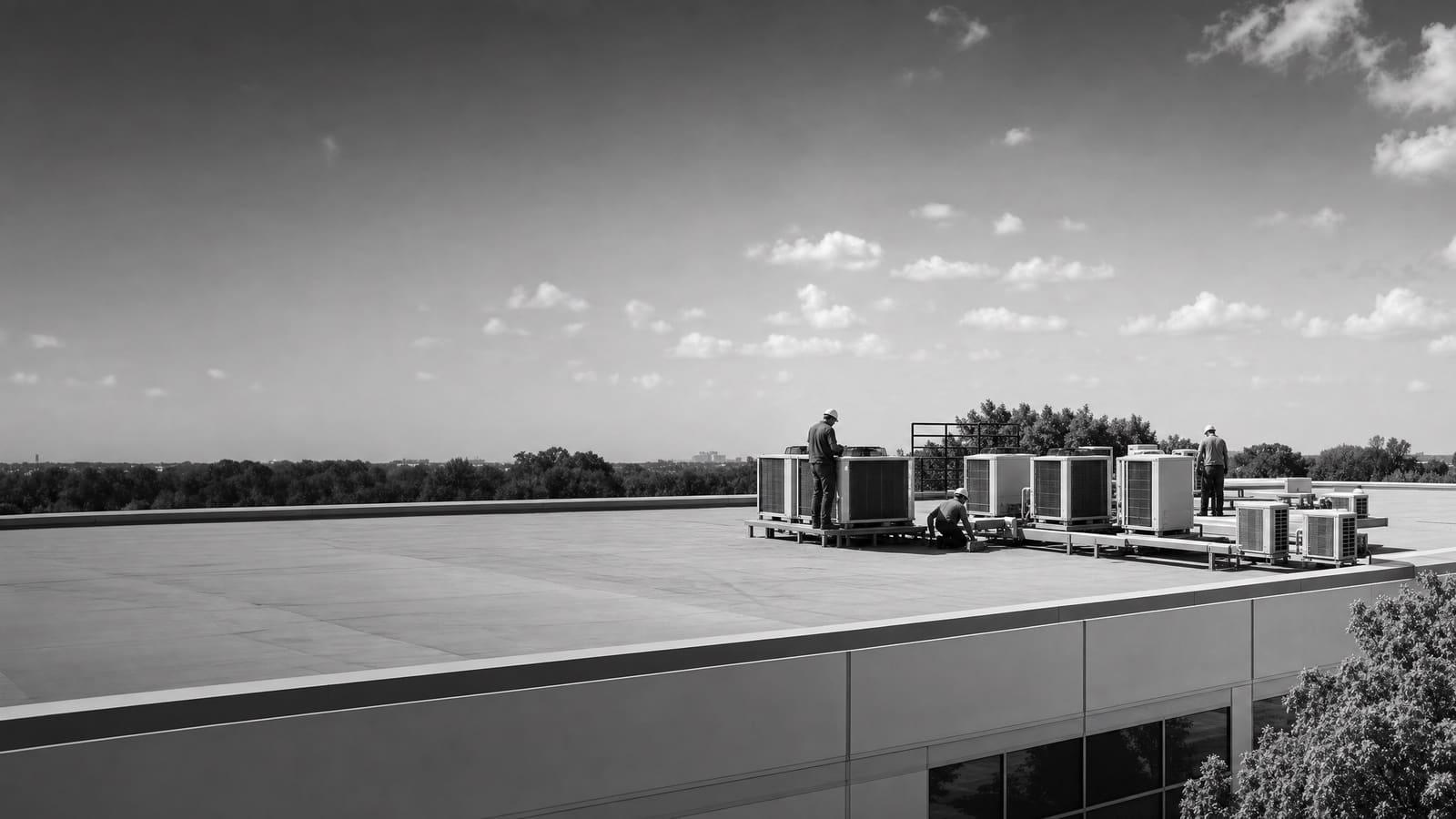
A complete commercial HVAC replacement includes load review, equipment selection, removal, rigging, connection work, controls, startup, testing, and refrigerant handling. Replacement becomes more useful than another repair when an older unit needs frequent service, no longer holds comfort, or creates a growing failure risk. DOE guidance flags rooftop units over 15 years old for closer replacement review.
A site review must confirm capacity, roof or equipment-room access, electrical service, fuel connections, duct condition, controls, and space for the selected unit.
THREE OPERATING CHOICES
Choose the project path before choosing a model
Start with the business problem. A failed unit may demand the fastest sound replacement. A working but unreliable unit gives you time to compare efficiency, heat-pump options, controls, and phasing. A changed space may need a fresh load review rather than another unit with the old capacity.
DOE notes that owners often wait until rooftop equipment stops conditioning the space, needs frequent maintenance, or fails. That timing removes choices and can turn availability into the main selection rule. Planned replacement gives the team time to check electrical capacity, physical constraints, gas service, equipment availability, and contractor experience.
Do not assume the existing nameplate proves the right size. Occupancy, hours, internal equipment, ventilation demand, and space layout may have changed. The useful decision is not simply repair versus replace. It is whether the next system should preserve the old design, correct it, or support a new operating goal.
BUDGET STRUCTURE
What moves the installed price
The supplied research does not support a universal installed price. Build the budget from equipment, field conditions, labor, logistics, and closeout instead.
EQUIPMENT CHOICES
Compare systems by how the building must operate
A packaged rooftop unit can combine heating, cooling, ventilation, and controls in one assembly. This arrangement is common across U.S. commercial buildings. It may support a direct replacement when the roof opening, duct layout, power, fuel, and control points remain compatible. Compatibility still needs to be measured. A curb adapter can solve one fit problem while adding height, weight, airflow resistance, or service-access concerns.
A higher-efficiency air-conditioning rooftop unit keeps the existing heating approach while improving the cooling plant. A heat-pump rooftop unit adds reverse-cycle heating. DOE identifies all-electric, dual-fuel, and cold-climate heat-pump RTUs as distinct choices. The right one depends on heating load, electricity and gas costs, electrical capacity, physical constraints, equipment availability, and operating goals. As outdoor temperature drops, basic heat-pump efficiency falls, so the heating design and backup strategy must be explicit.
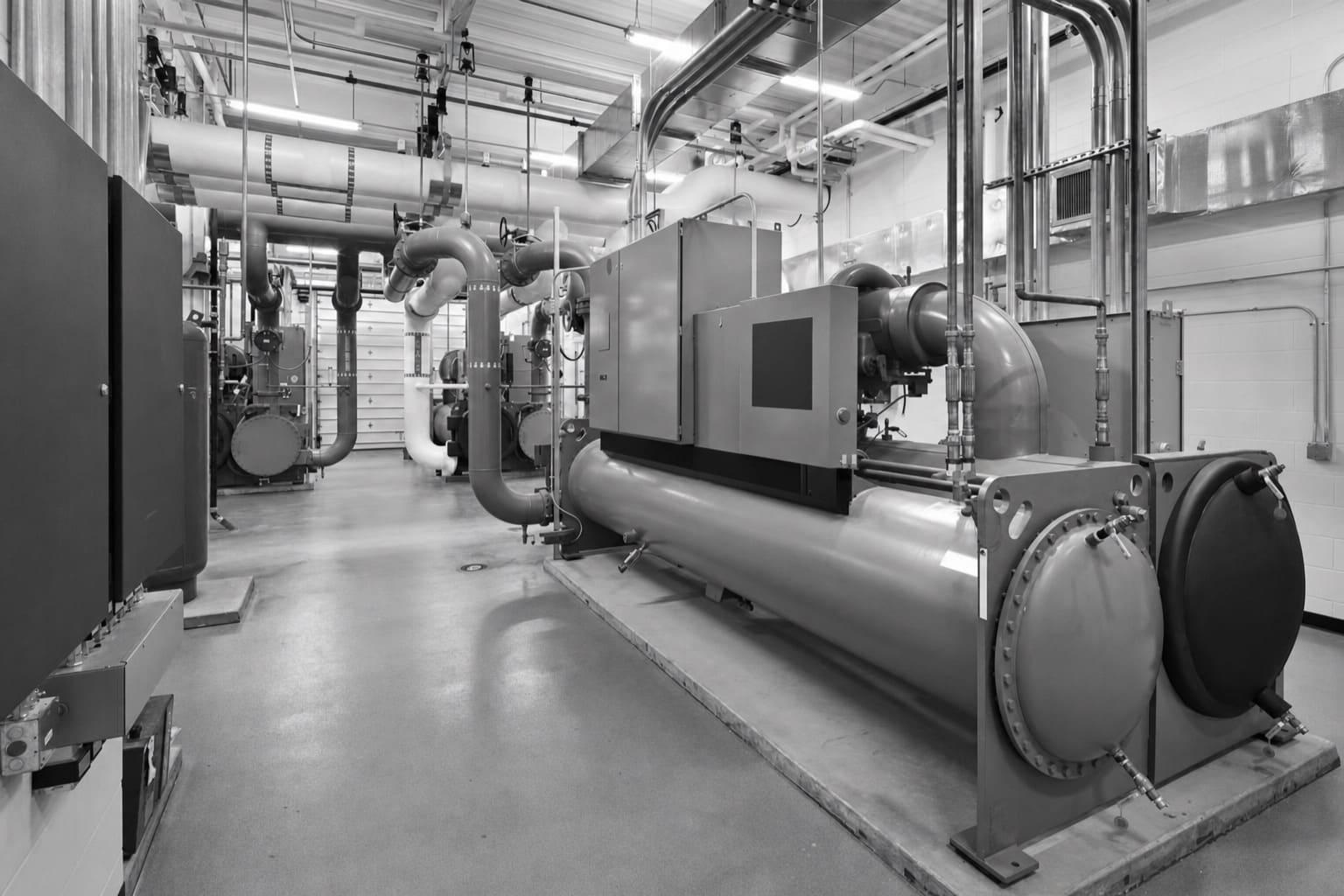
Split systems and larger central systems require a different scope. Indoor and outdoor equipment, refrigerant piping, hydronic components, pumps, air handlers, and controls may be spread across the building. Compare the complete operating system, not only the main machine. A low equipment price can hide expensive distribution, power, structural, or integration work.
PROJECT COMPLEXITY
A box swap and a system change are different purchases
The more the new design departs from existing capacity, fuel, footprint, distribution, or controls, the more engineering and field verification the quote should contain.
LOWER COMPLEXITY
Compatible replacement
The load remains suitable, the new unit fits the existing arrangement, utilities have adequate capacity, and controls need limited changes. The quote can focus on removal, setting, connections, startup, and testing.
HIGHER COMPLEXITY
Conversion or redesign
Capacity, heating source, electrical demand, footprint, ductwork, or automation changes. The project may need deeper load analysis, infrastructure work, transitions, sequences, phasing, and broader commissioning.
SITE REVIEW
Measure the conditions that can break the budget
Begin at the equipment, then follow every connection. Record the manufacturer, model, capacity, heating type, voltage, refrigerant, controls, dimensions, weight, and service clearances. Photograph the nameplate and the full installation. For rooftop equipment, measure the curb and identify the duct openings. Check how the old unit can be removed and how the new one can reach its final position.
Inside the building, document comfort complaints and the spaces served by each system. Confirm operating hours, occupancy patterns, ventilation needs, and heat-producing equipment. Look for damaged ductwork, blocked returns, poor balancing, failed dampers, or control problems. A new unit will not correct a distribution fault by itself.
For a heat-pump conversion, the review must also test the electrical path. DOE guidance calls out electrical capacity, physical constraints, gas lines, climate, equipment availability, contractor knowledge, and utility-bill impact. The design should state how heating works during colder conditions and whether backup heat is included. If a contractor cannot explain these items in the proposal, the buyer cannot compare the risk.
Ask for assumptions in writing
The proposal should identify the load basis, reused components, excluded repairs, available electrical capacity, backup-heat approach, access plan, and conditions that could trigger a change order.
OWNERSHIP VIEW
Balance first cost against operating risk
An older rooftop unit can remain repairable while still becoming a weak business asset. DOE says units over 15 years old can waste substantial energy compared with newer models. Historical DOE reporting also found that older commercial rooftop units could waste $900 to $3,700 per unit each year, but that national figure is not a forecast for a Somerville property. Actual savings require site operating data.
Efficiency is only one part of lifetime cost. Include maintenance demand, service availability, refrigerant strategy, downtime exposure, controls, expected occupancy, and the value of completing work on a planned schedule. For a portfolio, use the same review method across sites so the highest-risk units can be replaced first.
OWNER PRIORITY
Protect the asset
Favor durable equipment, service access, documented commissioning, warranty compliance, and controls that reveal faults before comfort complaints become emergency calls.
OPERATOR PRIORITY
Protect daily service
Plan shutdowns, temporary conditions, tenant notice, staging, and startup around occupied hours. Define who responds if testing finds a problem.
PROJECT DELIVERY
Plan the replacement from survey through handoff
The first phase is discovery. The contractor surveys the equipment, distribution, utilities, controls, access, and operating schedule. The design phase then confirms the load and compares suitable configurations. Selection should include actual availability because a technically strong model does not solve an urgent problem if it cannot arrive within the project window.
Before installation, approve equipment data, connection requirements, control sequences, access needs, shutdowns, and responsibilities. Coordinate removal and setting with building operations. Protect occupied areas and define what happens if weather or delivery changes the schedule. Refrigerant recovery and handling must follow federal requirements. EPA Section 608 rules address refrigerant handling and recycling for stationary air-conditioning and heat-pump equipment.
Startup is not the finish line. Commissioning should verify rotation, electrical readings, refrigerant condition, airflow, temperature response, sensors, dampers, safeties, economizer or ventilation operation when included, and the agreed control sequence. The owner should receive startup records, equipment data, warranty information, control documents, maintenance requirements, and staff training. Final payment is easier to judge when the acceptance tests were defined before work began.
QUOTE CHECKLIST
Five items every comparable quote should show
Require each bidder to price the same outcome. A short total with no scope detail makes equipment, labor, exclusions, and performance hard to compare.
01
Named equipment and performance
Show model, capacity, heating type, efficiency, voltage, controls, accessories, availability, and approved alternates.
02
Complete field scope
List removal, recovery, rigging, curb or pad work, ducts, piping, wiring, fuel work, drainage, and insulation.
03
Controls and testing
Define sensors, automation integration, sequences, balancing, startup tests, commissioning records, and acceptance criteria.
04
Schedule and operating plan
State procurement assumptions, shutdown windows, phasing, staging, temporary conditions, and responsibility for delays.
05
Exclusions and handoff
Identify allowances, change-order triggers, warranty terms, training, closeout documents, and items the owner must provide.
Get a defensible number
Price the equipment and the building together.
Send the address, operating target, and target opening date. Flux will identify what must be verified before the project can be priced.
Get a free estimateQuestions
Straight answers.
When should a commercial rooftop unit be replaced instead of repaired?
Review replacement when the unit needs frequent service, cannot maintain the space, creates unacceptable downtime risk, or no longer fits the building load. DOE notes that rooftop units over 15 years old may waste substantial energy compared with newer equipment. Age alone does not settle the decision; condition, repair history, parts, operating cost, and business risk also matter.
Should the new HVAC unit match the old unit's capacity?
Not automatically. Confirm how the served space is used now. Changes in occupancy, operating hours, ventilation, layout, internal equipment, or building envelope can change the load. Matching an old nameplate can repeat an earlier sizing error.
Is a commercial heat-pump rooftop unit a good replacement option?
It can be, but the choice needs a heating-load and infrastructure review. Compare all-electric, dual-fuel, and cold-climate configurations. Check electrical capacity, physical space, gas service, colder-condition performance, backup heat, utility costs, equipment availability, and service support.
What should commissioning include after installation?
Commissioning should verify airflow, electrical operation, refrigerant condition, temperature response, sensors, dampers, safeties, ventilation functions, and control sequences included in the design. Ask for recorded results, corrected deficiencies, warranty documents, operating information, and staff training.
Who should handle refrigerant from the old commercial system?
The project scope should assign refrigerant recovery and handling to properly qualified personnel. EPA Section 608 rules govern handling and recycling practices for refrigerants used in stationary air-conditioning and heat-pump equipment. The quote should include this work rather than leaving disposal unclear.
How can commercial HVAC bids be compared fairly?
Give bidders the same equipment requirements, site information, operating limits, control scope, testing standard, and handoff requirements. Compare named models, field work, exclusions, schedule assumptions, commissioning, warranty, and change-order triggers—not only the total price.
Sources used for this guide
- [1]betterbuildingssolutioncenter.energy.gov — DOE Advanced Rooftop Unit Replacement Guidance
- [2]betterbuildingssolutioncenter.energy.gov — DOE Commercial Heat Pump Rooftop Unit Replacement Guidance
- [3]betterbuildingssolutioncenter.energy.gov — DOE High-Efficiency Commercial Rooftop Unit Toolkit
- [4]energy.gov — DOE Efficient Commercial Rooftop Air Conditioner Program
- [5]epa.gov — EPA Stationary HVAC Refrigerant Management