THE DIRECT ANSWER
What a commercial HVAC replacement actually includes
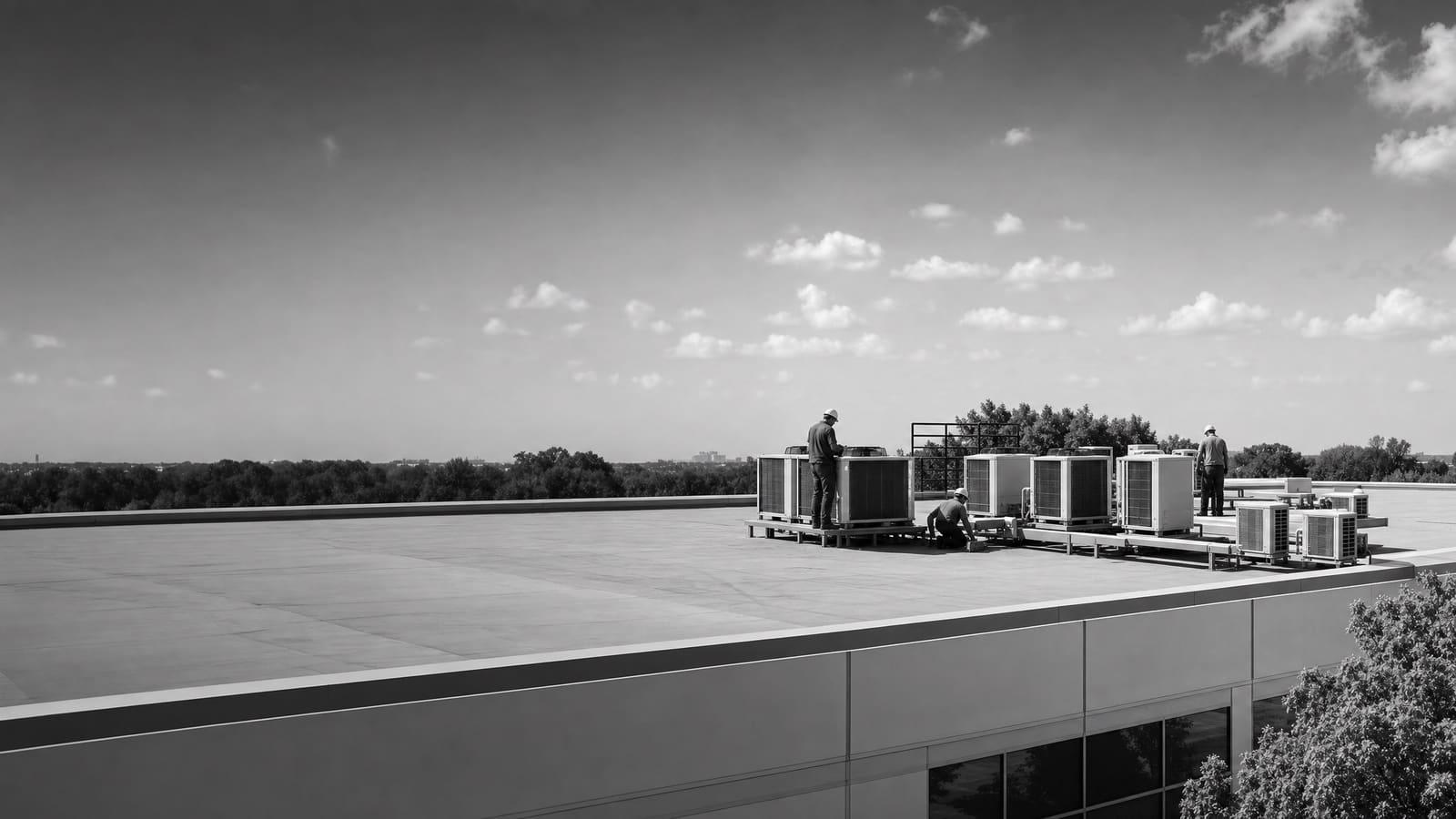
A commercial HVAC replacement covers a confirmed load calculation, equipment selected against real lead times, permits, rigging and the crane set, curb and connection work, controls integration, and commissioning that proves the unit performs to spec. Replacement beats another repair once a unit passes roughly 15 years, because older rooftop units can waste $900 to $3,700 each per year against current models. That waste runs every month between service calls, whether or not anything is broken.
A site review still has to confirm tonnage against current occupancy, curb and roof deck condition, available electrical capacity, and crane access before any price on the page is real.
THREE WAYS TO GO
Three operating choices for a rooftop replacement
Rooftop equipment cools close to half of all commercial floor space in the country, so most San Marcos buildings land on one of three paths when a unit reaches the end of its life. The right path depends on whether the space still works the way it did when the last unit went up.
The fastest option keeps the same footprint and the same fuel. The middle option keeps gas heat but corrects sizing and efficiency. The third changes the heating source entirely. Federal guidance treats the heat pump question as a site-by-site call driven by climate, electricity and gas prices, electrical capacity, physical constraints on the roof, existing gas lines, and available incentives. San Marcos sits in the West, where DOE says today's heat pump rooftop units are an appropriate solution and can meet most or all of the winter heating demand. That makes the conversation worth having before the order goes in, not after.
WHAT MOVES THE NUMBER
The budget lines that decide the installed price
No single installed price covers commercial work, because tonnage, roof condition, and access vary building to building. These are the lines that separate a low quote from a high one, and each should be priced rather than assumed.
IN PRACTICE
How to choose the unit you actually keep
The most expensive mistake in commercial HVAC is waiting for the unit to die. Facility managers usually delay a replacement until the equipment no longer conditions the space, needs constant service, or fails outright — and replacing on failure costs more than replacing on a plan. A unit that quits in August gets whatever is on a truck that week, not the equipment that fits the building.
Age is the cleanest trigger. Rooftop units past 15 years waste real money against current models, and that waste has been measured at $900 to $3,700 per unit each year. Run that across a roof carrying four or six units and the case for a planned sequence usually writes itself.
Efficiency tier is the second decision. The high-performance specification DOE set with manufacturers targeted units that cut energy use by up to 50 percent against the older standard, and more than 20 models now exceed it. The premium tier is not automatically right for every building, but it should be priced next to the base unit so the difference is a choice instead of a default. A building running long hours usually earns the gap back. A lightly used space may not.
COMPLEXITY CHECK
What makes a replacement simple or hard
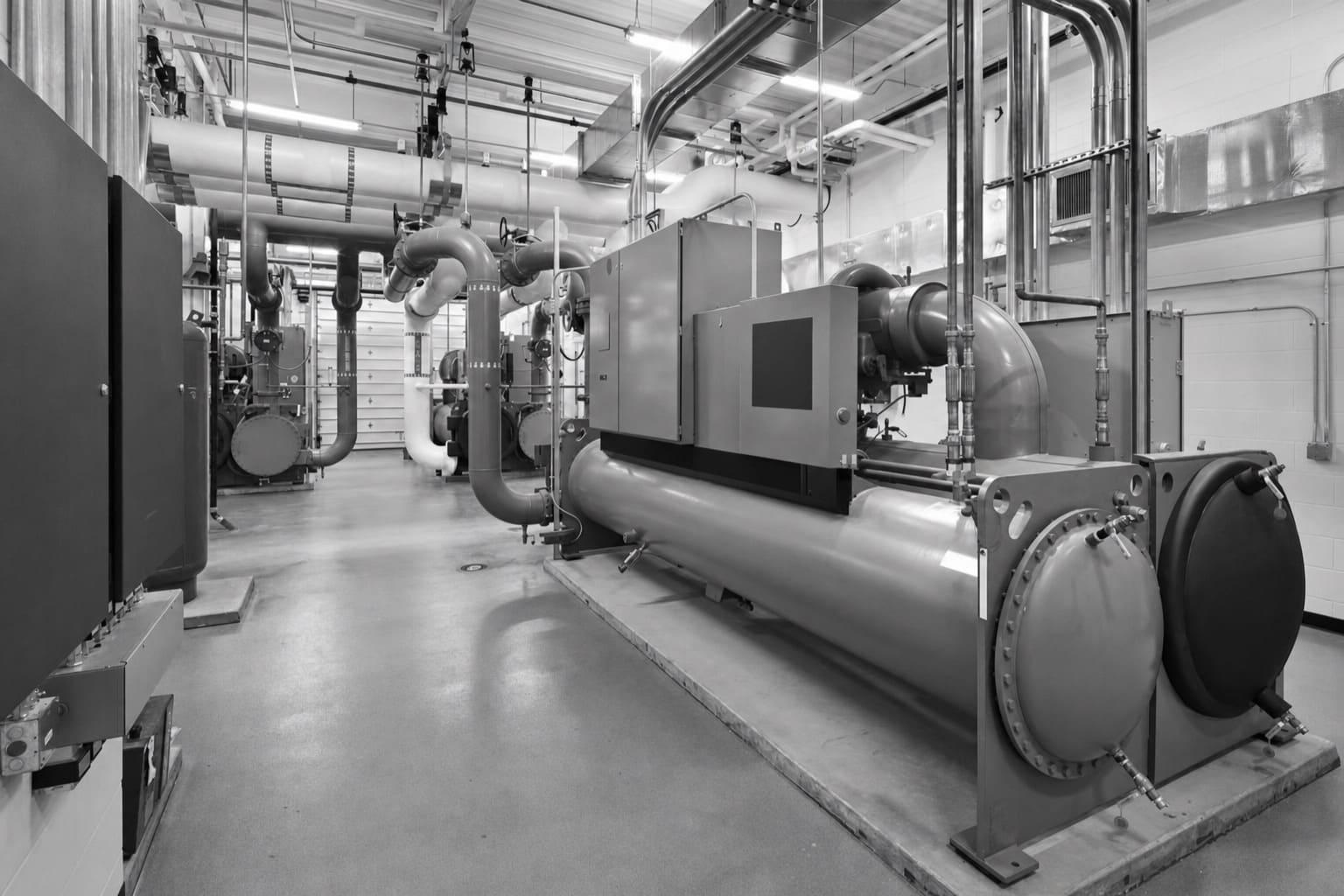
Two buildings with the same tonnage can price very differently. The gap is almost always access, infrastructure, and how much of the system is changing at once.
LOWER COMPLEXITY
Straight swap on a sound roof
Same tonnage, same fuel, an existing curb in good condition, clear crane reach from the lot, and no change to the electrical service. Permits are routine, the set happens in a morning, and the schedule is driven by equipment lead time rather than trades stacking up.
HIGHER COMPLEXITY
Fuel switch or a changed footprint
A larger unit, a new curb, or a move to electric heat. Electrical capacity, physical constraints on the roof, and existing gas lines are the three infrastructure checks that decide whether a heat pump rooftop unit fits, and any one of them can add engineering, a service upgrade, and weeks to the schedule.
BEFORE THE QUOTE
What a real site review has to confirm
A quote written from a nameplate photo is a starting point, not a price. The nameplate tells you what someone installed years ago. It does not tell you whether that tonnage still matches the space, whether the curb is sound, or whether the deck can carry a heavier unit.
A useful site review walks four things. First, load: occupancy, plug loads, lighting, and envelope changes since the last unit went in, because twenty years of tenant turnover rarely leaves a building on its original load. Second, the curb and deck: whether an adapter works or the opening has to be reframed. Third, service: the panel, the capacity available, and the gas line if it stays in the design. Fourth, access: where the crane sets up, how far it has to reach, and how many parking stalls come out of service and for how long.
That last one decides more schedules than owners expect. A tight lot with tenant parking can push the lift to a weekend or an early morning, and that changes the labor line. Better to learn it during scoping than on the morning the crane starts billing by the hour.
Ask for the load calculation, not just the tonnage
If a contractor quotes a size without showing how it was derived, you are buying the last installer's assumption. A short calculation against current use either confirms the existing tonnage or explains why it should change, and it costs far less than a unit that is wrong for the next fifteen years.
IN SAN MARCOS
Permits and the roof schedule
In California, a commercial rooftop replacement is permitted work. Building departments list any electrical, plumbing, or mechanical upgrade or repair as requiring a permit, so the job needs one even when the new unit lands on the existing curb. Confirm with the San Marcos building division which reviews apply to your scope before you commit to a date, because a replacement that grows in tonnage or footprint usually pulls electrical and structural review in alongside the mechanical permit.
Re-roofing sits in its own permit category, both overlay and tear-off, and that matters for sequencing. If the roof is within a few years of replacement, doing the roof and the rooftop units in the wrong order means paying twice for flashing, curb work, and crane mobilization. Ask the roofer and the mechanical contractor for one combined schedule before either scope is awarded.
Pull the permit questions early
Permit and inspection time is calendar time, not labor time. Ask the building division what your scope triggers while equipment is still being priced, so review runs in parallel with the lead time instead of starting after it.
OWNERSHIP
Two things that outlive the install
The install ends in a morning. What you own afterward is a service relationship and a refrigerant position, and both are far easier to set up correctly on day one than to fix in year three.
Refrigerant is the piece most owners underestimate. EPA rules under Section 608 govern how refrigerant is handled and recycled in stationary air conditioning and heat pump equipment, including recovery when a unit is serviced or taken out of service. New commercial equipment ships on newer refrigerants, so a roof replaced one unit at a time will run a mixed fleet for years. That is perfectly workable, but only if someone is tracking which unit holds what and what your service contract actually covers.
SERVICE
Warranty depends on documentation
Startup readings, charge, airflow, and control settings should be recorded and handed to you, not just filed by the installer. Manufacturers ask for that record when a compressor fails in year four, and a missing startup sheet is an expensive gap to discover then.
REFRIGERANT
Plan for a mixed roof
Replacing units one at a time leaves older and newer refrigerants side by side. Keep a simple list of unit, refrigerant, and charge, and make sure recovery and recordkeeping obligations are written into whoever holds the service contract.
PHASING AND PROCUREMENT
Replacing a roof full of units without a crisis
A building with several rooftop units almost never needs all of them replaced in one year, and trying usually produces a bad capital ask and a worse schedule. The better pattern is to rank the roof. Age, service history, and how critical the space is give you an order. The oldest unit over a critical tenant space goes first. The newest unit over storage waits.
Once the order is set, procurement gets easier. Lead times can be checked before a unit fails, one crane mobilization can set two units in the same visit, and next year's replacement gets budgeted a year ahead instead of approved in a panic. The federal rooftop campaign that worked with more than 200 organizations to upgrade over 43,000 units rests on exactly that idea: planned upgrades, not emergency swaps.
Lifetime cost follows the same logic. The equipment line is what you pay once. The energy line is what you pay every month for fifteen years or more, and on an aging unit that line has quietly been running $900 to $3,700 above where it should be. When two quotes land close together, the tiebreaker is usually what the unit costs to run, not what it costs to land.
THE QUOTE
Five things a comparable quote has to show
Two quotes are only comparable when both spell out the same scope. If any of these is missing, ask for it before you compare numbers, because the gap is usually exactly where the cheaper quote got cheaper.
01
Equipment, tonnage, and efficiency tier
Make, model, capacity, and the efficiency level quoted, with the alternate tier priced beside it.
02
Equipment lead time
A real availability date, not a guess, since the schedule is set by the order rather than by the crew.
03
Curb, roof, and structural scope
Whether an adapter fits or the opening gets reframed, and who owns the flashing and the roof patch.
04
Rigging, access, and lot closure
Crane size, staging location, stalls affected, and the hours the lot is out of service.
05
Permits, commissioning, and closeout
Which permits are included, who calls inspections, and what startup documentation you receive at handoff.
Get a defensible number
Price the equipment and the building together.
Send the address, operating target, and target opening date. Flux will identify what must be verified before the project can be priced.
Get a free estimateQuestions
Straight answers.
When does replacement beat another repair?
Once a rooftop unit is past about 15 years, a repair buys time on equipment that is already wasting energy every month. That waste has been measured at $900 to $3,700 per unit each year against current models. If the repair is major and the unit is old, replacement is usually the cheaper decision even before comfort enters the conversation.
How much does commercial HVAC installation cost in San Marcos?
There is no single installed price, and anyone quoting one before seeing the roof is guessing. Tonnage, efficiency tier, curb and structural work, crane access, and electrical capacity set the number. Ask for those as separate lines so you can compare two quotes honestly instead of comparing two totals.
Does a rooftop replacement need a permit?
Yes. California building departments require permits for mechanical upgrades and repairs, and a replacement that adds tonnage or footprint usually brings electrical and structural review with it. Confirm the specific reviews with the San Marcos building division while equipment is still being priced, so permit time runs alongside lead time.
Should we switch to a heat pump rooftop unit?
It is worth pricing. Heat pump rooftop units are an appropriate solution across most of the West and can meet most or all of the winter heating demand there. The deciding factors are electrical capacity, physical constraints on the roof, existing gas lines, your utility rates, and any incentives available at the time you buy.
How long is the space without cooling?
The set itself is short. What stretches a replacement is equipment lead time and permit review, which is why both belong on the quote next to the price. Planning the swap before the unit fails is what keeps a failure from turning into weeks of rented temporary cooling.
Sources used for this guide
- [1]betterbuildingssolutioncenter.energy.gov — DOE Advanced Rooftop Unit Replacement Guidance
- [2]betterbuildingssolutioncenter.energy.gov — DOE Commercial Heat Pump Rooftop Unit Replacement Guidance
- [3]betterbuildingssolutioncenter.energy.gov — DOE High-Efficiency Commercial Rooftop Unit Toolkit
- [4]energy.gov — DOE Efficient Commercial Rooftop Air Conditioner Program
- [5]epa.gov — EPA Stationary HVAC Refrigerant Management
- [6]californiacity-ca.gov — HVAC Permits