THE DIRECT ANSWER
What a commercial HVAC replacement includes
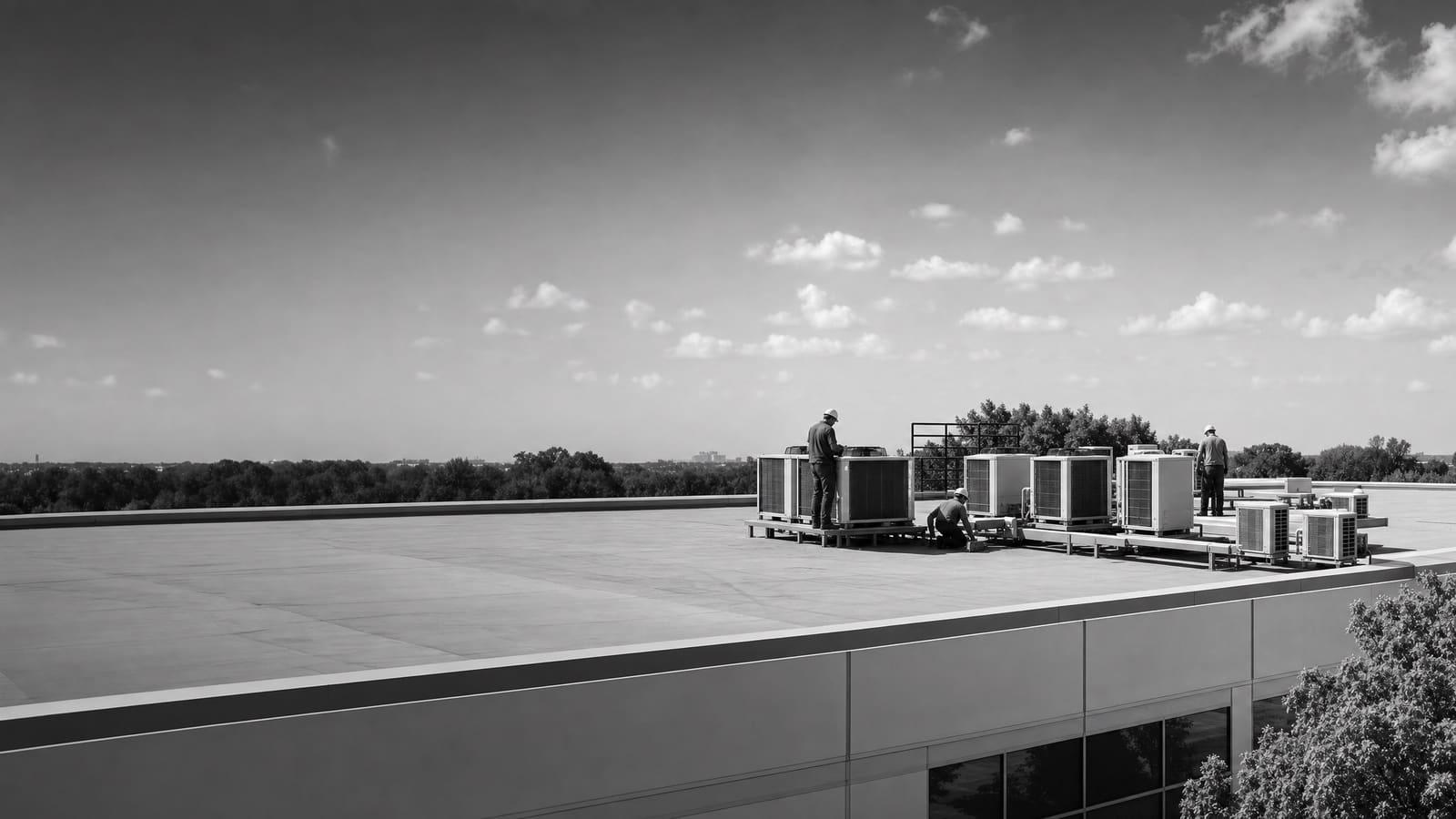
A commercial HVAC replacement includes a load check, equipment selected against lead time, the mechanical permit, refrigerant recovery on the old unit, the crane set, and commissioning before handoff. Replacement usually beats another repair once a rooftop unit passes 15 years and service calls start repeating. Old, inefficient units waste roughly $900 to $3,700 a year each in energy alone, which often decides the timing before a failure does.
A site review still has to confirm curb size, roof structure, crane reach, and the electrical and gas service at the unit. Those items move the number more than the tonnage on the old nameplate.
THREE WAYS TO GO
The choice you are actually making
Most commercial replacements come down to three options, and the right one depends on how long you plan to hold the building and what the roof can support.
Like-for-like is the fastest path back to cooling. Same curb, same connections, simple permit. It also carries forward whatever sizing mistake the old unit had.
A high-efficiency replacement costs more up front and earns it back through the meter. A federal challenge specification pushed manufacturers to build rooftop units that cut energy use by up to half against the older standard, and more than twenty models exceeded it, so this is catalog equipment rather than custom engineering.
A heat pump rooftop unit adds reverse-cycle heating to the same box. Across the West, where winters stay mild, today's heat pump units can handle most or all of the winter heating load. Whether it saves money depends on your electric and gas rates and on the electrical capacity already at the roof.
WHAT MOVES THE NUMBER
Where the money goes on a rooftop replacement
These are the lines that actually move a rooftop replacement price. Ask for each one priced separately, so you can see what is equipment and what is building work.
HOW TO BUY IT
Size it for the building you have now
Start with the load, not the nameplate. Rooftop units get replaced at the size of the unit that failed, and that number came from a building that may not exist anymore. Occupancy changed. Lighting changed. Plug load changed. A unit sized to twenty-year-old assumptions short-cycles, holds humidity, and leaves the complaints you already have exactly where they are.
Then be honest about age. A rooftop unit past 15 years is often the most expensive equipment on the building — not because of what it costs to fix, but because of what it burns every month. Waiting for total failure removes your choices. You take whatever is on a truck, at whatever price, on whatever day a crane is free.
Finally, put availability next to price. Lead time is a real term of the deal, and a quote that names a model without naming a date is only half a quote. Planned replacement lets you pick the equipment, schedule the lift around your tenants, and keep running on the old unit until the new one is staged.
SIDE BY SIDE
Simple roof, complicated roof
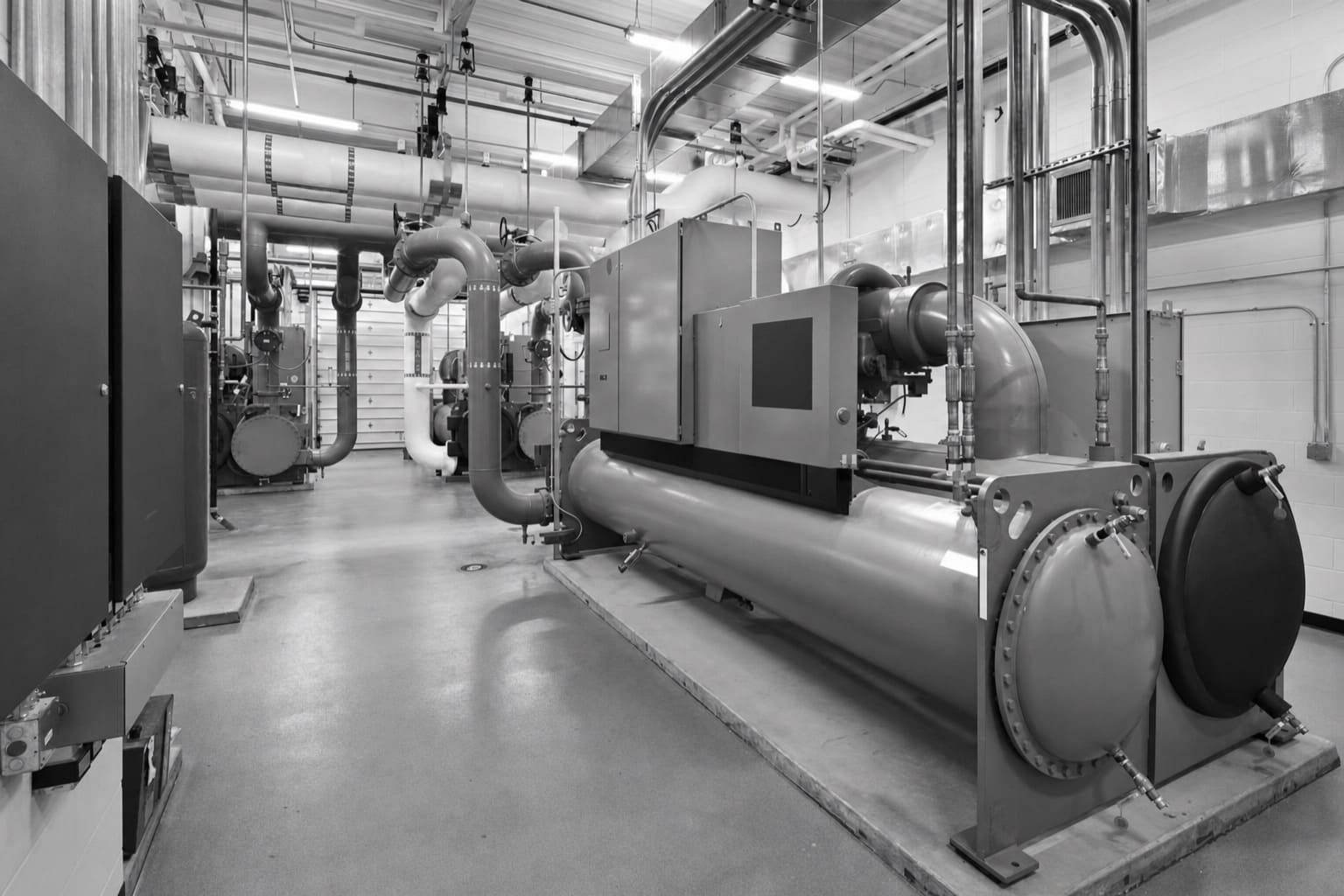
Two buildings with the same tonnage can price very differently. What separates them is usually access and infrastructure, not the equipment itself. Read your roof against these two lists before you set a budget.
SIMPLER
Straight swap conditions
The new unit closely matches the old footprint, the curb is sound, a crane can reach from an open lot, and the gas and electric at the roof are already sized for the replacement. Permitting is mechanical and electrical, and the work fits one closure.
HARDER
What adds scope
Tonnage grows, the footprint changes, or the curb needs structural review. Crane reach is blocked by the building or a tight lot. An all-electric unit needs service the panel does not have. Any one of these adds engineering, review time, and a second closure.
SCOPING IT
What a real site review has to answer
A useful site review answers questions in order. What is the load today. What is on the roof now, including curb dimensions and the condition of the structure under it. What service is at the unit — gas line, electrical feed, panel capacity. How a crane reaches the spot, and what that costs the parking lot for a day. What the city requires before anyone starts.
The old unit also has to leave correctly. Handling and recycling of refrigerant in stationary air conditioning and heat pump equipment is federally regulated, so removal includes a documented recovery step. That is not an optional line, and a bid that skips it is not cheaper — it is incomplete.
If an all-electric replacement is on the table, move the electrical review to the front. Physical constraints, gas line status, and electrical capacity are the practical gates on heat pump rooftop units, and all three are cheaper to check on paper than to discover on crane day.
Ask for this before you compare bids
Curb dimensions, roof structure condition, panel capacity at the unit, the crane staging plan, and the permit scope. Two bids are only comparable when both were written after someone measured those five things.
IN RICHMOND
Permitted work, and the roof underneath it
Permits in California cities are not limited to new equipment. Building departments require a permit for mechanical, electrical, and plumbing upgrades and repairs, which means a rooftop replacement is permitted work even when the new unit lands on the same curb with the same connections. Build the application into the schedule instead of treating it as paperwork that follows the install.
Re-roofing is permitted separately, and that matters for sequencing. If the membrane is near the end of its life, running the roof and the unit as two unrelated projects means two permits, two access windows, and a new unit sitting on an old roof that has to be worked around later. Confirm the roof's condition during the HVAC site review and decide the order then.
Decide the roof and the unit together
If the membrane has several years left, replace the unit now and flash the new curb into the existing roof. If the roof is due within a year or two, sequence the reroof first and set the new unit on fresh work.
TWO THINGS TO SETTLE
Who pays, and how many units
Two questions decide how much planning a replacement deserves: who holds the asset, and how many units sit on the roof.
If you own and occupy, the savings land in your own operating budget, so a higher efficiency tier is easier to justify. If you lease, the split between capital cost and utility savings usually lives in the lease, and that language sets the specification before any engineering does.
Fleet math is different from single-unit math. One failure is an emergency. Six units of the same vintage is a schedule you control, and the second and third replacements cost less to plan than the first.
OWNERSHIP
Who gets the savings
An owner-occupier keeps the utility savings and can price efficiency against them. In a leased building, read the lease first — it decides whether landlord or tenant carries the equipment cost and who benefits from the lower bill.
OPERATIONS
One unit or a fleet
Rooftop units condition close to half of all commercial floor area in the country, and most roofs carry several of the same age. Replacing them on a plan spreads the spend, repeats the rigging setup, and keeps you out of emergency pricing.
PLANNING AHEAD
Phasing, procurement, and what it really costs
The cheapest rooftop replacement is rarely the one with the lowest bid. It is the one that happens on your calendar. Emergency replacement takes away every lever you have: model choice, efficiency tier, incentive paperwork, and the ability to schedule a crane on a day the lot is empty.
Phasing works when you inventory the roof honestly. Record each unit's age, tonnage, refrigerant, and repair history in one place. Units past 15 years go on the replacement list with a rough year attached. Anything failing twice a season moves to the front. That inventory turns a run of surprises into a budget line you can defend.
Procurement follows the same logic. Ask for the installed price, the lead time, and the efficiency tier together, then decide. Organizations working through the federal rooftop campaign upgraded more than 43,000 units and cut roughly $37 million a year from their combined energy bills — the plain argument for treating a roof as a program instead of a series of repairs. Lifetime cost is what you actually pay: purchase, energy, service, and the downtime you take when a unit dies in August.
BEFORE YOU SIGN
Five things a comparable quote shows
A quote is comparable when a second contractor could bid the same scope from it. These five items make bids line up instead of guessing at each other.
01
Equipment and efficiency
Manufacturer, model, tonnage, efficiency tier, and heating type, with the load calculation that justifies the size.
02
Lead time and start date
A realistic ship date for that specific model, not a general range, plus what happens to the schedule if it slips.
03
Roof and rigging scope
Curb adapter, any structural work, crane size, staging area, and how long the lot stays closed.
04
Permits and inspections
Who pulls the mechanical and electrical permits, who meets the inspector, and whether fees are inside the price.
05
Startup and commissioning
Charge, airflow, and controls verified and documented, warranty registered, and refrigerant recovered from the old unit.
Get a defensible number
Price the equipment and the building together.
Send the address, operating target, and target opening date. Flux will identify what must be verified before the project can be priced.
Get a free estimateQuestions
Straight answers.
When is replacing better than another repair?
Once a unit is past 15 years and the same repairs keep coming back, replacement usually wins on operating cost alone. Old, inefficient rooftop units waste roughly $900 to $3,700 a year each. Two more service calls plus a season of that waste often costs more than the difference between repair and replacement.
Do you need a permit to replace a rooftop unit?
Yes. California building departments require permits for mechanical, electrical, and plumbing upgrades and repairs, so a replacement is permitted work even on the same curb. Confirm the exact scope with the city before the crane is booked, and make sure the quote says who pulls the permit and who meets the inspector.
Does a heat pump rooftop unit make sense here?
Heat pump rooftop units are best suited to mild-to-moderate winter heating, and across the West today's units can carry most or all of the winter load. The real test is local: your electric and gas rates, and whether the electrical capacity at the roof supports an all-electric unit without a service upgrade.
What happens to the refrigerant in the old unit?
It gets recovered, not vented. Handling and recycling of refrigerant in stationary air conditioning and heat pump equipment is federally regulated, so proper recovery and documentation are part of the removal. Expect to see it on the scope of work rather than buried in labor.
How do you compare two bids that are far apart?
Line them up on scope, not the total. Check tonnage and efficiency tier, curb and structural work, crane and lot closure, permit responsibility, and commissioning. Most large gaps come from one bid assuming the curb fits, the panel has capacity, or the roof is fine — assumptions a site review would have settled.
Sources used for this guide
- [1]betterbuildingssolutioncenter.energy.gov — DOE Advanced Rooftop Unit Replacement Guidance
- [2]betterbuildingssolutioncenter.energy.gov — DOE Commercial Heat Pump Rooftop Unit Replacement Guidance
- [3]betterbuildingssolutioncenter.energy.gov — DOE High-Efficiency Commercial Rooftop Unit Toolkit
- [4]energy.gov — DOE Efficient Commercial Rooftop Air Conditioner Program
- [5]epa.gov — EPA Stationary HVAC Refrigerant Management
- [6]californiacity-ca.gov — HVAC Permits