THE DIRECT ANSWER
What a commercial HVAC replacement actually includes
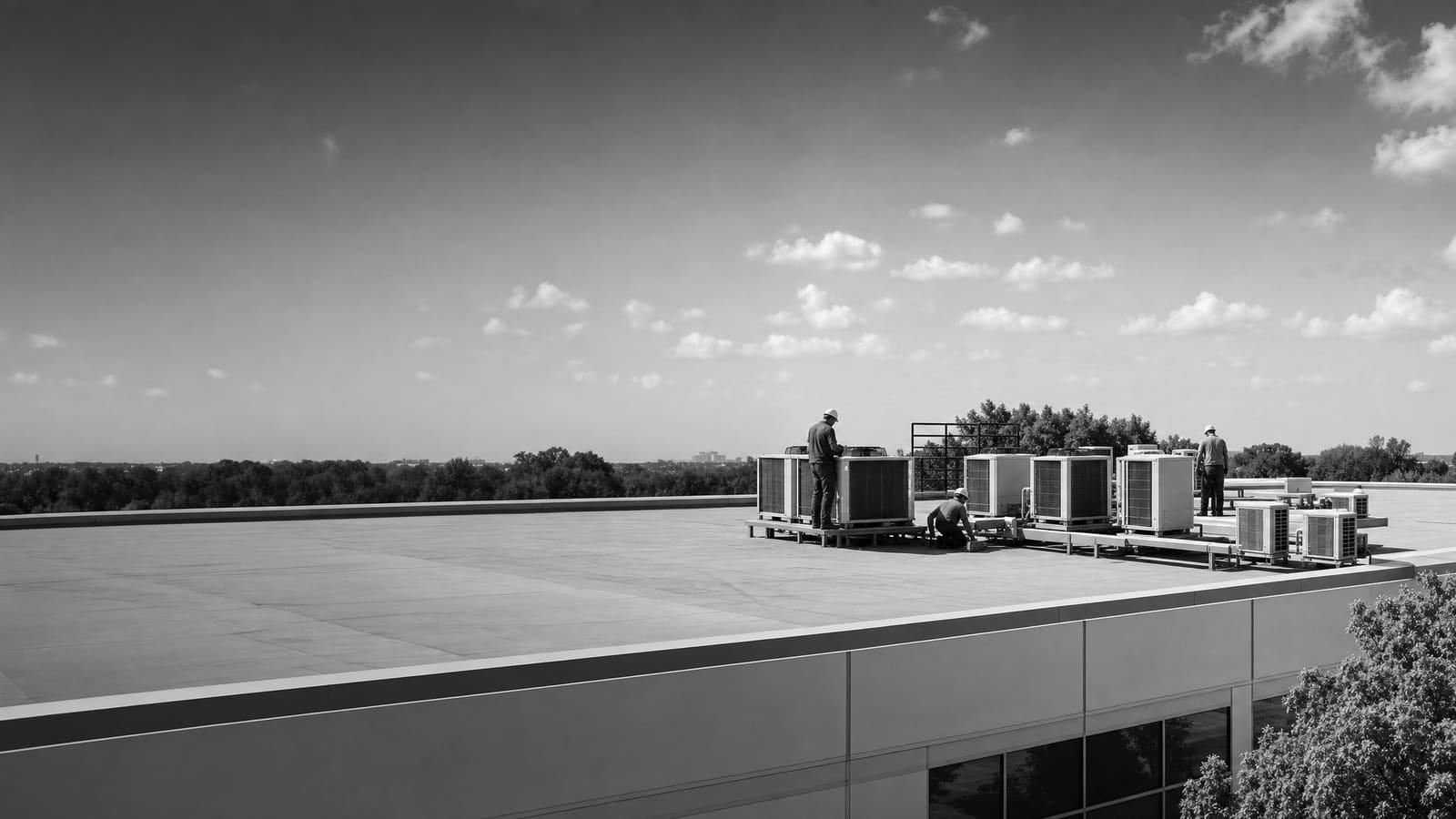
A commercial HVAC replacement covers a confirmed load calculation, equipment chosen against real lead times, the rigging and roof work, mechanical and electrical connections, permits and inspections, and commissioning that proves the system performs to spec. Replacement usually beats one more repair once a unit passes fifteen years. DOE puts the annual waste from an old, inefficient rooftop unit at $900 to $3,700 per unit — money that leaves the building every month whether or not the compressor is the thing that failed.
A site review still has to verify the actual load for how the space is used today, the curb and the structure under it, available electrical capacity, and crane access before any of that price is real.
THREE WAYS TO GO
Three replacement paths for a rooftop unit
Most commercial replacements land on one of three paths, and the right one depends on whether the building still uses the space the way it did when the old unit went in.
The first path keeps everything as it is and gets conditioning back fastest. The second recalculates the load and buys efficiency, which pays back on roofs where the unit runs long hours. The third replaces gas heat with a heat pump, which is now a mainstream option in the West rather than an experiment.
Price them together. A bid sheet carrying all three, each with its own installed price and equipment lead time, is the only way to see what the efficiency tier actually costs and what it gives back. The comparison is worth doing even when you already suspect the answer.
WHAT MOVES THE NUMBER
Where the money actually goes
No two rooftops price the same, but the line items are consistent. These are the six that move the total, roughly in order of how much room they have to move.
CHOOSING EQUIPMENT
Buying the right tier without over-buying
Start with the load, not the nameplate. A unit installed twenty years ago was sized for a building that no longer exists in the same form. Occupancy changed, lighting and plug loads changed, and the envelope may have been touched twice. Carrying the old tonnage forward carries the old sizing mistake forward with it.
Once the load is honest, the equipment question gets simpler. More than twenty rooftop models on the market now beat the high-efficiency specification DOE developed with manufacturers, so you are choosing a performance tier rather than a brand. Ask for two or three options at different tiers, each with the installed price and the lead time attached. That is the comparison that means something.
The heat pump question deserves a real answer instead of a default. DOE guidance is direct about it: for most of the U.S. South and West, today's heat pump rooftop units can handle most or all of the winter heating demand. What decides it at your building is electrical capacity, the gas line, and whether your rates make the swap pencil. If the panel has room, it belongs on the sheet.
COMPLEXITY CHECK
What makes a replacement simple, and what makes it hard
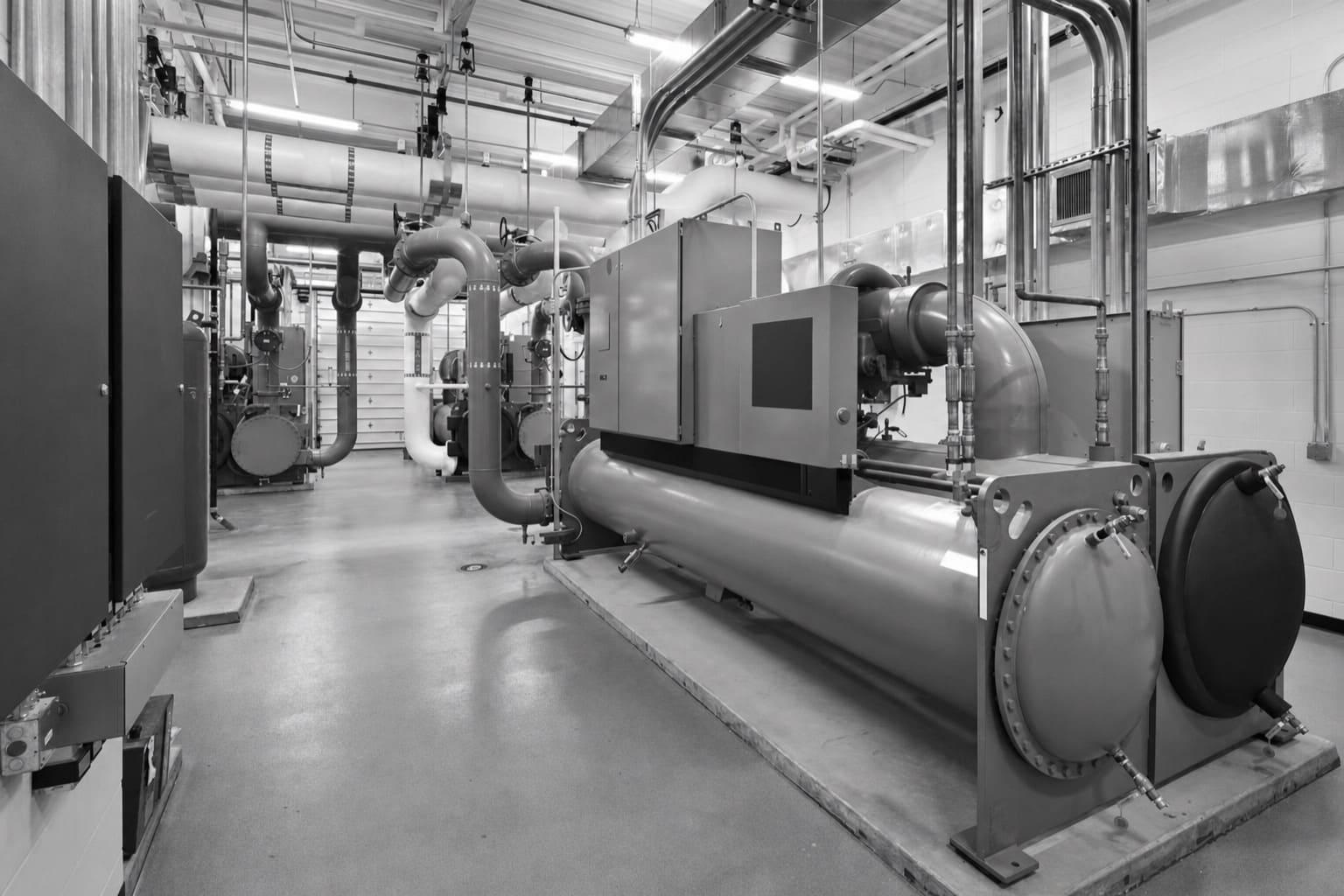
Two replacements on the same street can price very differently. It usually comes down to whether the new unit can land on what is already there, and whether the crane can reach it without shutting the building down.
LOWER COMPLEXITY
Straight swap on a ready roof
Same tonnage and footprint, the curb accepts an adapter, gas and electric stay where they are, and the crane sets up in the lot on a weekend morning. Permit scope is mechanical and electrical, and the calendar is driven almost entirely by equipment availability.
HIGHER COMPLEXITY
Resize, electrify, or a tight site
Tonnage or footprint grows, the roof needs structural review, the panel needs capacity added, or the only workable crane position closes the main entrance. Add a re-roof in the same window and you are sequencing two permits and two inspection tracks around one lift.
SCOPING IT
What a site review has to confirm
A quote is only as real as the walk behind it. Before anything gets priced, someone should be on the roof with the nameplate and a tape, and then in the electrical room.
Four things get confirmed. First, the load, measured against how the space is used now rather than what the old unit was rated for. Second, the curb and the structure under it, because a larger or heavier unit can turn a swap into a framing job. Third, electrical capacity: panel, breaker space, and service size, which is the single item most likely to change scope on an electrification path. Fourth, access — where the crane sets up, how far it has to reach, how many stalls close, and for how long.
DOE's own checklist for rooftop decisions covers the same ground: climate and heating load, utility bill impact, building type, equipment availability, electrical capacity, physical constraints, gas lines, and contractor availability. A quote that arrives without those answered is a price for a unit, not a price for a project.
The two questions that move the number most
Does the existing curb accept an adapter, or does the roof need framing? And does the panel have capacity for the unit you actually want? Get both answered in writing before you compare bids against each other.
IN REDDING
Settle the permit scope before you book the crane
Permit scope in California is not one form. Building departments across the state treat mechanical work as its own permit — any mechanical upgrade or repair triggers one — and re-roofing carries a separate permit whether it is an overlay or a tear-off.
That matters for a rooftop replacement more than it sounds like it should. Roofs and rooftop units tend to reach end of life around the same time, and a crane day is the cheapest moment to deal with both. Combining them means two permits, two inspection tracks, and a sequence that has to run in the right order: roof work, curb, set, then connections and sign-off.
Confirm the exact list with the City of Redding building division before you commit to a date. A contractor who cannot tell you which permits they are pulling and who is calling the inspections has not finished scoping the job.
Ask for the permit list in writing
Mechanical, electrical, and — if the roof is being re-covered in the same window — a separate re-roofing permit. The inspection sequence, not just equipment availability, sets the date you get the building back.
OWNERSHIP MATH
Two decisions that outlive the install
The install is a morning. Two of the choices made around it stay with you for the life of the equipment: how you will service what you just bought, and whether you keep replacing units on failure.
Both are cheap to get right at purchase and expensive to fix afterward. The refrigerant a unit ships with sets your parts and technician plan for fifteen years or more. And the trigger you use for replacement — planned or panicked — decides whether you ever get to shop on price instead of on availability.
REFRIGERANT
Plan for a mixed fleet
EPA rules under Section 608 govern how refrigerant is handled and recycled in stationary air conditioning and heat pump equipment. New units ship on newer refrigerants, so a roof replaced one unit at a time runs two service protocols for years. Write that into the service contract now.
TIMING
Replace before it fails
DOE is blunt about the common pattern: managers wait until the unit no longer conditions the space, needs constant repair, or dies outright. Replacing proactively usually beats both replacement-on-failure and a like-for-like swap at end of service life, because you control the schedule.
PHASING AND PROCUREMENT
Sequencing a roof with more than one unit
If you own more than one unit, the sequence matters as much as the specification. Rooftop equipment conditions close to half of all commercial floor area in the country, which means most portfolios carry several units at different ages. Replacing them one emergency at a time is the most expensive way to get through that list.
A better pattern is to rank the roof by age and run hours, replace the worst unit on a planned date, and standardize the specification so the next three are a repeat order rather than a fresh design. Units past fifteen years are the obvious first candidates. DOE also points to a middle path: some units are better served by advanced controls than by full replacement, and the honest test is which one pencils on that specific unit.
The scale of that math is not theoretical. Through DOE's rooftop campaign, more than two hundred organizations upgraded over forty-three thousand units and cut a combined $37 million a year from their energy bills. Your building will not see that number, but the shape of it holds — the savings live in the units that run the most hours, and those are the ones to replace first.
BEFORE YOU SIGN
Five things a comparable quote shows
Bids are only comparable when they describe the same project. Ask every bidder to put these five in writing, and differences in price stop being a mystery.
01
The exact unit
Tonnage, efficiency tier, heating type, and refrigerant of the specific model quoted — not a placeholder and not an unnamed equivalent.
02
Lead time and price validity
How long the equipment takes to arrive, and how long the quoted price holds if you take a week to decide.
03
Curb and roof scope
Curb adapter, any structural work, penetrations, and who repairs the roof around the new unit.
04
The crane day
Rigging plan, which stalls close and for how many hours, tenant notice, and who coordinates all of it.
05
Permits and commissioning
Which permits are pulled, who calls the inspections, and the startup report showing charge, airflow, and controls verified before handoff.
Get a defensible number
Price the equipment and the building together.
Send the address, operating target, and target opening date. Flux will identify what must be verified before the project can be priced.
Get a free estimateQuestions
Straight answers.
When does replacement beat one more repair?
Once a unit is past fifteen years and needing repeat attention, the math usually flips. DOE puts the annual waste from an old, inefficient rooftop unit at $900 to $3,700 per unit, and that cost continues whether or not anything is currently broken. A repair buys a season; a replacement resets the clock.
Should you replace like-for-like or resize?
Confirm the load either way. If the space and its use have not changed, like-for-like is often correct and it is the fastest path back to conditioning. If occupancy, plug loads, or the envelope changed, right-sizing fixes comfort complaints the old unit was never able to solve.
Does a heat pump rooftop unit make sense here?
DOE guidance says that for most of the U.S. South and West, today's heat pump rooftop units can handle most or all of the winter heating demand. What decides it at your building is electrical capacity, the existing gas line, and your utility rates. Put it on the comparison sheet and let the numbers answer.
What permits does a rooftop replacement need?
California building departments treat mechanical work as its own permit, and re-roofing carries a separate one. A swap typically means mechanical plus electrical, with structural review appearing when tonnage or footprint grows. Confirm the exact list with the City of Redding building division before scheduling the crane.
How long does the installation actually take?
The lift and connection is the short part of the project. Equipment availability is what sets the calendar, which is why lead time belongs on the quote next to the price. Permit and inspection sequencing can matter just as much, especially if roof work is happening in the same window.
Sources used for this guide
- [1]betterbuildingssolutioncenter.energy.gov — DOE Advanced Rooftop Unit Replacement Guidance
- [2]betterbuildingssolutioncenter.energy.gov — DOE Commercial Heat Pump Rooftop Unit Replacement Guidance
- [3]betterbuildingssolutioncenter.energy.gov — DOE High-Efficiency Commercial Rooftop Unit Toolkit
- [4]energy.gov — DOE Efficient Commercial Rooftop Air Conditioner Program
- [5]epa.gov — EPA Stationary HVAC Refrigerant Management
- [6]californiacity-ca.gov — HVAC Permits