The direct answer
Commercial HVAC replacement and installation in Queen Creek.
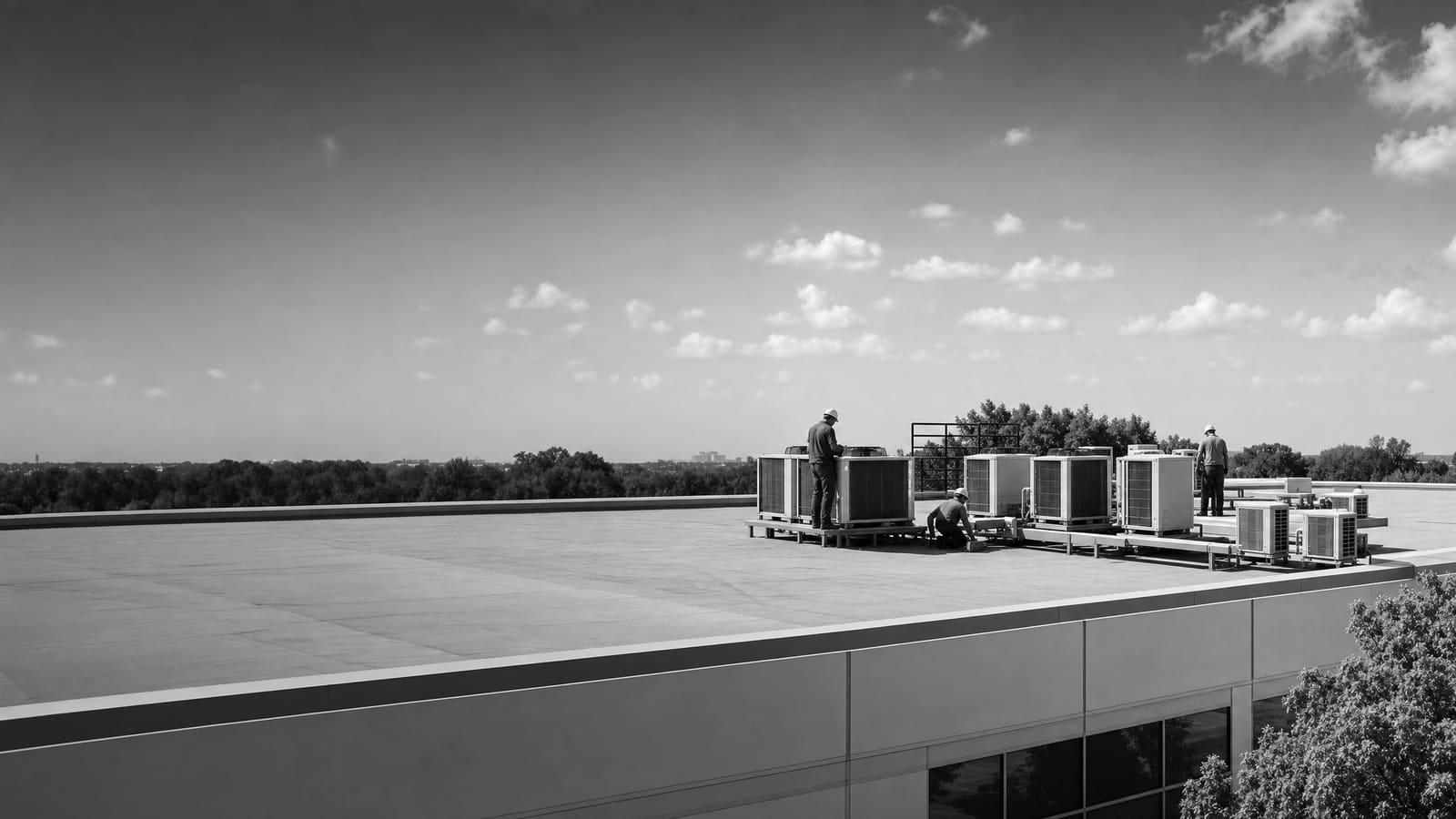
A commercial HVAC replacement includes load review, equipment selection, removal, rigging, connections, controls, startup, testing, and closeout. Replacement becomes more useful than another repair when an older unit needs frequent service, cannot hold comfort, or risks failing during business hours. DOE guidance says rooftop units over 15 years old can waste substantial energy compared with newer models.
A site review must verify the load, roof and curb condition, electrical capacity, fuel connections, controls, access, and equipment availability.
Start with the operating decision
Repair, replace in kind, or redesign?
The right path depends on more than equipment age. Begin with service history, comfort performance, operating schedule, and the cost of an unplanned outage. A sound repair may buy useful time when the unit is stable and parts remain practical. A planned replacement can reduce failure risk when service calls are becoming routine.
Do not assume the old nameplate still describes the building. Occupancy, lighting, plug loads, ventilation needs, and space use may have changed. Check the present load before ordering equipment. Then compare the simplest replacement with efficiency, controls, and heat-pump options. DOE notes that owners may replace an old rooftop unit or retrofit it with advanced controls, depending on which choice makes financial sense.
Build the real budget
What changes the installed number
The supplied research does not support one universal installed price. Ask bidders to separate the equipment price from every condition that can change labor, materials, access, or schedule.
Choose the equipment
Compare rooftop unit options by how the building runs
Packaged rooftop units condition nearly half of U.S. commercial floor area, so they remain a common replacement format. A like-for-like packaged unit can simplify layout and connection work when the building still has the same needs. Yet matching the old capacity without checking the load can preserve poor humidity control, short cycling, noise, or uneven temperatures.
A higher-efficiency rooftop unit may lower energy use, but its value depends on run hours, load profile, control sequence, and maintenance. Ask for performance data at expected operating conditions, not only the headline rating. Also ask whether staged or variable operation will improve comfort during lighter loads.
A heat-pump rooftop unit provides cooling and reverse-cycle heating. DOE guidance says heat-pump selection should consider geography, utility costs, emissions goals, building type, equipment availability, electrical capacity, physical limits, gas service, and contractor knowledge. All-electric, dual-fuel, and other heat-pump configurations do not create the same infrastructure needs. Model the site before choosing one. Keep current incentives out of the business case unless eligibility and timing are verified when the purchase is made.
Complexity check
A box swap and a system change are different projects
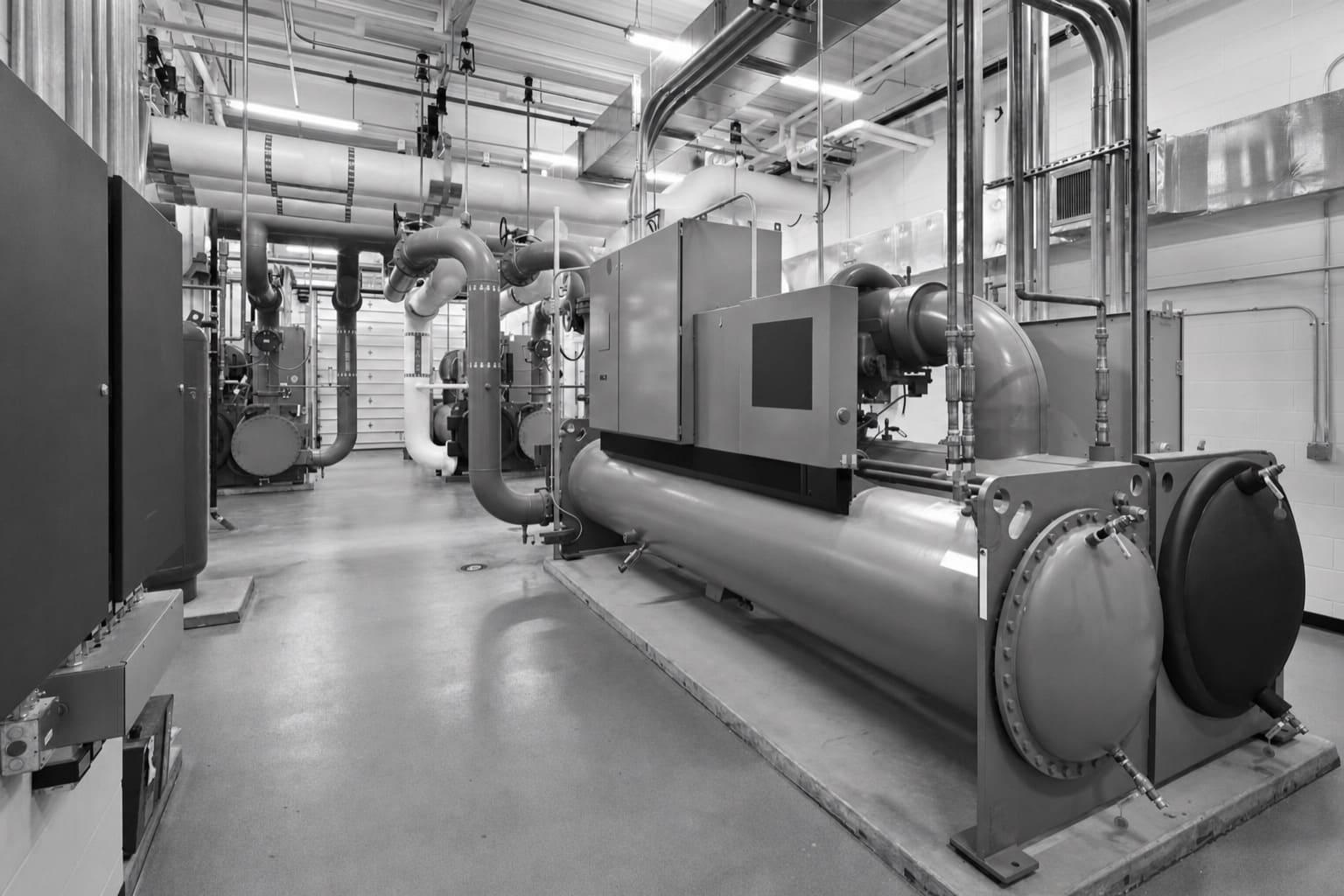
Two units with similar capacity can require very different installation work. The quote should state which set of conditions applies and identify assumptions that still need field verification.
Lower complexity
Compatible replacement
The new unit fits the existing layout, while the curb, structure, power, fuel, controls, drainage, and access remain suitable. Testing still matters.
Higher complexity
Changed system
Capacity, footprint, weight, heating method, electrical demand, ventilation, controls, or duct needs change. Design and trade coordination become central to the job.
Scope the site
What should happen before equipment is ordered
Start with equipment records and a physical survey. Record the model, capacity, heating type, voltage, controls, curb dimensions, service clearances, and known repair history. Review which rooms are uncomfortable and when the problem occurs. A daytime complaint may point to load, airflow, zoning, ventilation, or control issues that a larger unit will not automatically solve.
Confirm the building load against current use. Inspect accessible ductwork, filters, dampers, drains, electrical equipment, fuel connections, and the roof area supporting the installation. For a heat-pump option, check available electrical capacity and whether removing or retaining gas equipment changes scope. DOE guidance treats both electrical capacity and physical constraints as core adoption questions.
Then plan the work around operations. Define shutdown limits, occupied areas, delivery routes, staging, roof access, lifting needs, weather exposure, and temporary conditioning needs. Identify who protects the building opening and who restores any disturbed roof or interior finish. Resolve these items before release because equipment availability alone does not make a unit installable.
Give bidders the same facts
Issue one written scope, one equipment schedule, known site conditions, operating limits, and required closeout documents. Comparable inputs produce more useful bids.
Think beyond startup
Protect operations and future service
Installation decisions continue to affect the property after the crew leaves. First, decide how much outage risk the business can accept. A planned project can coordinate shutdowns, access, and tenant notices before an aging unit fails. If several units are near the same stage, condition data can help set a sequence instead of replacing every unit at once.
Second, design for service. Technicians need safe access, clear labels, filters that can be reached, accurate control documents, and parts information. Refrigerant handling also belongs in the plan. EPA Section 608 rules address the handling and recycling of refrigerants in stationary air-conditioning and heat-pump equipment. The proposal should assign recovery and documentation duties rather than leaving them implied.
Operations
Plan the outage
State acceptable downtime, occupied zones, notice needs, temporary measures, access limits, and the recovery plan if work cannot finish as expected.
Ownership
Plan the service life
Require asset labels, filter data, control sequences, warranty steps, startup records, and a clear preventive-maintenance handoff.
Procurement and phasing
Buy the result, not only the rooftop unit
A low equipment line can become an expensive project when exclusions appear after award. Compare total installed scope and the operating result. Review capacity, heating method, efficiency, sound, controls, ventilation, electrical demand, curb compatibility, warranty, and service support together. Ask each bidder to show substitutions rather than hiding them behind the words “or equal.”
For a multi-unit property, phasing can protect cash flow and reduce outage risk. Rank equipment using condition, service history, comfort impact, operating role, and replacement difficulty. Units serving critical rooms may move ahead of units with backup coverage. Grouping compatible work can also reduce repeated mobilization, but do not replace serviceable equipment solely to make the schedule neat.
Use life-cycle thinking carefully. Compare purchase and installation cost with modeled energy use, maintenance needs, expected repair exposure, and the cost of downtime. DOE reports that older, inefficient commercial rooftop units have created large energy waste in past programs, but a national example is not a savings guarantee for one property. Require site-based assumptions. Verify any incentive, tax treatment, or financing term at the time of purchase because availability and deadlines can change.
Installation and verification
How the project should move from delivery to handoff
Before delivery, the contractor should confirm the approved unit, connection details, lifting points, weights, dimensions, accessories, and site route. The team should verify that curbs or adapters are ready and that roof, electrical, fuel, drain, duct, and control work align with the approved scope. A pre-installation meeting is useful when several trades or occupied areas are involved.
During the changeout, the old refrigerant must be handled under applicable federal requirements. The crew removes the old equipment, protects the opening, sets the replacement, completes mechanical and electrical connections, and restores disturbed work. Safety zones and access controls should remain in place until lifting and rooftop work are complete.
Startup is not the same as commissioning. Startup proves that equipment can run. Functional testing checks whether it operates as intended through cooling, heating, fan, staging, safety, economizer, and control commands when those features are included. Confirm airflow, sensor readings, setpoints, drainage, rotation, and communication with the building controls. Record corrections before final acceptance.
Do not accept “running” as complete
Final payment should follow documented startup, functional checks, resolved deficiencies, owner training, warranty registration, and delivery of approved closeout records.
Quote checklist
Five items every comparable proposal should show
Use these items to compare scope, not just totals. Each proposal should also list exclusions, allowances, alternates, assumptions, and the party responsible for unresolved conditions.
01
Selected equipment
Model, capacity, heating type, efficiency, refrigerant, accessories, warranty, and availability.
02
Installation scope
Removal, recovery, rigging, curb, duct, drain, roof, power, fuel, controls, and cleanup.
03
Operating plan
Shutdown window, staging, access limits, protection, notices, and temporary conditioning.
04
Testing and acceptance
Startup checks, airflow, sequences, controls, deficiencies, and acceptance criteria.
05
Closeout and price
Schedule, payment terms, exclusions, training, manuals, warranties, labels, and final records.
Get a defensible number
Price the equipment and the building together.
Send the address, operating target, and target opening date. Flux will identify what must be verified before the project can be priced.
Get a free estimateQuestions
Straight answers.
When is replacement better than another commercial HVAC repair?
Replacement deserves serious review when an older unit needs frequent service, cannot maintain comfort, uses obsolete or difficult-to-support components, or creates unacceptable outage risk. DOE guidance notes that rooftop units over 15 years old can waste substantial energy compared with newer models. Age alone does not decide the issue, so compare condition, repair history, load fit, operating cost, and business impact.
Should a replacement match the old rooftop unit size?
Not automatically. Confirm the present building load before ordering. Changes in occupancy, lighting, equipment, ventilation, hours, or space use can make the old capacity a poor guide. A compatible replacement may still be right, but the decision should follow a load review rather than a nameplate match.
Is a commercial heat-pump rooftop unit worth considering?
Yes, as an option to model. DOE says the decision should consider geography, utility costs, emissions goals, building type, equipment availability, electrical capacity, physical constraints, gas service, and contractor knowledge. Compare all-electric, dual-fuel, and conventional choices using the same load and operating assumptions.
How much does commercial HVAC installation cost in Queen Creek?
The supplied research does not support a universal installed range. Price depends on equipment, capacity, efficiency, curb and roof work, rigging, electrical or fuel changes, controls, testing, and operating constraints. Request an itemized site-based proposal instead of relying on a broad per-unit number.
What should be included in a commercial HVAC replacement quote?
The quote should identify the selected equipment, availability, removal, refrigerant recovery, rigging, curb and duct work, drainage, roof coordination, power, fuel, controls, startup, functional testing, training, warranty steps, closeout records, schedule, exclusions, allowances, and acceptance criteria.
Who handles refrigerant from the old commercial unit?
The proposal should assign that duty to qualified personnel and include recovery and documentation. EPA Section 608 rules address refrigerant handling and recycling for stationary air-conditioning and heat-pump equipment. Do not leave this work as an unstated assumption.
Can several rooftop units be replaced in phases?
Yes. Rank units by condition, repair history, comfort impact, operating role, backup coverage, and replacement difficulty. Phasing can spread capital needs and limit disruption, while a planned sequence can reduce the risk of emergency replacement.
What documents should the owner receive at handoff?
Request approved equipment data, startup and test records, control sequences, setpoints, deficiency resolutions, warranty information, maintenance requirements, filter details, asset labels, training records, and updated drawings or connection records when the project changes them.
Sources used for this guide
- [1]betterbuildingssolutioncenter.energy.gov — DOE Advanced Rooftop Unit Replacement Guidance
- [2]betterbuildingssolutioncenter.energy.gov — DOE Commercial Heat Pump Rooftop Unit Replacement Guidance
- [3]betterbuildingssolutioncenter.energy.gov — DOE High-Efficiency Commercial Rooftop Unit Toolkit
- [4]energy.gov — DOE Efficient Commercial Rooftop Air Conditioner Program
- [5]epa.gov — EPA Stationary HVAC Refrigerant Management