THE DIRECT ANSWER
What commercial HVAC replacement includes
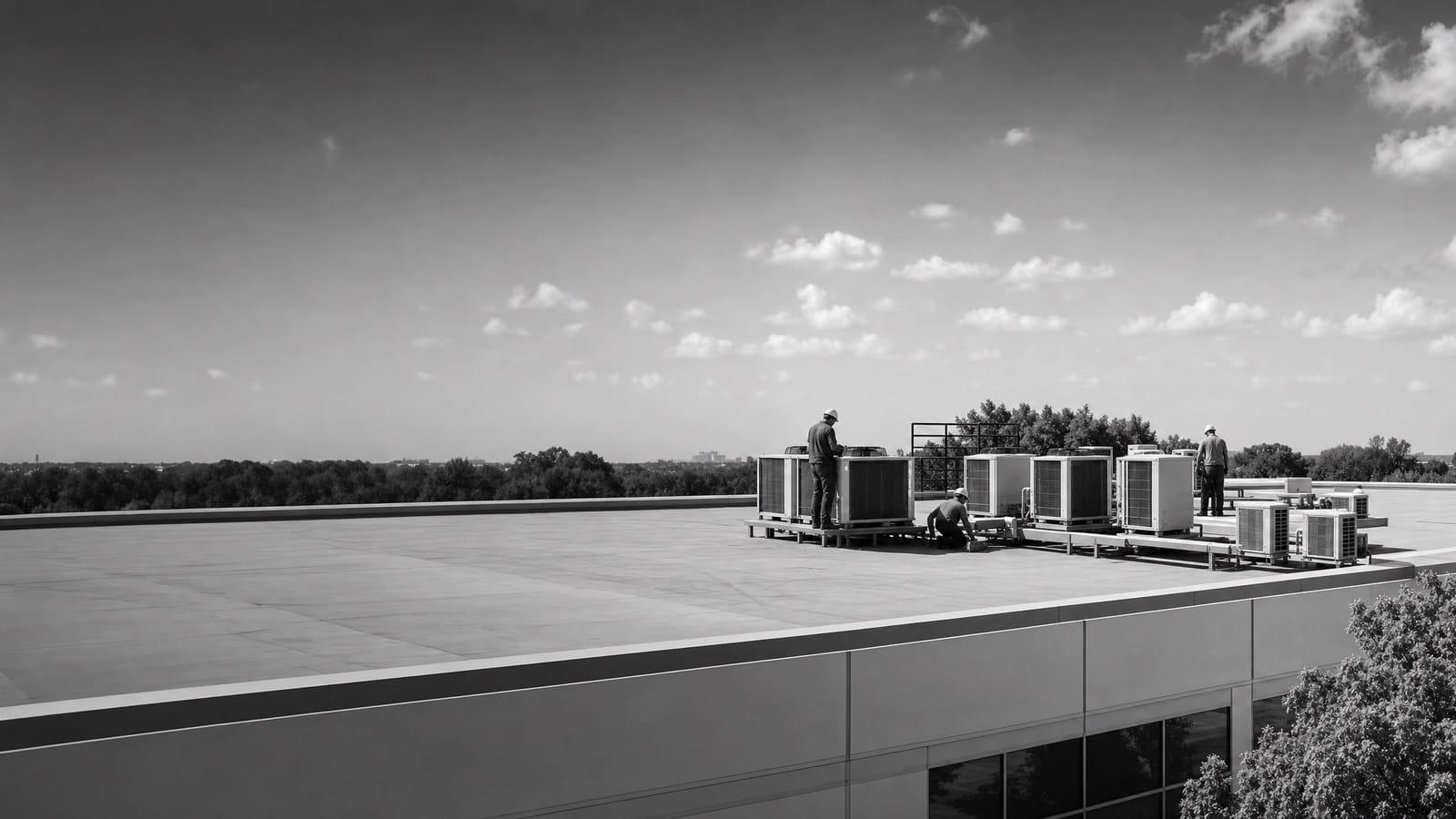
Commercial HVAC replacement covers load review, equipment selection, permits, removal, rigging, connections, controls, startup, and commissioning. Replacement becomes more useful than another repair when an older unit no longer holds temperature, fails often, or wastes energy. DOE guidance says rooftop units over 15 years old can be strong candidates for proactive replacement.
A site review must verify capacity, roof and curb conditions, utilities, ventilation, controls, access, and how the building operates.
THREE OPERATING CHOICES
Choose the project path before choosing a unit
Start with the problem the project must solve. A failed unit may call for a fast replacement, but speed should not erase basic checks. A working older unit gives you time to compare efficiency, heating type, controls, and phasing. A changed space needs a fresh load review because the old nameplate only shows what was installed before.
The right choice also depends on operating hours and the cost of downtime. A lightly used area may allow a planned shutdown. A critical occupied area may need temporary conditioning or phased work. Ask each bidder to describe the assumed path. If one quote is a direct swap and another includes resizing, electrical work, and controls, the totals are not comparable.
BUDGET STRUCTURE
What moves the installed price
There is no supported universal installed price for this project. A useful budget separates equipment from the work needed to place, connect, control, and prove it.
EQUIPMENT FIT
Compare systems by how they serve the building
A packaged rooftop unit combines major heating, cooling, and ventilation functions in one cabinet. It can be a practical replacement when the existing roof location, curb, ducts, and utilities still work. A high-efficiency rooftop unit may lower energy use compared with old equipment, but the result depends on sizing, controls, ventilation, maintenance, and operating hours.
A heat-pump rooftop unit uses reverse-cycle heating as well as cooling. DOE guidance says the decision should consider climate, utility rates, emissions goals, electrical capacity, physical space, gas service, equipment availability, and contractor knowledge. Heat-pump efficiency falls as outdoor temperature drops, so a Plymouth evaluation should state how heating will work during colder conditions. Options may include all-electric, cold-climate, or dual-fuel equipment. Do not treat them as interchangeable.
A split or applied system may fit when roof loading, zoning, indoor space, or process needs make a packaged unit a poor match. The quote should explain why the proposed system fits the building. It should also identify any capacity, ventilation, sound, redundancy, or control tradeoff created by that choice.
PROJECT COMPLEXITY
A box swap and a system change are different projects
Similar-looking replacements can carry very different labor, design, shutdown, and coordination needs. Classify the job before comparing totals.
LOWER COMPLEXITY
Compatible replacement
The new unit fits the existing location, capacity, utilities, ducts, and control approach. The work still needs rigging, safe removal, refrigerant handling, startup, and documented testing.
HIGHER COMPLEXITY
Changed system
Capacity, weight, footprint, heating source, voltage, ventilation, or controls change. Expect more design, trade coordination, utility review, roof work, and commissioning.
SITE REVIEW
Measure the building before writing the scope
Begin with records and a field survey. Gather equipment schedules, nameplate photos, service history, utility information, control diagrams, roof plans, and past comfort complaints. Then inspect the unit, curb, ducts, drains, disconnects, gas connection, sensors, outdoor-air path, and service clearances. Note when spaces are occupied and which areas cannot lose conditioning.
Sizing should reflect current use. More people, longer hours, added computers, lighting changes, tenant improvements, and envelope work can change loads. Oversizing is not a safe cure. A unit that cycles too quickly may control temperature without managing comfort well. Undersizing can leave the system running without meeting demand.
The survey should also find hidden scope before bids arrive. Check whether the proposed equipment changes weight or dimensions. Verify electrical capacity for heat-pump or resistance-heating options. Confirm how the controls will communicate with existing systems. Identify who repairs roofing after curb work and who protects occupied areas during removal.
Give every bidder the same facts
Issue one written basis of design with operating hours, loads, equipment requirements, exclusions, access limits, controls, and required closeout documents.
PLYMOUTH DECISION
Make winter performance part of the equipment schedule
For a Plymouth project, do not approve a heat-pump option from cooling capacity alone. DOE guidance explains that outdoor temperature affects heat-pump efficiency and heating output. Ask the designer or contractor to state the selected unit's heating performance at the project design conditions, the role of supplemental heat, and the sequence used when temperatures fall.
Electrical capacity also belongs in this review. All-electric and some cold-weather configurations may require resistance heat or other added electrical load. A dual-fuel design has different gas, control, and emissions considerations. Compare these paths with the building's actual schedule and utility structure.
Require a written cold-weather sequence
The submittal should show heat-pump operation, supplemental or backup heat, changeover logic, electrical demand, alarms, and what happens after a power interruption.
OWNERSHIP VIEW
Look beyond the day of installation
The lowest first price can become expensive if it carries forward poor sizing, weak controls, hard-to-source parts, or no commissioning. Compare the expected operating plan, maintenance needs, warranty conditions, and staff training along with installed cost.
Refrigerant planning also matters. EPA rules govern refrigerant handling and recycling in stationary air-conditioning and heat-pump equipment. The contractor should identify the refrigerant used by the new unit and explain recovery and disposal responsibilities for the old equipment. For a mixed fleet, record refrigerant type, filter sizes, belts, controls, and critical parts in the asset register.
OPERATIONS
Serviceability
Check filter and coil access, parts support, alarm visibility, technician familiarity, and the maintenance tasks required by the warranty.
RISK
Resilience
Consider temporary conditioning, staged replacement, redundancy, spare parts, and response plans where one outage can disrupt the building.
DELIVERY PLAN
Plan phasing, procurement, and handoff together
Equipment availability can change the design and schedule. Ask for the manufacturer, model, approved options, current availability, release date, and substitution process. Do not let an undefined “or equal” clause turn into a different capacity, efficiency level, heating method, or control package after award.
Build the field plan backward from the shutdown. Confirm roof access, crane staging, weather limits, delivery timing, tenant notice, utility isolation, and protection of the building below. Stage curb adapters, controls, electrical materials, and roofing support before the old equipment comes off. If the building cannot tolerate a long outage, place temporary service and contingency steps in the base scope.
Handoff is part of installation. Require startup reports, airflow and control checks, refrigerant information, warranty registration, equipment data, training, and updated setpoints. Commissioning should show that the unit does more than turn on. It should verify the intended sequence, heating and cooling response, ventilation, alarms, and communication with the building automation system where included.
QUOTE CHECK
Five items every comparable quote should show
Put these items in writing before choosing a contractor. Clear inclusions expose missing scope and make bid differences easier to understand.
01
Named equipment
Manufacturer, model, capacity, efficiency, heating type, refrigerant, options, warranty, and availability.
02
Complete installation scope
Removal, recovery, rigging, curb, roofing, ducts, drains, gas, electrical work, controls, and insulation.
03
Project responsibilities
Design, permits, inspections, crane coordination, shutdown notices, temporary conditioning, cleanup, and disposal.
04
Testing and closeout
Startup, airflow, ventilation, sequences, alarms, training, reports, manuals, and warranty registration.
05
Commercial terms
Price, allowances, exclusions, schedule, payment milestones, change process, substitutions, and labor warranty.
Get a defensible number
Price the equipment and the building together.
Send the address, operating target, and target opening date. Flux will identify what must be verified before the project can be priced.
Get a free estimateQuestions
Straight answers.
When should a commercial rooftop unit be replaced instead of repaired?
Replacement deserves serious review when an older unit cannot hold temperature, needs frequent repairs, uses excessive energy, or threatens business continuity. DOE guidance notes that rooftop units over 15 years old can waste substantial energy and that proactive replacement may be smarter than waiting for failure. Compare repair cost and reliability risk with the full replacement scope.
Should a Plymouth business replace HVAC equipment like for like?
Only after confirming that the old capacity and system type still fit. A compatible replacement may reduce design and connection work, but it can preserve an old sizing or control problem. Recalculate or verify the load when occupancy, operating hours, internal equipment, layout, ventilation, or the building envelope changed.
Is a commercial heat-pump rooftop unit a good replacement option?
It can be, but the answer depends on winter performance, utility costs, electrical capacity, physical constraints, gas service, controls, and operating goals. Compare all-electric, cold-climate, and dual-fuel options using the building's actual load and schedule. Require a written cold-weather sequence and supplemental-heat plan.
What should happen during commercial HVAC commissioning?
Commissioning should verify airflow, temperature response, ventilation, sensors, setpoints, heating and cooling sequences, supplemental heat, economizer functions when included, alarms, and automation communication. The owner should receive startup records, operating information, training, and a list of any unresolved items.
Who should handle the old unit and its refrigerant?
The quote should assign removal, refrigerant recovery, transport, recycling, and disposal. EPA Section 608 rules address refrigerant handling and recycling for stationary air-conditioning and heat-pump equipment. Ask for the old and new refrigerant types in the closeout record.
How can owners compare commercial HVAC installation bids?
Give every bidder the same scope and compare named equipment, capacity, efficiency, heating method, availability, roof work, rigging, utilities, controls, commissioning, schedule, allowances, exclusions, warranties, and substitutions. A lower total may simply omit work that another bidder included.
Sources used for this guide
- [1]betterbuildingssolutioncenter.energy.gov — DOE Advanced Rooftop Unit Replacement Guidance
- [2]betterbuildingssolutioncenter.energy.gov — DOE Commercial Heat Pump Rooftop Unit Replacement Guidance
- [3]betterbuildingssolutioncenter.energy.gov — DOE High-Efficiency Commercial Rooftop Unit Toolkit
- [4]energy.gov — DOE Efficient Commercial Rooftop Air Conditioner Program
- [5]epa.gov — EPA Stationary HVAC Refrigerant Management
- [6]minneapolismn.gov — Mechanical and Heating Contractors - City of Minneapolis