THE DIRECT ANSWER
What commercial HVAC replacement includes
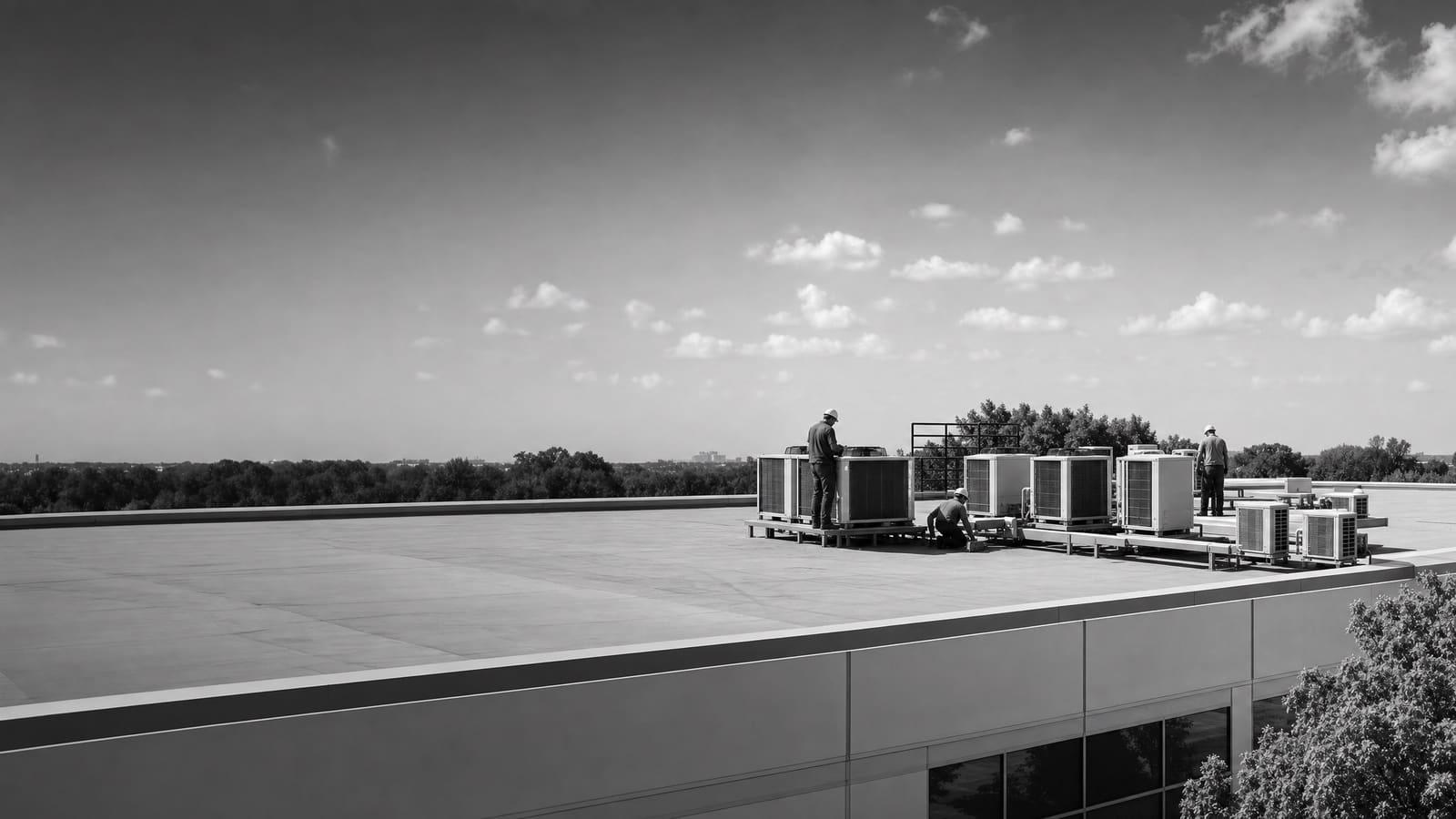
Commercial HVAC replacement includes load review, equipment selection, removal, rigging, curb or pad work, utility connections, controls, startup, and commissioning. Replacement becomes more useful than another repair when an older unit needs frequent service, cannot hold comfort, or risks failing during critical operating hours. DOE guidance notes that rooftop units over 15 years old may waste substantial energy compared with newer models.
A site review must verify the existing unit, present building load, electrical capacity, fuel service, access, structure, controls, and ventilation needs.
THREE OPERATING CHOICES
Choose the replacement path before choosing a model
Start with the problem the project must solve. A failed unit may call for the fastest sound replacement, but speed should not turn the old nameplate into the only sizing method. A working but unreliable unit gives you more time to review loads, controls, efficiency, and fuel choices.
A like-for-like packaged unit can reduce design and connection changes when the building use has stayed stable. A right-sized unit can address short cycling, uneven temperatures, poor humidity control, or changes in occupancy and internal heat. A heat pump rooftop unit adds another decision: whether the building, electrical service, operating pattern, and heating strategy support an all-electric or dual-fuel design.
Compare the choices by installed scope, expected operation, service support, lead time, and disruption. The lowest equipment price does not settle the full project decision.
BUDGET STRUCTURE
What moves an installed HVAC quote
There is no supported universal installed price for a commercial system. The useful number is a site-based total that separates equipment from the work needed to deliver a complete operating system.
EQUIPMENT FIT
Match the system to the building instead of the old label
The existing nameplate is a starting point, not proof of the correct replacement size. The old unit may have been oversized from the beginning. The building may also have gained people, lighting, kitchen equipment, computers, walls, or longer operating hours. Ask how the load was confirmed and which assumptions were used.
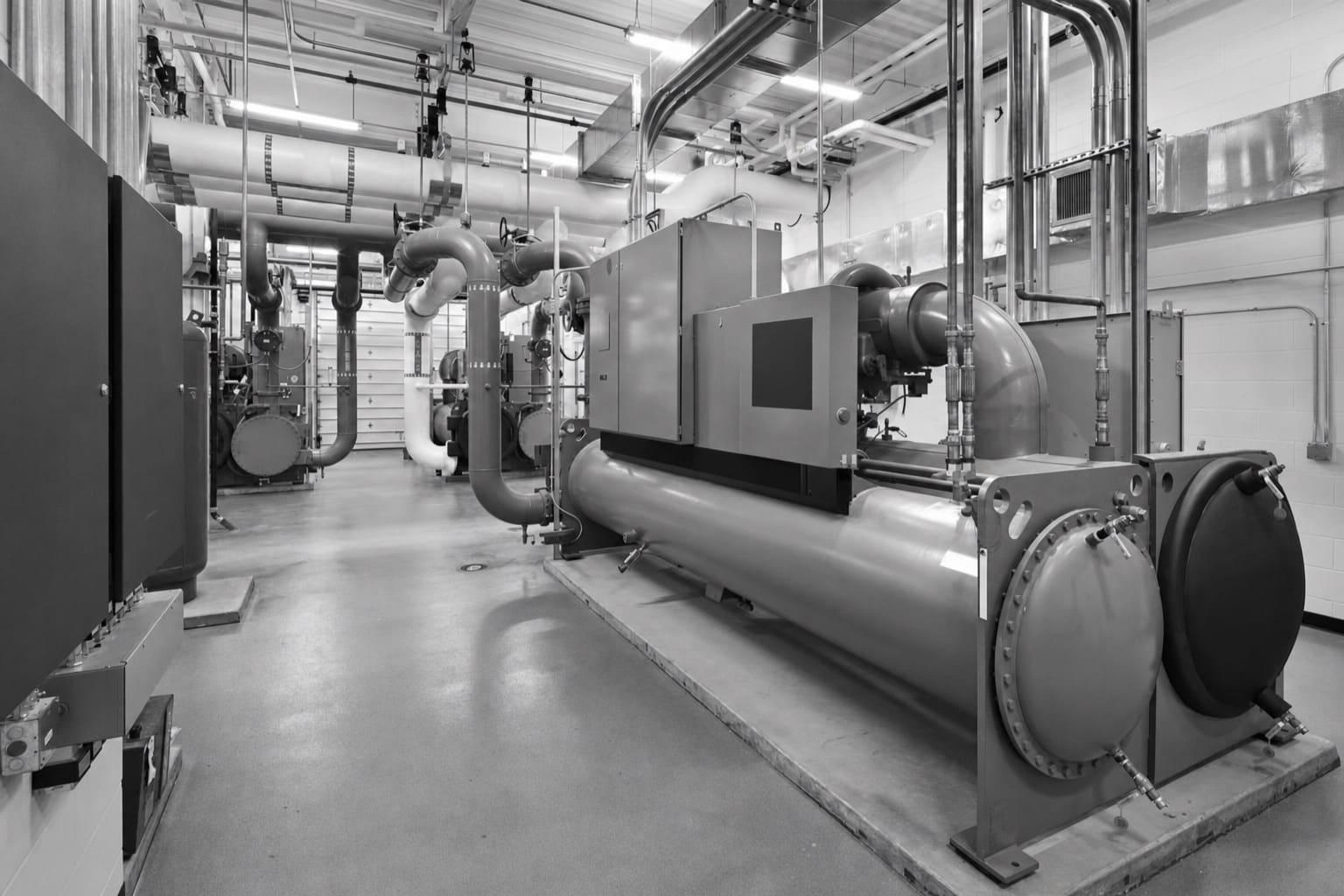
Packaged rooftop units combine major heating, cooling, and airflow parts in one cabinet. They are common across commercial buildings and can simplify replacement when the roof opening and connections are compatible. Split systems separate indoor and outdoor equipment. They may fit smaller zones or buildings where rooftop access and duct routing make a packaged unit less useful. Larger or more complex buildings may need a designed system with separate air-handling, heating, cooling, pumping, or control components.
Efficiency matters, but it should be judged with operating hours, control quality, maintenance access, and expected load. DOE has documented large energy-saving opportunities from high-efficiency rooftop equipment and advanced controls. Those findings do not guarantee the same savings at every property. Ask for the assumptions behind any projected reduction in energy use.
PROJECT COMPLEXITY
A box swap and a system change are different projects
Two similar-looking rooftop units can require very different scopes. The difference often appears in the curb, utilities, controls, ventilation, structure, access, and heating method—not in the cabinet alone.
LOWER COMPLEXITY
Compatible replacement
The selected unit fits the existing arrangement, the load remains suitable, utility requirements stay within available capacity, and controls need limited changes. The quote should still include removal, rigging, connections, startup, testing, and closeout.
HIGHER COMPLEXITY
Changed system
The project alters capacity, footprint, weight, fuel, electrical demand, ventilation, zoning, or automation. It needs deeper field verification and may require added design, structural, electrical, duct, control, or operating work.
SITE REVIEW
Inspect the conditions that can change the price
A good site review follows the system from the occupied space to the equipment and utility connections. Inside, note comfort complaints, operating hours, temperature schedules, air balance concerns, special processes, and spaces that cannot lose conditioning. At the equipment, record model information, capacity, heating type, refrigerant, electrical data, curb or pad dimensions, duct arrangement, outside-air setup, control points, drainage, and service clearance.
The review should also trace the path of work. A rooftop replacement needs a safe way to stage, lift, disconnect, remove, set, and reconnect equipment. Ground equipment needs delivery access and a stable base. Indoor equipment may require door, corridor, ceiling, or wall access. These conditions affect labor and shutdown planning even when the new unit closely matches the old one.
Photographs help, but they do not replace measurements or a check of concealed conditions. If a bidder carries an allowance, exclusion, or assumption, ask what field condition would change it and how that change would be priced.
Bring useful records
Provide nameplate photos, service history, utility information, control drawings, roof details, comfort complaints, operating schedules, and any planned changes to the space.
OWNERSHIP VIEW
Plan for disruption now and service later
Installation quality affects the building long after the equipment leaves the warranty period. Decide how shutdowns, occupied spaces, deliveries, roof access, security, noise, and temporary conditioning will be handled before work starts. Then look past startup. Filters, coils, belts, drains, sensors, electrical parts, and controls must remain reachable for routine service.
Refrigerant management also belongs in the ownership plan. EPA rules govern refrigerant handling and recycling for stationary air-conditioning and heat-pump equipment. The quote should identify who recovers refrigerant from removed equipment and how the old unit is handled. For a property with several systems, keep an equipment record that identifies refrigerant, filters, controls, warranty dates, and startup documents for each unit.
DURING INSTALLATION
Protect operations
Define shutdown windows, tenant notices, work zones, weather decisions, temporary conditioning needs, and the person authorized to approve field changes.
AFTER HANDOFF
Make service easier
Keep startup results, settings, warranties, manuals, equipment data, filter information, and control sequences where the maintenance team can find them.
PROCUREMENT AND PHASING
Buy the result, not just the equipment
If several units are aging, rank them by condition, service history, comfort impact, operating importance, and failure consequence. DOE guidance says proactive replacement of inefficient or underperforming rooftop units can be a sound business move compared with waiting for failure. A phased plan can also give the owner time to confirm loads, standardize controls, coordinate roof work, and decide where heat-pump technology fits.
Ask bidders to state equipment availability and the proposed schedule, but treat both as time-sensitive. The schedule should show field verification, submittal review, ordering, any curb or electrical preparation, installation, startup, and owner handoff. If operations cannot tolerate an outage, the proposal should explain temporary measures or sequencing rather than leaving them for installation day.
Compare lifetime value through energy use, maintenance needs, expected comfort, service access, control capability, and the cost of disruption. If a savings estimate supports the decision, request its baseline, operating assumptions, utility inputs, and included measures. Incentives may affect timing, but none are established by the supplied research for this Parma page as of August 2026. Verify any claimed program directly before relying on it.
QUOTE CHECKLIST
Five things every comparable quote should show
Put competing proposals into the same structure. A clear scope reveals whether a lower total reflects a better plan or work that another bidder included.
01
Selected equipment
List capacity, heating method, efficiency, options, refrigerant, controls, warranty, substitutions, and current availability.
02
Complete installation scope
Define removal, recovery, disposal, rigging, curb or pad work, duct, drain, fuel, electrical, and insulation.
03
Controls and ventilation
State sensors, outside-air functions, sequences, automation connections, programming, testing, and responsibility for existing control problems.
04
Schedule and operating plan
Show shutdowns, staging, access limits, weather planning, temporary needs, milestones, and the process for delays.
05
Commissioning and closeout
Require verified airflow, temperatures, refrigerant setup, heating and cooling operation, alarms, training, records, and warranty documents.
Get a defensible number
Price the equipment and the building together.
Send the address, operating target, and target opening date. Flux will identify what must be verified before the project can be priced.
Get a free estimateQuestions
Straight answers.
When should a commercial rooftop unit be replaced instead of repaired?
Consider replacement when the unit needs frequent repairs, cannot maintain comfort, has lost capacity, uses too much energy, or creates a serious operating risk. DOE guidance notes that rooftop units over 15 years old can waste substantial energy compared with newer equipment. Age alone does not decide the project. Review condition, repair history, parts availability, performance, and the business effect of another failure.
Can a new commercial HVAC unit use the same capacity as the old one?
It can, but the old nameplate should not be the only basis for selection. Confirm whether occupancy, hours, internal equipment, ventilation, walls, windows, or space use changed. A load review can show whether the old capacity remains suitable. It can also reveal oversizing that caused short cycling, weak humidity control, noise, or uneven temperatures.
What is included in a commercial HVAC installation quote?
A complete quote should identify the equipment and include removal, refrigerant recovery, disposal, rigging, curb or pad work, duct connections, drainage, fuel and electrical work, controls, startup, testing, commissioning, warranties, and closeout records. It should also state exclusions, allowances, schedule assumptions, and who handles field changes.
Should a Parma commercial building consider a heat-pump rooftop unit?
A heat pump may be worth evaluating, but the decision needs a site study. DOE recommends considering climate, utility costs, emissions goals, building type, equipment availability, electrical capacity, physical limits, gas infrastructure, and contractor knowledge. Compare all-electric, dual-fuel, and conventional choices using the same load and operating assumptions.
Does higher-efficiency rooftop equipment always deliver the projected savings?
No. DOE has documented strong energy-saving opportunities from efficient rooftop units and controls, but actual results depend on load, operating hours, weather, utility rates, installation, ventilation, control settings, and maintenance. Ask for the baseline and calculations behind any savings claim. Commissioning is important because efficient equipment cannot perform as intended when airflow or controls are wrong.
Why does commercial HVAC commissioning matter?
Startup proves that the equipment turns on. Commissioning checks whether the installed system works as intended. The closeout should verify airflow, temperature response, heating and cooling stages, refrigerant setup, outside-air operation, sensors, schedules, alarms, and control sequences. It should also leave the owner with settings, test results, manuals, and warranty information.
Who should handle refrigerant from the old HVAC equipment?
The project scope should assign refrigerant recovery and equipment disposal to qualified parties. EPA Section 608 rules address handling and recycling refrigerants from stationary air-conditioning and heat-pump equipment. Ask the bidder to state how the refrigerant will be recovered, how the removed unit will be handled, and what documentation will be provided.
How can an owner reduce disruption during replacement?
Plan the work path and shutdown before ordering equipment. Identify spaces that cannot lose conditioning, restricted operating hours, delivery and staging areas, roof access, security needs, weather limits, and tenant communication. If the building needs continuous service, require a written phasing or temporary-conditioning plan in the proposal.
Is there a current HVAC incentive available for this Parma project?
The supplied research does not establish a current Parma incentive as of August 2026. Do not include an incentive in the financial decision until the program administrator confirms eligibility, equipment requirements, application timing, funding status, and completion deadlines. Treat old campaign results or past programs as historical context, not proof of current funding.
Sources used for this guide
- [1]betterbuildingssolutioncenter.energy.gov — DOE Advanced Rooftop Unit Replacement Guidance
- [2]betterbuildingssolutioncenter.energy.gov — DOE Commercial Heat Pump Rooftop Unit Replacement Guidance
- [3]betterbuildingssolutioncenter.energy.gov — DOE High-Efficiency Commercial Rooftop Unit Toolkit
- [4]energy.gov — DOE Efficient Commercial Rooftop Air Conditioner Program
- [5]epa.gov — EPA Stationary HVAC Refrigerant Management