THE SHORT ANSWER
What a commercial HVAC replacement actually includes
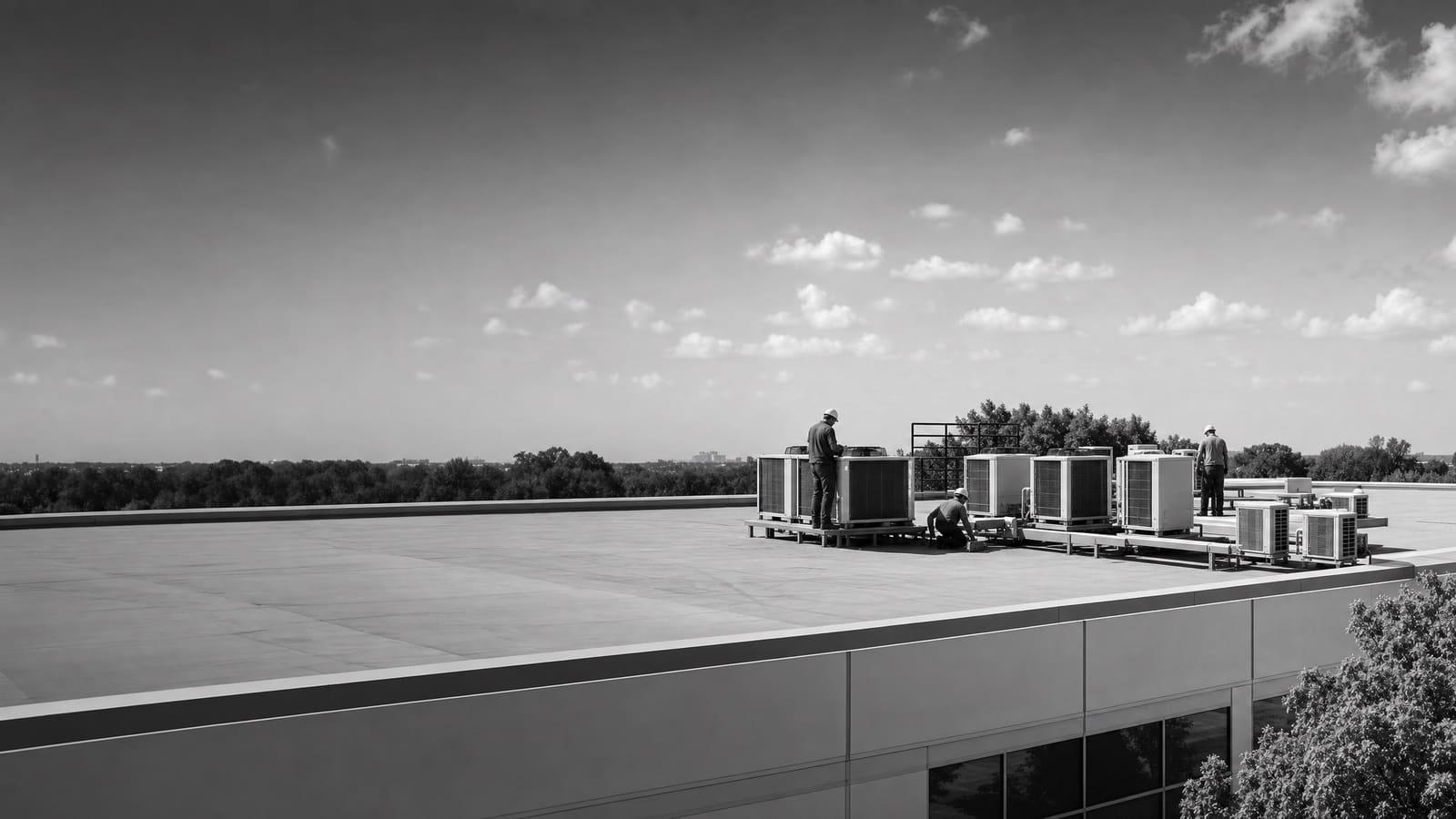
A commercial HVAC replacement covers load verification, equipment selection, curb and structural work, rigging, electrical and gas connections, certified refrigerant recovery from the old unit, permitting, and commissioning. Replacement beats another repair once the unit is old enough that its energy waste is the real cost. DOE puts the yearly waste from an old, inefficient rooftop unit at roughly $900 to $3,700, and flags units past fifteen years as the ones worth replacing on a plan instead of on failure.
A site review confirms tonnage against how the space is used today, curb and roof framing capacity, available electrical service, crane reach across the lot, and what the existing refrigerant charge requires at removal.
THE DECISION
Three ways to handle an aging rooftop unit
Most buildings arrive at this decision one of three ways: the unit fails in August, the unit is limping and the owner picks a date, or the unit still runs but the utility bill and the repair log stopped making sense together. Those are three different projects.
Replacement on failure removes every choice you had. You take what is available, on whatever schedule the crane and the permit allow, in the middle of a Florida cooling season.
A planned like-for-like swap keeps the same footprint and the same connections. It is the fastest path back to conditioned space and the cheapest to engineer.
A planned upgrade uses the same crane day to fix sizing and efficiency together. The DOE performance specification that built today's high-efficiency rooftop market targeted units cutting energy use by up to half against the standard it replaced, and the federal minimum has since moved up behind it. The upgrade only pays if the load is confirmed first, which is why the order of operations matters more than the brand.
WHAT MOVES THE NUMBER
The lines that separate two quotes
An installed price is not one number. It is equipment plus the work around it. These are the lines that make two honest quotes on the same building land a third apart, and the ones worth asking about before you compare totals.
EQUIPMENT CHOICE
Gas heat or a heat pump on this roof
Palm Coast sits in the part of the country DOE describes as well suited to heat pump rooftop units. Its guidance is direct about it: heat pumps do their best work where winters are mild to moderate, and across most of the South and West today's heat pump rooftop units can carry most or all of the winter heating demand on their own. For a building here, that moves the electric option from a stretch to a default worth pricing.
Two checks decide it. The first is electrical. A heat pump replacing a gas-heat unit needs the panel, the feeder, and the service to carry it, and DOE lists electrical capacity among the infrastructure items to confirm before committing a site. The second is the cold snap. Even southern climates take sharp winter demand, and DOE points at the February 2021 Texas freeze as the example, so ask what the unit does at design low temperature and whether backup heat is electric resistance or a dual-fuel arrangement.
Neither answer is universal. Get both priced on the same roof and compare what they cost to run, not just what they cost to buy.
SCOPE CHECK
What makes this simple, and what makes it hard
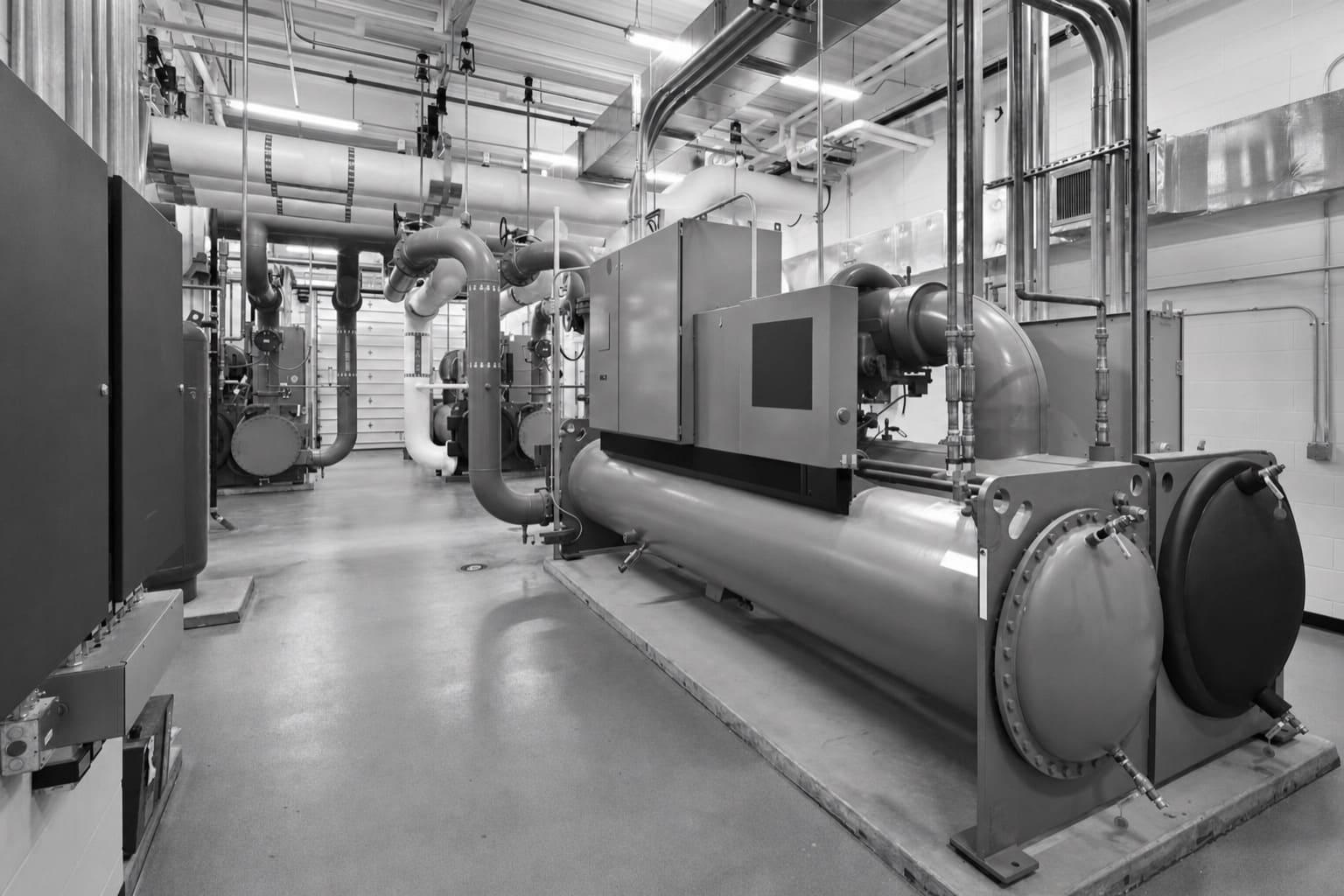
Two buildings can run the same tonnage and still land in very different projects. The difference is rarely the equipment. It is the roof, the lot, the electrical service, and whether the new unit stays inside the footprint of the one it replaces.
LOWER COMPLEXITY
Same curb, same fuel, open lot
Matching tonnage on the existing curb, unchanged fuel type, adequate electrical service, and a lot with crane reach and staging room. Permit scope stays mechanical and electrical, and the set happens in a single visit.
HIGHER COMPLEXITY
New footprint, fuel change, tight site
Different tonnage or footprint pulls in structural review. A gas-to-electric change pulls in service capacity. A tight or occupied lot pulls in night work, off-site staging, and a longer closure. Any one of these can outrun the equipment lead time.
BEFORE YOU BUY
What a real site review has to produce
The quote you can trust comes from a visit, not a phone call. The visit exists to answer the questions that get expensive later.
Start with load. DOE is consistent on this point: proactively replacing an inefficient unit usually beats both replacement-on-failure and a reflexive like-for-like swap at the end of service life. That only holds if somebody recalculates what the space needs now. Twenty years of tenant changes, added plug load, lighting retrofits, and envelope work move the answer in both directions, and oversizing costs you comfort as well as money.
Then the physical checks. Curb dimensions and roof framing. Where the crane sets up and what it has to reach over. Panel capacity and available breaker space. Gas line disposition if the unit is converting. Where condensate and controls wiring run.
Last, the removal. The old unit still holds refrigerant, and EPA Section 608 governs how that refrigerant is handled and recovered when equipment is serviced or taken out of service. That is certified work with documentation behind it, not a line item to discover on a change order.
Ask for this before you compare quotes
A written load basis, the curb and structural finding, the crane and lot plan, the electrical capacity check, and who is pulling the permit. Two quotes only become comparable when all five say the same thing.
PALM COAST SPECIFICS
Florida permitting adds an engineering step to your schedule
Treat the permit as part of the schedule, not as paperwork that happens after the equipment ships. Florida commercial alteration permit guidance is specific about mechanical work: when the scope includes installing or relocating HVAC equipment, the mechanical plans have to be signed and sealed by a Florida licensed architect or engineer. Energy calculations are required whenever the scope touches heating, ventilation, or air conditioning. The submittal also has to show equipment location, and framing plans enter the package when roof structure is repaired, replaced, or altered to carry the unit.
None of that is difficult. It is time, and it is time that has to start before the crane is booked. Confirm the current submittal checklist with the Palm Coast building division for your address, since local requirements and review timelines vary.
Sequence it this way
Site review, then load basis, then sealed mechanical plans and energy calculations, then permit submittal, then equipment order and crane date. Reversing those last two is the most common reason a planned replacement slips a season.
OWNERSHIP ANGLES
Two things the invoice does not show
The equipment decision is the easy one to compare. The two items that actually decide what the next fifteen years cost you rarely appear on a quote at all.
The first is what you are already spending to keep an old unit alive. DOE's figure for an old, inefficient rooftop unit is $900 to $3,700 wasted per unit per year, and that is before the repair log. On a four-unit roof, that stops being a rounding error.
The second is the fleet. Rooftop equipment cools close to half of all commercial floor area in the country, and buildings that have one usually have several. Replacing them one emergency at a time leaves you with mismatched control systems, scattered service history, and no leverage on price.
OPERATING COST
The unit you keep is not free
An aging rooftop unit bills you every month in energy that never shows up as a line item. DOE's range runs to $3,700 a year per unit. Weigh that against the repair quote before you approve another one.
PORTFOLIO
Sequence the roof, not the unit
More than two hundred organizations working through DOE's rooftop campaign upgraded over forty-three thousand units and cut a combined $37 million a year in energy cost. That came from planning the fleet, not reacting to it.
PHASING AND PROCUREMENT
How to stage a multi-unit replacement
If your roof carries more than one unit, the useful question is not which one to replace. It is in what order, and how far apart.
Rank on age and operating cost rather than on which one is loudest. The fifteen-year-old unit is the one DOE points at as a candidate for proactive replacement, and the oldest unit on the roof is usually also the one carrying the worst efficiency. Rank the fleet honestly, then set a replacement cadence you can actually fund.
Standardizing helps more than most owners expect. One manufacturer and one control platform across the roof means one set of spare parts, one learning curve for whoever services it, and quotes you can compare year over year. It also changes the pricing conversation when you are buying three units across two years instead of one unit in a panic.
Finally, mind refrigerant. EPA Section 608 governs how refrigerant is handled and recovered across every unit you own, and a roof replaced one emergency at a time ends up carrying several different charges and several different service requirements. That is manageable when it is planned into the cadence and costly when it is discovered.
THE QUOTE
Five things a comparable quote shows
Two installed prices for the same roof can differ sharply and both be honest, because they scoped different work. Before you compare totals, confirm each quote states these five plainly.
01
Equipment, stated fully
Manufacturer, model, tonnage, efficiency tier, and heating type, plus a committed availability date.
02
The load basis
Whether the tonnage came from a current load calculation or from the old unit's nameplate.
03
Curb, structural, and roof work
Adapter, framing review, and roofing repair around the opening, priced rather than excluded.
04
Rigging, access, and closure
Crane size, staging location, stalls affected, and the hours the work happens.
05
Permit, refrigerant, and commissioning
Who seals the plans, who recovers the old charge, and what startup verification is documented at handoff.
Get a defensible number
Price the equipment and the building together.
Send the address, operating target, and target opening date. Flux will identify what must be verified before the project can be priced.
Get a free estimateQuestions
Straight answers.
When does replacement beat another repair?
DOE points at rooftop units past fifteen years as the ones that waste substantial energy and money compared with newer models, and puts that waste at roughly $900 to $3,700 per unit per year. Once a unit is in that band, the repair quote is only part of what you are paying.
Is a heat pump the right choice for a building here?
It is worth pricing. DOE says heat pump rooftop units are best suited to mild-to-moderate winter heating, and that across most of the South and West they can handle most or all of the winter heating demand. Confirm electrical service capacity and what the unit does during a cold snap before committing.
What does the permit require in Florida?
Florida commercial alteration guidance requires mechanical plans signed and sealed by a Florida licensed architect or engineer when the scope includes installing or relocating HVAC equipment, plus energy calculations and the equipment location shown on the submittal. Confirm the current checklist with the Palm Coast building division.
What happens to the refrigerant in the old unit?
EPA rules under Section 608 of the Clean Air Act govern how refrigerant is handled and recovered when stationary air conditioning equipment is serviced or taken out of service. Recovery is certified work, and it should appear in the scope rather than arrive as a change order.
How do I compare two installed prices?
Line them up on scope first. Same tonnage and efficiency tier, same load basis, same treatment of curb and structural work, same crane and lot plan, and the same answer on permits, refrigerant recovery, and commissioning. Totals only mean something once those five match.
Sources used for this guide
- [1]betterbuildingssolutioncenter.energy.gov — DOE Advanced Rooftop Unit Replacement Guidance
- [2]betterbuildingssolutioncenter.energy.gov — DOE Commercial Heat Pump Rooftop Unit Replacement Guidance
- [3]betterbuildingssolutioncenter.energy.gov — DOE High-Efficiency Commercial Rooftop Unit Toolkit
- [4]energy.gov — DOE Efficient Commercial Rooftop Air Conditioner Program
- [5]epa.gov — EPA Stationary HVAC Refrigerant Management
- [6]tampa.gov — Permit Application Guide Commercial Alteration