THE DIRECT ANSWER
Commercial HVAC replacement and installation in Ogden.
A commercial HVAC installation should cover load review, equipment selection, removal, rigging, curb or pad work, utility connections, controls, startup, testing, and owner handoff. Replacement becomes more useful than another repair when an older unit needs frequent service, cannot hold comfort, wastes energy, or puts operations at risk.
A site review must confirm capacity, airflow, roof or pad conditions, electrical service, fuel connections, controls, access, and the work needed around the new unit.
THREE OPERATING CHOICES
Decide what kind of replacement you are buying
The first choice is not a brand. It is the result the building needs. A direct replacement may reduce design work when the old system served an unchanged space well. A right-sized replacement makes more sense when occupancy, hours, internal equipment, layout, or comfort needs have changed. A heat pump rooftop unit adds another question: whether all-electric, dual-fuel, or cold-climate equipment fits the heating load, utility costs, electrical capacity, and operating goals.
Do not let the old nameplate settle these questions by itself. An oversized unit may cycle too often and control humidity poorly. An undersized unit may run without meeting the load. Ask each bidder to state what information supports the proposed capacity and heating method.
BUDGET STRUCTURE
What moves the installed price
No universal installed price fits every commercial system. A useful budget separates the equipment from the labor, access, connection, control, and correction work around it.
EQUIPMENT CHOICE
Compare systems by the work they must do
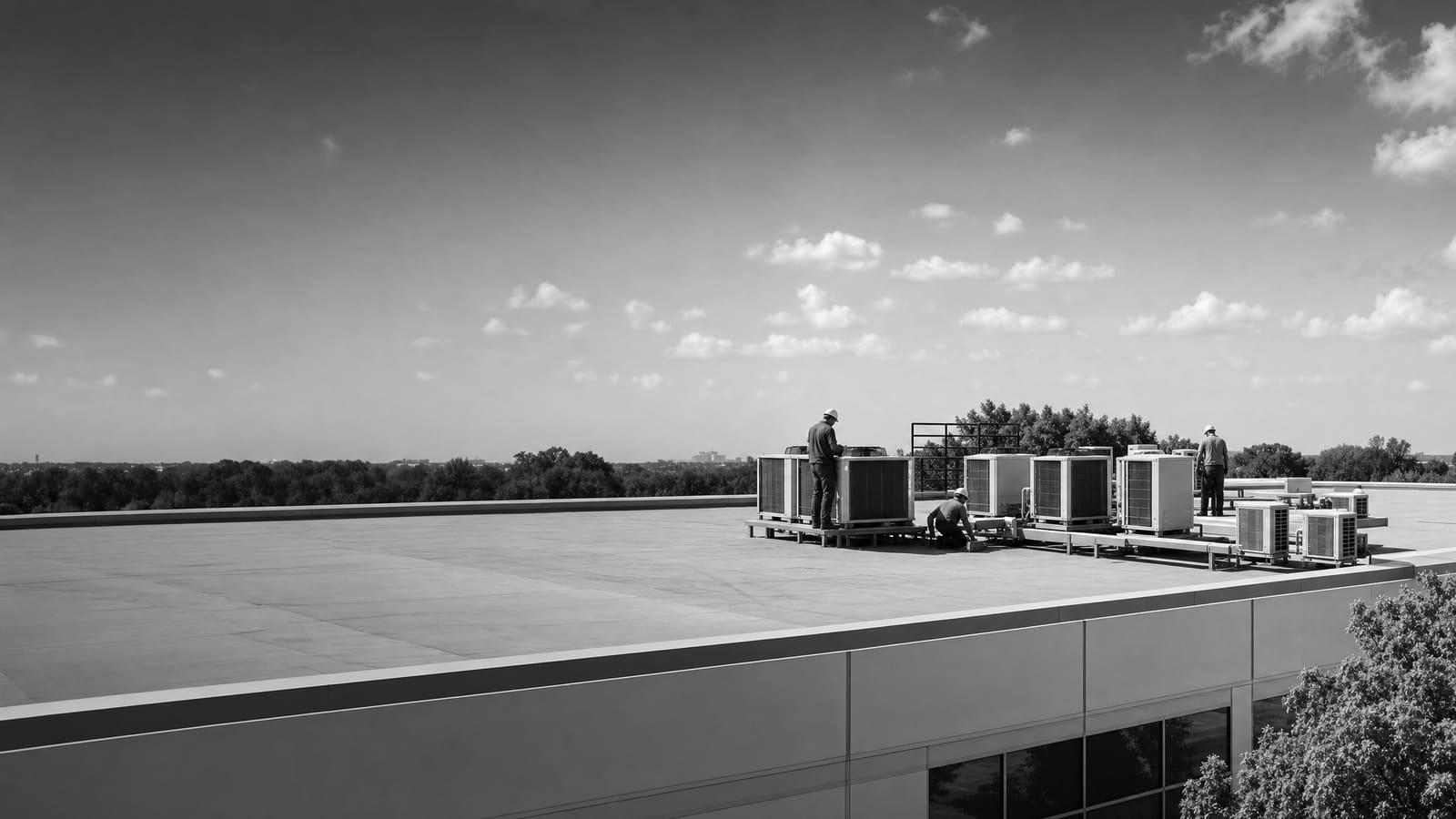
Packaged rooftop units combine major heating, cooling, and air-moving parts in one outdoor cabinet. They are common across commercial buildings and can make replacement more direct when the roof curb, ducts, utilities, and controls remain compatible. A high-efficiency RTU may reduce energy use compared with old, inefficient equipment, but the expected benefit depends on operating hours, load, controls, maintenance, and the condition of the system it replaces.
A heat pump RTU cools like an air-conditioning RTU and uses reverse-cycle operation for heating. DOE guidance says the decision should account for climate, building type, electricity and gas costs, emissions goals, equipment availability, contractor knowledge, and infrastructure. Electrical capacity, physical constraints, and existing gas service can determine whether all-electric, dual-fuel, or another approach fits.
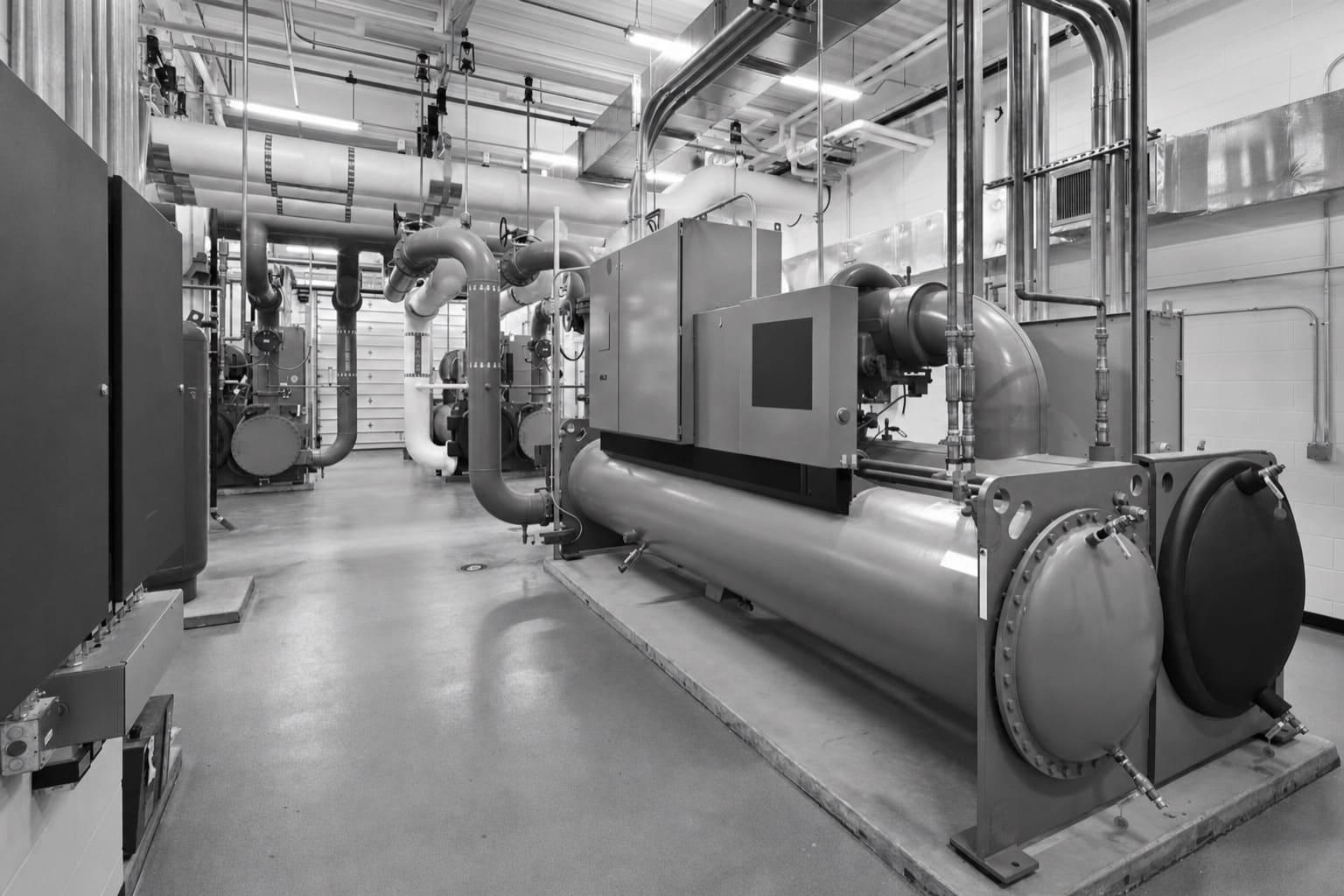
Split systems and larger central systems need a different scope. The quote may have to address indoor and outdoor equipment, refrigerant piping, pumps, hydronic piping, air handlers, ventilation, or distribution changes. Compare proposed systems by capacity, efficiency, heating method, ventilation, controls, service access, warranty, and expected operation—not by model number alone.
PROJECT COMPLEXITY
A box swap and a system change are different projects
The same nominal capacity does not guarantee the same installation. Building use, connections, access, controls, and physical fit determine whether the work is straightforward or requires added design.
LOWER COMPLEXITY
Compatible replacement
The load remains suitable, the new unit fits the existing location, utilities are adequate, controls are simple, and crews can reach the equipment without major building work.
HIGHER COMPLEXITY
Changed system or changed building
Capacity, heating method, footprint, electrical demand, ventilation, zoning, controls, or distribution changes. The project needs more field verification, coordination, and commissioning.
SITE REVIEW
Verify the building before ordering equipment
Start with the present system. Record each unit’s model, capacity, heating type, voltage, controls, condition, repair history, and areas served. Then document the building as it operates now: occupied hours, people, lighting, process loads, outside-air needs, setpoints, and recurring comfort complaints. If use has changed, ask for a load calculation instead of copying the old capacity.
The physical review should follow the complete path from delivery to final connection. Check roof or equipment-room access, crane or lifting conditions, curb dimensions, pad condition, clearances, duct transitions, drain routing, electrical service, disconnects, gas piping, refrigerant piping, and control wiring. Confirm how shutdowns affect tenants, products, computers, kitchens, or other sensitive operations.
This review should produce a written scope before equipment is released. It should also identify assumptions and exclusions. If a bidder cannot inspect a concealed condition, the quote should explain how discovery work and price changes will be handled. That makes bids easier to compare and reduces avoidable change orders.
Bring useful records
Provide nameplate photos, plans, service reports, utility history, control screenshots, occupancy schedules, and a list of problem areas. These records help separate equipment failure from airflow, control, or distribution problems.
OWNERSHIP VIEW
Balance immediate risk with lifetime operation
Waiting for failure can force a rushed equipment choice, emergency scheduling, and a longer interruption if a suitable unit is not available. Planned replacement gives the owner time to confirm the load, compare heating methods, coordinate access, and decide whether related controls or ventilation work belongs in the project.
Efficiency still needs context. DOE has documented major energy waste from older commercial RTUs and meaningful savings from high-efficiency upgrades. Your result depends on runtime, local energy prices, control sequences, maintenance, and how well the new equipment matches the building. Ask for assumptions behind any savings claim and compare total ownership needs, not just first price.
REPAIR PATH
Keep the present unit
Reasonable when the failure is limited, parts remain practical, performance is stable, and the repair does not hide a larger pattern of downtime or energy waste.
REPLACEMENT PATH
Plan the next system
Stronger when service is frequent, comfort is unreliable, the unit is over 15 years old, or failure would seriously disrupt the facility.
INSTALLATION AND HANDOFF
Plan the outage before the equipment arrives
The contractor should turn the scope into a work sequence. That sequence may include equipment release, submittal review, access preparation, utility shutdowns, removal, rigging, curb or pad work, duct and piping connections, electrical work, controls, startup, testing, inspection, and cleanup. For an occupied building, define which areas lose heating, cooling, or ventilation and for how long. Decide whether work must be phased or completed outside normal hours.
Do not treat startup as proof that the project is complete. Commissioning should verify airflow, temperatures, heating and cooling stages, refrigerant operation, fan rotation, drainage, ventilation, sensors, safeties, schedules, alarms, and control commands that apply to the installed system. Problems found here are cheaper to correct than recurring comfort calls after turnover.
The final handoff should include approved submittals, startup records, test results, warranty information, control sequences, equipment schedules, maintenance needs, filter data, and training for facility staff. Update the equipment list so future service teams know the model, refrigerant, electrical requirements, and date placed in service. Refrigerant recovery and handling should follow federal requirements for stationary air-conditioning and heat-pump equipment.
BID COMPARISON
Five things every comparable quote should show
Put competing proposals into the same structure. A lower total may simply leave out work another bidder included. These five entries expose the important differences.
01
Defined equipment
List capacity, efficiency, heating type, voltage, refrigerant, accessories, warranty, availability, and approved substitutions.
02
Complete installed scope
State removal, disposal, rigging, curb or pad work, ducts, drains, utilities, controls, startup, testing, and cleanup.
03
Assumptions and exclusions
Identify concealed conditions, structural work, electrical upgrades, controls integration, hazardous materials, temporary service, and after-hours work.
04
Schedule and outage plan
Show procurement milestones, expected shutdowns, phasing, access needs, weather limits, and responsibility for site coordination.
05
Acceptance and handoff
Define commissioning checks, correction of deficiencies, training, closeout records, warranty start, and final completion.
Get a defensible number
Price the equipment and the building together.
Send the address, operating target, and target opening date. Flux will identify what must be verified before the project can be priced.
Get a free estimateQuestions
Straight answers.
When should a commercial rooftop unit be replaced instead of repaired?
Replacement deserves serious review when an older unit needs frequent repairs, cannot maintain comfort, consumes excessive energy, or creates a high failure risk for operations. DOE guidance notes that RTUs over 15 years old can waste substantial energy and that owners often wait until performance drops or failure occurs. Age alone does not settle the choice. Compare the repair, recent service history, remaining condition, parts outlook, operating cost, and consequence of another outage.
Should the new commercial HVAC unit match the old capacity?
Not automatically. Matching capacity may work when the space, occupancy, hours, ventilation, envelope, and internal loads have not changed and the old system performed well. If the building changed or had long-running comfort problems, ask for a load review. The old nameplate shows what was installed, not necessarily what the building needs today.
What is included in a commercial HVAC replacement?
A complete scope commonly addresses equipment selection, removal, refrigerant recovery where applicable, lifting or rigging, curb or pad work, duct transitions, drains, electrical and fuel connections, controls, startup, testing, cleanup, warranty documents, and owner training. The exact scope depends on the system. Every quote should clearly state what is included, excluded, and assumed.
Is a commercial heat pump rooftop unit a good replacement choice?
It can be, but the decision needs a site review. Compare the heating load, equipment type, electrical capacity, electricity and gas costs, existing fuel service, physical fit, controls, equipment availability, and operating goals. DOE guidance distinguishes all-electric, dual-fuel, and cold-climate heat pump RTUs because one configuration does not fit every building.
How much does commercial HVAC installation cost in Ogden?
The supplied research does not support a universal local installed-price range. Capacity, efficiency, heating type, access, rigging, curb or pad changes, electrical work, controls, ventilation, phasing, and concealed conditions can all move the total. Request a site-based quote that separates equipment, labor, access, infrastructure, controls, commissioning, and allowances.
How long does a commercial HVAC replacement take?
The field work is only one part of the schedule. Equipment availability, submittal approval, site access, rigging, connection changes, controls, inspections, startup, and correction work all matter. Ask bidders for a procurement schedule and a separate outage plan. The quote should also explain what happens if equipment availability changes before release.
What should commissioning verify?
Commissioning should confirm that the installed system performs as specified. Checks may include airflow, supply and return temperatures, heating and cooling stages, refrigerant operation, fan rotation, drainage, ventilation, sensors, safeties, schedules, alarms, and building-control commands. The contractor should document results and correct deficiencies before final acceptance.
What refrigerant information belongs in the quote?
The proposal should identify the equipment refrigerant and explain any effect on piping, detection or safety features, service tools, staff training, and future maintenance. For removed equipment, the scope should assign responsibility for refrigerant recovery and disposal. Federal Section 608 rules address refrigerant handling and recycling in stationary air-conditioning and heat-pump equipment.
Sources used for this guide
- [1]betterbuildingssolutioncenter.energy.gov — DOE Advanced Rooftop Unit Replacement Guidance
- [2]betterbuildingssolutioncenter.energy.gov — DOE Commercial Heat Pump Rooftop Unit Replacement Guidance
- [3]betterbuildingssolutioncenter.energy.gov — DOE High-Efficiency Commercial Rooftop Unit Toolkit
- [4]energy.gov — DOE Efficient Commercial Rooftop Air Conditioner Program
- [5]epa.gov — EPA Stationary HVAC Refrigerant Management