THE SHORT VERSION
What a commercial HVAC replacement actually includes
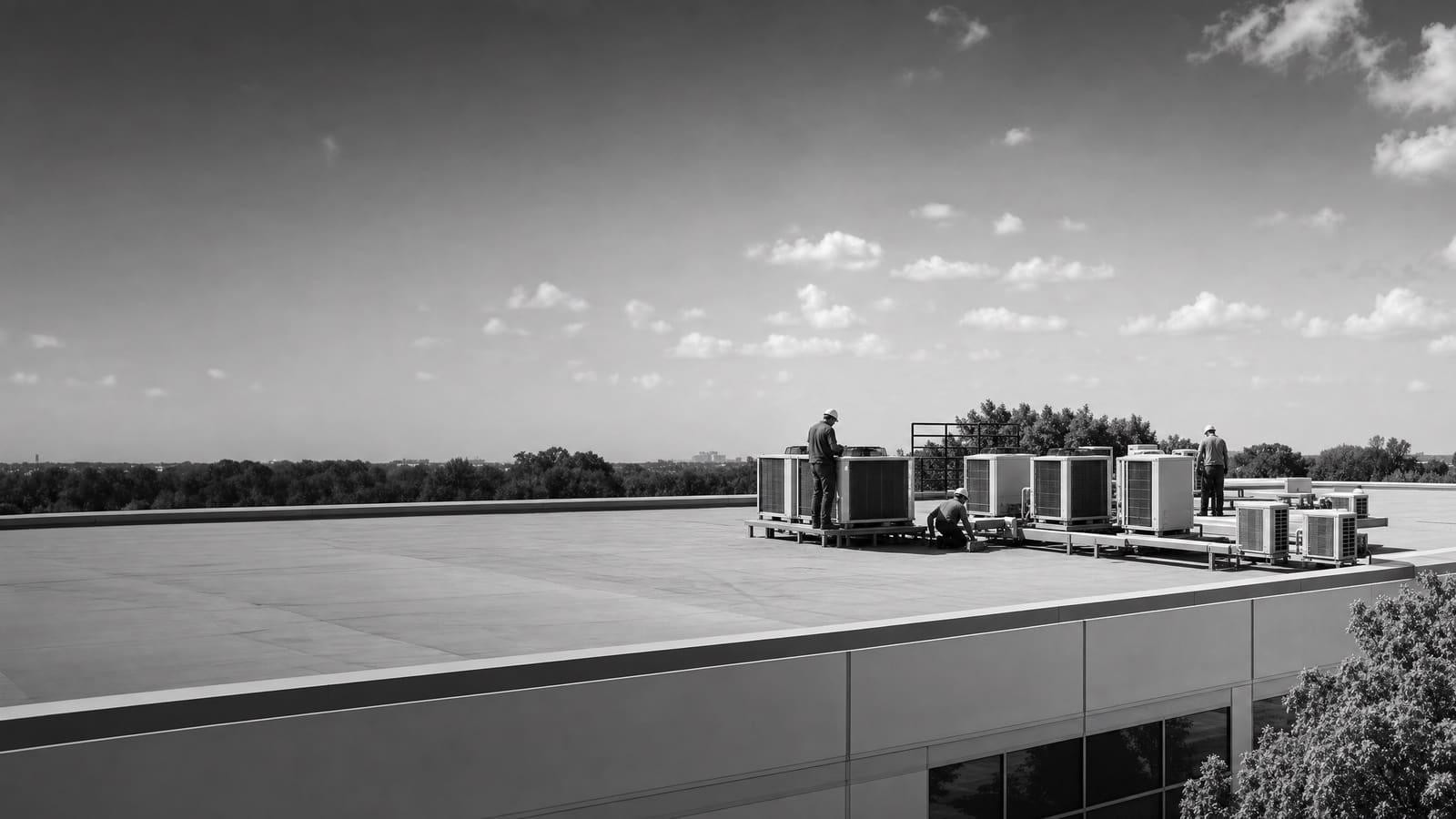
A commercial HVAC replacement covers the load calculation, equipment selection, refrigerant recovery from the old unit, rigging and set, curb or curb-adapter work, gas, electrical and control connections, then startup and commissioning. Replacement beats another repair once failures start stacking up. Federal guidance points at rooftop units past fifteen years, where an inefficient unit can waste roughly $900 to $3,700 a year in energy on its own — before you count a single repair bill.
That waste range is per unit, and it moves with size, run hours, and condition. A site review still has to confirm tonnage, curb and roof condition, electrical capacity, and crane access before any of it becomes your number.
THE THREE PATHS
Three ways to handle an aging rooftop unit
Most buildings land on one of three paths, and the honest comparison is not price against price. It is price against how long you hold the building, what the unit costs to run every month, and how much unplanned downtime you can absorb.
Waiting for failure is the default, not a decision. It hands you the worst version of every variable at once: whatever equipment is available that week, emergency labor rates, and a tenant conversation you did not schedule.
Planned replacement moves the same spend forward and buys back the choices. You pick the efficiency tier, you pick the crane day, and you can bid the work instead of accepting the first unit someone can get on a truck.
A controls retrofit is the third path and it is underrated. Federal guidance treats advanced controls as a real alternative when the cabinet and compressor still have life in them. Better fan control and smarter economizer logic on a unit that otherwise works can capture savings without the capital event.
WHAT MOVES THE NUMBER
The budget lines that actually swing
Two quotes for the same building can differ by far more than the equipment. The gap almost always sits in the lines below. Ask every bidder to show them separately, because a number that folds curb work and crane access into one lump is not a price. It is an estimate waiting to be revised after the old unit comes off the roof.
BUYING GUIDANCE
Choosing the equipment, not just the contractor
Rooftop units condition close to half of all commercial floor space in the country, which means the packaged-unit market is deep and the choices in front of you are real. Federal work with manufacturers produced a high-performance specification aimed at cutting energy use by up to half against the older baseline, and manufacturers now offer more than twenty models that exceed it. That matters to a buyer in one specific way: the efficient unit is no longer a special order or an experiment. It is a line on the same quote as the baseline unit, from the same supplier, on a similar schedule.
The comparison that decides it is not sticker against sticker. It is the premium for the better unit measured against what the old one is burning right now. Where an aging rooftop is wasting on the order of $900 to $3,700 a year, a tier upgrade often pays back inside a normal hold period. Those savings have been measured in buildings rather than only on data sheets — more than two hundred organizations upgraded over forty-three thousand rooftop units and cut a combined thirty-seven million dollars a year in energy spend.
The trap is comparing an efficient unit's price against a baseline unit's price and calling the cheaper one the better value. Ask for both, with an annual operating estimate next to each. A bidder who will not model that difference is selling you a box, not a system.
SCOPE CHECK
What makes a replacement simple, and what makes it hard
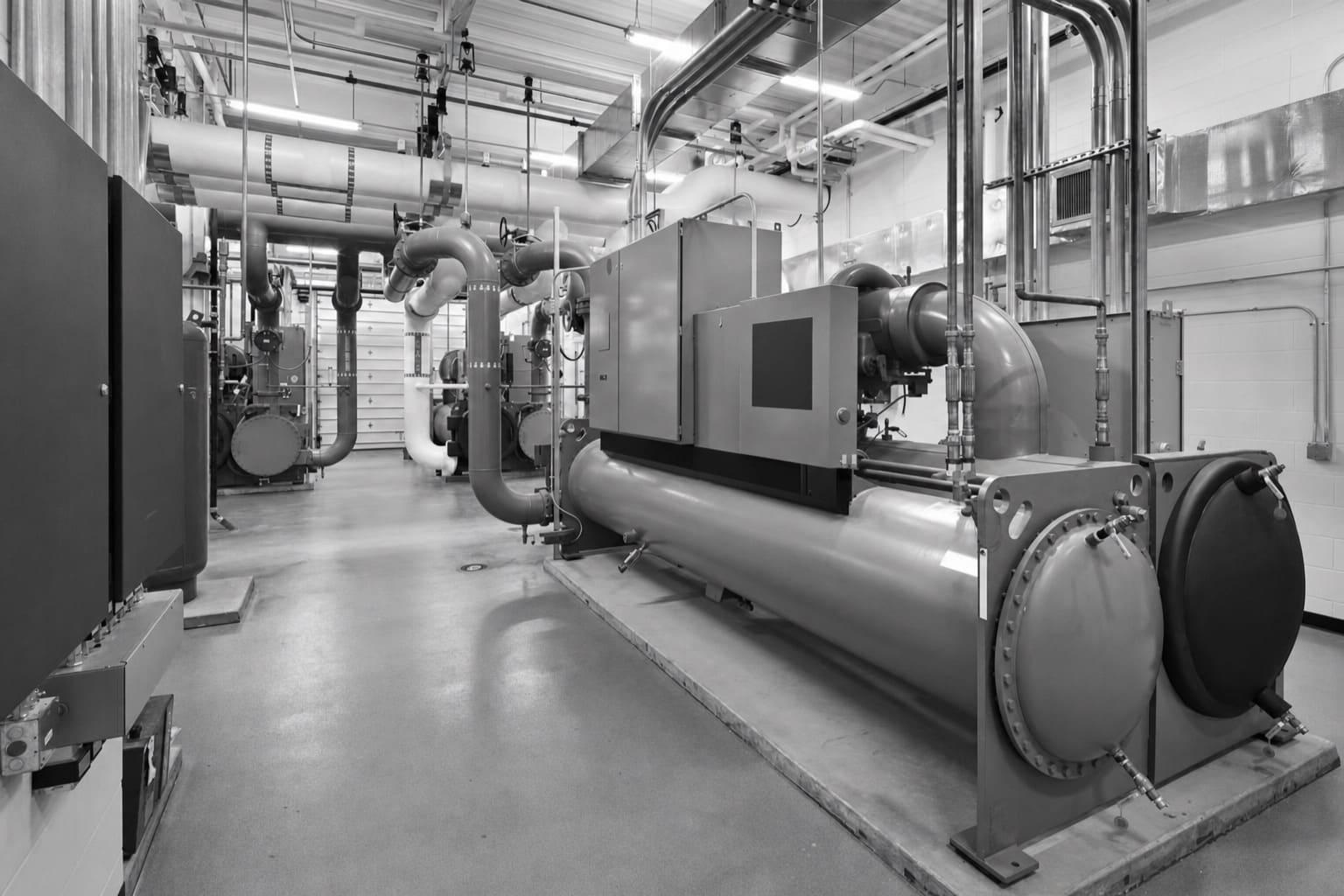
Before anyone quotes, it helps to know which project you actually have. The difference between a one-morning swap and a phased job usually comes down to four questions: does the footprint match, does the electrical service have room, can the roof carry the new load, and can the space lose conditioning for a day.
LOWER COMPLEXITY
Like-for-like on a matching curb
Same tonnage, same footprint, same heating fuel, workable crane access, and a space whose use has not changed since the old unit went in. Rigging plan, set, connect, commission. The engineering is thin and the surprises are few.
HIGHER COMPLEXITY
Fuel switch, resize, or tight access
Changing heating fuel, adding tonnage, or landing a unit on a roof the crane cannot easily reach. Electrical capacity, structural review, gas line changes, and phasing all enter the scope. Federal heat pump guidance flags electrical capacity and physical constraints as the two conditions that stop these projects most often.
THE SITE REVIEW
What a real site review has to confirm
A quote written from a nameplate photo is a starting point, not a price. It tells a contractor tonnage and vintage. It does not tell them whether the curb matches, whether the roof structure carries the new weight, whether the panel has capacity for a different unit, or whether a crane can reach the corner your unit happens to sit on.
The load calculation is the step buyers skip and later regret. The old nameplate reflects how the building was used when that unit was installed, which may be fifteen or twenty years of tenants, lighting retrofits, and equipment changes ago. Sizing forward from how the space is used today is what finally fixes the comfort complaint the old unit could never solve. Occasionally it also shrinks the unit, which shrinks both the purchase and the operating bill.
Access is the other one. The rigging plan, the lot closure window, the boom reach, and the weather call are the whole difference between a morning of coned-off stalls and a week of improvisation. Federal heat pump guidance names electrical capacity, physical constraints, and gas line arrangements as the infrastructure checks that determine whether a site can take a given piece of equipment at all. Those answers come off the roof, not out of a spreadsheet.
Ask for these four before you sign
A photo of the existing curb with its dimensions, the panel schedule showing available capacity, the rigging plan with lot closure hours, and the load calculation the tonnage came from. If all four exist, the installed price will usually hold. If one is missing, plan on a change order.
OWNERSHIP
Two decisions that outlive the install
The install takes a week of your attention. Its consequences run for the full service life of the equipment, and two of them are worth deciding deliberately instead of inheriting from whatever sat on the roof before.
Both are far easier to settle before the equipment is ordered than after. Heating fuel drives electrical work, unit weight, and sometimes gas line demolition. Refrigerant drives who can legally service the unit and which parts your contractor keeps on the shelf. Neither is something you want a technician discovering on a Friday in February.
Federal guidance is blunt about the sequencing. The infrastructure questions — electrical capacity, physical constraints, gas lines — get answered first, because they determine which equipment is even a candidate for your building. Answer them late and you have already paid for a unit the site cannot support.
HEATING FUEL
Gas, electric, or both
A heat pump rooftop is mechanically close to a standard air-conditioning rooftop but heats by reversing the cycle instead of burning fuel. All-electric, cold-climate, and dual-fuel versions exist, and the right fit depends on your winter heating load, local electricity and gas prices, and the electrical capacity already in the building.
REFRIGERANT
Handling is regulated work
Handling, recovery, and recycling of refrigerant in stationary air-conditioning and heat pump equipment falls under federal rules. That shapes how the old unit is decommissioned and how a mixed fleet gets serviced afterward. Put recovery in the written scope rather than assuming it.
PHASING AND PROCUREMENT
Buying one unit versus buying a plan
If you have more than one rooftop unit, the single most useful thing you can do is stop treating each one as a separate emergency. Walk the roof once. Record age, tonnage, heating type, refrigerant, and condition for every unit, then rank them by what each one is costing you to run. That list turns a decade of surprise capital events into a schedule you can budget against and bid in groups.
Grouped procurement helps in ways single replacements never do. One crane mobilization instead of three. One permit cycle in most cases. Pricing that reflects a multi-unit order rather than a one-off. And a consistent fleet afterward, which makes the service contract simpler and the spare-parts strategy smaller.
The lifetime math favors moving early on the worst offenders. Federal guidance is direct about it: replacing an inefficient unit proactively generally beats replacing it on failure, and it also beats a like-for-like swap made at the very end of service life, because at that point the failure dictates the equipment choice instead of you. The unit costing the most per year is the one to do first, not the one that happens to be the loudest. That ranking is also the only honest answer to how much you should budget — a number built from your roof rather than a market average.
THE QUOTE
Five things a comparable quote shows
Bids only compare if they cover the same scope. Ask every bidder to break out these five, in this order. When one quote comes in materially cheaper, the difference is almost always sitting in item two or item four rather than in the equipment itself.
01
Equipment, named
Make, model, tonnage, efficiency tier, heating type, and refrigerant. Not "a ten-ton unit" — the specific model, so two bids can be read on the same axis.
02
Curb and structural scope
Whether the new unit lands on the existing curb, needs an adapter, or triggers structural review — and who owns the cost if the roof surprises everyone.
03
Rigging and access plan
Crane size, staging area, lot closure hours, and the weather contingency. Included in the installed price, not billed as an extra on the day.
04
Old unit decommissioning
Refrigerant recovery under federal rules, removal, and haul-off, itemized. This is regulated work and it should be visible on the page.
05
Startup and commissioning
Charge, airflow, and control settings verified against spec and documented at handoff. Skip it and the warranty conversation gets difficult in month two.
Get a defensible number
Price the equipment and the building together.
Send the address, operating target, and target opening date. Flux will identify what must be verified before the project can be priced.
Get a free estimateQuestions
Straight answers.
When does replacement beat another repair?
Federal guidance points at the fifteen-year mark. Past it, rooftop units waste enough energy that proactive replacement usually beats waiting for failure, and it also beats a last-minute like-for-like swap, because a failure in season dictates the equipment choice for you. Add repair frequency and whether the unit still holds the space, and the answer is normally clear.
Is a high-efficiency unit worth the premium?
Usually, and it is testable rather than a matter of faith. The federal high-performance specification targeted up to fifty percent lower energy use than the older baseline. Where an aging unit is wasting roughly $900 to $3,700 a year, the premium often returns inside a normal hold period. Ask for an annual operating estimate beside each option.
Should we switch a gas rooftop to a heat pump?
It is a building-by-building answer. Heat pump rooftops come in all-electric, cold-climate, and dual-fuel versions. The decision turns on your winter heating load, local electricity and gas prices, and whether the building has the electrical capacity and physical room for the change. Settle those questions before equipment is ordered, not after.
What happens to the refrigerant in the old unit?
It gets recovered by qualified hands. Federal rules govern the handling, recovery, and recycling of refrigerant in stationary air-conditioning and heat pump equipment, so decommissioning is regulated work rather than a courtesy. Ask to see it itemized in the scope, and ask how a mixed fleet will be serviced afterward.
Can we keep the unit and just upgrade the controls?
Sometimes, and it is worth asking. Federal guidance treats an advanced controls retrofit as a real alternative to replacement when the cabinet and compressor still have service life left. Better fan control and smarter economizer logic can capture meaningful savings without the capital event. It is a delay, not a cure, but a useful one.
Sources used for this guide
- [1]betterbuildingssolutioncenter.energy.gov — DOE Advanced Rooftop Unit Replacement Guidance
- [2]betterbuildingssolutioncenter.energy.gov — DOE Commercial Heat Pump Rooftop Unit Replacement Guidance
- [3]betterbuildingssolutioncenter.energy.gov — DOE High-Efficiency Commercial Rooftop Unit Toolkit
- [4]energy.gov — DOE Efficient Commercial Rooftop Air Conditioner Program
- [5]epa.gov — EPA Stationary HVAC Refrigerant Management