THE DIRECT ANSWER
Commercial HVAC replacement and installation in New Rochelle.
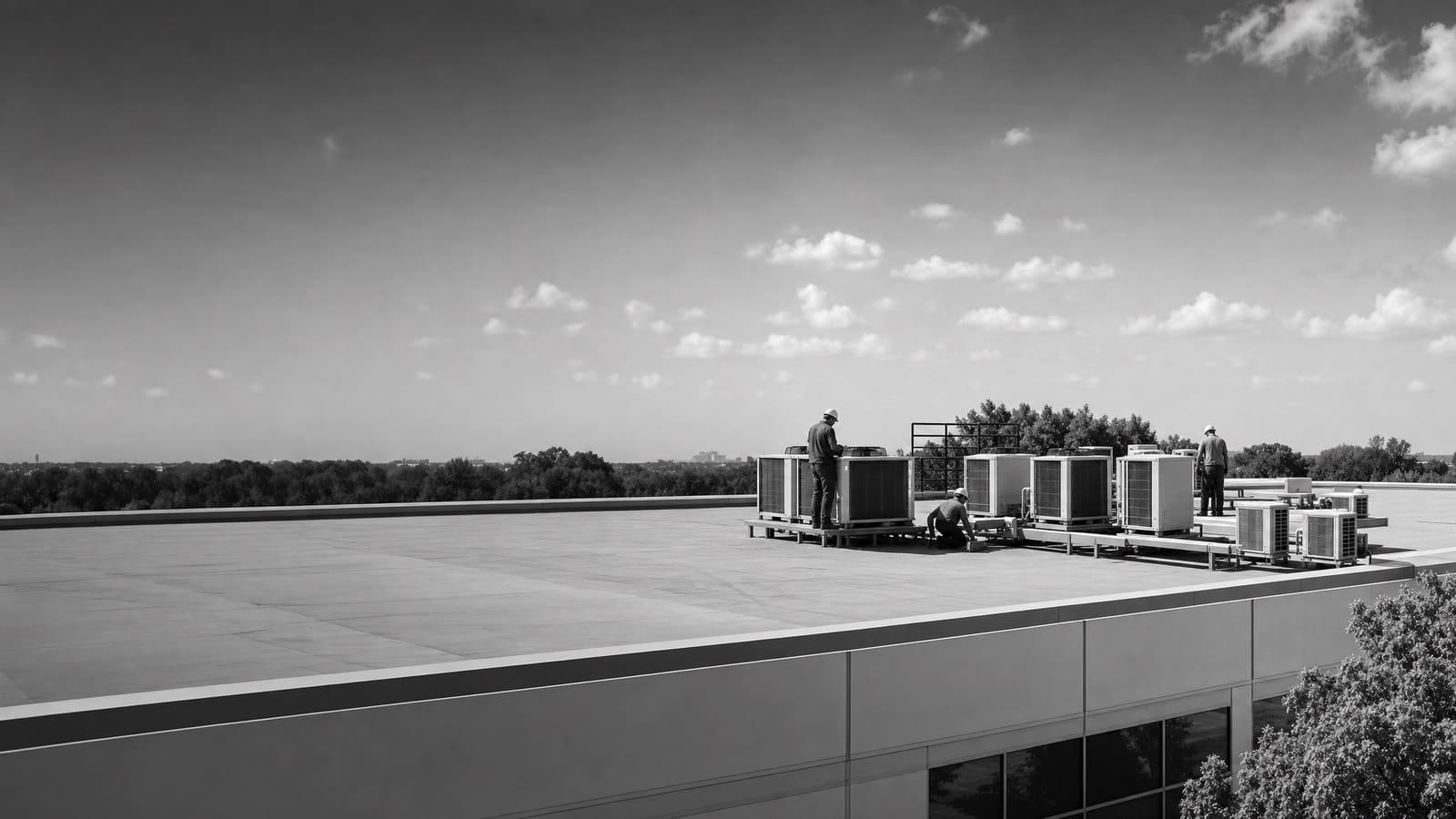
A commercial HVAC replacement includes load review, equipment selection, removal, rigging, utility connections, controls, startup, testing, and handoff. Replacement becomes more useful than another repair when an older unit needs frequent service, cannot hold comfort, or no longer fits the building load. DOE guidance notes that rooftop units over 15 years old can waste substantial energy compared with newer models.
A site review must confirm capacity, curb fit, structural limits, electrical service, fuel connections, ventilation, controls, access, and the work needed beyond the equipment.
THREE OPERATING CHOICES
Choose the replacement path before choosing a model
The old unit gives the project a starting point, but it should not make the whole decision. A direct replacement can reduce design and connection changes when the present system still fits the space. A right-sized replacement is more useful when occupancy, hours, internal equipment, ventilation, or comfort needs have changed. A heat pump rooftop unit adds reverse-cycle heating and may support an electrification plan, but it needs a closer review of winter operation, utility rates, electrical capacity, backup heat, and available equipment.
Ask bidders to price the same operating path. Otherwise, a low bid may cover a basic swap while another includes load work, controls, curb changes, and full commissioning. Those are different projects, even if both proposals list the same nominal capacity.
BUILD THE BUDGET
What moves an installed HVAC price
The supplied research does not support a universal installed price. Compare proposals by complete scope, not equipment cost alone. These lines often explain why two totals differ.
EQUIPMENT FIT
Packaged rooftop units, split systems, and heat pumps solve different problems
Packaged rooftop units combine major heating, cooling, and air-moving parts in one cabinet. They are common across commercial buildings and condition nearly half of U.S. commercial floor area. A packaged replacement can be practical when the roof, curb, duct layout, and utility connections support it. The quote still needs to state whether the new cabinet fits the existing curb, needs an adapter, or changes roof loading.
A split or multi-zone arrangement separates indoor and outdoor components. It can help where roof geometry, zoning, tenant layouts, or indoor distribution make one packaged unit a poor fit. More components also mean more refrigerant routing, condensate planning, controls, access, and coordination. The buyer should see those details in the drawings or written scope.
A heat pump rooftop unit looks much like an air-conditioning rooftop unit but also supplies reverse-cycle heating. DOE guidance separates all-electric, dual-fuel, and cold-climate choices because location, winter load, utility prices, electrical capacity, gas infrastructure, physical limits, and equipment availability affect the result. Do not treat electrification as a box substitution. Compare design heating performance, supplemental or backup heat, electrical work, expected operating profile, and service support before selecting it.
SCOPE COMPLEXITY
A simple swap and a building upgrade are not the same job
Project complexity depends on how closely the selected system matches the existing building. Define the conditions before asking contractors for comparable totals.
LOWER COMPLEXITY
The present arrangement still works
Capacity remains suitable, the curb and duct path can be reused, utilities are adequate, controls are simple, and the work area is accessible. The scope can focus on safe removal, connection, startup, and documented performance.
HIGHER COMPLEXITY
The replacement changes the building
Capacity, fuel, voltage, weight, footprint, ventilation, zoning, or control strategy changes. The project may need added design, structural review, electrical work, duct changes, roofing, phasing, and deeper commissioning.
SITE REVIEW
Start with the load and the conditions around the unit
A nameplate identifies the old equipment, not the correct new design. The site review should record served areas, occupancy, operating hours, process loads, outdoor-air needs, problem zones, control schedules, and changes made since the present system was installed. It should also check whether poor comfort comes from capacity, airflow, distribution, controls, maintenance, or the building envelope.
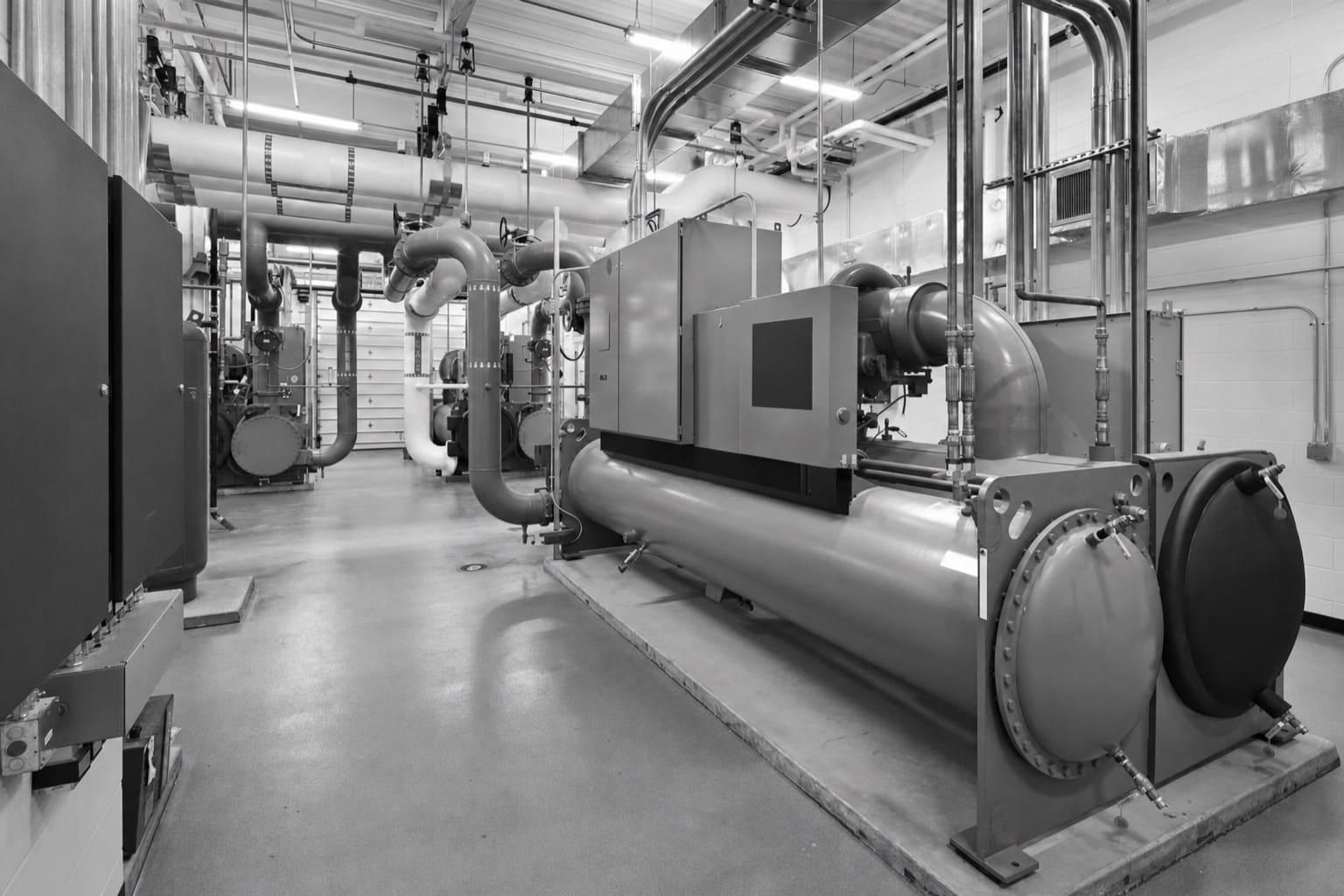
The physical review is just as important. Confirm equipment dimensions and weight, curb condition, roof opening, drainage, duct transitions, service clearances, electrical supply, disconnects, fuel connections, refrigerant paths, and access for removal. Identify where a crane or lifting equipment could stage and what occupied areas must remain open. For indoor equipment, trace the route from delivery point to final position.
Use this information to create one written basis of design. It should state the assumed loads, required capacity, equipment type, heating method, ventilation, filtration, controls, efficiency target, and operating sequence. Each bidder can then price the same result.
Do not size from the old label alone
The former unit may have been oversized, undersized, or selected for a past use. Confirm today’s load before carrying an old mistake into new equipment.
OWNERSHIP VIEW
Balance outage risk with lifetime operation
A failed unit turns replacement into an emergency. Equipment availability can outweigh small efficiency or feature differences when occupants, inventory, or operations need conditioning now. Planned replacement gives the owner more time to check loads, compare system types, coordinate access, and select an installation window.
Purchase price is only one part of ownership. Energy use, maintenance access, controls, filter service, replacement parts, refrigerant strategy, warranty terms, and staff training affect the system after startup. DOE has found that efficient rooftop equipment can deliver meaningful energy savings, but actual value depends on the old unit, climate, load, controls, rates, and operating hours. Ask for a stated method behind every savings claim.
RELIABILITY
Replace before failure
Proactive work can reduce emergency choices, unplanned downtime, rushed procurement, and temporary conditioning. Rank units by age, condition, service history, comfort performance, and consequence of failure.
LIFETIME COST
Buy the operating result
Compare energy assumptions, maintenance needs, service access, controls, warranty, parts support, and expected use. A cheaper unit may not be the lower-cost system to own.
PROJECT DELIVERY
Plan procurement, shutdown, installation, and handoff as one sequence
The contractor should confirm equipment availability before the owner approves a shutdown date. The schedule should show submittal review, equipment release, field verification, curb or support work, control preparation, delivery, lifting, connections, startup, testing, and inspection. If the facility cannot lose conditioning, define temporary service or phased work before signing the contract.
For a rooftop replacement, the lift is only one part of the day. The team must isolate utilities, recover refrigerant as required, remove the old unit, protect the roof, set the new equipment, complete transitions, restore connections, and make the area safe. Federal refrigerant rules address handling and recycling in stationary air-conditioning and heat-pump equipment. The scope should identify qualified handling, recovery, and disposition rather than leaving the old charge unaddressed.
Handoff should include startup records, measured airflow or balancing results where required, control sequences, alarm checks, schedules, setpoints, warranty registration, manuals, filter information, and staff training. Commissioning verifies that the installed system follows the intended sequence under real operating conditions. A unit that merely starts is not yet a proven installation.
COMPARE PROPOSALS
Five things every comparable HVAC quote should show
Put these items in the request for pricing. If a bidder excludes one, ask for the cost and operating effect before comparing totals.
01
One clear equipment schedule
Show manufacturer, model, capacity, heating type, efficiency, voltage, options, refrigerant, availability, and approved alternatives.
02
A complete installed scope
List removal, disposal, rigging, curbs, roofing, ductwork, utilities, drains, controls, insulation, startup, and finish repairs.
03
Assumptions and exclusions
State load assumptions, access limits, work hours, temporary service, hidden-condition treatment, and owner-provided work.
04
Testing and handoff
Define startup checks, airflow verification, control testing, commissioning records, training, manuals, and warranty responsibilities.
05
Price and schedule terms
Separate alternates, allowances, payment milestones, lead time, shutdown needs, change-order rules, and completion conditions.
Get a defensible number
Price the equipment and the building together.
Send the address, operating target, and target opening date. Flux will identify what must be verified before the project can be priced.
Get a free estimateQuestions
Straight answers.
When should a commercial HVAC unit be replaced instead of repaired?
Replacement deserves serious review when an older unit needs frequent repairs, cannot maintain comfort, uses excessive energy, depends on hard-to-source parts, or creates a high outage risk. DOE guidance specifically warns that rooftop units over 15 years old may waste substantial energy compared with newer equipment. Age alone does not decide the project; condition, service history, load fit, and failure impact matter too.
Should a replacement match the old unit’s capacity?
Not automatically. Confirm the current building load, outdoor-air needs, occupancy, operating hours, internal equipment, zoning, and comfort history. A matching capacity may be reasonable when the space has not changed and the old system performed well. A new load review can prevent an old sizing error from being repeated.
What should be included in a commercial HVAC installation?
A complete scope should cover equipment selection, removal, refrigerant recovery where applicable, disposal, rigging, supports or curbs, duct transitions, electrical and fuel connections, drains, controls, insulation, startup, testing, commissioning, documentation, training, and warranty handling. The proposal should clearly list exclusions and owner responsibilities.
Is a commercial heat pump rooftop unit a good replacement choice?
It can be, but the answer depends on winter heating loads, equipment performance, electricity and fuel rates, electrical capacity, gas infrastructure, backup heat, physical limits, and operating goals. Compare all-electric, dual-fuel, and cold-climate options against a defined load and operating model rather than choosing by label alone.
How can owners compare commercial HVAC bids fairly?
Give every bidder the same basis of design and require the same equipment details, installed scope, assumptions, exclusions, testing, schedule, warranty, and alternates. Normalize missing items before comparing totals. A proposal that omits controls, curb work, commissioning, or rigging is not directly comparable with one that includes them.
What documents should the owner receive at handoff?
Request approved submittals, startup sheets, testing or balancing results, commissioning records, control sequences, schedules and setpoints, warranty registration, equipment manuals, filter and maintenance information, and training records. These documents give the service team a reliable baseline after installation.
Sources used for this guide
- [1]betterbuildingssolutioncenter.energy.gov — DOE Advanced Rooftop Unit Replacement Guidance
- [2]betterbuildingssolutioncenter.energy.gov — DOE Commercial Heat Pump Rooftop Unit Replacement Guidance
- [3]betterbuildingssolutioncenter.energy.gov — DOE High-Efficiency Commercial Rooftop Unit Toolkit
- [4]energy.gov — DOE Efficient Commercial Rooftop Air Conditioner Program
- [5]epa.gov — EPA Stationary HVAC Refrigerant Management