THE DIRECT ANSWER
What a commercial HVAC replacement actually includes
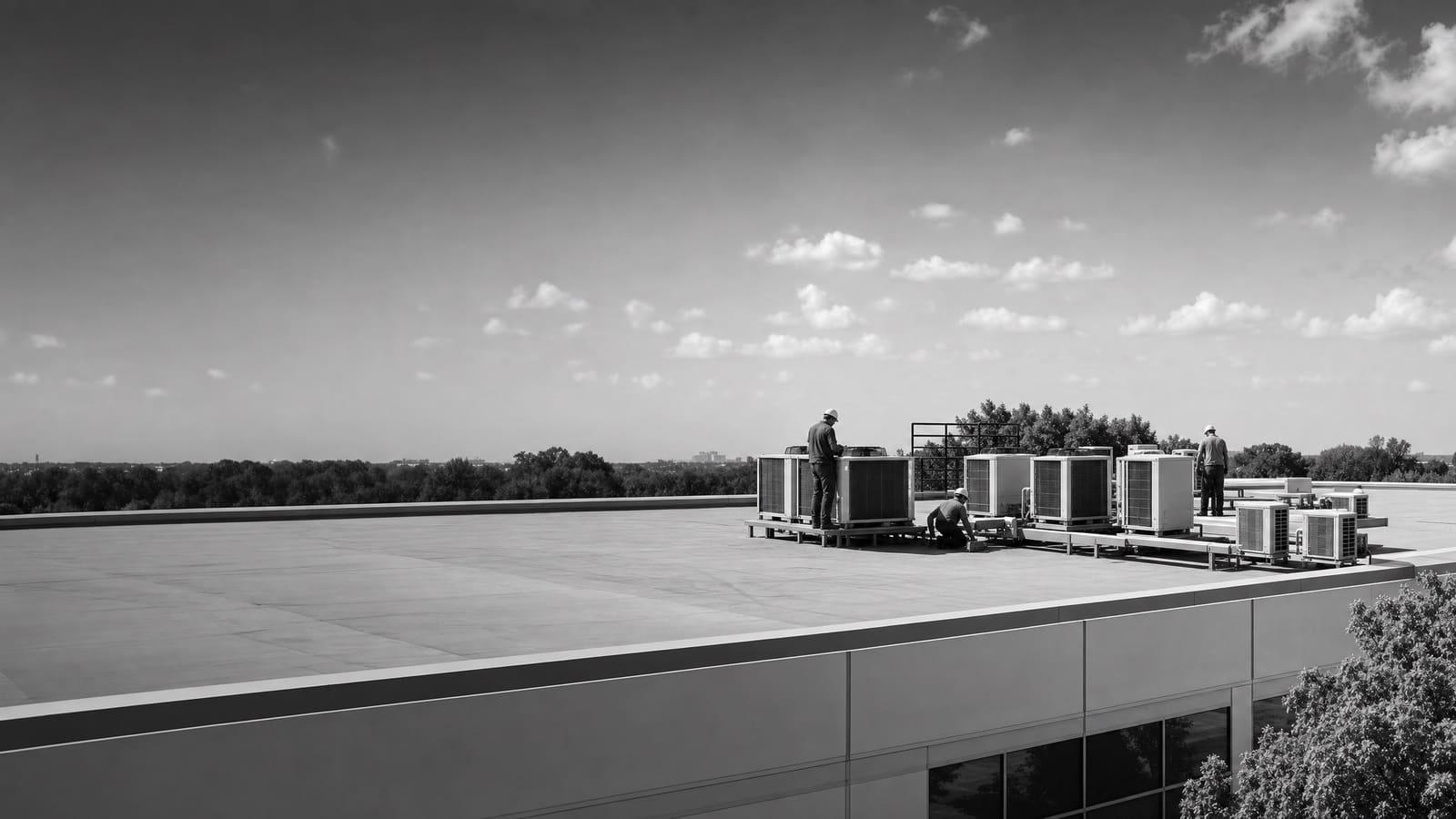
A commercial HVAC replacement is a load check, an equipment selection, a rigging and permit plan, and a documented startup. On a packaged rooftop building it means pulling the old unit, adapting the curb, reconnecting power, gas, and controls, then commissioning to spec. Replacement wins over another repair once the unit is past fifteen years. An old, inefficient rooftop unit wastes $900 to $3,700 a year, so the repair math flips sooner than owners expect.
A site review still has to verify curb size and roof structure, available electrical capacity, gas service, crane reach across the lot, and whether current occupancy matches the old nameplate.
THREE WAYS TO GO
The choice in front of you
Most buildings land on one of three options, and the right one depends on whether the space still works the way it did when the old unit went in. A like-for-like swap is the fastest path back to cooling and the cheapest to engineer, but it carries forward whatever sizing mistake the old unit had. A right-sized replacement starts from today's occupancy, plug load, and hours, and it fixes the comfort complaints a same-tonnage unit will repeat. A heat pump rooftop unit is a real third option here: current heat pump RTUs are considered capable of meeting most or all winter heating demand across the South and West, where winters are mild. The heating question is rarely what stops that project. Electrical capacity is. Confirm the panel before you commit to an all-electric plan.
WHAT MOVES THE NUMBER
Where the money actually goes
Nobody can price a roof over the phone, but the same handful of lines move the number on almost every commercial replacement. Ask which of these your quote has priced for real and which are allowances waiting to become change orders.
BUYING GUIDANCE
The decisions that outlive the invoice
The biggest money decision on a rooftop replacement is not the brand. It is whether you buy the efficiency tier that matches how many hours the building actually runs. A unit serving a warehouse office and a unit running nearly year-round over a Murrieta retail floor do not have the same payback on a premium efficiency step. Ask for two tiers priced side by side, with the annual energy difference stated, and decide with both numbers in front of you.
The second decision is controls. Rooftop equipment is where a great deal of commercial energy waste lives, and the fix is often not a bigger unit — it is a unit that modulates on a sequence matched to your hours. A federal push with manufacturers produced rooftop units designed to cut energy use by up to half against the older standard, and more than twenty models now exceed that specification. None of that shows up on the bill unless the sequence is set correctly and someone verifies it.
The third is timing. Equipment availability, not labor, usually sets your date. Put the lead time on the quote in writing, right next to the price.
SIDE BY SIDE
What makes one replacement harder than another
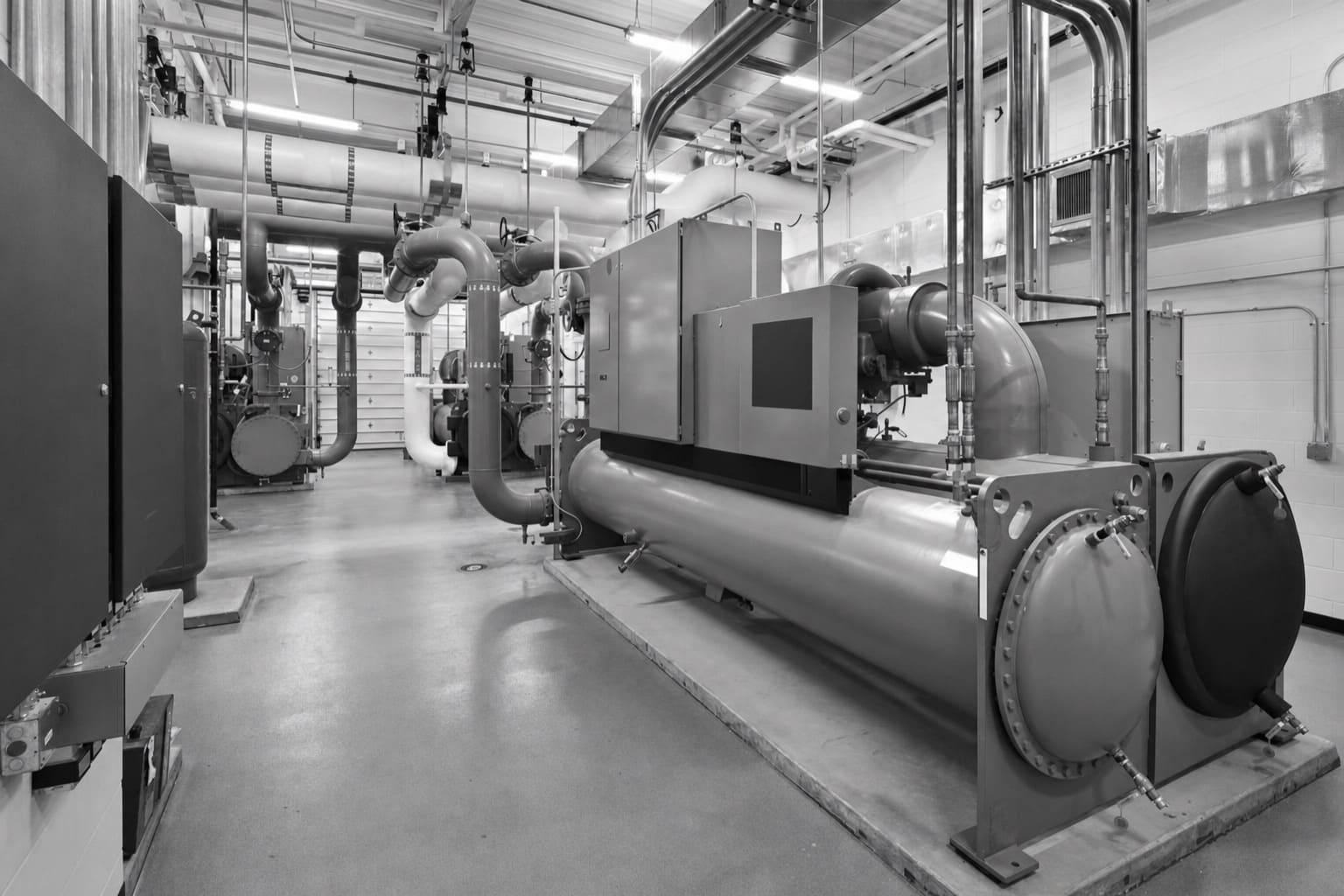
Two replacements at the same tonnage can be a week apart on schedule and far apart on price. What separates them is almost always access, structure, and whether the new unit needs something the building does not already have.
LOWER COMPLEXITY
Straight swap on an existing curb
Same tonnage, same fuel, curb reusable or a simple adapter. The crane reaches from the lot without closing a drive aisle. Power and gas are already sized. These land in a day or two on site and price with few unknowns.
HIGHER COMPLEXITY
Bigger unit, tight site, or a fuel switch
Added tonnage or a larger footprint pulls in structural review. A crane that has to set from the street adds permits and traffic control. An all-electric conversion adds service work. An occupied building with no after-hours window stretches everything.
SCOPING IT RIGHT
What a real site review produces
A useful site review takes about an hour and prevents most change orders. The visit should produce four things: a measured curb with a decision about adapter versus rebuild, a structural read on the roof if weight or footprint changes, a photo of the electrical panel with available capacity noted, and a rigging plan that says where the crane sets up and how many stalls close.
The load question deserves its own conversation. The old nameplate is evidence, not an answer. Years of tenant changes, added equipment, better glazing, and different operating hours can move the real load in either direction. Oversized equipment short-cycles, dehumidifies poorly, and wears out early. Undersized equipment never catches up on the hottest afternoons. Both show up as complaints, and a calculation avoids both.
Finally, walk the controls. If the building has automation, find out what the new unit has to talk to and who is responsible for making that connection work. Asking that before the order goes in is the difference between a system that performs and a system that merely runs.
What the site visit must confirm
Curb dimensions and roof structure, available electrical capacity and panel space, gas line status, crane reach and stall closures, the existing controls and the sequence they expect, and any code item the replacement pulls into scope.
IN MURRIETA
Permits set your calendar, not just your budget
Plan on a permit. California building divisions treat mechanical change-outs as permitted work, and the electrical and plumbing pieces that ride along with an HVAC replacement are permitted too. That matters for scheduling more than for cost. The permit needs to be in hand before the crane is on the calendar, and the inspection has to fit inside the same window your tenants already agreed to.
Two practical moves. Make the installing contractor the permit holder in writing, so there is no gap between the price you accepted and the paperwork someone still has to pull. Then confirm the submittal and inspection sequence with the Murrieta building division before you commit to a shutdown date. A replacement that grows in tonnage or footprint can add review steps a like-for-like swap never triggers, and that is a week-one conversation.
Ask before you set the date
Who pulls the mechanical permit, what electrical work is carried on it, how long review takes for a like-for-like change-out versus an upsized unit, and how soon an inspector can come after the set.
OWNERSHIP AND OPERATIONS
Two questions that decide how this feels next year
The first is whether you replace on your schedule or the equipment's. Waiting for failure means paying peak-season pricing for whatever is on the truck, in the tonnage that happens to be available rather than the one you wanted, with tenants in the building while it happens. The second is who benefits. In a leased building, ownership writes the check for the unit and the tenant collects the utility savings unless the lease says otherwise. That is worth reading before you choose between an efficiency tier and the cheapest box that fits the curb.
TIMING
Planned beats reactive
A proactive replacement lets you compare tiers, order the unit you chose, and set it on a weekend. Replace-on-failure hands all three of those decisions to whatever is in stock in August.
LEASE STRUCTURE
Who pays and who saves
Capital cost sits with ownership; energy savings land with whoever pays the utility bill. Check the lease and the recovery language before the efficiency step gets value-engineered out of the scope.
PHASING AND PROCUREMENT
If you have more than one unit on the roof
Resist the urge to treat a multi-unit roof as one enormous project or as five unrelated emergencies. Rank the units by age, service history, and how much of the building each one serves, then replace in waves that share a crane day. Mobilization is a real cost, and splitting it across two or three units in the same visit is the cheapest savings available on this kind of work.
Procurement follows the same logic. Ordering several units together improves your position on price and gives you one lead time to plan around instead of three staggered ones. It also leaves you with a fleet that ages together, which makes service contracts and spare-parts strategy far simpler for the next fifteen years.
Lifetime cost is what should decide the tier. The energy an old unit wastes does not pause while you deliberate. Through the DOE Advanced RTU Campaign, participating organizations upgraded more than 43,000 rooftop units and reported roughly $37 million in combined annual energy savings. Your building is not a national average, but the direction holds: on equipment that runs this many hours, the operating line is bigger than the gap between the bids.
BEFORE YOU SIGN
Five things a comparable quote shows
A quote you can actually compare says these five things in writing. When two bids differ by a wide margin, the gap is almost always hiding in one of them.
01
The equipment, spelled out
Make, model, tonnage, efficiency tier, refrigerant, and heating type — not a line that says "new rooftop unit."
02
Lead time next to the price
The date the unit ships, and what happens to the price if that date moves.
03
Curb, structure, and rigging
Adapter or new curb, any structural work, crane size, staging location, and how long the lot is closed.
04
Permits, inspection, and disposal
Who pulls the permit, who meets the inspector, and who recovers the old refrigerant charge and hauls the unit away.
05
Commissioning and documentation
Charge, airflow, and control sequence verified against spec, with a startup report you keep for the warranty.
Get a defensible number
Price the equipment and the building together.
Send the address, operating target, and target opening date. Flux will identify what must be verified before the project can be priced.
Get a free estimateQuestions
Straight answers.
When is replacement smarter than one more repair?
Once a unit is past fifteen years, repairs stop buying much runway. An old, inefficient rooftop unit can waste $900 to $3,700 a year on its own, and that spend continues between service calls. If the compressor is the failed part, replacement is usually the better use of the money.
Should we replace like-for-like or resize?
Run the load either way. If occupancy, hours, and layout have not changed, like-for-like is often correct and cheaper to engineer. If the space was reconfigured or the comfort complaints never went away, a same-tonnage unit will simply repeat them.
Is a heat pump rooftop unit realistic in Murrieta?
For most of the West, today's heat pump rooftop units are considered capable of handling most or all of the winter heating demand, and mild winters are exactly where they perform best. The gating question is usually electrical capacity at the building, not the weather.
Who handles the crane, the permit, and the old unit?
The installing contractor should own rigging, lot coordination, permits, inspection, and refrigerant recovery as part of the installed price. Federal rules govern how the old refrigerant charge is recovered and handled, so make sure that work is named in the scope.
What actually sets the schedule?
Equipment availability, most of the time. The set itself is short. Getting the right unit on a truck and the permit in hand is what fills the calendar, which is why lead time belongs on the quote in writing next to the price.
Sources used for this guide
- [1]betterbuildingssolutioncenter.energy.gov — DOE Advanced Rooftop Unit Replacement Guidance
- [2]betterbuildingssolutioncenter.energy.gov — DOE Commercial Heat Pump Rooftop Unit Replacement Guidance
- [3]betterbuildingssolutioncenter.energy.gov — DOE High-Efficiency Commercial Rooftop Unit Toolkit
- [4]energy.gov — DOE Efficient Commercial Rooftop Air Conditioner Program
- [5]epa.gov — EPA Stationary HVAC Refrigerant Management
- [6]californiacity-ca.gov — HVAC Permits