THE DIRECT ANSWER
Commercial HVAC replacement and installation in Missouri City.
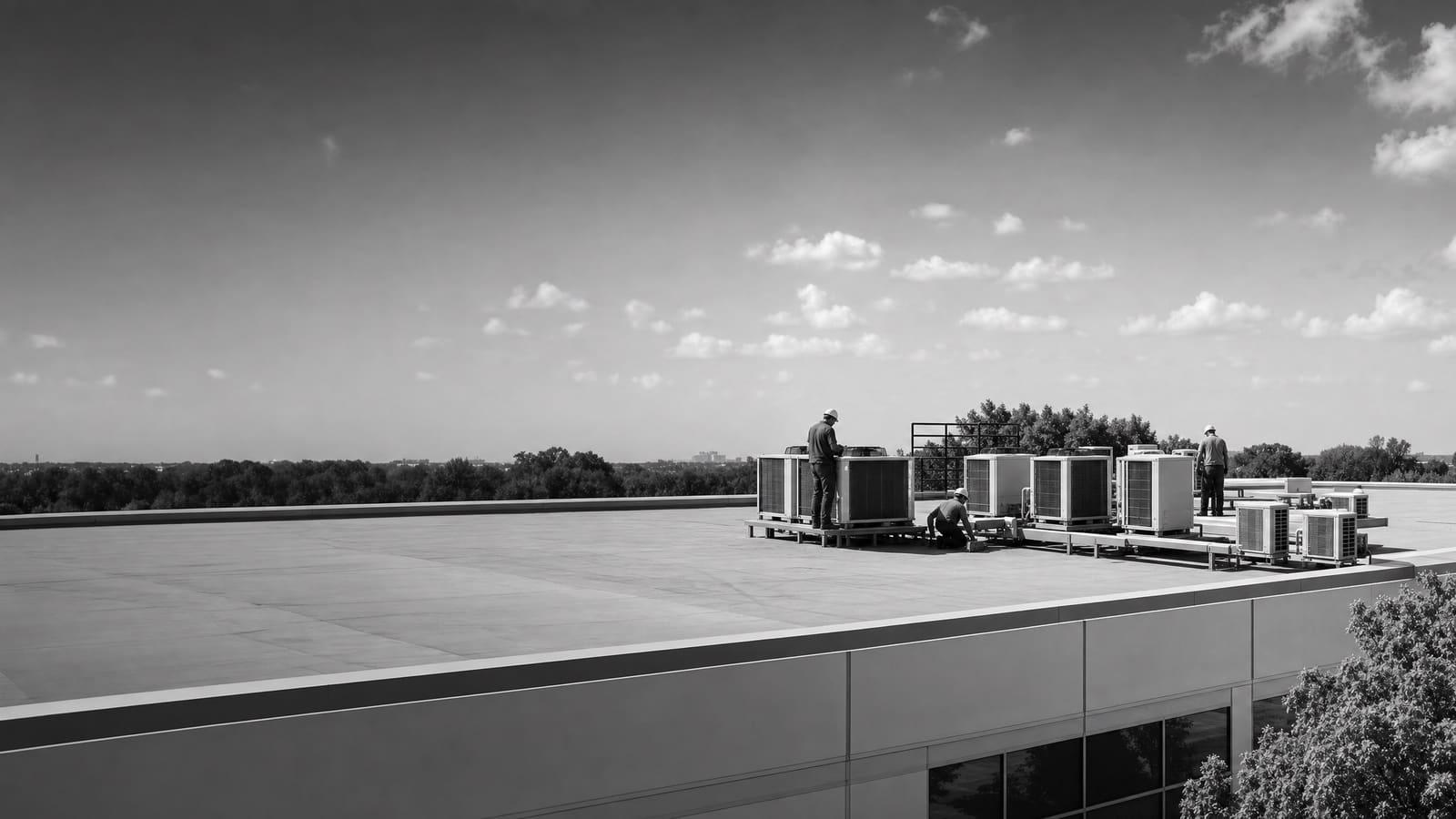
A commercial HVAC replacement should cover load review, equipment selection, removal, rigging, curb or pad work, utility connections, controls, refrigerant handling, startup, testing, and handoff. Replacement becomes more useful than another repair when an older unit is unreliable, cannot hold comfort, needs frequent service, or no longer fits the space.
A site review should verify the load, existing connections, roof or pad condition, access, electrical capacity, controls, and work needed outside the equipment.
START WITH THE OPERATING DECISION
Repair, replace in kind, or improve the system
The first choice is not a brand or efficiency label. It is what kind of project the building needs. A repair may make sense when the equipment is otherwise sound and the failure is limited. A planned replacement gives the owner time to compare equipment, confirm the load, and schedule disruption. A system change may be useful when the old design causes comfort trouble, energy waste, maintenance problems, or conflict with ownership goals.
DOE guidance says rooftop units over 15 years old can waste substantial energy compared with newer equipment. It also notes that owners often wait until units fail, require frequent maintenance, or stop providing adequate conditioning. Those signals support a replacement review, but age alone does not settle the decision. Service history, condition, availability, operating risk, and the building's future all matter.
BUILD THE REAL BUDGET
What moves an installed HVAC quote
No supported source provides a universal installed price for this project. Budget from the complete scope, not the equipment line alone.
EQUIPMENT FIT
Choose the system around the building, not the old label
A replacement starts with the load the building has now. The old nameplate is useful evidence, but it is not a load calculation. Occupancy, schedules, lighting, process equipment, ventilation, envelope changes, and space use may have shifted since the original unit was selected. An oversized replacement can cycle poorly and struggle with control. An undersized unit may run hard without holding the setpoint. Ask what information supports the proposed capacity.
Packaged rooftop units combine major heating and cooling functions in one cabinet. They can simplify a direct replacement when the roof, curb, ducts, utilities, and controls remain suitable. Split and applied systems separate components and may fit buildings with different zoning, architectural, service, or capacity needs. The right choice depends on the existing distribution system and the problems the owner wants to solve.
Efficiency matters, but it must be read with the operating profile. A higher-efficiency unit can reduce energy use, while controls, ventilation, airflow, and maintenance affect what the building realizes. Compare documented performance, heating method, service access, parts strategy, warranty, and expected operation together.
COMPLEXITY CHECK
A simple swap and a system change are different projects
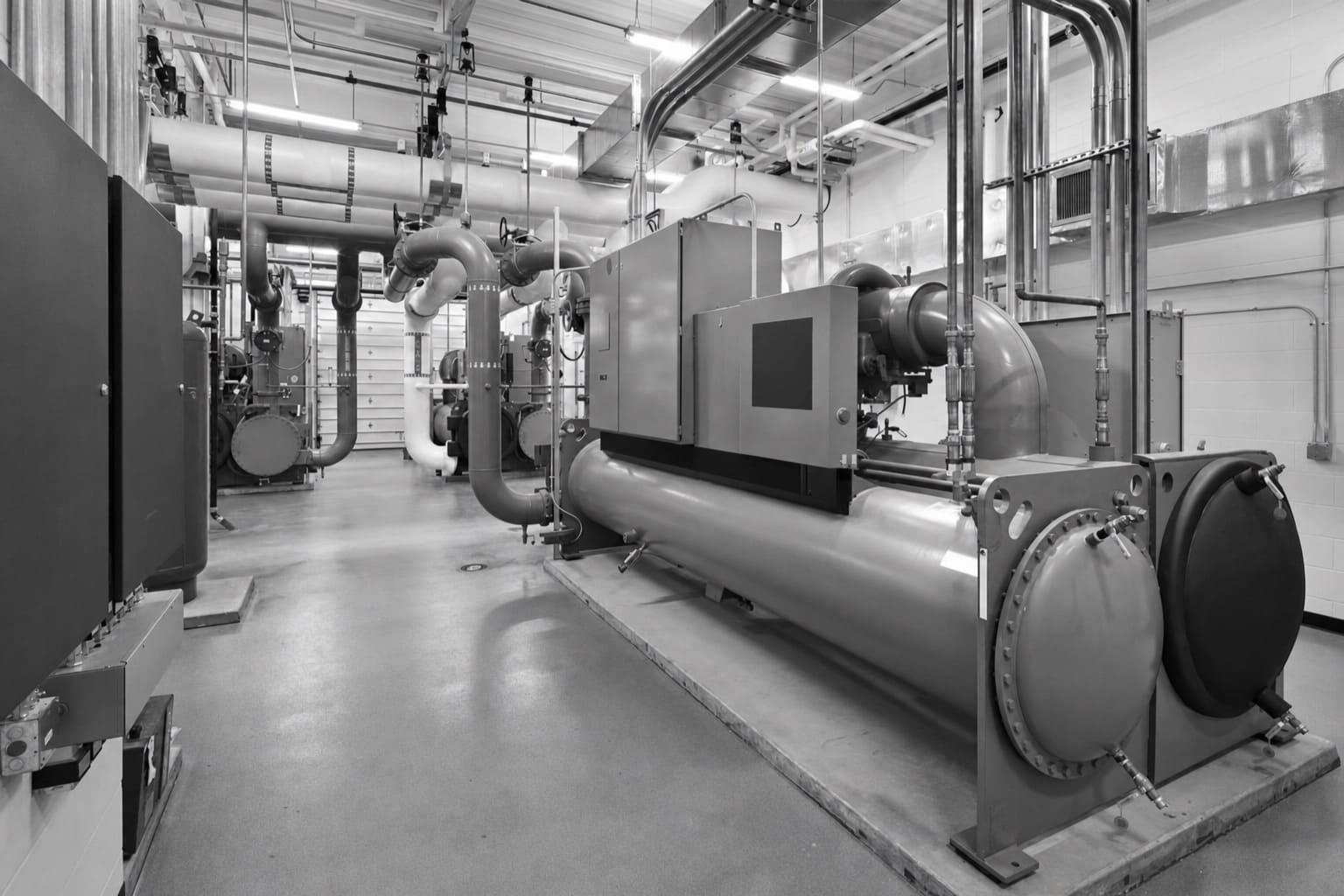
Two replacements with similar equipment can carry very different field scopes. Identify which conditions apply before comparing totals.
LOWER COMPLEXITY
Existing arrangement still works
The load remains suitable, connections align, the support is sound, access is clear, and controls need little change. The quote should still include removal, setting, connections, startup, testing, and closeout.
HIGHER COMPLEXITY
The project changes the system
Capacity, dimensions, fuel, power demand, ducts, controls, zoning, or structural conditions change. Expect more investigation, coordination, design detail, and a stronger phasing plan before field work begins.
SITE REVIEW
Turn an equipment request into an installation scope
A useful site review follows the whole path from the equipment to the occupied space. It records the current model and capacity, heating source, voltage, controls, refrigerant, filters, service clearances, and signs of repeated failure. It also checks the roof or equipment pad, curb or support, duct transitions, disconnects, drains, gas piping where present, and the route used to remove and set equipment.
Inside the building, the review should connect complaints to zones and schedules. Hot rooms, cold rooms, noise, humidity concerns, pressure problems, and uneven airflow may point beyond the main unit. Replacing the cabinet without finding the cause can leave the owner with a new machine and an old problem.
For a heat pump option, DOE guidance says the evaluation should include geography, utility costs, emissions goals, building type, equipment availability, electrical capacity, physical constraints, gas infrastructure, contractor knowledge, and incentives. Since incentives and rates change, any claimed benefit should be verified for the project date rather than assumed.
Bring evidence to the walkthrough
Collect nameplate photos, service records, utility history, control screenshots, comfort complaints, roof information, lease constraints, operating hours, and any planned changes to the space.
HEATING CHOICE
Compare conventional and heat pump rooftop units on the same basis
Heat pump rooftop units provide cooling and reverse-cycle heating. DOE describes them as technologically similar to air-conditioning rooftop units, with the added heating function. Its guidance says much of the South and West can be appropriate for current heat pump rooftop technology, while also warning that sharp winter demand can occur in Texas. That makes heating performance and backup strategy part of equipment selection.
Do not compare only the purchase price. Model electric demand, electricity and gas use, heating performance, resistance or supplemental heat, electrical upgrades, emissions goals, service capability, and available equipment. A dual-fuel configuration may deserve review where retaining another heat source supports operating needs. An all-electric option needs verified electrical capacity and a clear sequence for colder conditions.
KEEP THE HEATING TYPE
Lower infrastructure change
A like-for-like heating arrangement may reduce redesign when the existing utilities and operating model still work. Confirm that it does not preserve a load, comfort, or maintenance problem.
CONSIDER A HEAT PUMP
Broader operating review
Compare heating performance, backup heat, electrical capacity, utility impact, service readiness, and ownership goals before selecting all-electric or dual-fuel equipment.
PROJECT DELIVERY
Plan the outage before equipment arrives
The installation plan should say what happens before, during, and after the shutdown. Before mobilization, confirm equipment data, dimensions, weight, connection points, accessories, controls, and delivery condition. Verify the curb, pad, support, lifting approach, staging area, utility isolation, and weather limits. Coordinate access with tenants, customers, staff, security, and other trades.
During replacement, protect the building opening and nearby property. Define who removes the old unit, recovers refrigerant, handles disposal, completes duct and utility connections, restores weather protection, and keeps the site safe. EPA rules under Clean Air Act Section 608 govern refrigerant handling and recycling for stationary air-conditioning and heat pump equipment. The quote should assign that work to properly qualified parties and include records required for the project.
After setting the unit, startup is not the finish line. The team should confirm rotation where applicable, voltage, airflow, temperatures, refrigerant condition, drainage, heating and cooling operation, ventilation, sensors, safeties, alarms, and control sequences. The owner should receive results, warranty information, equipment data, and a clear list of open items.
LIFETIME VALUE
Buy dependable operation, not just new equipment
A lower first price can be reasonable when proposals cover the same equipment and work. It becomes risky when exclusions hide curb changes, electrical work, controls, rigging, testing, disposal, or restoration. Normalize each bid into one scope before choosing. If a contractor carries an allowance, ask what condition would change it and how added cost will be approved.
Then look past installation day. Compare expected energy use, maintenance access, filter and belt needs, controls support, parts availability, refrigerant strategy, warranty terms, and the effect of downtime. DOE reported that older commercial rooftop units in a past market program wasted substantial energy and that verified high-efficiency units produced meaningful real-world savings. Those historical results support evaluating efficiency, but they do not promise a fixed saving for one building.
For multiple units, consider a planned sequence based on condition, criticality, service cost, and operating impact. Grouping similar equipment can simplify controls, training, filters, spare parts, and maintenance. Keeping one emergency unit alive may still be sensible if it protects capital for a more critical replacement.
Treat incentives as unconfirmed until checked
No current local program is supplied for this page. Do not place an incentive, tax credit, or rebate in the project budget until eligibility, funding, equipment rules, and deadlines are verified.
COMPARE PROPOSALS
Five things every comparable quote should show
A useful proposal lets the owner see the product, field scope, operating impact, proof of performance, and commercial terms without filling gaps by assumption.
01
Selected equipment
List capacity, configuration, heating method, efficiency, accessories, controls, warranty, and availability.
02
Included field work
Define removal, rigging, supports, ducts, drains, power, fuel, controls, weatherproofing, disposal, and restoration.
03
Schedule and phasing
Show procurement assumptions, shutdown windows, access needs, temporary service, milestones, and owner responsibilities.
04
Startup and acceptance
State the tests, readings, control checks, balancing, corrections, training, and documents included.
05
Price boundaries
Separate base scope, allowances, options, exclusions, payment terms, change process, and expiration date.
Get a defensible number
Price the equipment and the building together.
Send the address, operating target, and target opening date. Flux will identify what must be verified before the project can be priced.
Get a free estimateQuestions
Straight answers.
When is commercial HVAC replacement better than another repair?
Replacement deserves a close review when an older unit needs frequent service, cannot condition the space, creates repeated downtime, or no longer fits the building load. Compare the repair cost and expected reliability with the full replacement scope. A single limited failure does not automatically require replacement.
Should a contractor match the old unit's capacity?
Not without checking the current load. The old nameplate is a starting point, but occupancy, schedules, equipment, ventilation, envelope work, and space use may have changed. The proposal should explain why the recommended capacity fits present conditions.
What is included in a complete commercial HVAC installation?
The scope commonly needs equipment, removal, refrigerant recovery, rigging, curb or pad work, duct transitions, drains, electrical and fuel connections, controls, weatherproofing, startup, testing, disposal, documentation, and warranty handoff. The exact work depends on the existing system and site.
How much does commercial HVAC installation cost in Missouri City?
The supplied research does not support one universal installed price. Capacity, equipment type, efficiency, access, rigging, supports, ducts, electrical work, controls, phasing, and testing all affect the total. Request a site-based quote that separates equipment, field work, allowances, options, and exclusions.
Is a heat pump rooftop unit worth considering?
Yes, as an option to evaluate. Compare heating performance, backup heat, electrical capacity, electric and gas use, equipment availability, service support, emissions goals, and infrastructure cost. DOE guidance says the choice should be made at the site or portfolio level, not assumed from equipment type alone.
How should a commercial HVAC project limit downtime?
Order and verify equipment before shutdown, confirm all dimensions and connections, plan rigging and access, stage adapters and materials, coordinate occupants, and define temporary conditioning if needed. The proposal should identify the outage window and the conditions that could extend it.
What should happen during commissioning?
The installer should verify power, rotation where applicable, airflow, temperatures, drainage, heating, cooling, ventilation, sensors, safeties, alarms, refrigerant condition, and control sequences. Results and unresolved items should be documented before final acceptance.
Who should handle refrigerant from the old unit?
The project scope should assign recovery and handling to qualified parties working under applicable EPA Section 608 requirements. The quote should also state who handles the old equipment, refrigerant records, transport, and disposal.
How can an owner compare HVAC bids fairly?
Put every proposal into the same scope. Match equipment data, accessories, field work, controls, rigging, testing, schedule, warranty, allowances, exclusions, and payment terms. Ask bidders to price missing work or mark it clearly before selecting a proposal.
Sources used for this guide
- [1]betterbuildingssolutioncenter.energy.gov — DOE Advanced Rooftop Unit Replacement Guidance
- [2]betterbuildingssolutioncenter.energy.gov — DOE Commercial Heat Pump Rooftop Unit Replacement Guidance
- [3]betterbuildingssolutioncenter.energy.gov — DOE High-Efficiency Commercial Rooftop Unit Toolkit
- [4]energy.gov — DOE Efficient Commercial Rooftop Air Conditioner Program
- [5]epa.gov — EPA Stationary HVAC Refrigerant Management