THE DIRECT ANSWER
Commercial HVAC replacement and installation in Mission.
A commercial HVAC replacement includes equipment selection, removal of the old system, setting and connecting the new unit, controls work, startup, and performance checks. Replacement becomes more useful than another repair when an older unit fails often, cannot hold the space conditions, or keeps consuming maintenance money without restoring dependable operation.
A site review must verify the building load, roof or equipment-room access, electrical capacity, fuel connections, controls, ventilation needs, and shutdown limits.
THE FIRST DECISION
Choose the project path before choosing a model
The old nameplate is a starting point, not a complete design. A direct replacement may work when the space, occupancy, operating hours, and internal equipment have stayed much the same. A right-sized replacement is more useful when the building use or comfort needs have changed. A heat pump rooftop unit adds another choice because it can provide both cooling and reverse-cycle heating.
DOE guidance says rooftop units older than 15 years can waste substantial energy compared with newer equipment. It also notes that waiting for total failure can force owners into a rushed purchase. A planned decision gives the team time to check the load, compare available equipment, study electrical and fuel conditions, and schedule the interruption. The best path is the one that fits the present building and the owner's operating goals—not simply the unit that most closely matches the old label.
BUDGET CONTROL
What moves the installed price
The supplied research does not support one universal installed price. A useful budget separates the equipment from the work needed to make it fit, operate, and pass final checks.
EQUIPMENT CHOICES
Compare systems by the job they must do
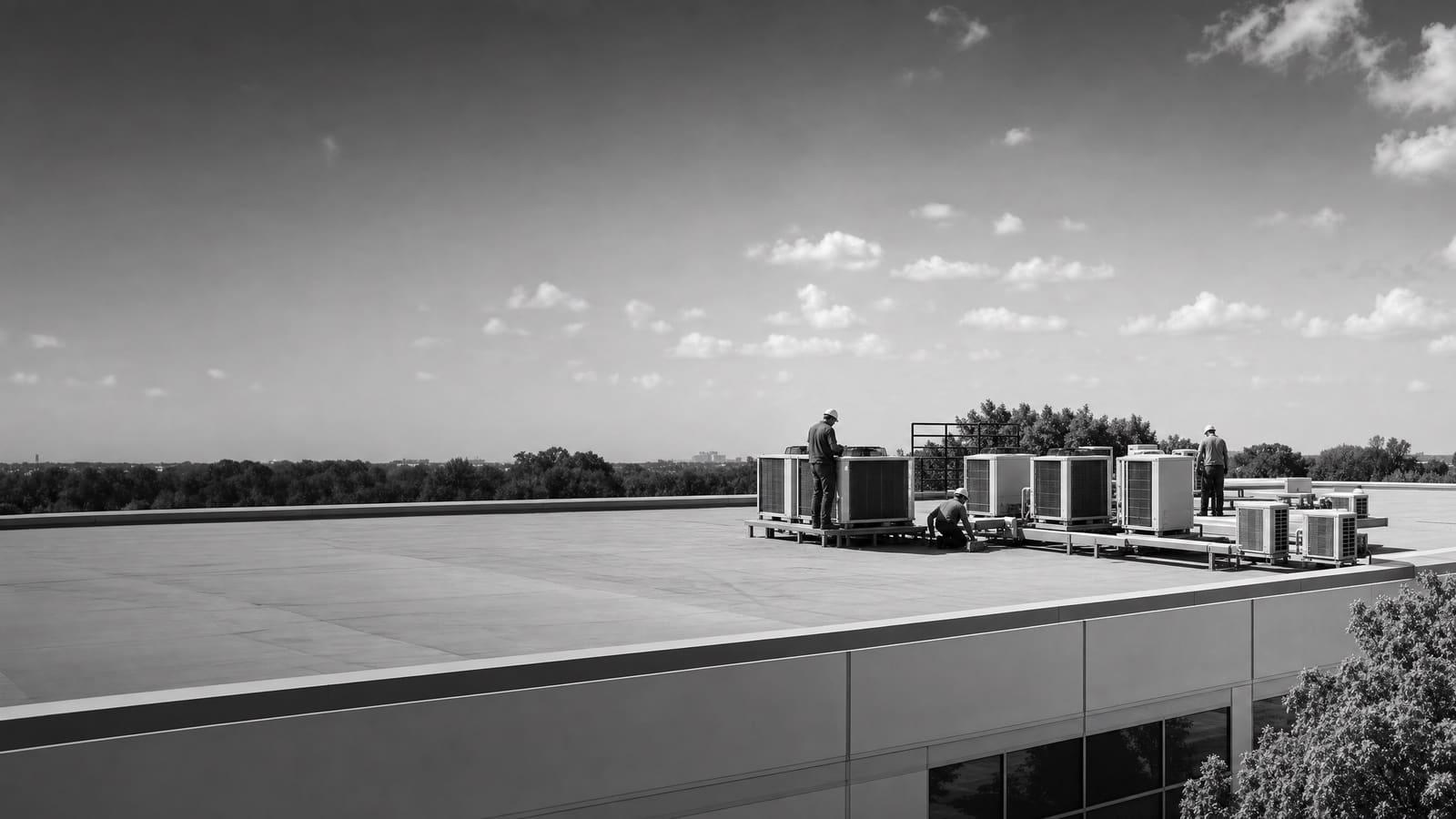
Packaged rooftop units combine major heating and cooling parts in one outdoor cabinet. They are common across commercial buildings and can make replacement direct when the roof opening, duct layout, utilities, and controls remain compatible. Compatibility still needs proof. A new cabinet may differ in dimensions, weight, connection points, airflow requirements, and control features.
A conventional air-conditioning rooftop unit may pair cooling with a separate heating method. A heat pump rooftop unit uses reverse-cycle operation for heating as well as cooling. DOE guidance says heat-pump suitability depends on geography, heating loads, electricity and gas prices, emissions goals, equipment availability, electrical capacity, physical constraints, gas lines, and contractor knowledge. It also notes that southern regions can still experience sharp winter heating demand. That makes heating design and backup strategy part of the selection—not an afterthought.
High-efficiency equipment can reduce energy use, but rated efficiency does not fix poor sizing, weak airflow, bad control sequences, or neglected maintenance. Ask for the efficiency rating, heating arrangement, fan and control features, ventilation approach, and expected service needs. Then compare those details against how the facility actually runs.
PROJECT COMPLEXITY
A simple swap and a system change are different projects
Complexity rises when the new equipment changes weight, footprint, utilities, airflow, heat source, controls, or occupied-space conditions. The quote should state which condition applies.
LOWER COMPLEXITY
Compatible replacement
The load still fits, connections are usable, the curb can be adapted, controls are understood, and access supports a planned removal and set.
HIGHER COMPLEXITY
Capacity or system change
Resizing, electrification, structural changes, duct revisions, new electrical service, control integration, or phased occupancy calls for added design and coordination.
SITE REVIEW
Build the scope from field conditions
A useful site review starts at the occupied spaces. The team should document hot and cold complaints, hours, tenant needs, ventilation demands, process loads, and areas that cannot lose conditioning. Maintenance history can show whether the problem is a failed component or a deeper pattern involving capacity, airflow, controls, or repeated refrigerant loss.
At the equipment, record the complete nameplate, dimensions, service clearances, power, heat source, controls, filter arrangement, drain route, outside-air setup, and visible connection conditions. For rooftop work, review safe access, roof condition around the unit, curb configuration, equipment weight, lifting path, crane staging, and protection for people below. Interior systems require the same care around delivery routes, door sizes, occupied areas, and removal access.
The review should also trace what the new unit must connect to. That includes ducts, electrical service, fuel piping, condensate, controls, alarms, and any building automation system. Heat-pump options need a specific electrical-capacity review. Findings should appear in the proposal as included work, allowances, exclusions, or owner responsibilities. Hidden assumptions are where otherwise comparable quotes begin to separate.
Bring operating evidence
Provide nameplate photos, service records, utility history, comfort complaints, floor plans, control information, operating hours, and known shutdown restrictions before final equipment selection.
OWNERSHIP VIEW
Balance urgency with lifetime operation
Failure pressure narrows choices. Available equipment may decide the schedule before the owner can review capacity, efficiency, controls, or a different heating approach. Planned replacement creates room for field verification, procurement, coordination, and a controlled shutdown.
The purchase decision should also look beyond first price. Energy use, maintenance access, filter and belt service, control support, refrigerant service, parts availability, warranty terms, and expected operating conditions all affect ownership. EPA refrigerant rules govern handling and recycling during stationary air-conditioning and heat-pump work, so the proposal should assign refrigerant recovery and documentation to qualified personnel. For a portfolio, consistent controls and service parts may matter as much as one unit's purchase price.
REACTIVE
Replacement after failure
Restoring space conditions leads the decision. Confirm availability, temporary measures, included work, and what compromises are being accepted for speed.
PLANNED
Replacement before failure
Use the time to verify loads, compare system types, coordinate access, review infrastructure, and schedule turnover around operations.
PROJECT DELIVERY
Plan the shutdown, installation, and handoff
The installation plan should name who orders equipment, confirms dimensions, reviews submittals, protects the site, coordinates lifting, removes the old unit, makes each connection, starts the system, and closes remaining work. It should also state when the affected area loses conditioning and what must happen before it can reopen.
Before removal, verify that the delivered model matches the approved selection and that required adapters, controls, accessories, and connection materials are present. Roof and staging areas should be ready before lifting begins. Occupants need clear notice about access limits, noise, parking effects, and temperature changes. Weather and equipment-delivery risks should have a defined response.
Startup is not the same as commissioning. Startup proves that the equipment turns on without an immediate fault. A stronger handoff checks airflow, temperatures, refrigerant setup, fan operation, heating and cooling stages, outside air, drains, safeties, sensors, control sequences, alarms, and communication with the building controls. The owner should receive startup records, warranty information, equipment data, control instructions, filter details, and maintenance needs. Final payment and acceptance should follow completion of the promised tests and open-item list.
QUOTE CHECKLIST
Five things every comparable quote should show
Ask each bidder to use the same requested scope. A low total is hard to judge when equipment, connection work, testing, or exclusions are unclear.
01
Exact equipment
Show model, capacity, efficiency, heat source, voltage, controls, accessories, availability, and approved alternatives.
02
Complete installation scope
List removal, rigging, curbs, ducts, drains, electrical, fuel, controls, roof work, protection, and disposal.
03
Assumptions and exclusions
Identify unknown conditions, allowances, owner work, structural review, temporary service, repairs, and change-order triggers.
04
Schedule and operating impact
State procurement timing, work sequence, shutdown needs, access limits, phasing, and conditions that could delay turnover.
05
Testing and closeout
Define startup checks, commissioning tasks, documentation, training, warranty coverage, and responsibility for correcting failed tests.
Get a defensible number
Price the equipment and the building together.
Send the address, operating target, and target opening date. Flux will identify what must be verified before the project can be priced.
Get a free estimateQuestions
Straight answers.
When should a commercial rooftop unit be replaced instead of repaired?
Replacement deserves serious review when an older unit fails often, no longer maintains required conditions, needs repeated major repairs, or cannot support current building use. DOE guidance notes that rooftop units older than 15 years can waste substantial energy compared with newer models. Age alone does not decide the project; condition, repair history, performance, parts support, and operating risk belong in the decision.
Should the new commercial HVAC unit match the old capacity?
Not automatically. Confirm how the space is used now, including occupancy, hours, internal equipment, ventilation, envelope changes, and comfort problems. A matching capacity may be reasonable when those conditions have stayed stable. If they changed, a load review can prevent the new unit from repeating an old sizing problem.
Is a heat pump rooftop unit worth considering?
Yes, as an option to evaluate rather than an automatic choice. Compare heating loads, electrical capacity, existing gas service, utility impact, backup heat, equipment availability, operating goals, and physical fit. The quote should make infrastructure changes and heating assumptions clear.
What should be included in a commercial HVAC installation quote?
The quote should identify the exact equipment and include removal, lifting or delivery, supports or curb work, duct connections, drains, electrical and fuel work, controls, refrigerant handling, startup, testing, documentation, warranty terms, schedule, exclusions, and owner responsibilities. It should also explain how unknown field conditions will be priced.
How can an owner compare commercial HVAC bids fairly?
Issue the same scope to each bidder, then compare equipment, installation work, controls, testing, schedule, warranty, assumptions, and exclusions line by line. Normalize missing items before comparing totals. Confirm whether each proposal solves the same load and operating need.
What happens to refrigerant from the old equipment?
EPA rules address refrigerant handling and recycling for stationary air-conditioning and heat-pump equipment. The project scope should assign recovery, handling, and required records to qualified personnel. Do not assume removal and refrigerant work are included unless the quote says so.
What documents should the owner receive after installation?
Request approved equipment data, startup and test records, warranty information, control sequences, operating instructions, filter and maintenance details, and a record of remaining corrections. These documents help the maintenance team support the unit and verify what was installed.
Sources used for this guide
- [1]betterbuildingssolutioncenter.energy.gov — DOE Advanced Rooftop Unit Replacement Guidance
- [2]betterbuildingssolutioncenter.energy.gov — DOE Commercial Heat Pump Rooftop Unit Replacement Guidance
- [3]betterbuildingssolutioncenter.energy.gov — DOE High-Efficiency Commercial Rooftop Unit Toolkit
- [4]energy.gov — DOE Efficient Commercial Rooftop Air Conditioner Program
- [5]epa.gov — EPA Stationary HVAC Refrigerant Management