THE DIRECT ANSWER
What a commercial HVAC replacement includes
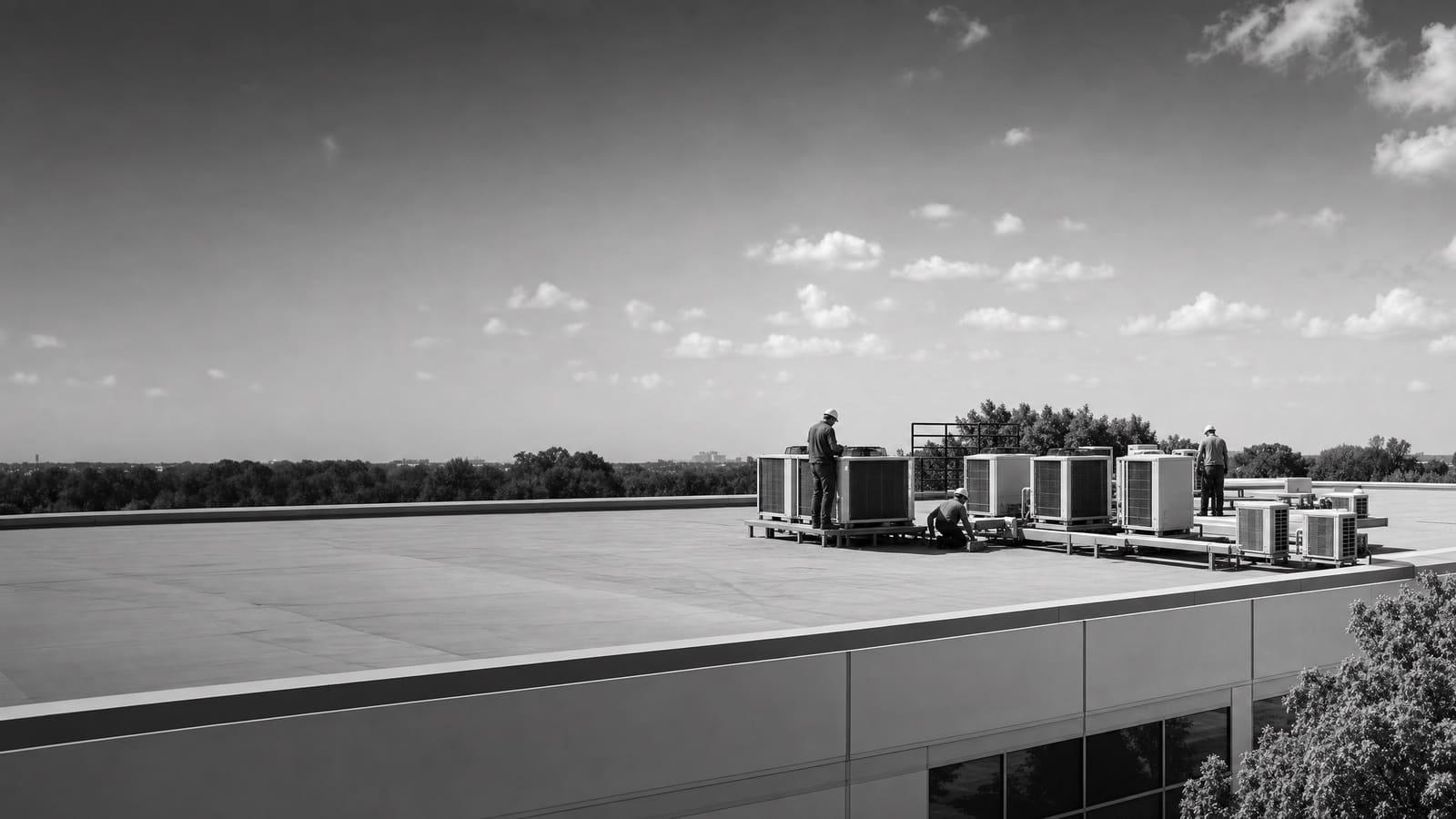
A commercial HVAC replacement covers a confirmed load calculation, equipment selected against real lead times, certified refrigerant recovery and removal of the old unit, a curb adapter or structural work, the crane set, gas and electrical connections, controls integration, and commissioning. Replacement beats another repair once a unit is past about 15 years and is losing money between breakdowns. An old, inefficient rooftop unit can waste $900 to $3,700 every year on its own.
A site review has to verify tonnage against current occupancy, the roof structure and curb, electrical capacity at the unit, gas line status, and crane reach before any number is real.
THE OPERATING CHOICE
Three ways to replace a rooftop unit
Packaged rooftop units condition close to half of all U.S. commercial floor space, so this is the decision most facility owners actually face. The three real options are a like-for-like air-conditioning unit, a higher-efficiency unit, or a heat pump unit that heats by reversing the cooling cycle. The efficiency gap is not small. The federal High-Performance Rooftop Unit Challenge targeted units that cut energy use up to 50% against the standard in place at the time, and more than 20 models now exceed that specification. A heat pump adds a second question: all-electric, or dual fuel that keeps a gas burner for the coldest hours. Answer that one with your electrical capacity, your gas service, and your winter load.
WHAT MOVES THE NUMBER
The lines that set the price
There is no single installed price for a commercial unit, because nearly every line below moves on its own. Ask for the quote broken out this way so two bids can be compared honestly.
BUYING GUIDANCE
How to choose the equipment
The most expensive version of this project is the one nobody planned. Facility managers usually wait until a unit stops holding the space, needs constant service calls, or fails outright. Replacing proactively with a more efficient unit is generally the better business decision than replacement-on-failure, and often better than a like-for-like swap at the end of service life. The reason is plain. When a unit dies in August, you take whatever is available, at whatever price, sized to whatever the old nameplate says.
Start with age. A unit past 15 years is usually the one bleeding money between repairs, somewhere between $900 and $3,700 a year for an old, inefficient rooftop unit. Multiply that across the units on your roof and the case makes itself.
Then decide how long you are holding the building. A short hold favors the fastest, cheapest path back to conditioned air. A long hold favors the efficiency tier, because you keep the operating savings for years. More than 200 organizations working through the federal Advanced RTU Campaign upgraded over 43,000 units and cut a combined $37 million a year from their energy bills. That is the real shape of the return: modest on one unit, substantial across a roof and across time.
SCOPE CHECK
Simple swap or engineered project
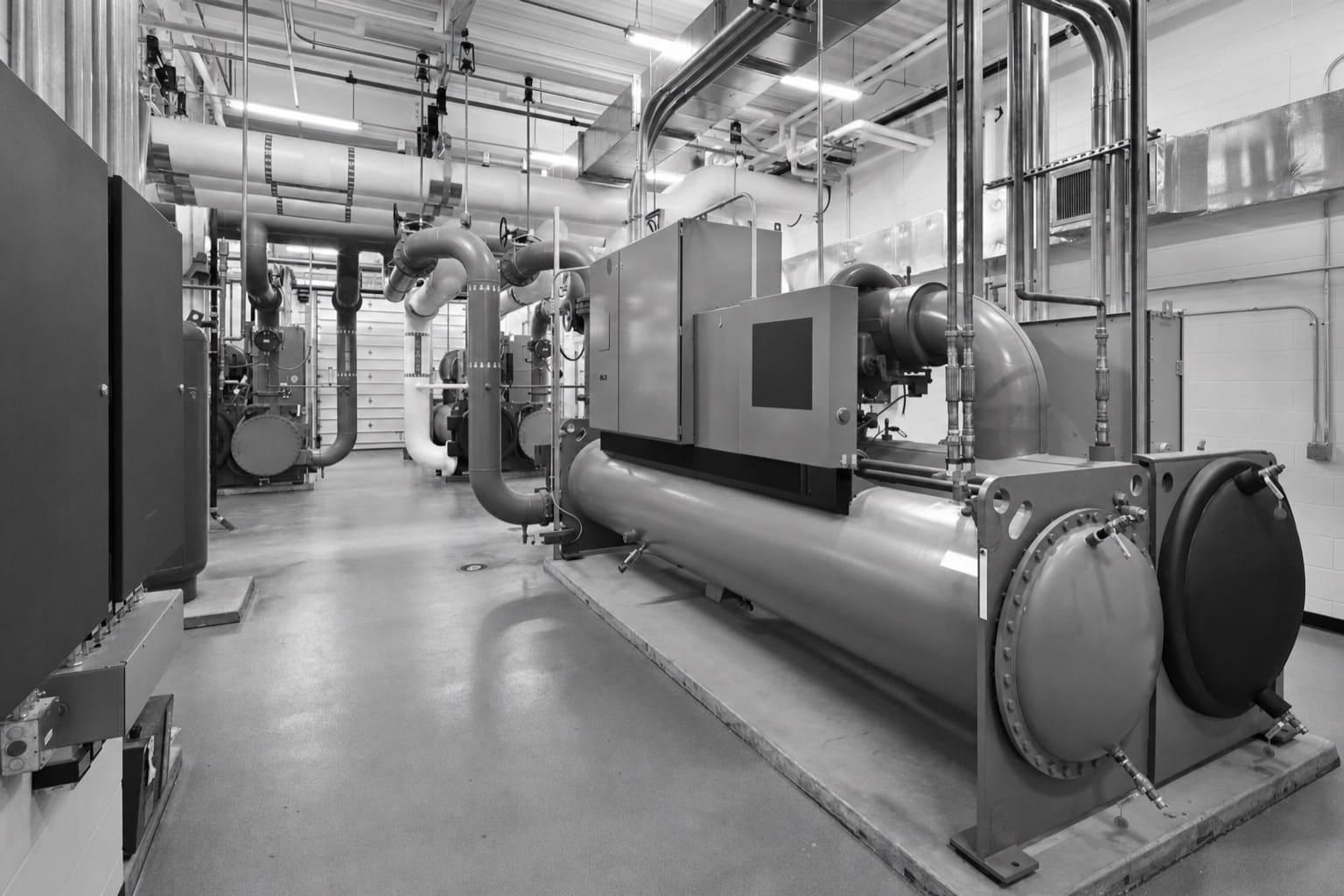
Two replacements on the same block can be a one-morning job and a six-week project. What separates them is whether the footprint, the load, or the fuel is changing.
LOWER COMPLEXITY
Same size, same fuel, clear roof
The new unit matches the old tonnage, lands on the existing curb or a simple adapter, and reuses the gas and electric already there. The crane has a clean shot from the lot. The outage is measured in hours, and tenants mostly notice the cones.
HIGHER COMPLEXITY
New size, new fuel, tight access
Tonnage changes, so the curb, the ductwork, and the roof structure all get examined. Going all-electric means proving electrical capacity at the unit and capping a gas line. Add a tight lot, a taller building, or a live tenant below and the rigging plan drives the schedule.
BEFORE YOU QUOTE
What the site review has to settle
Before anyone puts a number on paper, someone should be on the roof and in the electrical room. The federal guidance for heat pump rooftop adoption lists the questions that actually decide a project, and most of them apply just as well to a straight replacement: climate and heating load, the utility bill impact, building type and how the space is used, equipment availability, and infrastructure — electrical capacity, physical constraints, and gas lines. Add how familiar the installing contractor is with the equipment you are buying, and any incentives you may qualify for.
Infrastructure is where the surprises live. Electrical capacity is the one that stops an all-electric conversion cold. A unit can fit the curb perfectly and still need a feeder, a breaker, or panel work the building does not have. Physical constraints come next: clearances, roof structure, and how a larger cabinet lands on an older curb. Gas gets decided either way. Dual fuel keeps the line in service; all-electric means removing it properly.
Equipment availability belongs in the same conversation. Lead time is part of the decision, not a detail you find out after signing.
Ask for the checklist, not just the price
A quote that arrived without anyone opening the electrical panel or measuring the curb is an estimate with change orders hiding inside it. Get load, curb condition, electrical capacity, gas status, and crane access confirmed in writing before you compare bids.
OWNERSHIP
Two decisions owners make late and regret
Two decisions get pushed to the end of a replacement, and both are cheaper to make at the start. One is what refrigerant your roof will be running five years from now. The other is what happens on the coldest morning of the year. Neither changes how the unit performs the day it starts up, which is exactly why they get skipped. Both show up later as operating problems — a mixed fleet the service contract does not match, or a building that cannot hold temperature through a hard freeze. Settle them while the equipment is still being selected, when changing your mind costs nothing.
REFRIGERANT
Recovery, service, and a mixed roof
EPA Section 608 governs how refrigerant is handled and recycled in stationary cooling equipment, so recovery from the unit being removed is regulated work that belongs in the written scope. If you replace units one at a time, your roof will run more than one refrigerant for years. Plan parts and service around that.
HEATING
All-electric or dual fuel
Heat pump heating efficiency drops as outdoor temperatures fall, trending toward parity with electric resistance heat. Across most of the South, today's heat pump rooftop units handle most or all of the winter load. A Texas freeze like February 2021 is the event dual fuel gets bought for. Decide it on purpose.
PHASING AND LIFETIME COST
Planning a roof full of units
If six units sit on your roof and two are struggling, resist treating them as six separate emergencies spread over four years. Phasing beats reacting every time.
Rank the units by age, service history, and the load each one carries, then replace on a schedule you control. You get better pricing, because you are buying more than one unit. You get better lead times, because the order goes in before the failure. And you get to standardize — same manufacturer, same controls, same filters, technicians who already know the equipment — instead of maintaining a roof full of orphans.
Lifetime cost is where the argument settles. The purchase price is one payment. The operating bill arrives every month for as long as the unit is up there, and a single old, inefficient unit can waste $900 to $3,700 a year by itself. Efficient equipment is no longer hard to find; more than 20 models exceed the federal high-performance specification. The federal minimum efficiency standard finalized in December 2015 also raised the floor for every commercial unit sold, so even a basic replacement outperforms what it removes. The question is not whether to improve. It is how far above the floor to buy, and how long you will own the result.
COMPARING BIDS
Five things a comparable quote shows
Two bids are only comparable when they show the same things. When one comes in thousands cheaper, the difference is almost always sitting in one of these five lines.
01
Tonnage, efficiency tier, and model number
The exact unit, not a category. Efficiency tier is the line that separates a cheap bid from a good one.
02
Equipment lead time in writing
A date, or a range with a reason behind it. Availability is part of the price when the building is hot.
03
Curb, structural, and roofing scope
Adapter, any framing, and who patches the roof afterward. This is the most common change order.
04
Rigging plan and lot impact
Crane size, staging location, how many stalls close, and for how long. Tenants feel this line.
05
Commissioning and closeout documents
Startup readings, refrigerant charge, airflow, controls settings, permits, inspections, and warranty registration.
Get a defensible number
Price the equipment and the building together.
Send the address, operating target, and target opening date. Flux will identify what must be verified before the project can be priced.
Get a free estimateQuestions
Straight answers.
When does replacement beat one more repair?
Age and repair frequency answer it. Units past about 15 years waste substantial energy compared with newer models, and an old, inefficient rooftop unit can burn $900 to $3,700 a year before you count the service calls. Once you are paying for repairs and for waste at the same time, replacement is the cheaper path.
How much does a commercial HVAC replacement cost?
There is no universal installed price, and any number quoted before someone sees the roof is a guess. Tonnage, efficiency tier, curb and structural work, crane access, and electrical or gas changes each move the total independently. Ask for those lines broken out so you can compare bids on the same basis.
Should we install a heat pump unit instead?
For most of the South, current heat pump rooftop units can cover most or all of the winter heating load. The deciding factors are electrical capacity at the unit, your electricity and gas prices, and how much cold-weather risk you want to carry. Dual fuel keeps a gas burner for the coldest hours.
How long is the building without cooling?
The set itself is short — the crane arrives, the old unit comes off, the new one lands on the curb, and connections are made. The honest variable is equipment availability. That is why lead time belongs on the quote right next to the price, not in a follow-up call.
What happens to the refrigerant in the old unit?
EPA Section 608 regulates the handling and recycling of refrigerant in stationary cooling equipment, so recovery from the unit being removed is regulated work performed by certified technicians. It should appear in the written scope of the replacement, not be treated as an assumed courtesy.
Sources used for this guide
- [1]betterbuildingssolutioncenter.energy.gov — DOE Advanced Rooftop Unit Replacement Guidance
- [2]betterbuildingssolutioncenter.energy.gov — DOE Commercial Heat Pump Rooftop Unit Replacement Guidance
- [3]betterbuildingssolutioncenter.energy.gov — DOE High-Efficiency Commercial Rooftop Unit Toolkit
- [4]energy.gov — DOE Efficient Commercial Rooftop Air Conditioner Program
- [5]epa.gov — EPA Stationary HVAC Refrigerant Management