THE SHORT ANSWER
What a commercial HVAC replacement actually includes
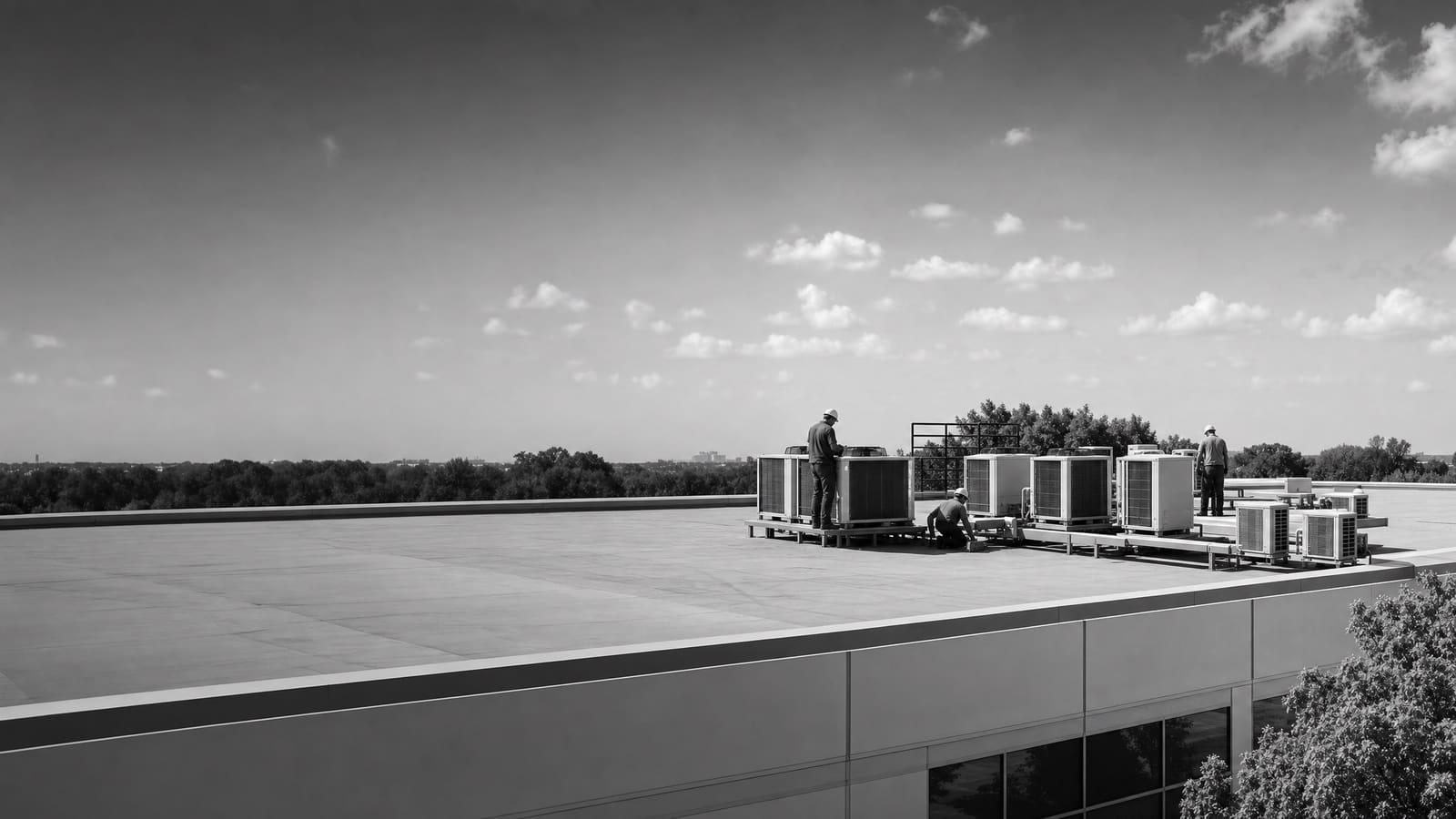
A commercial HVAC replacement covers the load calculation, equipment selection, removal and rigging of the old unit, curb and duct connections, electrical and gas work, controls, permits, and commissioning. Replacement usually beats one more repair once a unit passes fifteen years, since DOE reports rooftop units that old can waste substantial energy, and older inefficient units can cost $900 to $3,700 per unit each year in wasted energy alone.
A site review still has to confirm tonnage against how the space is used now, the curb and roof structure, available electrical capacity, and crane access before any of that means a number for your building.
THREE WAYS TO GO
Like-for-like, high-efficiency, or heat pump
Most replacement decisions come down to three paths, and the cheapest quote is not automatically the cheapest decision.
DOE's guidance is direct about this: replacing an aging rooftop unit proactively with a more efficient one is often the better business move than waiting for failure, and often better than a like-for-like swap at end of service life. Failure replacements get chosen under pressure, from whatever is in stock, with a crane booked on short notice.
The efficiency question is real money. DOE's High-Performance Rooftop Unit Challenge targeted units that cut energy use by up to 50 percent against the standard in place at the time, and DOE reported manufacturers offering more than 20 models that exceed that specification. The third path, a heat pump rooftop unit, puts reverse-cycle heating in place of gas.
Confirm the load before choosing any of the three. Twenty years of occupancy changes rarely leave the old nameplate correct.
WHAT MOVES THE NUMBER
The lines that decide your installed price
No two roofs price the same, so compare quotes line by line instead of on the bottom number. These are the items that move an installed price the most, and the ones most likely to reappear as a change order when a contractor skipped the roof visit.
IN PRACTICE
How to buy the replacement, not just the unit
Start with the load, not the catalog. Sizing taken off the old nameplate carries forward every mistake the last install made, and twenty years of occupancy, lighting, and equipment changes rarely leave the original number correct. A short load review before equipment selection is the cheapest step in the project and the one most often skipped when a unit is already down.
Then ask for the decision priced, not just the unit. Two options on one page, like-for-like beside the higher-efficiency or heat pump alternative, with installed price and real availability next to each, is what lets you weigh operating cost against capital cost instead of guessing. DOE's framing is that proactive replacement usually beats the failure replacement, and procurement is the reason: a unit chosen in July from whatever sits in a regional warehouse is chosen by inventory, not by your building.
Finally, treat commissioning as part of the purchase. Refrigerant charge, airflow, outside-air settings, and control setpoints verified and documented at startup are what separate a unit that hits its rating from one that merely runs. Most month-two comfort complaints trace back to a startup nobody wrote down.
SCOPE CHECK
Simple swap or engineered project
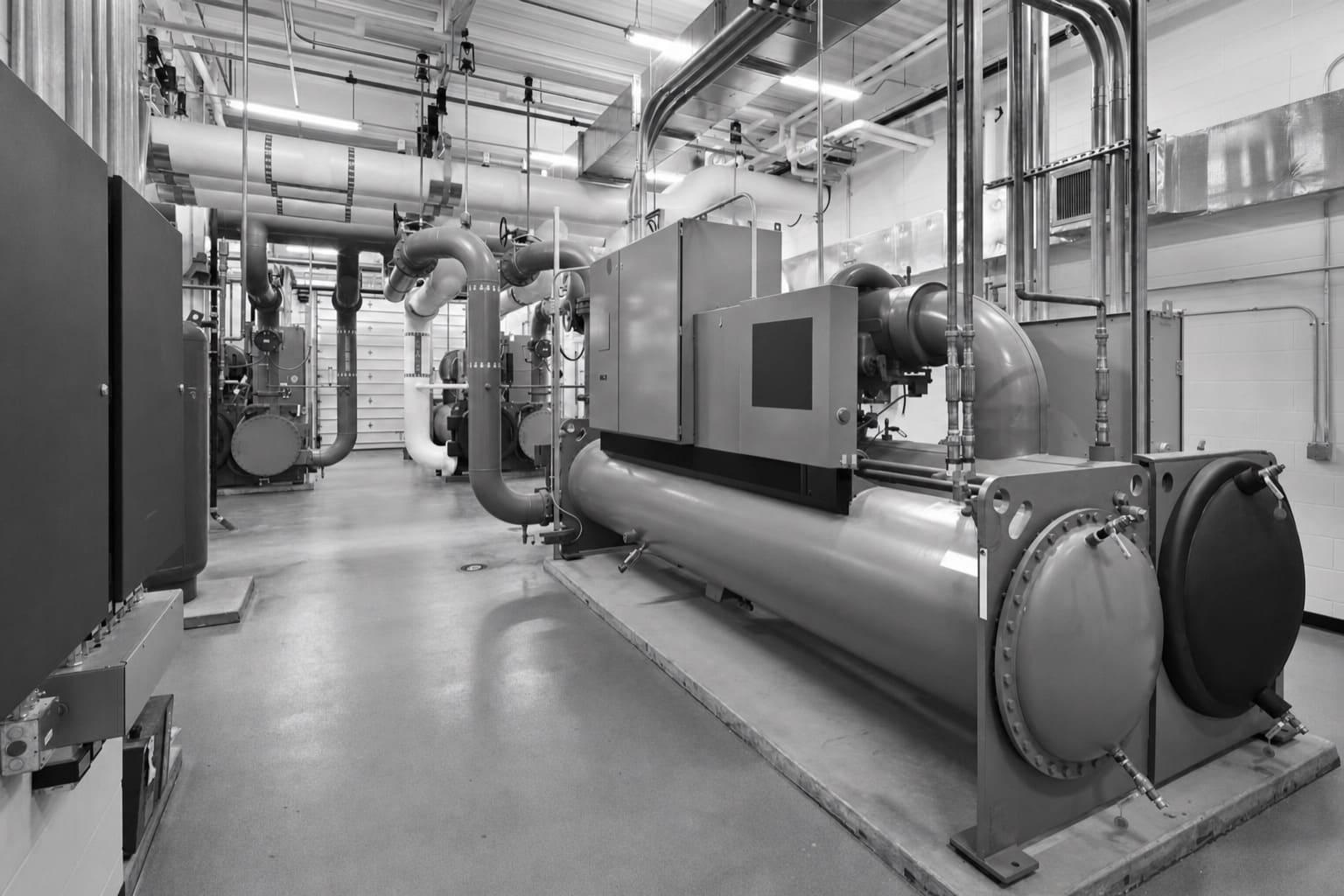
Not every replacement is the same project. The difference between a single morning and a multi-week job shows up long before anyone touches equipment.
LOWER COMPLEXITY
Same size, same spot
The new unit matches the old tonnage and footprint, the curb lines up or takes a standard adapter, gas and electric are already sized for it, and the crane has clear reach from the lot. This is the one-morning swap, and the scoping work is short.
HIGHER COMPLEXITY
New load, new infrastructure
Tonnage grows, the footprint changes, or the unit moves to electric heat. Now you may be looking at structural review for added weight, a service upgrade to carry the load, gas line changes, ductwork, and controls work. Plan this one months out, not days.
THE SITE REVIEW
What a real scoping visit has to verify
A quote written from a nameplate photo is a starting number, not a price. DOE's own adoption checklist for rooftop replacement is mostly infrastructure questions, and every one of them gets answered on the roof rather than over the phone.
Electrical capacity comes first. A higher-efficiency unit, or one with electric heat, can draw more than the existing panel, feeder, or service was sized for, and that upgrade is expensive enough to change the equipment decision entirely. Physical constraints come next: curb dimensions, roof structure and added weight, clearance around the unit, and whether a crane can actually reach the spot without closing half the lot. If the building is moving off gas, someone has to decide what happens to the gas line instead of leaving it capped and forgotten.
Then there is availability. Equipment lead time, and whether crews are experienced with the technology being specified, belong in the scoping conversation too. A perfect specification nobody can source or start up correctly is worse than a good one that lands on schedule. Incentives, where they exist, get confirmed before the order rather than after.
Ask for the roof visit before the number
If a contractor will not walk the roof, open the panel, and look at the lot before quoting, what you receive is a placeholder. The items that turn into change orders — structure, electrical capacity, and crane access — are the ones you can only see on site.
OWNERSHIP
Two things that outlive the install
Two parts of this decision keep costing money long after the crane leaves.
The first is refrigerant. EPA regulations under Section 608 of the Clean Air Act govern how refrigerant is handled and recycled in stationary refrigeration, air-conditioning, and heat pump equipment, and new commercial units ship on newer refrigerants than the ones they replace. That changes nothing about day-one operation, but it does mean a roof carrying two refrigerant generations needs a service plan rather than one technician's habits.
The second is what the unit does to the utility bill for the next two decades. DOE points at location-specific electricity and gas prices as the factor that decides whether an electric option actually saves money, which makes it a modeling question your contractor should be willing to run before you approve anything.
REFRIGERANT
Plan the fleet, not the unit
Recovery from the old unit is a regulated, required labor line on the quote. Going forward, a mixed roof needs service contract language that covers both refrigerant generations so a summer call does not stall waiting on parts.
OPERATING COST
Model before you switch fuels
Whether a heat pump unit lowers the bill depends on local electricity prices against gas. DOE treats that as a modeled answer, not an assumption, and it is fair to ask for the math before signing off on the change.
PLANNING AHEAD
Phasing a roof full of units
If you own more than one unit, replacement is really a sequencing question. Rooftop systems cool close to half of all U.S. commercial floor area, and most buildings carry several of them at different ages. Replacing one emergency at a time means paying mobilization, crane, and permit costs over and over, and never having a volume conversation with a supplier.
A better pattern is to rank the fleet by age, refrigerant type, repair history, and which zones generate the most complaints. Units past fifteen years move to the top, because that is where DOE puts the line at which energy waste becomes substantial. Then group two or three into a single crane day. The rigging plan, the lot closure, and the inspection all get spread across more than one unit.
Lifetime cost is where this pays off. DOE's Advanced RTU Campaign reported participating organizations upgrading more than 43,000 rooftop units and saving a combined $37 million a year on energy bills. That is the argument for planning ahead: the savings are annual and they start the day the better unit lands, which means every season you defer is a season you buy the old unit's operating cost again.
THE QUOTE
Five things a comparable quote shows
Quotes are only comparable when they show the same things. If one bidder is missing an item on this list, they have not priced the same project — they have priced a smaller one.
01
The equipment, stated plainly
Make, model, tonnage, efficiency tier, heat type, and refrigerant. Not just "replace RTU-3."
02
Availability next to price
Lead time for the exact unit quoted, so schedule risk is visible before you sign anything.
03
Curb, structure, and rigging
Curb adapter or new curb, any structural work, the crane itself, and how long the lot is closed.
04
Electrical, gas, and controls
Every connection change on the way in, including panel work and building automation integration.
05
Permits and commissioning
Who pulls permits, who meets the inspector, and which startup readings get documented at handoff.
Get a defensible number
Price the equipment and the building together.
Send the address, operating target, and target opening date. Flux will identify what must be verified before the project can be priced.
Get a free estimateQuestions
Straight answers.
When does replacing a rooftop unit beat repairing it again?
DOE puts the line around fifteen years. Past that, a rooftop unit can waste substantial energy compared with a current model, and older inefficient units can burn $900 to $3,700 per unit a year in wasted energy alone. Weigh that annual figure against the repair quote, not only against the price of a new unit.
How much does commercial HVAC installation cost in Mcallen?
There is no universal installed price, because tonnage, efficiency tier, curb and structural work, electrical capacity, and crane access each move it. Ask for the line items instead of a single number, and ask for two equipment options priced side by side so you can see exactly what the efficiency step costs.
Should we replace like-for-like or right-size the unit?
Confirm the load either way. If the space, the occupancy, and the equipment inside it have not changed, like-for-like is often correct and the fastest path back to cooling. If use changed or comfort complaints never went away, sizing to today's load fixes a problem the old unit could not.
Is a heat pump rooftop unit a reasonable option?
DOE identifies most of the U.S. South and West as well suited to heat pump rooftop units, since heating efficiency falls as outdoor temperatures drop and those regions see mild winter heating demand. The deciding factors at your building are electrical capacity and local electricity prices against gas, both worth modeling first.
What happens to the refrigerant in the old unit?
A certified technician recovers it. EPA regulations under Section 608 of the Clean Air Act cover handling and recycling of refrigerant in stationary air-conditioning and heat pump equipment, so recovery is a required labor line on the quote. New units ship on newer refrigerants, which is worth planning into service contracts on a mixed roof.
Sources used for this guide
- [1]betterbuildingssolutioncenter.energy.gov — DOE Advanced Rooftop Unit Replacement Guidance
- [2]betterbuildingssolutioncenter.energy.gov — DOE Commercial Heat Pump Rooftop Unit Replacement Guidance
- [3]betterbuildingssolutioncenter.energy.gov — DOE High-Efficiency Commercial Rooftop Unit Toolkit
- [4]energy.gov — DOE Efficient Commercial Rooftop Air Conditioner Program
- [5]epa.gov — EPA Stationary HVAC Refrigerant Management