THE DIRECT ANSWER
What a commercial HVAC replacement actually includes
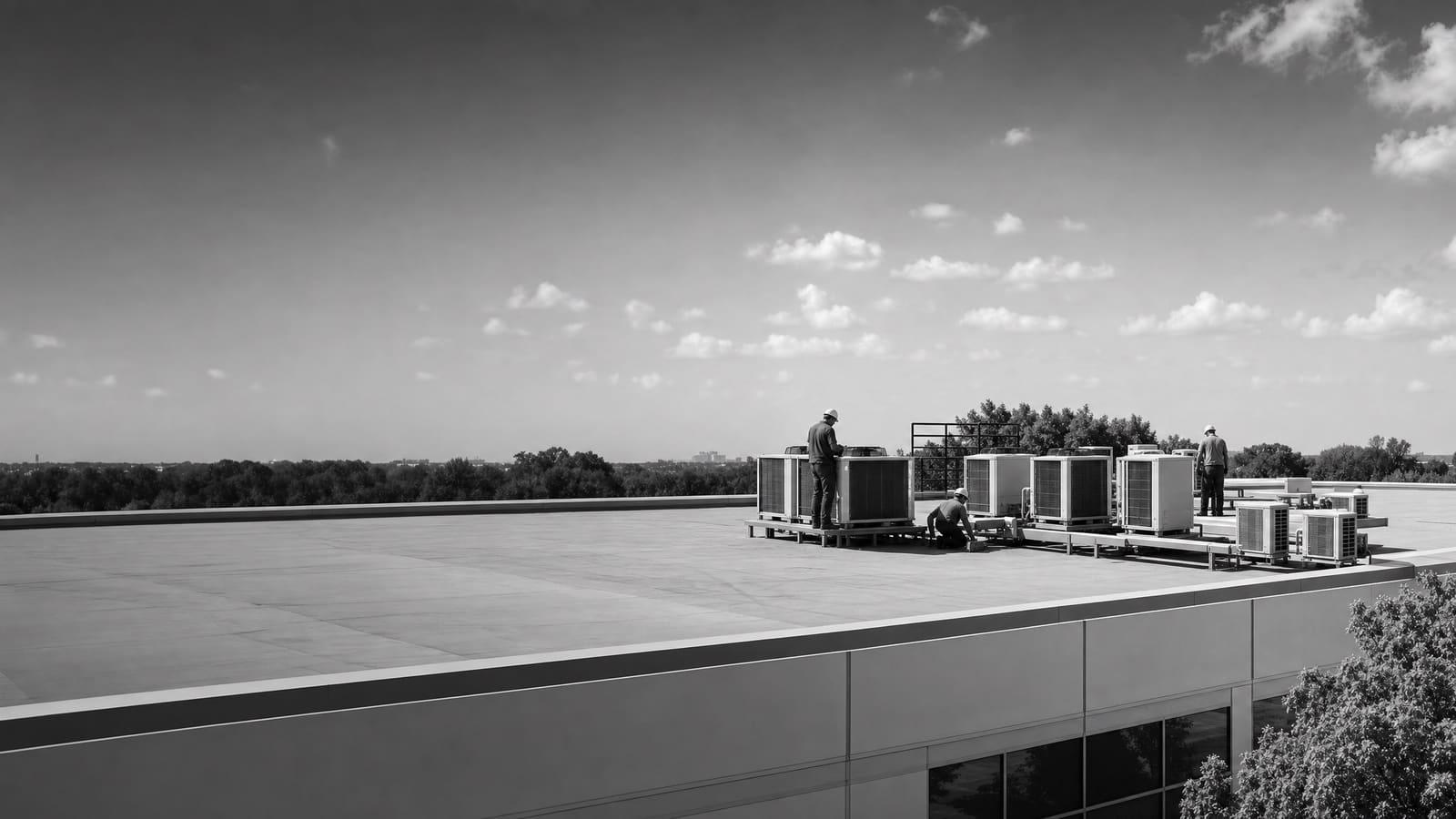
A commercial HVAC replacement is load verification, equipment selection, refrigerant recovery by a certified technician, removal and rigging, curb and connection work, controls integration, and commissioning. Replacement beats one more repair once a rooftop unit passes about fifteen years, stops holding the space, or needs repeat service calls. DOE puts the waste from old, inefficient rooftop units at roughly $900 to $3,700 per unit every year — often more than the repair you were about to approve.
A site review still has to confirm the actual load, curb and roof condition, available electrical capacity, gas service, and crane access. Those items move the installed number more than the badge on the unit.
THREE PATHS
Pick the path before anyone prices equipment
Almost every commercial replacement lands on one of three paths, and the right one depends on whether the building still uses the space the way it did when the old unit was specified. Rooftop units condition close to half of all U.S. commercial floor area, so most of these decisions are rooftop decisions. DOE's high-performance rooftop specification targeted units that cut energy use by up to half against the standard in place at the time, and a federal minimum standard has since raised the floor on everything sold. So the efficiency question is no longer theoretical. The gap between the cheapest unit and the better one shows up on every utility bill for the rest of that unit's service life. Choose the path first, because each one carries a different engineering, permit, and schedule load.
WHERE THE MONEY GOES
The six lines that separate two quotes
Installed price is not one number. It is a stack, and a handful of lines account for nearly all of the spread between two bids on the same roof. Each carries its own price risk. The risky ones should be resolved before you sign, not after the crane is booked.
BUYING GUIDANCE
How to choose the equipment, not just the price
The cheapest quote on a rooftop replacement usually wins by leaving something out. Read three bids side by side and the differences are rarely the equipment brand — they are the curb, the electrical work, and whether commissioning is included. Ask each contractor what happens if the curb does not match, and the answer tells you how the rest of the job will go.
On equipment, the useful frame is cost over the unit's service life rather than the day-one number. Rooftop units older than about fifteen years waste substantial energy compared with newer models, and DOE puts the annual waste from an old, inefficient unit at roughly $900 to $3,700. A higher-efficiency unit that costs more up front closes some of that gap every month it runs.
The exception is a building with a short remaining hold, a lease ending soon, or a use change already on the drawing board. There, a straight like-for-like swap is the honest answer. Spend the engineering money where the building will still be yours long enough to collect on it.
COMPLEXITY
What keeps a job simple and what complicates it
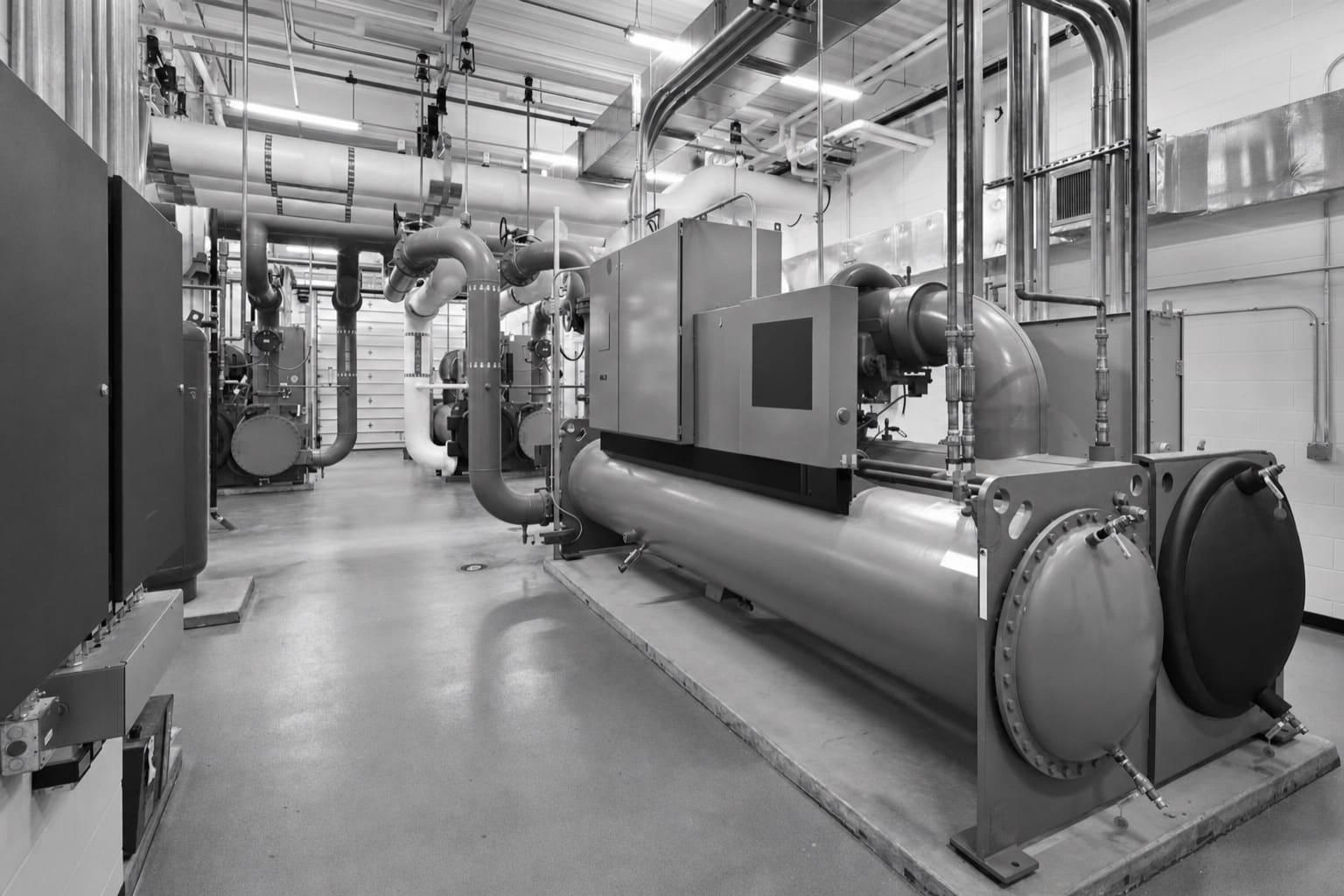
Two buildings can run the same tonnage and land a wide distance apart on price and schedule. What separates them is almost never the unit. It is access, connections, and how far the new equipment strays from what the roof was built to carry.
LOWER COMPLEXITY
Straight swap on a matching curb
Same tonnage, same fuel, curb adapter fits, the panel already has capacity, and the crane can set from the lot without closing an entrance. The work is planned, permitted, and finished inside one scheduled outage.
HIGHER COMPLEXITY
Resized, refueled, or hard to reach
Tonnage or footprint grows, structural review enters, the panel needs work, or the heating fuel changes. Add tight access and a tenant who cannot lose conditioning, and it becomes a phased job with real coordination.
SITE REVIEW
What the walk has to answer before pricing
A quote written from a nameplate photo is a starting number, not a price. It gets you a tonnage and a lead time, which is genuinely useful when a unit is down in season. It does not tell you what the roof will cost you.
The walk is where the surprises get priced. Someone measures the existing curb against the new footprint, opens the panel schedule and confirms available capacity, traces the gas line if the unit burns gas, checks the structure where the new weight lands, and stands in the lot to plan crane reach and closures. DOE's own heat pump rooftop checklist runs the same territory — climate and heating load, utility bill impact, building type, equipment availability, electrical capacity, physical constraints, gas lines, contractor familiarity, and incentives — because those are the items that decide whether a project works. The datasheet does not.
If the equipment is changing rather than matching, the review also has to confirm the local trade base is comfortable installing and servicing what you selected. Equipment nobody nearby wants to touch at 2 a.m. is a maintenance problem you buy on day one.
Ask for the walk before the deposit
A contractor who prices your roof without measuring the curb, opening the panel, and standing in the lot is pricing an average building. Yours is not average, and the difference arrives as a change order after the crane is booked.
OWNERSHIP
Two questions that change the answer
Two buildings can need the same unit and still deserve different projects. The first question is who pays the utility bill. The second is whether you are replacing on your schedule or the equipment's. Owner-occupied buildings capture efficiency savings directly, so a higher tier pays back to the same party that funded it. Where tenants are separately metered, the money you spend up front may return to somebody else — that does not make the upgrade wrong, but it changes how you justify it. And planned replacement almost always beats replacement on failure, because failures happen in season, with nothing suitable nearby and no leverage on price.
WHO BENEFITS
Owner-occupied vs leased
If you pay the meter, efficiency savings return to you and a higher tier is easy to justify. If tenants are separately metered, the case shifts toward reliability, tenant retention, and asset value.
WHEN YOU BUY
Planned vs replace-on-failure
DOE notes managers commonly wait for inadequate conditioning, frequent maintenance, or outright failure. Replacing proactively tends to beat both the emergency swap and a like-for-like unit at end of life.
PHASING AND PROCUREMENT
Buying more than one unit, and buying it early
If a roof carries several units of the same vintage, treat them as a fleet instead of a series of emergencies. Age them out on a schedule you set and each replacement gets competitive pricing, a planned outage, and equipment ordered before you need it. Handle them as failures instead and you pay in-season prices for whatever happens to be available.
Phasing also lets you standardize. A roof running the same platform across four units is cheaper to maintain, cheaper to stock parts for, and easier for a service tech to learn. The counterweight is service consistency: EPA rules govern how refrigerant is recovered and handled on every unit you own, so a mixed fleet means more procedures and more certifications to keep straight. That is manageable when it is planned and expensive when it is discovered.
Finally, ask about incentives before ordering rather than after. DOE lists incentives among the deciding factors for higher-efficiency and heat pump rooftop equipment, and programs commonly require approval before work begins. A quote that skips that question can quietly cost you money you were eligible for.
THE QUOTE
Five things a comparable quote should show
Three quotes are only comparable when they price the same scope. Ask every bidder for these five lines in writing, and the low number either holds up or explains itself.
01
Tonnage, efficiency tier, and model
The exact unit being installed, not a tonnage range, with the efficiency tier written out.
02
Curb, structural, and roof scope
Whether a curb adapter is included, and what happens if the roof needs work under it.
03
Electrical, gas, and refrigerant scope
Who confirms panel capacity, who pulls new circuits, and who recovers the old charge.
04
Rigging, permits, and inspections
Crane, lot closure, permit fees, and inspection coordination inside the installed price.
05
Commissioning and documentation
Startup readings, airflow and charge verification, controls setup, and the paperwork the warranty depends on.
Get a defensible number
Price the equipment and the building together.
Send the address, operating target, and target opening date. Flux will identify what must be verified before the project can be priced.
Get a free estimateQuestions
Straight answers.
When does replacing beat repairing again?
Once a rooftop unit is past roughly fifteen years, a repair is buying time on a machine that is already losing money. DOE puts the annual energy waste from an old, inefficient rooftop unit at roughly $900 to $3,700. Compare the repair against that figure plus the next repair, and the replacement case usually makes itself.
What actually drives the installed price?
Equipment tier and tonnage set the floor. The spread between bids comes from the curb adapter, the roof structure under it, electrical capacity, crane access and lot closure, and whether commissioning is included. Price those five explicitly and two quotes on the same building finally become comparable.
Should we switch to a heat pump rooftop unit?
Sometimes. DOE's checklist weighs climate and heating load, electricity and gas prices, electrical capacity at the panel, physical constraints, equipment availability, and incentives. Heat pump heating efficiency falls as outdoor temperatures drop, so buildings that see sustained cold usually look at dual-fuel or cold-climate models rather than a straight all-electric swap.
Can we just match the old unit?
Often yes, and it is the fastest path back to conditioning. Like-for-like is right when the space is still used the way it was when the original unit was sized. If occupancy, operating hours, plug loads, or the envelope changed, matching the nameplate carries the old sizing mistake forward for another service life.
What happens to the refrigerant in the old unit?
It is recovered, not vented. EPA regulations under Section 608 of the Clean Air Act govern how refrigerant is handled and recycled in stationary refrigeration, air-conditioning, and heat pump equipment, and that work belongs to certified technicians. Your quote should show recovery and disposal as a line item, not an assumption.
Sources used for this guide
- [1]betterbuildingssolutioncenter.energy.gov — DOE Advanced Rooftop Unit Replacement Guidance
- [2]betterbuildingssolutioncenter.energy.gov — DOE Commercial Heat Pump Rooftop Unit Replacement Guidance
- [3]betterbuildingssolutioncenter.energy.gov — DOE High-Efficiency Commercial Rooftop Unit Toolkit
- [4]energy.gov — DOE Efficient Commercial Rooftop Air Conditioner Program
- [5]epa.gov — EPA Stationary HVAC Refrigerant Management