THE DIRECT ANSWER
Commercial HVAC replacement and installation in Lynchburg.
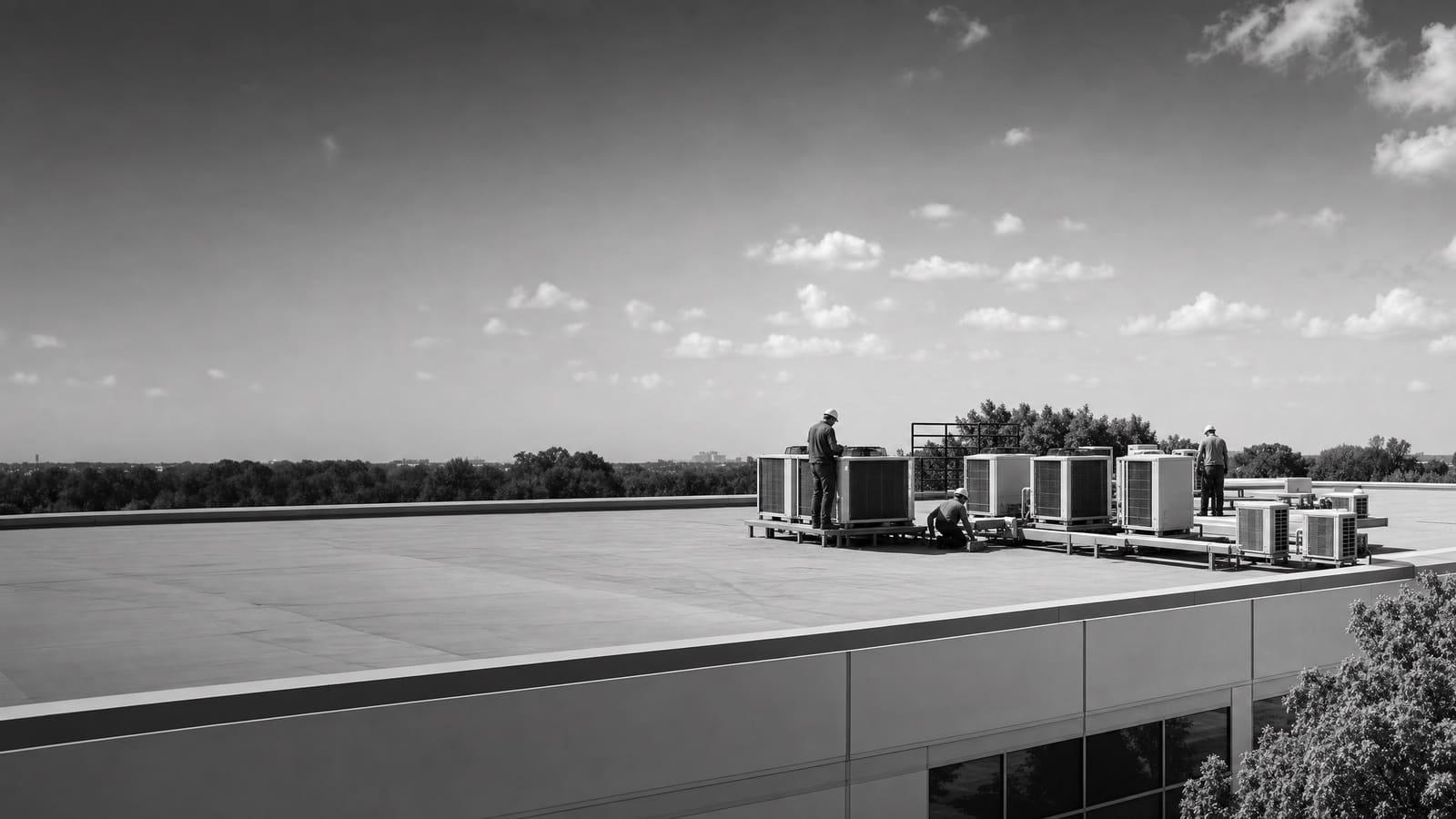
A commercial HVAC replacement includes load review, equipment selection, removal, rigging, connections, controls, startup, and commissioning. Replacement becomes more useful than another repair when an older unit needs frequent service, cannot hold comfort, or wastes energy. DOE guidance says rooftop units over 15 years old can be strong candidates for planned replacement.
A site review must verify the actual load, roof and curb condition, utilities, controls, access, operating needs, and equipment availability.
FIRST DECISION
Choose the replacement path before choosing a model
Start with the reason for the project. A failed unit may demand a fast path, but speed should not erase basic checks. Confirm that the replacement can serve the space, fit the existing curb, use the available power or fuel, and connect to the controls.
A planned project creates more room to compare efficiency, heat-pump heating, staging, ventilation, and electrical needs. It can also reduce the risk of making a major equipment choice during an emergency.
Do not assume the old nameplate proves the right capacity. The building may have changed since that unit was selected. Occupancy, hours, internal equipment, walls, windows, ventilation, and comfort complaints all help explain the real load. The best operating choice is the one that fits both the building and the owner's plan.
BUDGET CONTROL
The work that moves an installed quote
No supplied research supports a universal installed price. A useful budget separates equipment from the site work and operating constraints that can change the final scope.
EQUIPMENT CHOICE
Match the system to the building, not just the old label
Packaged rooftop units combine major heating, cooling, and air-moving parts in one cabinet. They are common across commercial buildings and condition nearly half of U.S. commercial floor area. A rooftop replacement may be practical when the roof, curb, ducts, utilities, and service access can support the new unit.
A high-efficiency rooftop unit can reduce energy use, but the rating is only one part of the decision. Fan control, compressor staging, economizer operation, ventilation, occupancy schedule, and maintenance all affect field performance. Ask how each proposed option works at normal load, not only at peak conditions.
A heat-pump rooftop unit uses reverse-cycle heating as well as cooling. DOE guidance says the choice among all-electric, dual-fuel, and cold-climate designs depends on geography, utility costs, emissions goals, building type, equipment supply, contractor knowledge, electrical capacity, physical limits, and existing gas service. A heat pump is not an automatic upgrade for every roof. It is a design option that needs a load and infrastructure check.
PROJECT COMPLEXITY
A box swap can become a building project
The old and new units may look similar while the work beneath them is very different. Separate simple reuse from modifications before comparing prices.
LOWER COMPLEXITY
Compatible replacement
The selected unit fits the roof arrangement, available utilities, ducts, controls, and operating need with limited modification. The proposal should still include removal, rigging, connections, startup, testing, and closeout.
HIGHER COMPLEXITY
System or fuel change
Capacity changes, heat-pump conversion, curb work, electrical upgrades, duct changes, new controls, or difficult access add coordination. These projects need defined assumptions and clear responsibility for each trade.
SITE REVIEW
Inspect the conditions that drawings and nameplates cannot settle
Begin with equipment records and a walk-through. Record the model, capacity, heating source, refrigerant, voltage, control points, service history, and known comfort problems. Then look beyond the cabinet. Inspect the curb, roof condition, duct transitions, drain route, disconnect, gas connection, control wiring, and safe service space.
The review should also follow the building's daily use. Note occupied hours, critical rooms, tenant limits, ventilation needs, temperature complaints, and any process load. A unit that serves a quiet office has a different duty than one serving a space with strong internal heat or long operating hours.
For a rooftop project, confirm how people, tools, and equipment reach the work area. The lift plan must account for staging, roof access, overhead limits, occupied areas, and protection of the property. If the new unit changes weight, footprint, connections, or capacity, identify the needed design review before ordering it. A firm equipment price is not a complete installed scope when these conditions remain unknown.
Bring useful evidence
Provide nameplate photos, controls information, service records, roof access details, operating hours, comfort complaints, and any available drawings. These items help turn assumptions into a comparable scope.
OWNERSHIP VIEW
Balance urgent reliability with long-term operation
Commercial HVAC decisions affect more than the maintenance budget. They shape comfort, tenant disruption, energy use, service planning, and future capital work. DOE notes that owners often wait until a rooftop unit cannot condition the space, needs frequent maintenance, or fails. Planned replacement can give the buyer time to compare options instead of accepting whatever is available during an outage.
Keep the ownership horizon in the discussion. A short hold may favor a simple, dependable scope. A long hold may justify deeper study of efficiency, controls, heat-pump heating, electrical capacity, and maintenance consistency. Either way, compare the full installed scope and expected operating fit.
RELIABILITY
Plan before failure
Rank aging or troublesome units, confirm replacement options, and establish an outage plan. Early decisions can reduce rushed procurement and make phasing easier.
LIFETIME VALUE
Look past first price
Compare energy use, maintenance access, controls, fuel needs, warranty terms, parts strategy, and likely infrastructure work alongside the initial installed cost.
DELIVERY PLAN
Order, phase, install, and verify the work
Do not schedule the shutdown from a hoped-for ship date. Confirm the proposed model, options, availability, substitution rules, and delivery point before building the installation plan. If timing is critical, state who approves substitutions and what performance or fit must remain equal.
Phase the work around the building's tolerance for lost heating, cooling, or ventilation. Some sites can shut down a whole area. Others need temporary conditioning, after-hours work, or one unit kept online while another is replaced. Put these limits in the proposal so every bidder prices the same operating plan.
After the set, the project is not finished when the fan starts. Verify rotation, airflow, temperatures, controls, heating and cooling operation, ventilation settings, drainage, and alarms as applicable to the selected system. Record the results. Complete owner training, warranty registration, equipment data, control sequences, startup reports, and maintenance requirements. A clean handoff gives the facility team a baseline for future service and helps expose installation problems before they become recurring comfort calls.
QUOTE CHECK
Five items every comparable proposal should show
Ask each bidder to price the same defined result. If a line is excluded, unknown, or carried as an allowance, the proposal should say so plainly.
01
Equipment and performance
List capacity, heating type, efficiency, voltage, options, controls, ventilation features, availability, and approved substitutions.
02
Removal and installation
Define recovery, disposal, rigging, curb work, ducts, drains, utilities, weatherproofing, and site protection.
03
Design and coordination
State who handles load review, drawings, trade coordination, structural questions, approvals, inspections, and required corrections.
04
Startup and proof
Require testing, control verification, commissioning records, deficiencies, final settings, and acceptance responsibilities.
05
Commercial terms
Show price, allowances, exclusions, schedule, payment terms, warranty, training, closeout documents, and change-order rules.
Get a defensible number
Price the equipment and the building together.
Send the address, operating target, and target opening date. Flux will identify what must be verified before the project can be priced.
Get a free estimateQuestions
Straight answers.
When does replacement make more sense than another repair?
Consider replacement when an older unit needs frequent service, cannot maintain the required conditions, has a major failed component, or no longer fits the building's load or operating plan. DOE guidance notes that rooftop units over 15 years old can waste substantial energy compared with newer models. Age alone does not decide the project, so review condition, repair history, performance, and ownership plans together.
Should a commercial replacement match the old capacity?
Not automatically. The old nameplate is evidence of what was installed, not proof of today's load. Confirm whether occupancy, hours, internal equipment, ventilation, walls, windows, or space use changed. A compatible replacement may be sensible when conditions remain stable. A load review matters when comfort problems or building changes suggest the old selection no longer fits.
Is a heat-pump rooftop unit a good replacement choice?
It can be, but the decision needs more than an efficiency comparison. Review heating load, local energy prices, emissions goals, electrical capacity, existing gas service, roof and curb limits, equipment availability, controls, and service capability. Compare all-electric, dual-fuel, and other suitable designs against the same operating requirements.
What should happen before the equipment is ordered?
Confirm the load, selected model, dimensions, weight, curb fit, utilities, duct connections, controls, ventilation needs, access plan, operating limits, and delivery terms. Resolve any design or coordination questions that could change the unit. Ordering first and checking fit later can turn a planned installation into an expensive redesign.
What is commissioning for a commercial HVAC installation?
Commissioning is the documented check that the installed system performs as intended. The exact tests depend on the equipment, but the process can include airflow, temperatures, heating and cooling operation, fan behavior, ventilation, controls, alarms, drainage, and operating sequences. The owner should receive the results and a list of corrected deficiencies.
How should refrigerant be handled during replacement?
The proposal should state how refrigerant in the old system will be recovered and managed. Federal rules address refrigerant handling and recycling for stationary air-conditioning and heat-pump equipment. Ask who performs the work, what is included in removal, and which refrigerant the new equipment uses so the maintenance team can plan service and records.
How can owners compare two HVAC installation quotes?
Normalize the scope before comparing totals. Check the exact equipment, efficiency, options, curb and duct work, rigging, electrical and gas work, controls, testing, schedule, warranty, exclusions, allowances, and closeout documents. A lower total may simply omit work that another proposal includes. Ask for unclear assumptions to be written into the quote.
Can the building stay open during replacement?
That depends on which spaces the unit serves and how much interruption the operation can accept. A project can be phased, scheduled outside occupied hours, or paired with temporary conditioning when the scope supports it. Define critical spaces and outage limits before bidding so the installation plan and price reflect the same business need.
What records should the owner receive at closeout?
Request final equipment data, startup and commissioning reports, control settings or sequences, warranty information, training records, maintenance requirements, and updated project documents when applicable. These records establish how the system was left, help future technicians, and give the facility team a clear baseline for service.
How should a facility plan several aging rooftop units?
Create an equipment list with age, condition, service history, comfort impact, operating importance, and replacement options. Rank units by failure consequence and poor performance. Then group compatible work when access, rigging, or shutdown planning makes that useful. A portfolio plan can preserve choice and reduce the pressure of one replacement-on-failure decision after another.
Sources used for this guide
- [1]betterbuildingssolutioncenter.energy.gov — DOE Advanced Rooftop Unit Replacement Guidance
- [2]betterbuildingssolutioncenter.energy.gov — DOE Commercial Heat Pump Rooftop Unit Replacement Guidance
- [3]betterbuildingssolutioncenter.energy.gov — DOE High-Efficiency Commercial Rooftop Unit Toolkit
- [4]energy.gov — DOE Efficient Commercial Rooftop Air Conditioner Program
- [5]epa.gov — EPA Stationary HVAC Refrigerant Management