THE SHORT ANSWER
Commercial HVAC replacement and installation in Loveland.
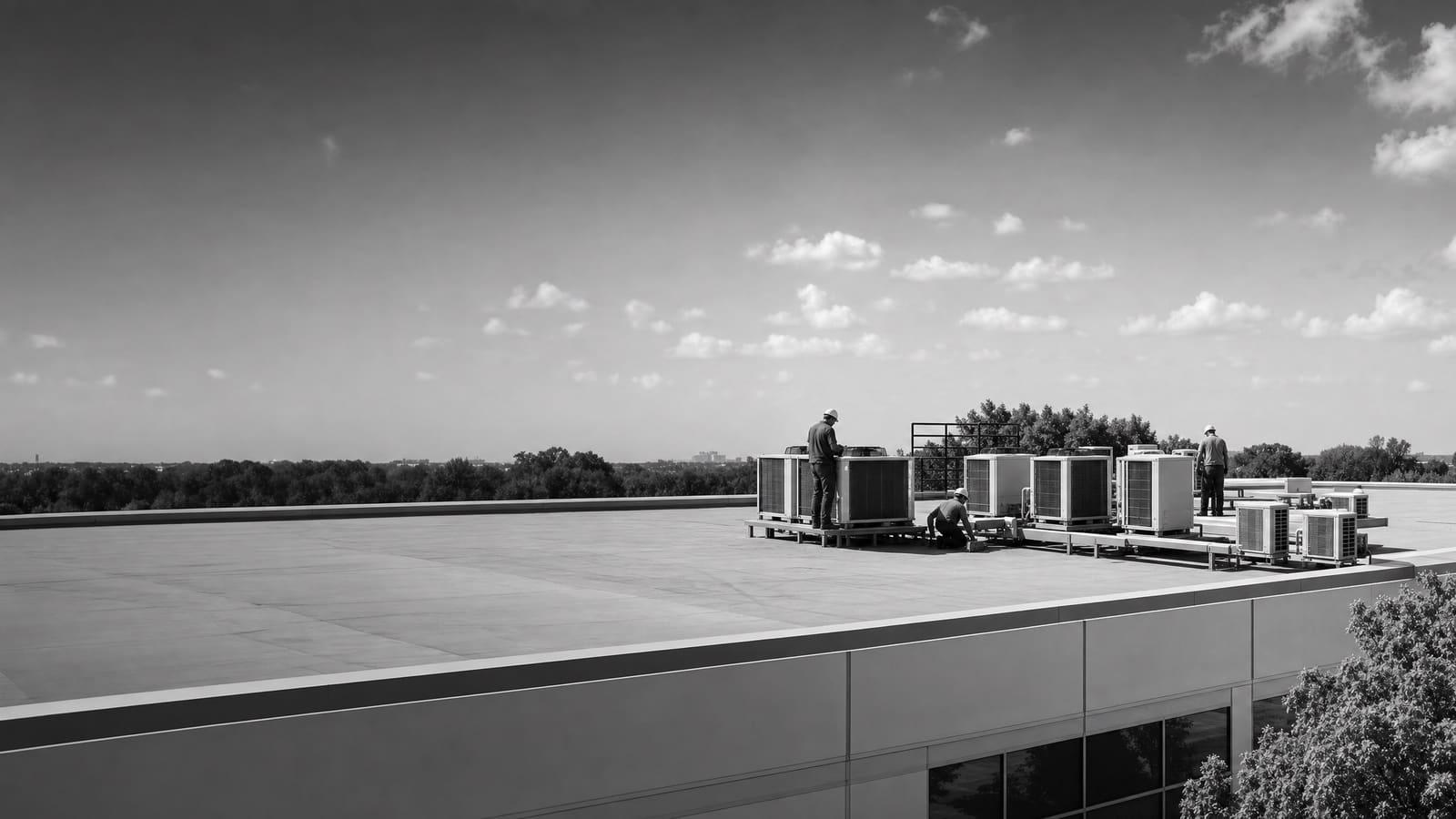
A commercial HVAC replacement should include load review, equipment selection, removal, rigging, curb or connection work, controls, startup, and documented testing. Replacement is often more useful than another repair when an older unit needs frequent service, cannot hold comfort, or risks failing during business hours. DOE guidance flags rooftop units over 15 years old for closer review.
A site review must confirm capacity, roof and curb conditions, electrical service, heating source, ventilation, controls, access, and the work needed around the new unit.
FIRST DECISION
Repair, replace in kind, or improve the system?
Start with the operating problem, not a preferred equipment model. A repair can make sense when the unit is otherwise dependable and the failure is limited. A like-for-like replacement can shorten design work when the old capacity, heating method, curb, utilities, and controls still fit the building. A redesigned replacement is worth considering when the space has changed, comfort remains uneven, maintenance repeats, or ownership wants a different energy plan.
Do not let an emergency make every decision. If several rooftop units are near the same age, review them as a group. That can reveal which unit needs immediate work, which should be monitored, and which replacements can be bundled. DOE notes that owners often wait until a unit cannot condition the space, requires frequent maintenance, or fails. A planned project gives the buyer more time to compare capacity, efficiency, heat-pump options, availability, and disruption.
BUDGET STRUCTURE
What moves the installed price
No supplied research supports a universal installed price. Build the budget from the actual equipment and every task required to leave it operating, tested, and ready for service.
EQUIPMENT CHOICES
Compare systems by the work they must do
Packaged rooftop units combine major heating, cooling, and air-moving parts in one outdoor cabinet. They are common in commercial buildings and can simplify replacement when the existing roof location and distribution system remain useful. A high-efficiency rooftop unit may lower energy use compared with old, inefficient equipment, but the expected result depends on load, operating hours, controls, maintenance, and how the system is commissioned.
A heat-pump rooftop unit uses reverse-cycle operation for heating as well as cooling. DOE says the choice among all-electric, dual-fuel, and cold-climate heat-pump rooftop units should account for geography, utility costs, emissions goals, building type, equipment availability, electrical capacity, physical constraints, gas service, and contractor knowledge. That makes a heat pump a project decision, not a label to add after pricing.
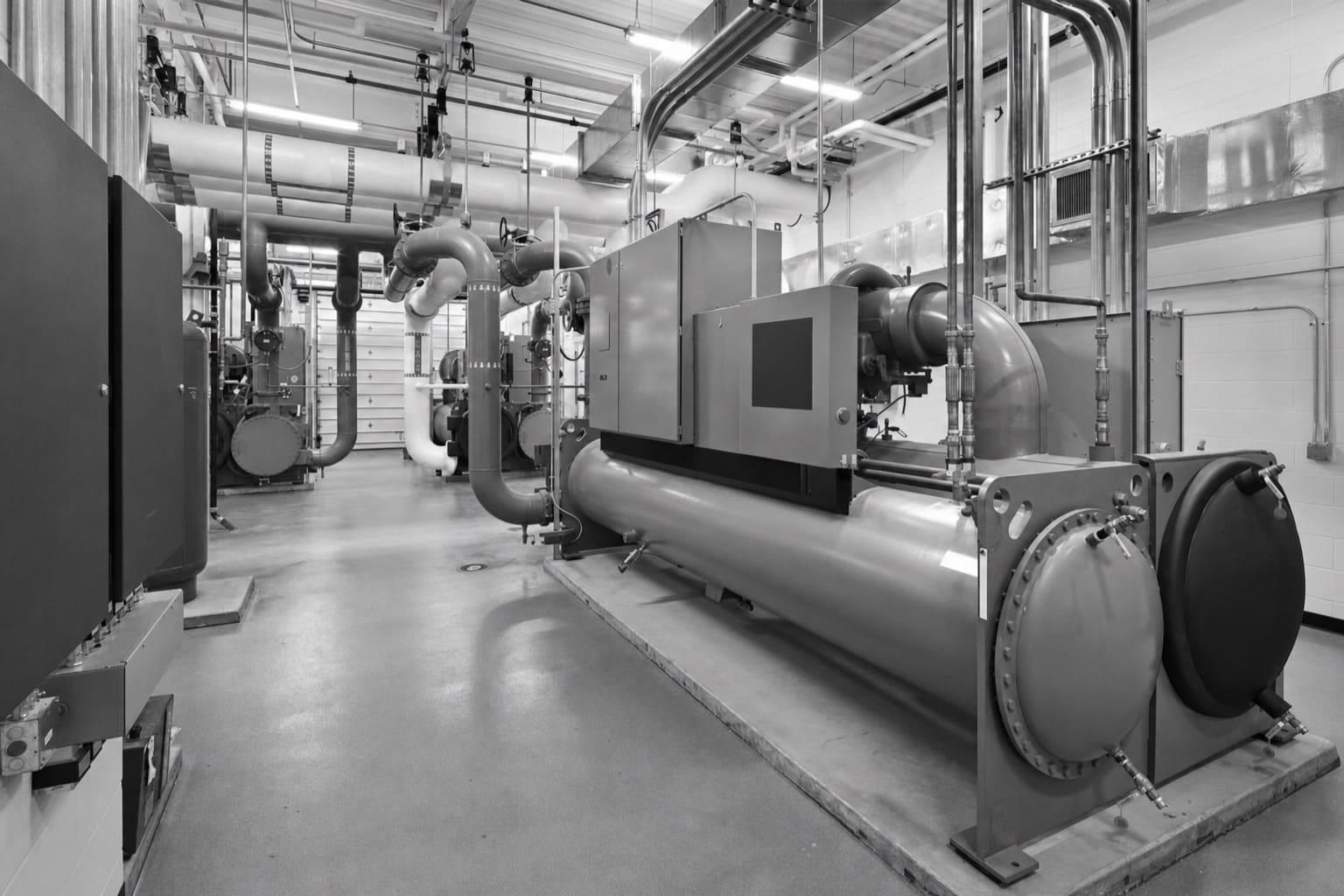
Split systems and larger central systems may fit buildings that cannot use a direct rooftop swap or that need more control by zone. Whatever the system type, ask the designer to show the load basis, heating performance, ventilation plan, electrical demand, part-load control, and service needs. A familiar unit is not automatically the lowest lifetime-cost choice, and a more efficient unit cannot fix bad airflow or a poor control sequence by itself.
PROJECT COMPLEXITY
A box swap and a system change are different jobs
The quote should identify which kind of project you are buying. Similar-looking rooftop replacements can carry very different design, infrastructure, access, and commissioning needs.
LOWER COMPLEXITY
Compatible replacement
The building use is stable, capacity remains suitable, the curb and duct layout can be reused, utilities match, and controls need little change. The work still requires rigging, connections, startup, testing, and closeout.
HIGHER COMPLEXITY
Changed capacity or technology
A heat-source change, larger electrical load, new ventilation plan, altered footprint, multiple zones, or building-control integration adds design and field coordination. Price these changes as defined work instead of vague contingencies.
SITE REVIEW
Measure the building before ordering equipment
The old nameplate is a useful starting point, but it is not a complete sizing study. Confirm how each area is used, when it is occupied, what equipment gives off heat, and whether walls, windows, lighting, or ventilation have changed. Review service records and comfort complaints. A unit that runs constantly may be undersized, poorly controlled, short of airflow, or simply failing. A unit that starts and stops too often may also need investigation.
Inspect the physical path from delivery to final connection. Record roof access, curb dimensions, duct openings, supports, lifting conditions, drainage, service clearances, electrical data, heating connections, and control points. For a heat-pump option, compare the building’s heating demand with the proposed unit’s performance and verify whether the electrical system can carry the new load. DOE specifically identifies electrical capacity and physical constraints as adoption considerations.
Finish the review with an operating plan. Mark areas that cannot lose conditioning, hours when noisy work is restricted, shutdown steps, temporary needs, and who can approve changes. This turns the quote into a project plan rather than a unit price surrounded by assumptions.
Start with evidence
Provide nameplate photos, service history, utility data, floor plans when available, occupied hours, comfort complaints, control information, and any known roof or electrical limits.
OWNERSHIP VIEW
Balance urgent uptime with lifetime operation
The fastest available replacement can protect the business during a failure, but speed can narrow equipment choices and carry old sizing errors forward. A planned replacement creates room to review efficiency, heating method, controls, infrastructure, and future service. DOE describes proactive replacement of inefficient and underperforming rooftop units as a potential business choice when compared with replacement after failure.
Efficiency also needs context. DOE reported that older commercial rooftop units could waste significant energy, and its high-performance program demonstrated that advanced units can cut energy use compared with an older standard. Those findings do not promise the same result at every building. The buyer still needs a site-specific comparison based on operating hours, load, energy rates, maintenance, and control quality.
UPTIME
Plan the shutdown
Define affected areas, temporary measures, delivery timing, lifting, weather limits, startup, and who accepts the system. A short field swap can still cause serious disruption if dependencies are missed.
LIFETIME COST
Compare more than purchase price
Review expected energy use, maintenance access, filters and parts, controls, heating performance, warranty terms, and replacement timing. State the assumptions so competing proposals can be judged on the same basis.
DELIVERY PLAN
Phase the work before equipment fails
For a building with several units, create an equipment list that records age, condition, repair pattern, served area, capacity, heating type, refrigerant, controls, and operational importance. DOE guidance notes that rooftop units over 15 years old can use substantially more energy than newer models. Age alone does not order a replacement, but it helps identify where condition review and planning should begin.
Rank each unit by failure consequence as well as mechanical condition. A unit serving a critical occupied area may need earlier action than an equally old unit serving a flexible space. Group compatible work when it reduces repeated design, mobilization, rigging, or shutdown effort, but keep enough flexibility to respond to actual equipment condition and availability.
Procurement should identify the exact model or approved performance requirements, expected availability, substitution rules, storage responsibility, warranty start, and what happens if site conditions differ. Incentives should never be treated as guaranteed savings unless eligibility, funding, deadlines, and application steps are verified at the time of purchase. No current local incentive was established by the supplied research. Base the core decision on a project that works without an uncertain payment, then treat any verified benefit as an added value.
INSTALLATION AND HANDOFF
The project is not finished when the unit starts
After the old equipment is isolated and removed, the installer must set and seal the new assembly, complete ducts and utilities, install required controls, and prepare the system for startup. Refrigerant work belongs with qualified personnel and documented procedures. EPA Section 608 rules address the handling and recycling of refrigerants in stationary air-conditioning and heat-pump equipment, so recovery and disposal should appear in the contractor’s scope.
Commissioning checks whether the installed system works as selected. At minimum, the closeout should record operating modes, airflow or balancing results where included, temperatures, control responses, alarms, safety devices, and important settings. Heat-pump projects should demonstrate heating operation as well as cooling. Building-control points and schedules should be tested from the operator’s interface, not only at the unit.
Ask for model and serial records, startup forms, warranties, control information, maintenance requirements, filter data, and training. Keep these items with the facility records. They give the service team a clean baseline and help ownership determine whether later problems come from equipment, installation, controls, or building operation.
Protect the operating baseline
Do not release final closeout on a verbal startup alone. Require test records, equipment data, warranty documents, control settings, maintenance instructions, and a clear list of unresolved items.
QUOTE CHECKLIST
Five things every comparable HVAC quote should show
Make each bidder price the same result. If an item is excluded, allowed, or dependent on inspection, the proposal should say so plainly.
01
Equipment and design basis
List model, capacity, efficiency, heat source, ventilation features, accessories, load assumptions, and approved alternatives.
02
Complete field scope
Define removal, recovery, disposal, rigging, curb, roof protection, ducts, drains, utilities, controls, and finish work.
03
Schedule and disruption plan
Show equipment availability, delivery, shutdown duration, lifting window, affected areas, temporary needs, and weather assumptions.
04
Testing and closeout
Name startup tests, balancing, control verification, training, warranty documents, manuals, and the party responsible for corrections.
05
Price boundaries
Separate base price, options, allowances, exclusions, payment terms, change rules, and responsibilities assigned to the owner.
Get a defensible number
Price the equipment and the building together.
Send the address, operating target, and target opening date. Flux will identify what must be verified before the project can be priced.
Get a free estimateQuestions
Straight answers.
When should a commercial rooftop unit be replaced instead of repaired?
Consider replacement when the unit is older, requires frequent maintenance, cannot maintain the space, or creates a serious failure risk. DOE notes that rooftop units over 15 years old can waste substantial energy compared with newer models. Age is a review signal, not an automatic verdict. Compare the repair, overall condition, expected reliability, energy use, refrigerant situation, and effect of another outage.
Should the new commercial HVAC unit match the old capacity?
Not without checking the present load. The old size may still be correct, but occupancy, internal equipment, ventilation, envelope conditions, and operating hours can change. Ask for the sizing basis and an explanation of any proposed capacity change. Reusing the old nameplate alone may repeat an old comfort or cycling problem.
Is a heat-pump rooftop unit a good replacement choice?
It can be, but the decision needs a building-level review. DOE says owners should consider climate and geography, energy costs, emissions goals, building type, equipment availability, electrical capacity, physical limits, gas service, and contractor knowledge. Compare all-electric, dual-fuel, and other suitable configurations against the building’s heating load and infrastructure.
What should be included in a commercial HVAC installation quote?
The quote should identify the equipment, design assumptions, removal, refrigerant recovery, disposal, rigging, roof and curb work, ducts, electrical work, heating connections, controls, startup, testing, training, warranties, schedule, exclusions, allowances, and change-order rules. It should also state who handles each task so the buyer is not left coordinating gaps.
How long does commercial HVAC replacement take?
The supplied research does not establish a universal timeline. Duration depends on equipment availability, design work, roof and curb conditions, rigging, infrastructure changes, controls, shutdown limits, testing, and closeout. Ask for separate dates for selection, ordering, delivery, field installation, startup, and final acceptance.
How much does commercial HVAC installation cost in Loveland?
No reliable Loveland installed-cost range was provided in the supplied research, so a universal number would be misleading. Price the actual capacity, equipment type, efficiency, roof and curb work, lift conditions, ducts, electrical service, heating changes, controls, testing, and schedule. Comparable quotes should use the same written scope and clearly identify allowances.
Who handles refrigerant when the old unit is removed?
The contract should assign refrigerant recovery, handling, records, and disposal to the qualified installation team. EPA Section 608 regulations address refrigerant handling and recycling for stationary air-conditioning and heat-pump equipment. The proposal should state what happens to the old equipment and refrigerant instead of treating disposal as an unstated task.
How should a facility plan several HVAC replacements?
Create an inventory, review condition and service history, identify the areas each unit serves, and rank failure consequences. Then group projects where shared design, purchasing, rigging, or shutdown planning creates value. Keep emergency options for critical units, but avoid waiting for every unit to fail before making equipment and infrastructure decisions.
Sources used for this guide
- [1]betterbuildingssolutioncenter.energy.gov — DOE Advanced Rooftop Unit Replacement Guidance
- [2]betterbuildingssolutioncenter.energy.gov — DOE Commercial Heat Pump Rooftop Unit Replacement Guidance
- [3]betterbuildingssolutioncenter.energy.gov — DOE High-Efficiency Commercial Rooftop Unit Toolkit
- [4]energy.gov — DOE Efficient Commercial Rooftop Air Conditioner Program
- [5]epa.gov — EPA Stationary HVAC Refrigerant Management