THE SHORT ANSWER
Commercial HVAC replacement and installation in Layton.
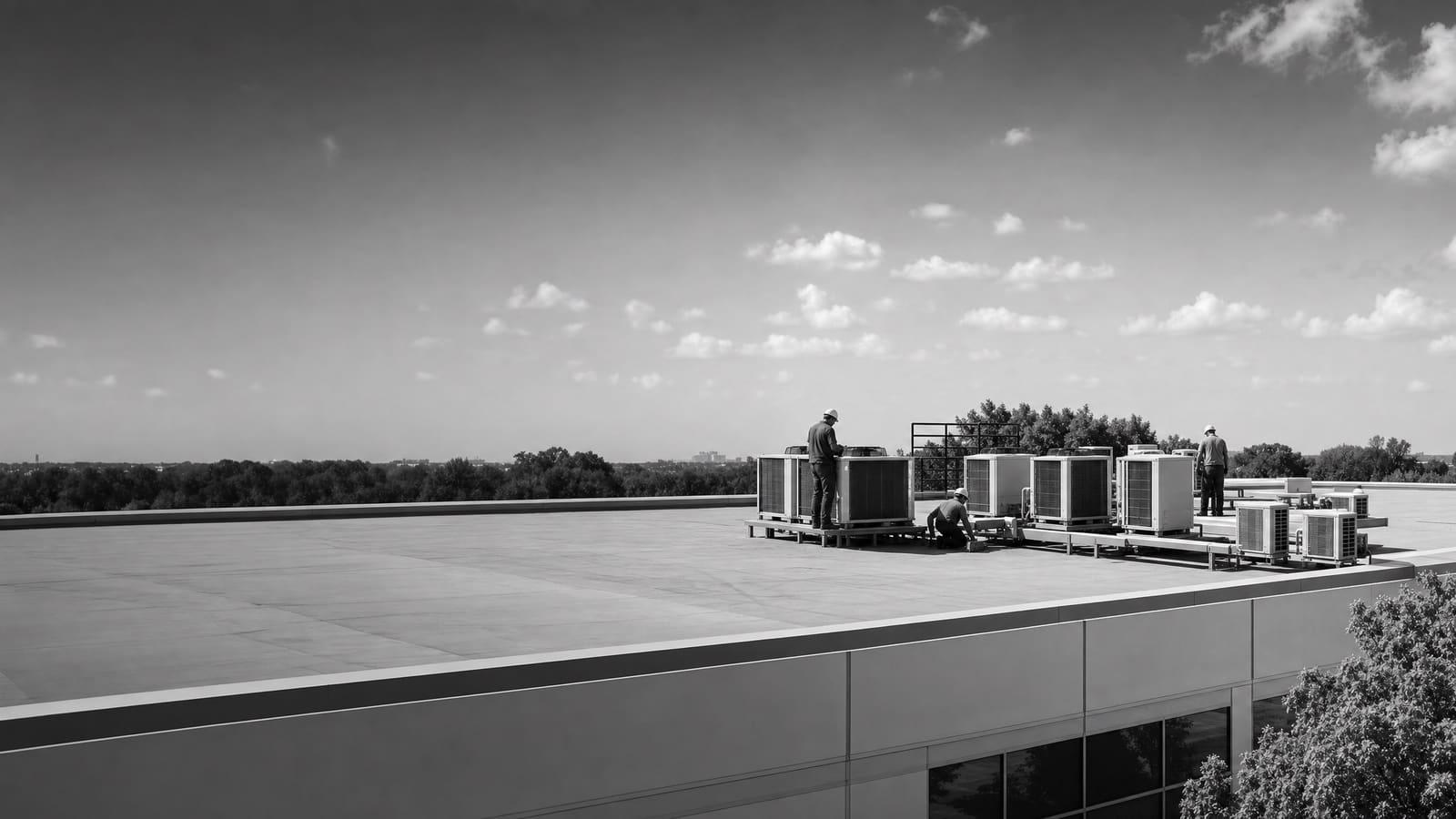
A commercial HVAC replacement includes equipment selection, removal, rigging, required connection changes, controls, startup, and testing. Replacement becomes more useful than another repair when an older unit needs frequent service, cannot hold temperature, or no longer fits the building load. A planned project also gives the owner time to compare efficiency, heat pump, and like-for-like options.
A site review should verify the load, roof or equipment-pad conditions, electrical capacity, fuel connections, controls, access, and shutdown limits.
FIRST DECISION
Choose the reason for the project
Start with the business problem, not a model number. An emergency replacement aims to restore dependable heating or cooling quickly. A planned end-of-life replacement gives the team more time to check the load, compare equipment, and schedule the outage. A building change calls for a deeper design review because new occupants, lighting, process equipment, walls, or operating hours can change demand.
Age also matters. DOE guidance says rooftop units over 15 years old can waste substantial energy compared with newer models. That does not mean every unit should be replaced on its fifteenth birthday. It means age, repair frequency, comfort, energy use, refrigerant condition, and failure risk should be reviewed together. Replacement before failure can avoid a rushed purchase and make phasing easier across a multi-unit facility.
BUDGET CONTROL
What moves the installed price
No supplied research supports a universal installed cost. A useful budget separates the equipment from the work required to make it fit, operate, and pass final testing.
EQUIPMENT CHOICES
Compare systems by how the building operates
A packaged rooftop unit combines major heating and cooling functions in one outdoor cabinet. It can be a practical replacement where the building already has compatible roof openings, ductwork, power, and fuel service. A higher-efficiency rooftop unit may lower energy use, but its value depends on operating hours, load pattern, controls, maintenance, and installed cost. DOE has documented strong energy-saving potential from high-efficiency rooftop equipment, yet a proposal still needs a project-specific operating analysis.
A heat pump rooftop unit provides cooling and reverse-cycle heating. DOE says the choice among all-electric, dual-fuel, and cold-climate equipment should consider geography, heating demand, electricity and gas prices, emissions goals, equipment availability, contractor knowledge, and infrastructure. Electrical capacity is a key check. Supplemental heat and low-temperature performance also need to be clear in the selection.
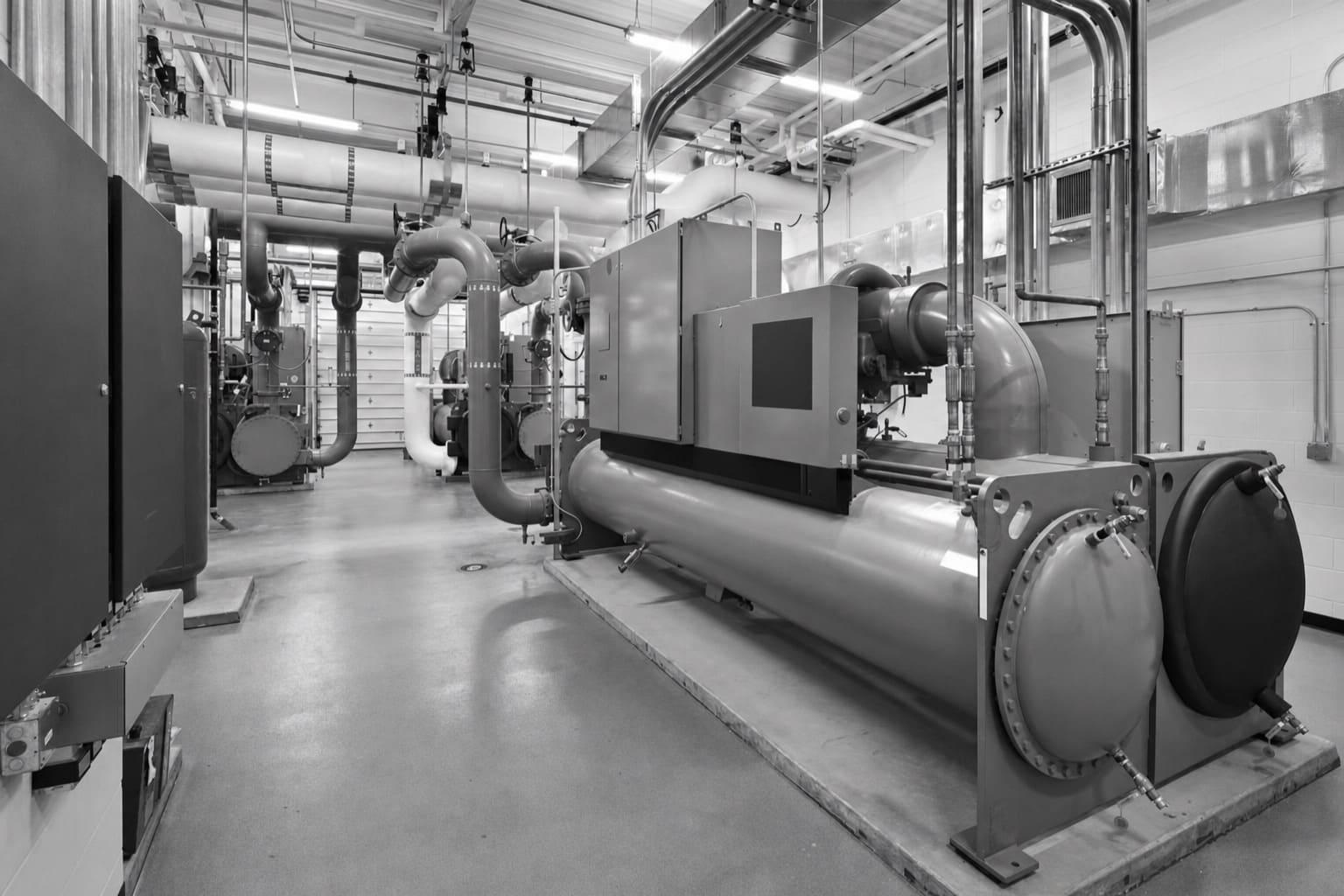
Split systems, larger central systems, and other configurations may fit buildings that cannot use a simple packaged replacement. The right comparison should state what each option changes outside the unit itself. That includes ductwork, piping, electrical service, controls, roof work, service access, and future maintenance.
PROJECT COMPLEXITY
Know whether this is a direct swap or a redesign
Two units with the same listed capacity can create very different projects. Existing conditions decide whether the work stays simple or expands into a coordinated building upgrade.
LOWER COMPLEXITY
Compatible replacement
The selected unit fits the existing location, load, duct path, electrical service, fuel connection, controls, and access plan. The quote can focus on removal, setting, connections, startup, and closeout.
HIGHER COMPLEXITY
Changed system or building
Capacity, footprint, weight, fuel, voltage, ventilation, ductwork, or controls differ. The project may need added design, trade coordination, infrastructure work, longer shutdowns, and more testing.
SITE REVIEW
Confirm the load instead of copying the old nameplate
The existing nameplate is useful for identifying what is installed. It is not proof that the unit was sized correctly or still fits the space. The review should account for the present use of the building, occupied hours, people, lighting, plug loads, process heat, ventilation, envelope, exposure, and zones served. Maintenance records and comfort complaints add important clues.
Oversizing can cause short cycling, uneven comfort, poor humidity control, and needless equipment cost. Undersizing can leave the system running hard without meeting demand. The goal is not simply a smaller or larger unit. It is a unit and control sequence that match real loads across normal operating conditions.
The field review should also trace what the equipment connects to. Inspect accessible ductwork, filters, dampers, drains, curbs, piping, wiring, disconnects, gas components, sensors, and control points. Note roof access, lifting paths, parking or loading conflicts, and areas that cannot lose conditioning. These findings turn a basic equipment quote into an installation plan.
Bring useful records
Provide equipment schedules, plans, service history, utility data, control information, occupancy changes, comfort complaints, and any known shutdown limits.
OWNERSHIP VIEW
Balance first cost with operating risk
The lowest proposal total is not always the lowest ownership cost. Compare expected energy use, maintenance access, warranty terms, replacement parts, controls support, and the effect of downtime. DOE has reported that older commercial rooftop units may waste significant energy, but historical national savings figures do not predict savings for one Layton facility.
Refrigerant planning also belongs in the ownership review. EPA Section 608 rules govern refrigerant handling and recycling for stationary air-conditioning and heat-pump equipment. The contractor should identify the new unit's refrigerant, explain service implications, and state how refrigerant from removed equipment will be recovered and managed. This is especially useful for an owner operating a mixed fleet.
KEEP AND REPAIR
Use when reliability remains acceptable
Continued repair may fit a sound unit with manageable service needs, available parts, stable comfort, and no near-term building change. Record the failure risk and replacement trigger.
PLAN AND REPLACE
Use when risk is rising
Replacement gains value when failures repeat, comfort falls, energy use concerns grow, parts become difficult, or an outage would disrupt people, inventory, or operations.
PROJECT DELIVERY
Plan procurement, installation, and commissioning as one job
Procurement should start only after the team confirms the selected model, capacity, voltage, heating configuration, controls, dimensions, weight, curb or pad requirements, and required accessories. The proposal should identify whether equipment is available, allocated, or subject to a future production date. It should also explain what happens if the proposed model changes before delivery.
Before installation, assign responsibility for rigging, deliveries, access control, roof protection, disconnects, temporary weather protection, trade coordination, and shutdown notices. For several units, phasing can keep part of the building operating and reduce the impact of an unexpected delay. Critical spaces may need temporary conditioning or a different sequence.
Installation is not complete when the unit turns on. Startup should verify rotation, voltage, current, refrigerant condition, airflow, temperature response, drainage, heat operation, sensors, safeties, schedules, and control communication as applicable. Commissioning should compare operation with the approved sequence and document corrections. Closeout should include startup reports, warranty registration, model and serial records, control backups, filter information, maintenance requirements, and training for the facility team.
QUOTE CHECKLIST
Five things every comparable quote should show
Ask each bidder to use the same basic scope. Clear inclusions, exclusions, and assumptions make price differences easier to understand before work begins.
01
Exact equipment selection
Show capacity, heating type, efficiency, voltage, refrigerant, accessories, controls, warranty, and stated availability.
02
Complete installed scope
List removal, recovery, disposal, rigging, mounting, duct, drain, electrical, fuel, roof, controls, and trade work.
03
Access and shutdown plan
State staging needs, affected areas, expected outages, phasing, temporary conditioning, and owner responsibilities.
04
Startup and commissioning
Define the tests, measurements, control checks, correction process, reports, training, and closeout documents included.
05
Price boundaries
Separate allowances, alternates, exclusions, change-order triggers, payment terms, schedule assumptions, and quote expiration.
Get a defensible number
Price the equipment and the building together.
Send the address, operating target, and target opening date. Flux will identify what must be verified before the project can be priced.
Get a free estimateQuestions
Straight answers.
When should a commercial rooftop unit be replaced instead of repaired?
Consider replacement when failures repeat, comfort is poor, energy performance has declined, parts are difficult to obtain, or an outage would create serious business disruption. DOE notes that rooftop units over 15 years old can waste substantial energy compared with newer models, but age should be weighed with condition, service history, and operating risk.
Should the new HVAC unit match the old unit's capacity?
Not automatically. Use the old nameplate as a starting point, then confirm the current load. Changes in occupancy, layout, lighting, process equipment, ventilation, envelope, or operating hours can make the old capacity a poor fit.
Is a heat pump rooftop unit a good replacement option?
It can be, but the decision needs a site-specific review. Compare heating demand, equipment performance, electricity and gas costs, electrical capacity, supplemental heat, physical constraints, emissions goals, availability, and contractor support. All-electric, dual-fuel, and cold-climate units solve different problems.
What should happen to refrigerant in the old commercial unit?
The proposal should state who will recover and manage it. EPA Section 608 regulations address refrigerant handling and recycling for stationary air-conditioning and heat-pump equipment. The closeout record should identify the removed equipment and the recovery work performed.
How long does commercial HVAC replacement take?
The supplied research does not support one standard duration. Timing depends on equipment availability, design needs, rigging, access, connection changes, controls, inspections, weather, and shutdown limits. Ask for separate procurement, preparation, installation, startup, and closeout dates.
How much does commercial HVAC installation cost in Layton?
There is no supported universal price in the supplied research. Capacity, efficiency, equipment type, curb or pad work, crane access, electrical changes, fuel work, ductwork, controls, phasing, and commissioning all affect the total. Compare quotes only after each contractor prices the same written scope.
What documents should the owner receive after installation?
Request equipment model and serial records, startup reports, test results, control sequences and backups, warranty information, approved changes, filter data, maintenance instructions, training records, and a clear list of remaining items.
Sources used for this guide
- [1]betterbuildingssolutioncenter.energy.gov — DOE Advanced Rooftop Unit Replacement Guidance
- [2]betterbuildingssolutioncenter.energy.gov — DOE Commercial Heat Pump Rooftop Unit Replacement Guidance
- [3]betterbuildingssolutioncenter.energy.gov — DOE High-Efficiency Commercial Rooftop Unit Toolkit
- [4]energy.gov — DOE Efficient Commercial Rooftop Air Conditioner Program
- [5]epa.gov — EPA Stationary HVAC Refrigerant Management