THE DIRECT ANSWER
Commercial HVAC replacement and installation in Largo.
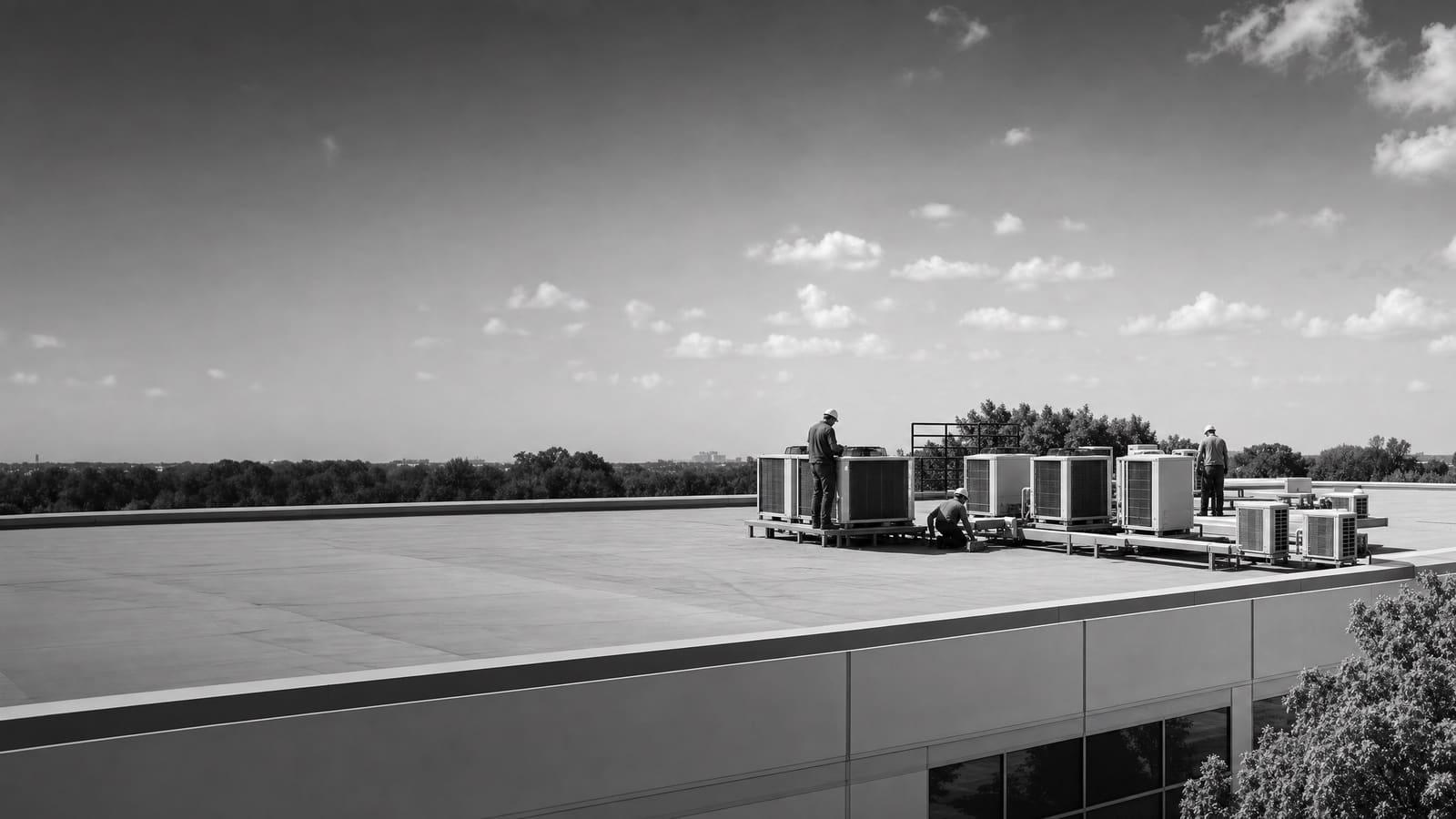
Commercial HVAC installation includes load review, equipment selection, permits, removal, rigging, connections, controls, startup, testing, and refrigerant handling. Replacement becomes more useful than another repair when an aging unit fails often, cannot hold comfort, or needs major work while still wasting energy. DOE guidance says rooftop units over 15 years old deserve a serious replacement review.
A site review must verify the load, curb, structure, utilities, ventilation, controls, access, drainage, and equipment availability before the scope is priced.
THREE OPERATING CHOICES
Choose the replacement path before choosing a model
Start with the reason for the project. A failed unit may require the fastest sound replacement. A working but unreliable unit gives you time to compare efficiency, controls, and heating choices. A changed building may need a new load calculation instead of a copy of the old nameplate.
DOE notes that owners often delay replacement until equipment stops providing adequate conditioning, needs frequent maintenance, or fails. Planned replacement creates room to review availability and infrastructure before the building loses cooling. It can also prevent an emergency decision from locking in an old sizing error.
Ask what the business needs from the system: quick recovery, lower operating demand, better humidity control, quieter operation, electrification, or easier fleet maintenance. Those goals shape the right scope.
BUILD THE BUDGET
What moves the installed price
The research does not support one universal installed price. A useful budget separates equipment from the work needed to place, connect, approve, and prove the system.
EQUIPMENT FIT
Compare systems by the work they must perform
Packaged rooftop units combine major heating and cooling parts in one outdoor cabinet. They are common across commercial buildings and can simplify replacement when the existing curb, ducts, utilities, and controls remain usable. A high-efficiency rooftop unit may add better compressor staging, fan control, or ventilation control. Those features matter only when they are selected and commissioned for the building.
A commercial heat-pump rooftop unit cools like an air conditioner and provides reverse-cycle heating. DOE guidance says heat-pump rooftop units are well suited to mild-to-moderate winter heating and can serve most or all winter demand in much of the South. That does not make every conversion automatic. The team must check electrical capacity, utility rates, physical space, gas infrastructure, equipment availability, contractor knowledge, and the owner's emissions goals.
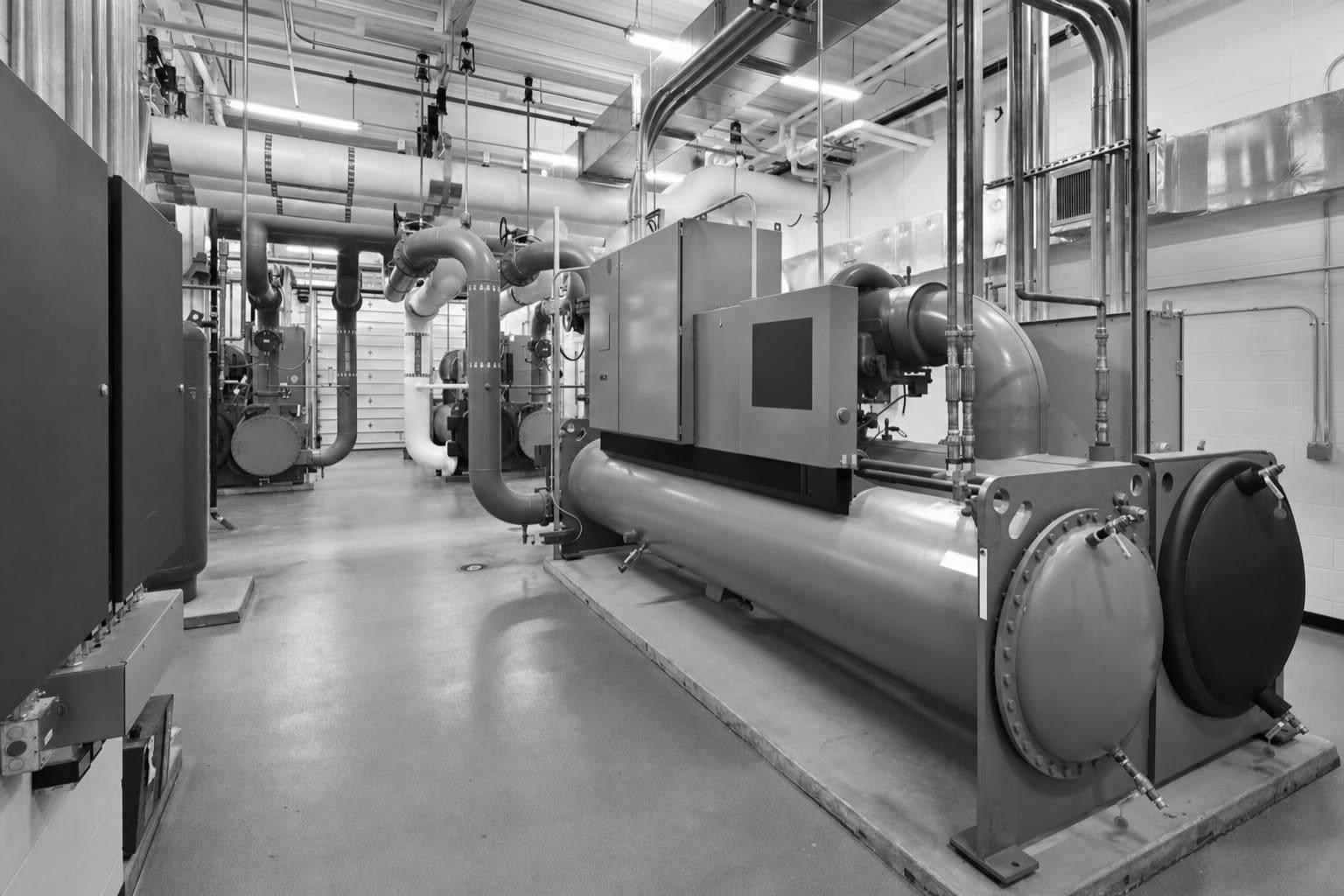
Split systems, larger applied systems, and central plants require different design work. Do not let a quote hide those differences behind one equipment label. Compare capacity, efficiency, heating method, ventilation, filtration, controls, service access, warranty, and expected operating sequence.
SCOPE COMPLEXITY
A simple swap and an engineered replacement are different jobs
The cabinet may look similar from the parking lot, but connection changes can turn a routine replacement into a larger mechanical, electrical, structural, and controls project.
LOWER COMPLEXITY
Compatible replacement
The existing load remains valid, and the new unit fits the curb, ducts, power, heating source, drainage, controls, and roof limits with minor changes.
HIGHER COMPLEXITY
Changed building or system
Capacity, weight, voltage, ventilation, heating source, automation, or equipment location changes. Design, structural review, utility work, and phased installation may be needed.
LARGO PROJECT CONTROL
Confirm the approval path for the actual property
Permit and plan requirements are jurisdiction-specific. Do not use a neighboring city's commercial alteration checklist as proof of what Largo will approve. Before ordering equipment, confirm the responsible authority, required trade permits, plan documents, inspections, and whether the scope needs signed and sealed design work.
This matters when equipment is installed or relocated, the roof framing changes, or heating, cooling, electrical, gas, and structural work overlap. Place permit responsibility in the contract. The quote should state who prepares documents, pays listed fees, answers review comments, schedules inspections, and corrects rejected work. It should also identify any assumptions that could delay release or installation.
Do not order from an unverified permit assumption
Have the project team confirm Largo's current requirements for the site and scope before equipment release, especially when capacity, weight, location, power, or fuel changes.
OWNERSHIP VIEW
Judge the project beyond first cost
First cost is only one part of the decision. DOE has documented that older commercial rooftop units can waste energy, while high-efficiency replacements and advanced controls can reduce use when applied correctly. The result at one building still depends on climate, load, hours, rates, maintenance, and control settings.
Also consider serviceability. A mixed equipment fleet may require more parts, training, filters, controls knowledge, and refrigerant planning. Standardization can simplify maintenance, but it should not force the wrong capacity or configuration onto a building. Ask how each choice affects future service calls, tenant comfort, energy tracking, warranties, and planned capital work.
OPERATING COST
Model the real schedule
Compare options using occupied hours, heating and cooling loads, utility rates, control sequences, maintenance needs, and expected equipment use.
PORTFOLIO CONTROL
Plan parts and refrigerants
Record model data, filters, belts, controls, warranties, and refrigerant type so the maintenance team can support the installed equipment.
INSTALLATION PLAN
Control downtime from release through handoff
A good installation plan begins before the equipment ships. Confirm submittal approval, factory options, curb information, electrical data, controls requirements, delivery restrictions, and the party responsible for receiving damage. Do not remove working equipment until the replacement, adapter, rigging, permits, labor, and critical materials are ready.
Plan the outage around the facility. A single-zone unit may require a full area shutdown. A multi-unit building may allow staged work while other zones stay open. Temporary cooling may help protect critical rooms, but it needs power, condensate routing, secure placement, and a clear operating plan. Put weather limits and rescheduling responsibility in writing.
Handoff is more than turning the thermostat down. The team should verify rotation, voltage, refrigerant condition, airflow, outside air, drainage, heating, cooling, safeties, sensors, alarms, and control sequences. Provide startup records, approved submittals, warranty information, equipment data, filter sizes, setpoints, and staff training. EPA refrigerant rules govern handling and recycling, so recovery and disposal responsibility should be clear.
QUOTE CHECKLIST
Five items every comparable quote should show
Ask each bidder to price the same defined outcome. Separate base scope, options, allowances, exclusions, schedule assumptions, and owner responsibilities.
01
Selected equipment
List capacity, efficiency, heating type, voltage, refrigerant, ventilation, filtration, factory options, warranty, and availability.
02
Complete installation scope
Show removal, recovery, rigging, curb work, ducts, power, gas, drains, controls, roofing, disposal, and cleanup.
03
Permits and design
Identify permit ownership, plan preparation, engineering, fees, inspections, review comments, and correction responsibility.
04
Schedule and outage
State release timing, delivery assumptions, work hours, shutdown duration, phasing, temporary cooling, and weather limits.
05
Testing and handoff
Require startup data, airflow and control checks, training, closeout records, warranty registration, and final deficiencies.
Get a defensible number
Price the equipment and the building together.
Send the address, operating target, and target opening date. Flux will identify what must be verified before the project can be priced.
Get a free estimateQuestions
Straight answers.
When should a commercial rooftop unit be replaced instead of repaired?
Review replacement when an older unit needs frequent repairs, cannot maintain comfort, has major failed parts, or creates rising operating and service burdens. DOE specifically notes that rooftop units over 15 years old can waste substantial energy compared with newer equipment. Condition, repair scope, availability, and business risk should still be reviewed together.
Should the new commercial HVAC unit match the old tonnage?
Not automatically. The old nameplate shows what was installed, not what the building needs now. Recheck the load when occupancy, operating hours, internal equipment, ventilation, walls, windows, or space use changed. Even a like-for-like proposal should explain why the existing capacity remains suitable.
Is a commercial heat-pump rooftop unit a good choice in Largo?
It can be. DOE says current heat-pump rooftop units are appropriate for much of the South's mild-to-moderate winter heating. The decision still requires a check of electrical capacity, utility impacts, physical constraints, equipment availability, heating demand, controls, and organizational goals.
What should happen during commercial HVAC commissioning?
Commissioning should verify that the installed system performs as specified. Typical checks include power, equipment rotation, heating, cooling, refrigerant condition, airflow, outdoor air, drainage, safeties, sensors, alarms, setpoints, and automation sequences. Results and unresolved items should be documented before final acceptance.
Who should handle refrigerant from the removed equipment?
The contract should assign recovery, handling, recycling, recordkeeping, and disposal to qualified parties working under applicable EPA requirements. Do not accept a vague removal line. Ask where the old equipment and recovered refrigerant go and what closeout documentation will be provided.
How can an owner compare commercial HVAC installation quotes?
Make bidders price the same equipment performance and installation scope. Compare exclusions as closely as price. Check equipment data, lead-time assumptions, curb and structural work, utilities, ducts, controls, permits, rigging, outages, testing, warranty, and closeout documents. A low quote with large allowances may not be the lowest final cost.
Sources used for this guide
- [1]betterbuildingssolutioncenter.energy.gov — DOE Advanced Rooftop Unit Replacement Guidance
- [2]betterbuildingssolutioncenter.energy.gov — DOE Commercial Heat Pump Rooftop Unit Replacement Guidance
- [3]betterbuildingssolutioncenter.energy.gov — DOE High-Efficiency Commercial Rooftop Unit Toolkit
- [4]energy.gov — DOE Efficient Commercial Rooftop Air Conditioner Program
- [5]epa.gov — EPA Stationary HVAC Refrigerant Management
- [6]tampa.gov — Permit Application Guide Commercial Alteration