THE SHORT ANSWER
What a commercial HVAC replacement actually covers
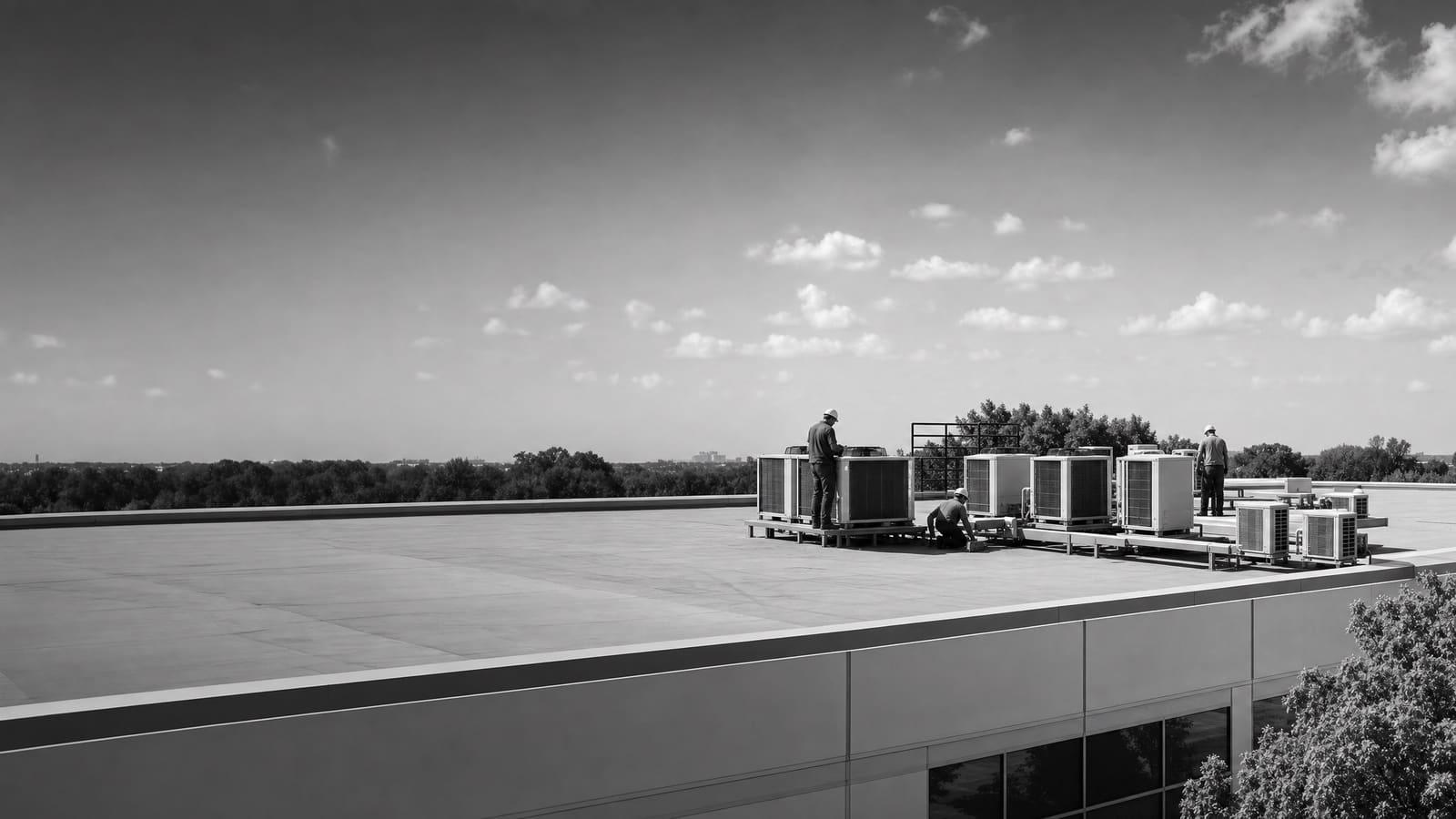
A commercial HVAC replacement covers a load check against how the building is used today, equipment selection, rigging and set, mechanical and electrical connection, refrigerant recovery from the old unit, and commissioning before handoff. Replacement usually beats another repair once a rooftop unit is past fifteen years. Old, inefficient units waste $900 to $3,700 each per year, so repair dollars at that point buy time rather than performance.
A site review still has to confirm the real load, the curb and roof structure, crane reach and lot access, and whether the electrical service and gas piping support the unit you actually want.
THREE PATHS
Repair, replace in kind, or change fuel
The first question is not which unit to buy. It is whether buying is the right move this year.
A unit with service life left, running on loose setpoints and no economizer logic, can be a better candidate for a controls retrofit than a replacement. That is a legitimate answer. Once a unit is past fifteen years, the math shifts. Old, inefficient rooftop units waste $900 to $3,700 a year each, and that waste keeps compounding while you pay for repairs that restore function and nothing else.
When replacement is the answer, the second question is fuel. Staying on gas heat with a high-efficiency air-conditioning unit is the low-risk path and still delivers real savings against a twenty-year-old box. Moving to a heat pump rooftop unit pulls heating efficiency, emissions goals, and electrical capacity into the same decision. Heat pump heating efficiency falls as outdoor temperature drops, which is exactly why dual-fuel and cold-climate versions exist for buildings with meaningful winter heating hours.
WHAT MOVES THE NUMBER
Where the money actually goes
Two quotes for the same tonnage can land far apart, and the gap is almost never the box. It is what has to change around the box. These are the lines worth reading closely, and the ones worth asking about when a quote leaves them out.
IN PRACTICE
Decide before the unit fails
The best replacements are decided before the unit quits. Once a rooftop unit fails in season, the decision collapses to whatever is on a truck, and that is usually a like-for-like box that carries forward whatever was wrong with the last one. Deciding early buys three things a failure never does: time to confirm the load against how the space is used today, time to compare an efficient unit against the one that is merely available, and time to price electrical or structural work before it becomes a change order.
Rooftop units condition close to half of all commercial floor area in the country, so most buildings are working with the same basic hardware. What separates a good outcome is matching the unit to the building rather than to the old nameplate. Twenty years of occupancy changes, added plug load, lighting retrofits, and envelope work usually mean the original sizing is no longer right. Oversized equipment short-cycles and dehumidifies poorly. Undersized equipment never catches up on the worst afternoons, and the complaints follow.
Ask for the load calculation as a deliverable, not a courtesy. It is the document that makes every other number on the quote defensible.
SCOPE CHECK
Simple swap versus engineered replacement
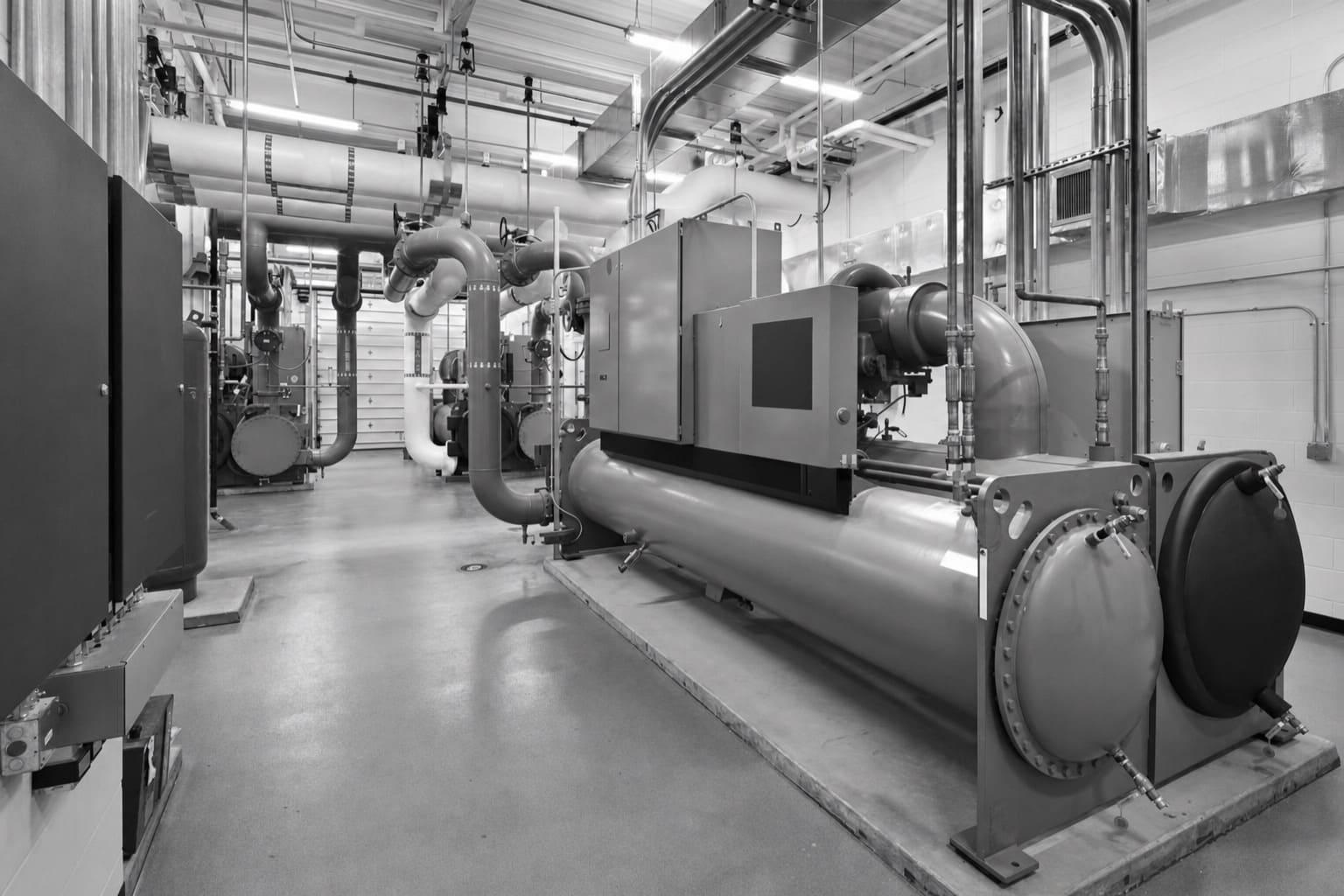
Not every replacement carries the same risk. Two units of the same tonnage on the same roof can price very differently depending on what has to change around them.
LOWER COMPLEXITY
Same fuel, same footprint
The new unit lands on an adapted curb, uses the existing gas and electrical service, and keeps the same duct connections. Access is clean and the crane is on site for part of a day. Engineering is minimal, and most of the schedule is equipment lead time.
HIGHER COMPLEXITY
New fuel or new footprint
Going all-electric can mean added electrical capacity. A larger or heavier unit can mean structural review. Tight lots, tall parapets, and occupied space below push the rigging into off-hours work. Each of those adds weeks before anyone touches the roof.
THE SITE REVIEW
What a roof walk has to settle
A useful site review answers the questions that decide the price, not just the ones that confirm a model number. Start with load: how the space is used now, what the occupancy and equipment schedule looks like, and where the current complaints are coming from. Then the physical constraints. Curb dimensions and roof structure decide whether an adapter is enough. Clear space around the unit decides service access. The parapet, the lot layout, and the nearest place a crane can set up decide the rigging plan and how many stalls close.
Infrastructure is the part buyers most often skip. Electrical capacity at the panel and the service determines whether an all-electric unit is even on the table without an upgrade. Existing gas piping determines whether dual-fuel is cheap or expensive. Both should be checked and written down before equipment is selected, because reversing that order is how change orders happen.
Finally, ask what the replacement itself triggers. Efficiency, ventilation, and economizer provisions vary by jurisdiction and code edition, and the answer belongs in the scope before the number is final, not in a revision after the crane is booked.
Bring this to the walkthrough
A nameplate photo, tonnage and fuel type, a rough age for each unit, the last two years of service tickets, and one utility bill. That set is usually enough to get real options and lead times back before anyone climbs a ladder.
OWNERSHIP VIEW
Two things that outlast the install
Two decisions made during a replacement keep showing up for the next fifteen years: what refrigerant your fleet runs on, and whether the company that installed the unit is the one who has to live with it.
Neither appears as a line on the quote. Both change what the building costs to operate. New equipment ships on current refrigerants, and handling on both the old and the new unit is regulated work under federal rules covering stationary air-conditioning and heat pump equipment. If you run a mixed fleet, that means two service and parts tracks for a while. Plan it rather than discover it.
The second is simpler. Commissioning records, control settings, and warranty terms are worth far more when the installing contractor stays accountable for how the unit performs in month six, not just on the morning it started.
REFRIGERANT
Mixed fleets need a plan
Recovery from the old unit and charging the new one are both regulated. On a roof with several units, decide now how long you will carry two refrigerant service tracks and which spares you stock for each.
ACCOUNTABILITY
Who owns month six
Startup readings, airflow, charge, and control settings should be documented and handed over. That record is what turns a warranty question into a repair instead of an argument.
PLANNING AHEAD
Phasing, procurement, and lifetime cost
If you own several units, treat them as a fleet instead of a series of emergencies. Ranking them by age, service history, and how much of the building each one serves gives you a replacement order you can actually budget against. More than 200 organizations have worked through their rooftop fleets this way under the federal Advanced RTU Campaign, upgrading over 43,000 units and cutting a combined $37 million a year from their energy bills. Nothing exotic was involved. The savings came from replacing tired units on a schedule rather than on a breakdown.
Procurement deserves the same discipline. Equipment availability is a real constraint on commercial units, so a quote that names a model without naming a lead time is only half a quote. Ask when the unit ships, what the substitute is if it slips, and who carries the schedule risk.
Lifetime cost is where the fuel question finally settles. The purchase price is one year of the conversation and the utility bill is the other fifteen. Model the annual energy difference between the units you are weighing, add expected maintenance, and check which incentives are open at the time you buy. A higher installed price that removes a few thousand dollars of annual waste is not the expensive option.
QUOTE CHECKLIST
Five things a comparable quote shows
Two quotes are only comparable when both show the same things. If one is missing a line, that scope did not disappear. It moved to a change order.
01
The equipment, named
Manufacturer, model, tonnage, efficiency tier, and fuel type, plus the ship date and what happens if it slips.
02
The load basis
The calculation behind the sizing, and whether it reflects current use or just copies the old nameplate.
03
Curb, structure, and rigging
Adapter or new curb, any structural review, crane size, staging area, and how long the lot is affected.
04
Utility and controls work
Electrical, gas, and refrigerant line changes, plus how the unit ties into existing controls.
05
Commissioning and closeout
Startup readings, airflow and charge verification, permits and inspections, documentation, and warranty terms.
Get a defensible number
Price the equipment and the building together.
Send the address, operating target, and target opening date. Flux will identify what must be verified before the project can be priced.
Get a free estimateQuestions
Straight answers.
When is replacing a rooftop unit better than repairing it again?
Age is the cleanest trigger. Rooftop units past fifteen years waste real money against current equipment, and old, inefficient units run $900 to $3,700 a year each in wasted energy. Once you are into repeat repairs on a unit that old, the repair restores function but never performance, and the waste keeps running in the background.
Should we switch to a heat pump rooftop unit?
It depends on winter, wiring, and price. Heat pump heating efficiency drops as outdoor temperature falls and trends toward electric resistance at the low end, so buildings with meaningful heating hours usually look at dual-fuel or cold-climate versions rather than a straight all-electric unit. Electrical capacity, local energy prices, and available incentives decide the rest.
Can we upgrade controls instead of replacing the unit?
Sometimes, and it is a real option rather than a consolation prize. If the unit still has service life, advanced controls can capture part of the savings for far less capital. The comparison worth running is simple: what the controls retrofit saves per year against what a new high-efficiency unit saves, over the years the old unit has left.
What actually drives the replacement schedule?
Equipment lead time, not roof time. The crane day is short and planned. Getting the unit is the variable, and it stretches further on larger tonnage, specific efficiency tiers, and heat pump configurations. That is why availability belongs on the quote next to the price, along with what the substitute is if the ship date moves.
Do we have to do anything about refrigerant?
Yes, and it should already be in the scope. Refrigerant in stationary air-conditioning and heat pump equipment is regulated federally, so recovery from the old unit is required work performed by certified technicians. New equipment ships on current refrigerants, which matters most if you run a mixed roof and need to plan service coverage and spare parts across two types.
Sources used for this guide
- [1]betterbuildingssolutioncenter.energy.gov — DOE Advanced Rooftop Unit Replacement Guidance
- [2]betterbuildingssolutioncenter.energy.gov — DOE Commercial Heat Pump Rooftop Unit Replacement Guidance
- [3]betterbuildingssolutioncenter.energy.gov — DOE High-Efficiency Commercial Rooftop Unit Toolkit
- [4]energy.gov — DOE Efficient Commercial Rooftop Air Conditioner Program
- [5]epa.gov — EPA Stationary HVAC Refrigerant Management