THE DIRECT ANSWER
Commercial HVAC replacement is a full building project
A sound commercial HVAC replacement includes a load review, equipment selection, access and rigging plans, electrical or fuel connections, controls, startup, testing, and refrigerant handling. Replacement becomes more useful than another repair when an older unit is unreliable, cannot hold comfort, needs frequent service, or wastes enough energy to weaken the repair case.
A site review should verify the existing capacity, curb or equipment pad, power, fuel, ductwork, controls, access, drainage, and how the occupied space is used today.
THREE OPERATING CHOICES
Decide what the new system must improve
Start with the business need, not a model number. A failed unit may require the fastest practical replacement. A working but weak unit gives you time to compare efficiency, heating type, controls, and planned phasing. A space with changed occupancy or equipment may need a new load review before any product is selected.
The old nameplate is useful evidence, but it is not a complete design. Oversized equipment may cycle too often and control the space poorly. Undersized equipment may run hard without meeting demand. The better choice matches present use, fits the available infrastructure, and can be installed with an acceptable outage. It should also support the owner’s maintenance, utility-cost, and emissions goals.
BUILD THE BUDGET
What moves an installed HVAC price
No supplied evidence supports a universal installed price. Ask for separate scope lines so equipment cost, field work, exclusions, and change risks stay visible.
EQUIPMENT CHOICES
Compare systems by how the building operates
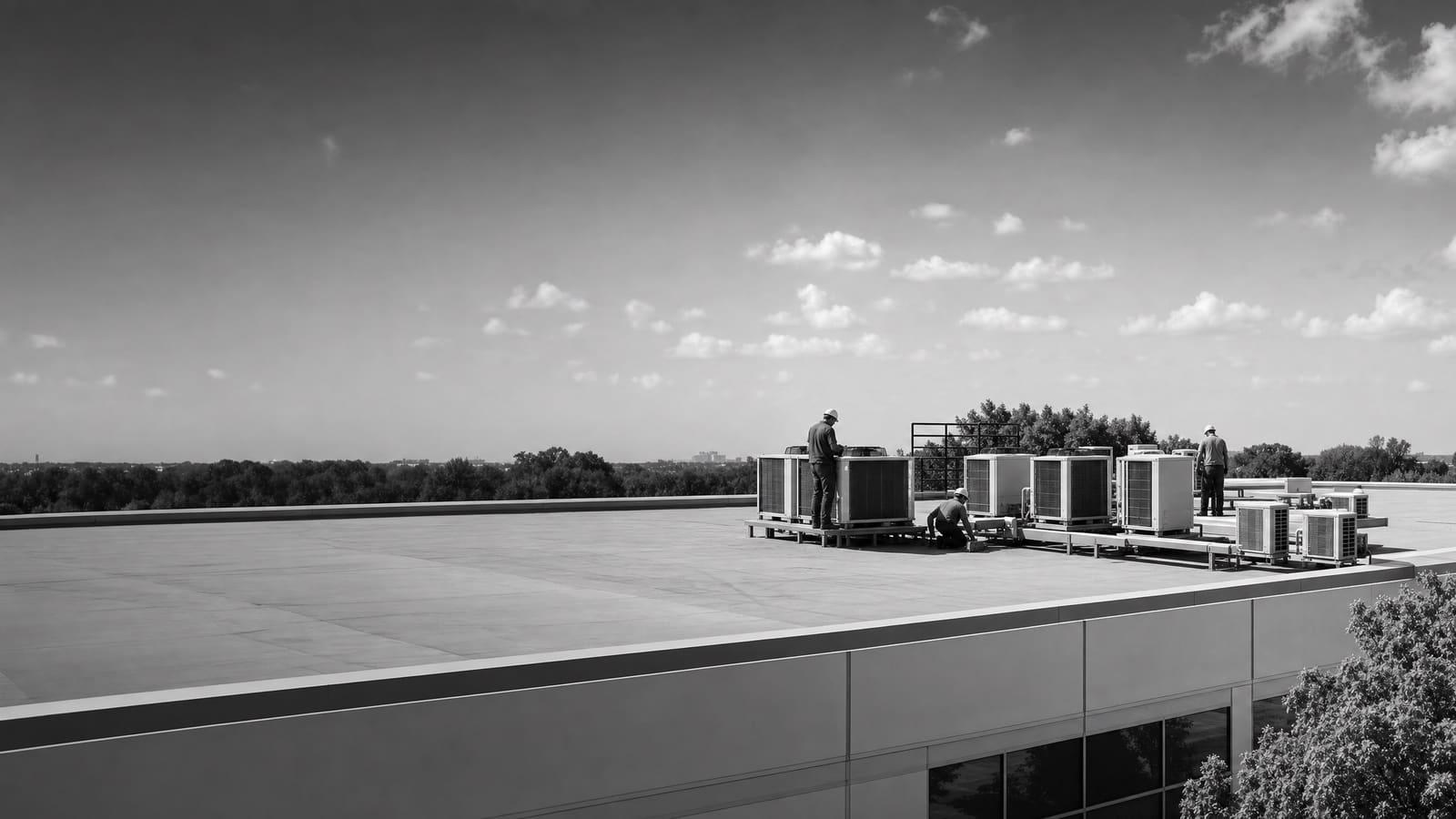
A packaged rooftop unit combines major heating and cooling parts in one outdoor cabinet. These units serve a large share of commercial floor area in the United States. A compatible packaged replacement can simplify field connections, but compatibility should be proven rather than assumed. The curb opening, unit weight, duct layout, power, fuel, controls, and service clearances all matter.
A heat-pump rooftop unit cools like an air-conditioning unit and also provides reverse-cycle heating. Choices can include all-electric, dual-fuel, and equipment intended for colder conditions. The right comparison considers winter heating needs, local energy prices, electrical capacity, gas infrastructure, emissions goals, physical space, product availability, and contractor knowledge. Do not select one from the cooling rating alone.
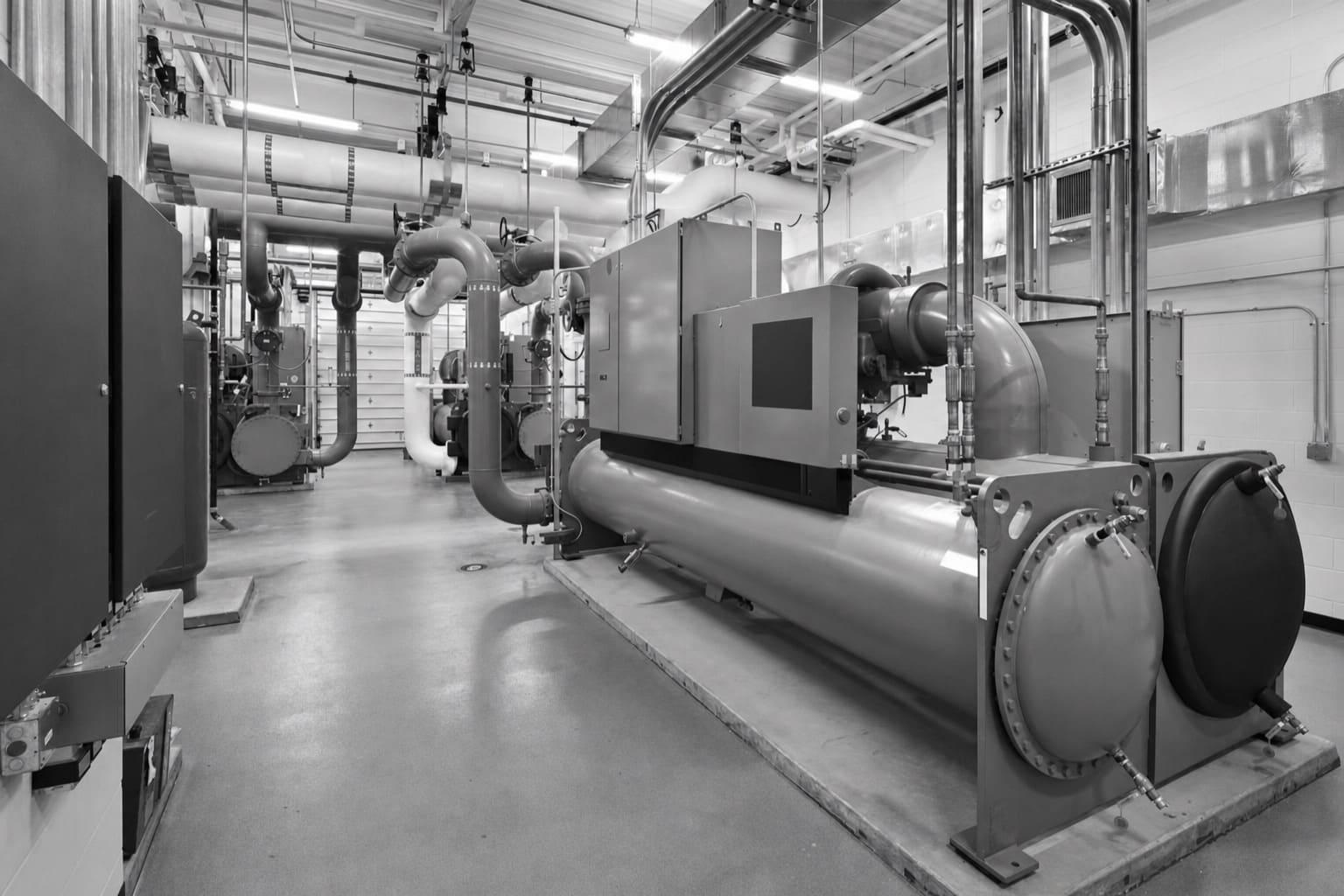
Split systems or larger central plants may fit buildings where rooftop packages cannot serve the zones, ventilation needs, or operating pattern well. In every case, ask how the proposed system handles part-load operation, outside air, humidity, occupied schedules, and control by zone. A product with a strong efficiency rating can still disappoint if it is poorly sized, installed, or controlled.
SCOPE COMPLEXITY
Know whether you are buying a swap or a redesign
Two proposals can use similar equipment and still cover very different projects. Separate a compatible replacement from work that changes capacity, energy source, distribution, or control strategy.
LOWER COMPLEXITY
Compatible replacement
The building use remains stable, the old capacity is supported by current conditions, and the new unit fits the curb, ducts, power, fuel, and controls with limited changes. The quote should still include startup and testing.
HIGHER COMPLEXITY
System redesign
Changed occupancy, recurring comfort problems, new ventilation needs, an energy-source change, or added zones can require engineering and infrastructure work. Allow more time for load analysis, coordination, procurement, installation, and commissioning.
SITE REVIEW
Measure the conditions that can change the order
Begin with an equipment inventory. Record each unit’s model, capacity, age if known, refrigerant, heating type, voltage, controls, condition, and service history. Map which spaces it serves and when those spaces are occupied. Note hot or cold areas, noise, moisture concerns, repeated alarms, and work orders. Utility and maintenance records can help show whether the problem is one failing part or a wider performance pattern.
Next, inspect the path from delivery to final position. Rooftop work needs verified dimensions, curb details, unit weight, lift access, roof protection, and safe service space. Indoor equipment needs a workable route through doors, corridors, ceilings, or mechanical rooms. Check drainage, ducts, piping, wiring, disconnects, fuel connections, sensors, and automation interfaces.
Finally, confirm what must remain open during the work. Some facilities can accept a full shutdown. Others need temporary conditioning, work outside occupied hours, or staged replacement by area. Put that operating plan into the bid documents so every contractor prices the same obligation.
Do not order from the nameplate alone
The existing unit may reflect an old building use or an earlier sizing error. Verify present loads, fit, infrastructure, and operating needs before approving equipment.
OWNERSHIP VIEW
Balance urgent reliability with lifetime operation
DOE guidance notes that rooftop units over 15 years old can use substantially more energy than newer models, while owners often delay replacement until comfort falls, repairs repeat, or the unit fails. Age alone does not settle the decision. Condition, maintenance history, operating hours, load, efficiency, and the consequences of an outage matter together.
A proactive project gives the owner time to confirm loads, compare product types, review infrastructure, and plan the outage. A run-to-failure strategy preserves capital today but can leave fewer equipment and scheduling choices later. For a portfolio, rank units by failure risk, energy performance, comfort complaints, service burden, and business impact. That turns replacement into a planned capital program instead of a series of emergencies.
REPAIR
Keep a serviceable unit working
Repair can make sense when the fault is limited, parts remain practical, performance is acceptable, and the work does not extend a pattern of recurring failures.
REPLACE
Remove a growing operating risk
Replacement becomes stronger when failures repeat, comfort suffers, maintenance grows, efficiency is poor, or a breakdown would cause a costly interruption.
PROCUREMENT AND PHASING
Plan the work before equipment reaches the site
Ask bidders to identify the exact equipment, approved alternatives, availability, and the date on which pricing or lead-time assumptions expire. Product availability can affect whether a heat-pump or conventional rooftop choice is practical for the required schedule. Do not accept an unnamed allowance when the project depends on a specific capacity, efficiency, heating configuration, electrical requirement, or control interface.
Separate prework from the shutdown. Curb adapters, duct transitions, electrical changes, control wiring, roof protection, and access preparation may be completed or staged before the main replacement. Confirm who coordinates delivery, lifting, occupied-area protection, debris removal, and weather decisions. If several units are involved, phasing can preserve service in part of the building and give the team a chance to correct repeatable issues before the next phase.
Closeout is part of procurement, not an optional last step. Require startup records, measured airflow or balancing results where included, control sequences, equipment schedules, manuals, warranties, refrigerant records, and staff training. EPA rules govern refrigerant handling and recycling in stationary air-conditioning and heat-pump equipment, so the quote should clearly assign recovery and disposal duties.
COMPARE QUOTES
Five things every comparable proposal should show
Give every bidder the same operating goals and site information. Then compare scope, assumptions, exclusions, schedule, and testing—not just the total.
01
Exact equipment selection
List capacity, heating type, efficiency, electrical data, refrigerant, controls, accessories, and acceptable substitutions.
02
Complete field-work scope
Define demolition, recovery, disposal, rigging, curbs, ducts, drains, power, fuel, controls, roofing, and protection.
03
Schedule and outage plan
Show procurement assumptions, prework, shutdown duration, phasing, temporary service, and occupied-hour restrictions.
04
Startup and performance checks
State who verifies airflow, charge, heating, cooling, drainage, safeties, sensors, schedules, and automation points.
05
Exclusions and closeout
Identify allowances, owner duties, change triggers, warranties, training, manuals, records, and final acceptance documents.
Get a defensible number
Price the equipment and the building together.
Send the address, operating target, and target opening date. Flux will identify what must be verified before the project can be priced.
Get a free estimateQuestions
Straight answers.
When should a commercial HVAC unit be replaced instead of repaired?
Consider replacement when failures repeat, comfort cannot be maintained, service costs keep growing, efficiency is poor, or an outage creates serious business risk. DOE guidance says rooftop units over 15 years old can waste substantial energy compared with newer equipment, but age should be weighed with condition, load, and maintenance history.
Should the replacement match the old unit’s capacity?
Not automatically. Confirm how the served space is used today, then review the load. Changed occupancy, equipment, hours, ventilation, or building improvements may alter the required capacity. A compatible replacement can be sensible when present conditions still support the old selection.
Is a commercial heat-pump rooftop unit worth considering?
Yes, as one option. Compare all-electric, dual-fuel, and conventional equipment using heating and cooling loads, electrical capacity, gas infrastructure, energy prices, emissions goals, physical constraints, availability, and service support. The cooling rating alone is not enough.
What should happen before the installation day?
The team should verify equipment fit, access, weight, curbs or pads, ducts, drainage, power, fuel, controls, service clearances, delivery, lifting, occupied-area protection, and shutdown needs. Required adapters and transitions should be measured and planned before equipment arrives.
How can an owner compare commercial HVAC quotes fairly?
Require the same equipment data and scope categories from every bidder. Compare demolition, refrigerant recovery, rigging, supporting work, controls, startup, testing, schedule, exclusions, warranties, documentation, and owner responsibilities alongside the total price.
What does commissioning add to a replacement project?
Commissioning or defined startup testing checks that the installed system performs as intended. The scope may verify airflow, refrigerant charge, heating, cooling, drainage, safeties, sensors, occupied schedules, and automation points. Written results give the owner a baseline for future service.
Who should handle refrigerant from the old equipment?
The proposal should assign refrigerant recovery, handling, records, and equipment disposal to qualified parties. EPA Section 608 rules address handling and recycling of refrigerants used in stationary air-conditioning and heat-pump equipment.
Can several commercial HVAC units be replaced in phases?
Yes. Phasing can limit disruption, preserve conditioning in part of the building, and spread capital work. The plan should define unit order, temporary service needs, shared controls, repeatable details, acceptance checks, and what happens if equipment delivery dates change.
Sources used for this guide
- [1]betterbuildingssolutioncenter.energy.gov — DOE Advanced Rooftop Unit Replacement Guidance
- [2]betterbuildingssolutioncenter.energy.gov — DOE Commercial Heat Pump Rooftop Unit Replacement Guidance
- [3]betterbuildingssolutioncenter.energy.gov — DOE High-Efficiency Commercial Rooftop Unit Toolkit
- [4]energy.gov — DOE Efficient Commercial Rooftop Air Conditioner Program
- [5]epa.gov — EPA Stationary HVAC Refrigerant Management