THE SHORT ANSWER
What a commercial HVAC replacement actually covers
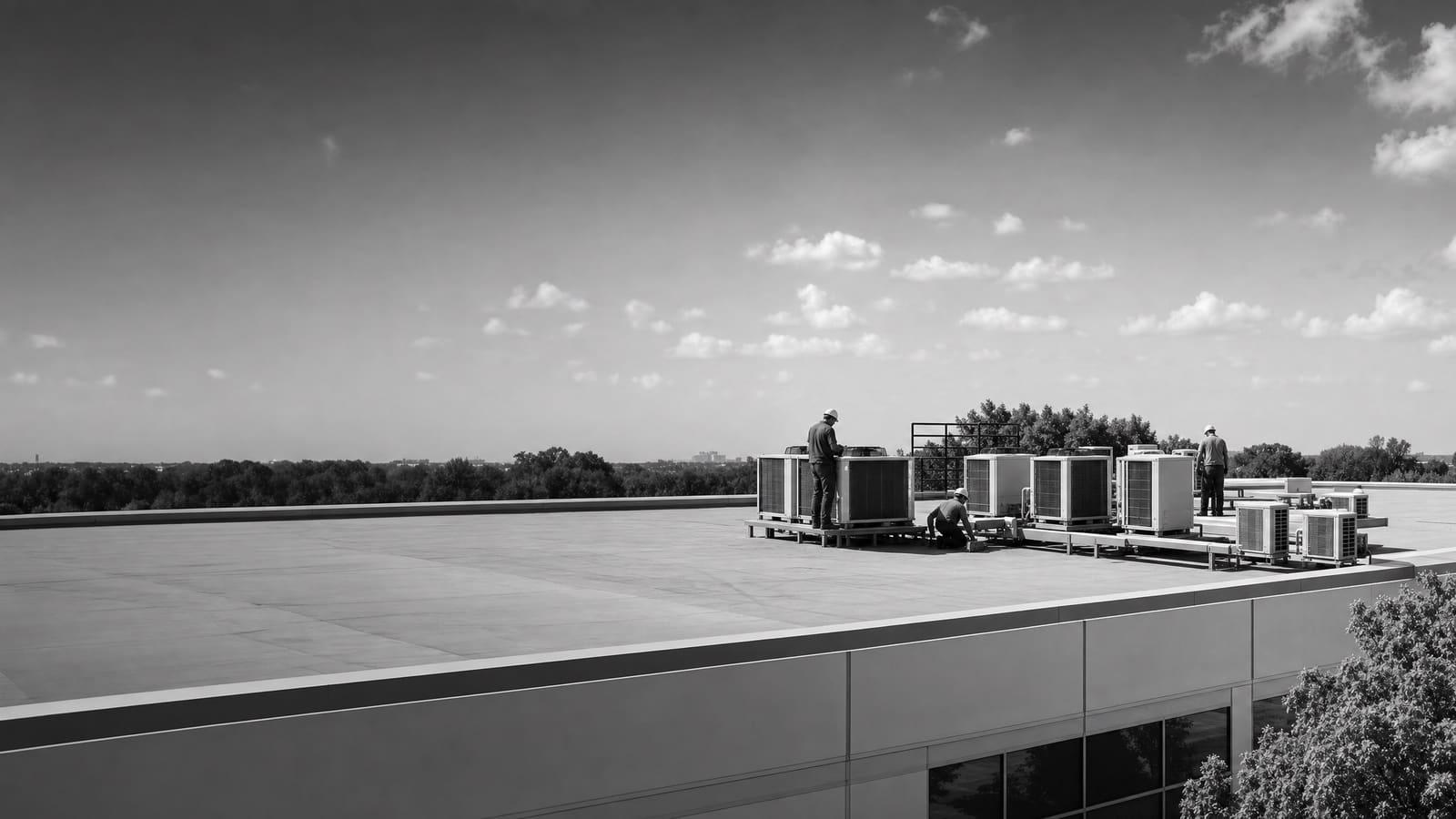
A commercial HVAC replacement covers load verification, equipment selection, rigging and set, mechanical and electrical connection, controls integration, and commissioning. Replacement beats another repair once a rooftop unit is past about fifteen years and needs frequent service, because aging units waste substantial energy — federal estimates put the annual waste from old, inefficient rooftop units at $900 to $3,700 each. Choosing the replacement before failure buys a better unit than an emergency order ever will.
A site review still has to confirm the real load, curb and structural fit, available electrical capacity, and gas line status before any equipment number means much.
THREE WAYS TO GO
Three replacement paths worth pricing
Most commercial buildings run packaged rooftop units, and federal research puts that equipment over nearly half of all U.S. commercial floor space. That makes the decision fairly standard: you are choosing among three paths, not twenty. The old unit's fuel type, the building's heating load, and the electrical service you already have narrow it quickly. Price at least two of the three. The cheapest install is rarely the cheapest decade, and the highest-efficiency option is not automatically right for a building that runs limited hours or has no room left in its panel. Ask every bidder to hold tonnage and airflow constant across the options so the numbers actually compare. Where the fuel choice is genuinely open, compare installed cost plus modeled utility impact, not the equipment sticker alone.
WHAT MOVES THE NUMBER
The six lines that decide your installed price
No one can price a commercial rooftop replacement from a tonnage number alone. These are the lines that separate a clean swap from a project. Make each bidder show them separately so you can see where the money actually goes.
IN PRACTICE
Buying the unit versus buying the outcome
DOE's rooftop replacement guidance names the pattern most buildings fall into: managers wait until the unit stops conditioning the space, needs constant service, or quits entirely. That wait is expensive twice. The old unit burns money the whole time — federal estimates put the waste from aging, inefficient rooftop units at $900 to $3,700 per unit each year — and the emergency call narrows your choice to whatever is available that week.
The same guidance makes the more useful point. Replacing proactively with a more efficient unit often beats both replacement-on-failure and a like-for-like swap at the end of service life. You pick the efficiency tier, the fuel path, and the crane date, and you fold the curb and controls work in while the roof is already open. Doing it on a planned date also means the tenants below get notice instead of a surprise.
So the question is not only what a new unit costs. It is what the current one costs you to keep, what it will cost to replace on a bad day in August, and what the building actually needs from the unit that follows it.
SCOPE CHECK
What makes this simple and what makes it a project
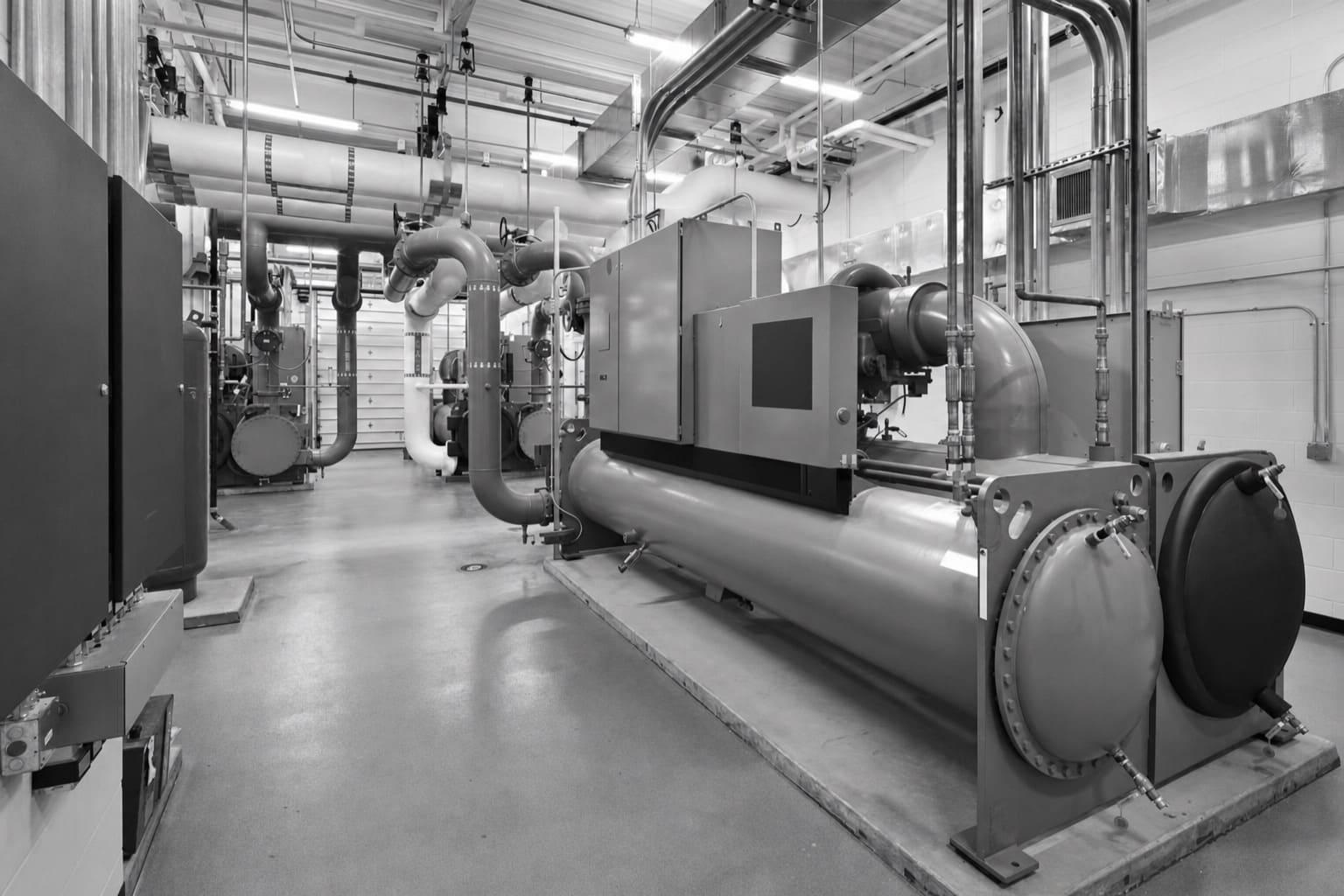
Two buildings can get very different numbers for the same tonnage. The gap is almost always access and infrastructure, not equipment. Here is what pushes a job toward each end.
STRAIGHTFORWARD
Lower complexity
Same fuel, same tonnage, an existing curb still square and sound, clear crane reach over an open lot, and adequate power already at the unit. Controls are simple or already compatible. This is a plan-and-set job.
PROJECT SCOPE
Higher complexity
A fuel switch, a larger footprint, tenants occupied below, restricted access, or a panel with no spare capacity. Add structural review, a service upgrade, or after-hours rigging and the schedule stretches past the equipment lead time.
BEFORE THE QUOTE
What the site review has to settle
A quote that arrives without anyone on the roof is a guess wearing a number. The review that makes it real is short, and it settles the same handful of questions every time.
First, the load. The nameplate on a twenty-year-old unit reflects the building as it was, not as it is. Occupancy, plug load, lighting, and envelope work all shift the answer, and carrying the old tonnage forward carries any original sizing error forward with it.
Second, infrastructure. DOE's heat pump guidance flags three items specifically: electrical capacity, physical constraints, and gas lines. Those decide whether an all-electric option is even on the table, before efficiency or price enters the conversation.
Third, the roof itself. Curb dimensions, structural capacity, and where a crane can actually reach set the rigging plan and a real share of the cost.
Fourth, contractor availability. The same guidance calls out installer familiarity with the technology as a live constraint. Newer equipment is only as good as the startup behind it. None of this takes long. It just has to happen before the number, not after it.
The four answers every bid should rest on
A verified load for today's use, confirmed electrical capacity and gas line status, curb and structural condition with crane reach, and a named startup and commissioning scope. Missing any one of these turns a fixed price into a change order.
OWNERSHIP
Two things that outlive the install
The crane day is one morning of noise. What you actually buy is a decade or more of operating behavior, and two decisions shape it more than the equipment brand does. Neither one shows up until a comfort complaint in month two, and both are far easier to settle before the purchase order than after the unit is in the air. If the building has more than one rooftop unit, treat these as fleet decisions rather than one-off ones. The second and third replacements move faster when the first one sets the standard.
REFRIGERANT
Your fleet is about to be mixed
New equipment ships on current refrigerants while older units run what they were built with. EPA Section 608 governs handling and recovery on both. Decide now how service contracts and spare parts cover a split fleet.
CONTROLS
Efficiency you never turn on
A high-efficiency unit left on default settings gives back much of what you paid for. Economizer setup, staging, and integration with existing building controls belong in the install scope, not a later service call.
PLANNING AHEAD
Phasing a roof full of units
If you own several rooftop units, replacing them one emergency at a time is the most expensive way through. DOE's Advanced RTU Campaign is the scale version of the same idea: more than 200 organizations upgraded over 43,000 units and now save a combined $37 million a year on energy bills. Owners in that campaign either replaced old units with more efficient ones or retrofitted advanced controls, whichever made better financial sense per unit.
That is a useful frame even for a small portfolio. Rank your units by age, service history, and the space each one serves. Replace the worst first, on a planned date, and let that job set the template — efficiency tier, controls approach, curb adapter detail. The units that follow price faster and install cleaner.
Procurement belongs in the same conversation. Equipment availability is a real constraint, and DOE lists it alongside electrical capacity and contractor knowledge when judging whether a technology fits a site. A unit selected early, with lead time confirmed in writing, is a scheduled project. The same unit selected the day yours fails is whatever the supply house happens to have.
THE QUOTE
Five things a comparable quote shows
Two quotes for the same roof should be readable side by side. When they are not, it is usually because one of these five items is buried inside a lump sum. Ask for each as its own line.
01
Equipment, stated exactly
Make, model, tonnage, efficiency tier, heating type, and refrigerant, so bids compare at matched capacity.
02
Confirmed lead time
The availability date sitting next to the price, not a promise to check on it later.
03
Roof and rigging scope
Curb adapter, any structural work, crane size, lot closure, and the day it happens.
04
Utility and controls work
Electrical, gas, and controls integration included, plus who pulls permits and meets inspectors.
05
Startup and commissioning
Charge, airflow, economizer, and control settings verified against spec and handed over in writing.
Get a defensible number
Price the equipment and the building together.
Send the address, operating target, and target opening date. Flux will identify what must be verified before the project can be priced.
Get a free estimateQuestions
Straight answers.
When does replacement beat one more repair?
Once a rooftop unit is past about fifteen years, needs frequent service, or no longer holds the space, repairs stop being the cheap option. Federal estimates put the annual waste from old, inefficient units at $900 to $3,700 each, which is money spent before the next repair bill arrives.
Is a heat pump rooftop unit the right call?
It depends on the heating load and the building's infrastructure. Heat pump units come as dual-fuel, all-electric, and cold-climate types, and DOE's guidance points to electrical capacity, physical constraints, and gas lines as the items that decide which one a site can actually take.
What usually blows up the budget?
Rarely the equipment. It is the electrical capacity an all-electric option needs, structural work when the new unit is heavier or a different footprint, and access — a crane that cannot reach easily, or a lot that can only be closed after hours.
What happens to the refrigerant in the old unit?
EPA regulations under Section 608 of the Clean Air Act cover handling and recovery of refrigerant in stationary air-conditioning and heat pump equipment. Recovery from the removed unit is part of the installer's scope and should be stated in the quote, not assumed.
Can the work happen without closing the building?
Usually. The disruptive part is the crane set, which affects parking and the area under the lift more than the space inside. Cone off the lot, schedule around your busiest hours, and give tenants notice ahead of the day.
Sources used for this guide
- [1]betterbuildingssolutioncenter.energy.gov — DOE Advanced Rooftop Unit Replacement Guidance
- [2]betterbuildingssolutioncenter.energy.gov — DOE Commercial Heat Pump Rooftop Unit Replacement Guidance
- [3]betterbuildingssolutioncenter.energy.gov — DOE High-Efficiency Commercial Rooftop Unit Toolkit
- [4]energy.gov — DOE Efficient Commercial Rooftop Air Conditioner Program
- [5]epa.gov — EPA Stationary HVAC Refrigerant Management