THE DIRECT ANSWER
Commercial HVAC replacement and installation in Kennewick.
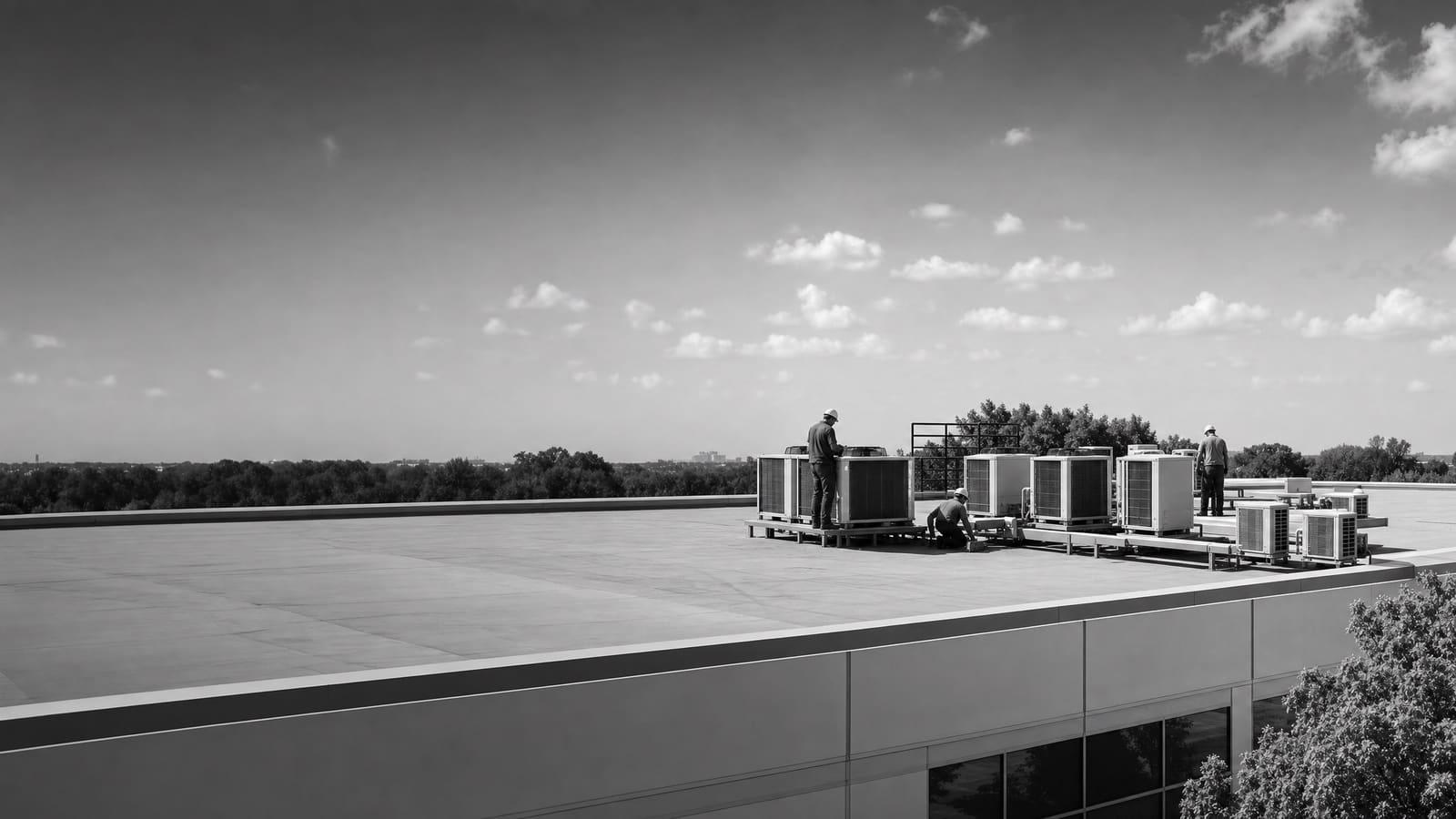
A commercial HVAC replacement includes load review, equipment selection, removal, rigging, connections, controls, startup, and commissioning. Replacement often makes more sense when an older unit needs frequent repairs, cannot hold comfort, or risks failing during business hours. DOE guidance says rooftop units over 15 years old may waste substantial energy compared with newer models.
A site review must verify the load, roof and curb conditions, electrical capacity, fuel connections, controls, access, and required downtime.
FIRST DECISIONS
Choose the project path before choosing a model
Start with the business problem. A failed unit may require the quickest sound replacement. A working but unreliable unit gives you time to compare efficiency, heating type, controls, and electrical needs. A changed space may need a fresh load review instead of the same capacity again.
Do not assume the old nameplate proves the right size. Occupancy, lighting, equipment, schedules, ventilation needs, and interior layout may have changed. Oversized equipment can cycle poorly, while undersized equipment may struggle during peak demand.
Also decide whether the project should stay with its present heating source or consider a heat-pump rooftop unit. DOE guidance says that choice depends on climate, utility costs, emissions goals, electrical capacity, physical limits, gas service, equipment availability, and contractor knowledge. A useful proposal tests those conditions instead of treating electrification as an automatic upgrade.
BUDGET STRUCTURE
What moves the installed price
No supplied research supports a universal installed price. Build the budget from the equipment and every task needed to leave it operating, tested, documented, and serviceable.
EQUIPMENT CHOICES
Compare function, not just capacity
A packaged rooftop unit keeps major heating, cooling, fan, and control components in one cabinet. It is common across commercial buildings and may offer a direct replacement path when the existing curb, ducts, power, and fuel arrangement remain useful. A high-efficiency rooftop unit can reduce energy use compared with old equipment, but savings depend on operating hours, load, controls, and the condition of the system around it.
A heat-pump rooftop unit adds reverse-cycle heating. DOE describes all-electric, dual-fuel, and cold-climate configurations. The correct choice depends on heating demand, electricity and gas prices, electrical capacity, physical space, gas infrastructure, and organizational goals. Electric resistance backup can also affect electrical requirements, so the proposal should identify the heating sequence and peak power needs.
Split or more complex systems may be useful when the roof cannot accept another packaged unit, when separate zones need closer control, or when the project is part of a larger renovation. Those choices can add refrigerant piping, indoor equipment, condensate work, controls, and coordination. Ask what problem each option solves and what new maintenance duties it creates.
PROJECT COMPLEXITY
A simple swap and a system change are different projects
Two units with the same capacity can require very different labor, infrastructure, scheduling, and testing. The quote should state which conditions it assumes.
LOWER COMPLEXITY
Compatible replacement
The new unit fits the existing arrangement, required connections remain usable, access is clear, controls are simple, and the work can occur in one planned outage.
HIGHER COMPLEXITY
Changed capacity or system
The project alters the curb, structure, ducts, electrical service, fuel source, controls, zoning, or operating sequence and needs added design and coordination.
SITE REVIEW
Measure the conditions that can change the job
A useful site review starts at the occupied space, not on the roof. Record comfort complaints, operating hours, tenant schedules, sensitive rooms, process loads, and areas that cannot lose conditioning. Confirm whether the present system serves the same use it served when installed.
At the equipment, capture the full nameplate, model, capacity, voltage, heating source, controls, filters, curb size, duct arrangement, drain route, disconnect, and service clearances. Note corrosion, roof damage, difficult panels, blocked access, and anything that would make future maintenance unsafe or slow. Review how the old unit communicates with thermostats or building automation.
Then trace the installation route. The plan may need lifting space, delivery staging, protected walkways, roof access, interior access, temporary barriers, and a defined shutdown window. For a heat-pump option, verify available electrical capacity and the proposed backup-heating method. These facts let bidders price the same job and reduce allowances that can later become change orders.
Useful information to bring
Provide nameplate photos, roof and equipment photos, floor plans if available, operating schedules, repair history, utility records, comfort complaints, controls information, and required completion dates.
OWNERSHIP VIEW
Balance first cost with operating risk
The lowest bid is not always the lowest-cost ownership choice. Compare expected energy use, controls, filter and belt access, warranty terms, replacement-part availability, technician familiarity, and the effect of downtime. DOE has documented meaningful energy waste from older commercial rooftop units, but a building-specific estimate still needs actual operating conditions.
Refrigerant also belongs in the ownership discussion. EPA rules govern refrigerant handling and recycling for stationary air-conditioning and heat-pump equipment. Ask which refrigerant the new unit uses, how technicians will recover material from the removed equipment, and whether the service team has the tools and training for the selected system. For a multi-unit property, consistent equipment and control strategies can simplify training and parts planning, while phased replacement can spread spending and reduce the chance of several aging units failing together.
KEEP AND OPERATE
Plan for service
Review access, filters, controls, warranty support, parts, refrigerant, and the skills needed to maintain the selected equipment.
LEASE OR SELL
Protect the record
Keep selection data, startup results, warranties, manuals, refrigerant records, and commissioning documents with the building.
PROJECT DELIVERY
Plan the work around the building
For an occupied building, the installation plan should explain what stops, when it stops, and what remains available. Confirm whether nearby zones can carry part of the load, whether temporary conditioning is needed, and which hours are acceptable for noise, lifting, roof work, or interior access. Protect people, products, equipment, and finishes near the work.
A multi-unit replacement may be phased by condition, operational importance, or shared access. Replacing the highest-risk units first can reduce emergency exposure. Coordinating several units may improve mobilization, controls consistency, and purchasing, but it also increases the effect of a delayed shipment or incomplete design. Identify acceptable substitutions before ordering and require approval for any change in performance, dimensions, power, heating method, controls, warranty, or refrigerant.
Do not treat delivery as completion. The contractor should verify rotation, voltage, safeties, airflow, temperature response, heating and cooling stages, economizer or ventilation operation when included, drains, sensors, alarms, and control sequences. Staff should receive the manuals, warranty information, filter data, and a clear explanation of normal operation.
QUOTE CHECKLIST
Five items every comparable quote should show
Require the same level of detail from each bidder. A single total without equipment data, exclusions, schedule, and testing is difficult to compare.
01
Defined equipment
List model, capacity, efficiency, heating type, refrigerant, controls, options, warranty, and approved substitutions.
02
Complete installed scope
State removal, disposal, rigging, curb, roof, ducts, drains, electrical, fuel, controls, insulation, and finish work.
03
Schedule and outage
Show procurement assumptions, delivery, work hours, shutdown length, phasing, access needs, and delay responsibilities.
04
Testing and handoff
Include startup, airflow checks, sequence testing, commissioning records, training, manuals, and warranty registration.
05
Assumptions and exclusions
Identify allowances, hidden-condition terms, design responsibility, approvals, inspections, temporary conditioning, and change-order rates.
Get a defensible number
Price the equipment and the building together.
Send the address, operating target, and target opening date. Flux will identify what must be verified before the project can be priced.
Get a free estimateQuestions
Straight answers.
When should a commercial rooftop unit be replaced instead of repaired?
Consider replacement when the unit needs frequent repairs, cannot maintain the space, creates serious downtime risk, or has become inefficient. DOE notes that rooftop units over 15 years old can waste substantial energy compared with newer models. Age alone does not decide the project; review condition, repair history, operating needs, and replacement options together.
Should the new HVAC unit match the old capacity?
Not automatically. Confirm how the space is used now and whether occupancy, equipment, ventilation, schedules, layout, or the building envelope changed. A compatible replacement can be practical when the load is still valid, but copying an old nameplate can also preserve an old sizing error.
Is a heat-pump rooftop unit a good replacement option?
It can be, but it needs a site-specific comparison. Review heating demand, electricity and gas costs, electrical capacity, physical constraints, backup heat, equipment availability, controls, and operating goals. Compare all-electric, dual-fuel, and other suitable configurations on the same load and schedule.
How much does commercial HVAC installation cost in Kennewick?
The supplied research does not support one reliable universal installed price. Capacity, efficiency, roof and curb work, rigging, electrical changes, heating source, controls, ducts, access, schedule, and commissioning all affect the total. Ask for a site-based proposal with each cost category and assumption clearly stated.
What should happen during HVAC commissioning?
Commissioning should prove that the installed system follows the intended sequence. Typical checks include power, rotation, safeties, airflow, heating and cooling stages, temperature response, ventilation functions, drains, sensors, alarms, and controls. The owner should receive the results, manuals, warranties, and operating guidance.
What happens to refrigerant in the removed equipment?
EPA requirements address refrigerant handling and recycling for stationary air-conditioning and heat-pump equipment. The installation scope should say who recovers the refrigerant, removes the old equipment, keeps required records, and handles disposal. Use qualified technicians and do not accept intentional refrigerant release as part of removal.
Sources used for this guide
- [1]betterbuildingssolutioncenter.energy.gov — DOE Advanced Rooftop Unit Replacement Guidance
- [2]betterbuildingssolutioncenter.energy.gov — DOE Commercial Heat Pump Rooftop Unit Replacement Guidance
- [3]betterbuildingssolutioncenter.energy.gov — DOE High-Efficiency Commercial Rooftop Unit Toolkit
- [4]energy.gov — DOE Efficient Commercial Rooftop Air Conditioner Program
- [5]epa.gov — EPA Stationary HVAC Refrigerant Management