The direct answer
Commercial HVAC replacement and installation in Johns Creek.
A complete commercial HVAC replacement covers sizing, equipment selection, removal, rigging, connections, controls, startup, testing, refrigerant handling, and closeout. Replacement becomes more useful than another repair when an older unit is unreliable, cannot hold the space conditions, needs frequent service, or wastes energy compared with a suitable new system.
A site review must verify the present load, roof and curb condition, utility connections, controls, access, equipment availability, and required approvals.
Choose the operating path
Repair, replace in kind, or redesign
Start with the business problem, not a preferred equipment brand. A repair may be sensible when the fault is isolated, parts remain practical to obtain, and the unit still serves the space well. Replacement deserves a closer look when breakdowns repeat, comfort slips, maintenance grows, or the unit reaches an age where failure could force a rushed purchase. DOE guidance notes that rooftop units over 15 years old can waste substantial energy compared with newer models.
A like-for-like replacement can reduce design and connection changes, but it should not mean copying the old nameplate without review. Occupancy, internal equipment, ventilation needs, schedules, and the building envelope may have changed. A redesigned system takes more study, yet it may correct poor zoning, excess capacity, weak humidity control, or an outdated heating strategy. Compare all three paths using reliability, installation risk, expected operation, and disruption.
Build the installed budget
What moves a commercial HVAC quote
No supplied source supports a universal installed price for this project. Ask for one complete scope and make each bidder identify the same cost drivers, exclusions, and allowances.
Equipment choices
Compare systems by the work they must do
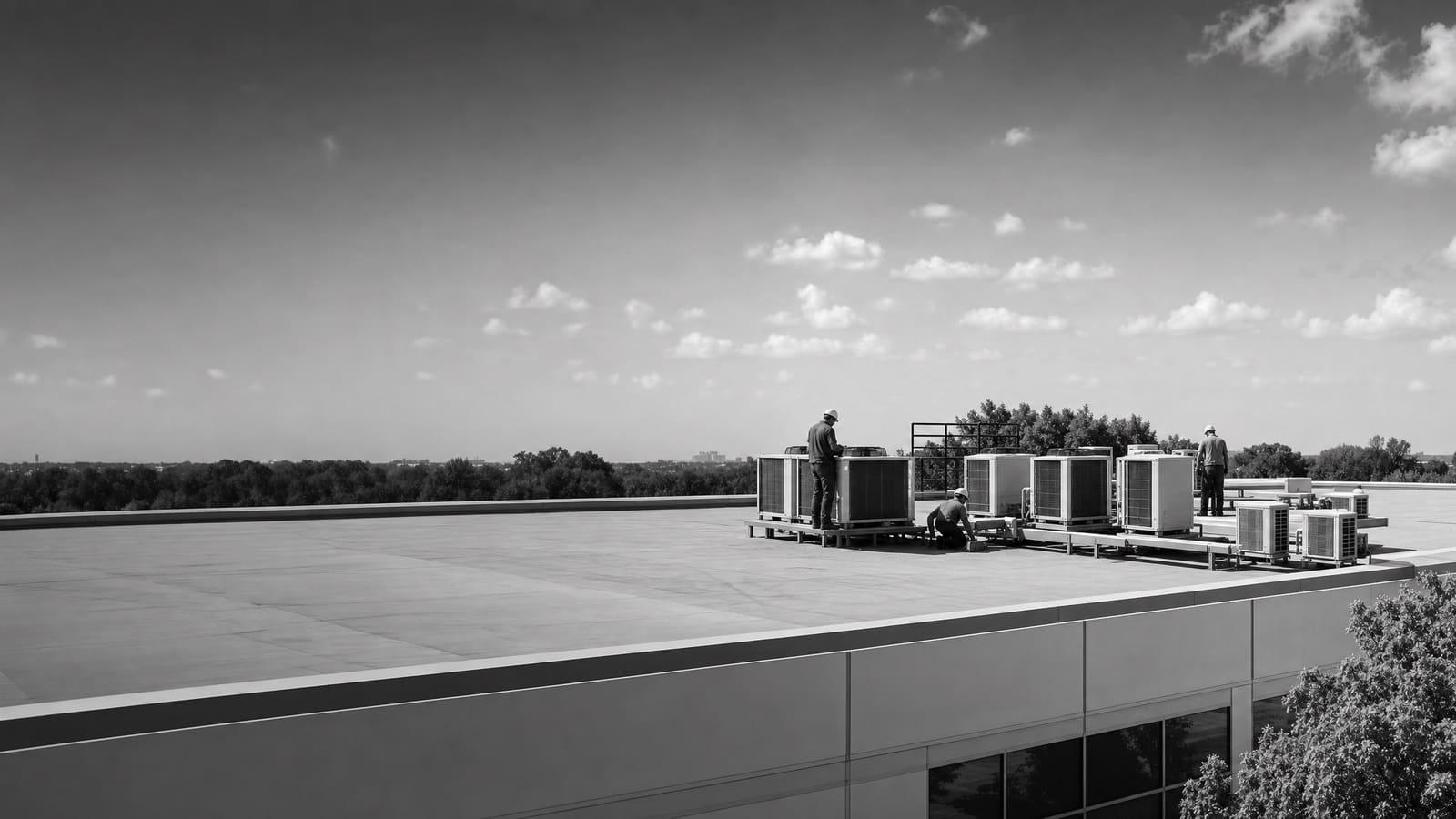
Packaged rooftop units combine major heating and cooling functions in one outdoor cabinet. They are common across commercial buildings and can make a direct replacement practical when the existing roof location, curb, ducts, and utilities remain suitable. High-efficiency models may lower energy use, but the useful comparison is whole-project performance. Review part-load operation, fan control, ventilation, heating method, service access, and how the unit communicates with existing controls.
A heat-pump rooftop unit cools like an air-conditioning unit and also provides reverse-cycle heating. DOE guidance says climate, utility rates, emissions goals, electrical capacity, physical constraints, gas infrastructure, equipment availability, and contractor knowledge all affect the decision. An all-electric unit may require electrical work. A dual-fuel design may retain another heat source. Either choice needs a heating-load review instead of a label-based swap.
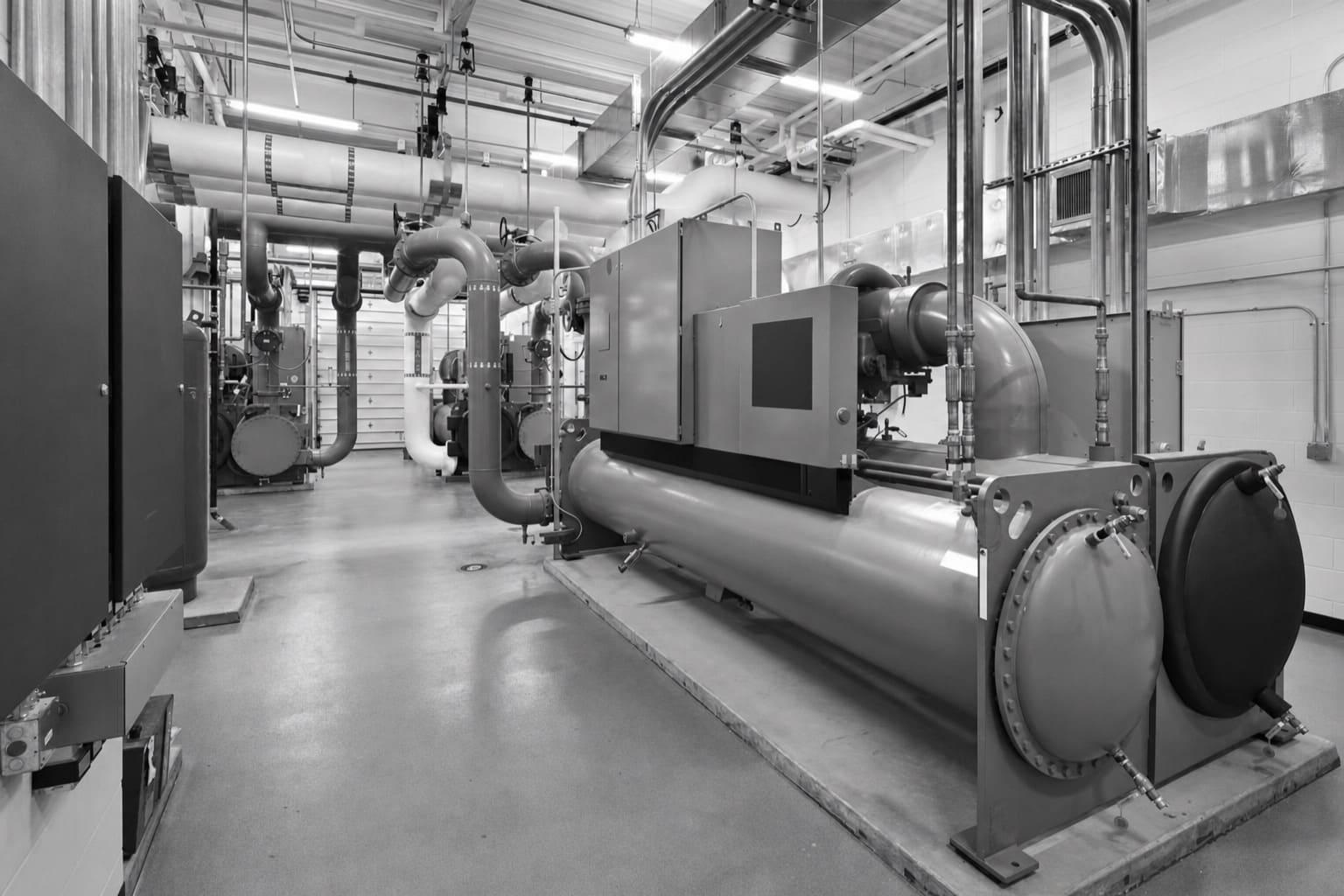
Split systems or more involved central systems may fit buildings with limited roof access, separate zones, or an existing plant. They also introduce more field-installed piping, wiring, controls, and coordination. Do not compare equipment by efficiency rating alone. Compare the installed design, expected operation at real loads, maintenance access, compatible replacement parts, and the consequences of a future failure.
Complexity check
A box swap and a system change are different projects
The same nominal equipment capacity can produce very different project scopes. Existing conditions determine whether the work stays close to a direct replacement or becomes a coordinated building upgrade.
Lower complexity
Connections remain compatible
The verified load is similar, the curb and ducts are usable, utilities have enough capacity, controls are straightforward, and rigging can occur without major building or site changes.
Higher complexity
The building must adapt
Capacity or fuel changes, electrical service needs work, roof supports change, controls require integration, or installation must be phased around occupied spaces and critical operations.
Scope before selection
What a useful site review should settle
Begin with the equipment inventory and the reason the project exists. Record model and serial information, heating type, service history, recurring faults, occupied schedule, comfort complaints, and any spaces that changed use. Then verify the load rather than assuming the old capacity is correct. Internal equipment, people, outside-air needs, envelope work, and operating hours can all change what the building needs.
Inspect the physical path from delivery to final placement. For rooftop work, confirm curb dimensions, supports, roof condition, drainage, service clearances, ladder or hatch access, and the crane approach. Protect roofing and occupied areas in the work plan. At the equipment, trace power, disconnects, gas, condensate, ducts, sensors, and control wiring. A heat-pump option also calls for a clear review of electrical capacity and the planned source of heat during colder conditions.
Finally, define performance before bidding. State required space conditions, operating schedules, ventilation expectations, filtration, control sequences, alarm needs, and automation connections. That turns commissioning into a measurable handoff instead of a simple check that the unit starts.
Bring evidence to the walkthrough
Provide nameplate photos, service records, utility information, control screenshots, roof documents, floor plans, operating schedules, and a short list of unresolved comfort problems.
Ownership choices
Balance continuity with lifetime operation
A replacement decision affects more than installation day. Owners must protect current operations while avoiding a system that becomes difficult to run or service. Ask how the project handles loss of conditioning, occupied work, deliveries, noise, dust, parking, and weather. Then test the long-term plan against maintenance skills, parts strategy, controls, energy use, and future replacements.
Older equipment does not become a replacement candidate by age alone. Condition, repair frequency, comfort, efficiency, parts, and failure consequences matter together. DOE guidance supports proactive review of inefficient or underperforming rooftop units rather than waiting for complete failure. Planned work gives the owner time to compare designs, check infrastructure, and coordinate disruption. Emergency work narrows those choices.
Installation day
Protect business continuity
Set shutdown limits, temporary-condition needs, access controls, weather decisions, occupant notices, and recovery steps before equipment is removed.
Years of operation
Protect serviceability
Review filter access, component access, controls support, technician familiarity, warranty terms, documentation, and how the choice fits the wider equipment fleet.
Procurement and phasing
Buy a verified result, not only a unit
Issue bidders the same site information and performance requirements. Require each proposal to name the selected equipment, major options, availability assumptions, included trades, controls work, rigging, roof protection, testing, training, and closeout records. Separate fixed scope from allowances. List exclusions plainly. If a bidder relies on an existing curb, electrical feeder, gas connection, duct section, or controls gateway, the quote should say what was inspected and what remains unverified.
For several units, decide whether to replace them together or in phases. Grouping work may simplify surveys, mobilization, controls standards, and staff training. Phasing may protect capital and reduce simultaneous shutdown risk. It can also leave a mixed fleet with different refrigerants, controls, filters, parts, and service procedures. Build an equipment schedule that shows priority, condition, role, and replacement sequence.
Plan the installation backward from the approved shutdown. Equipment release, submittal review, field measurement, adapter fabrication, controls preparation, rigging, utility isolation, startup, balancing, inspection, and owner training all need owners and dates. Do not remove working equipment until the replacement, required accessories, connection pieces, and installation resources are ready.
Comparable bids
Five things every quote should show
A comparable quote makes scope gaps visible before award. Ask each bidder to present these five items in writing and explain any exceptions.
01
One defined equipment schedule
Show capacity, heating type, efficiency, options, controls, accessories, availability, and approved substitutions.
02
One complete installed scope
Identify demolition, rigging, curb, roof, ducts, electrical, gas, drains, controls, insulation, and trade responsibilities.
03
One operating plan
State shutdowns, phasing, temporary conditions, occupied-work limits, access control, protection, cleanup, and weather contingencies.
04
One testing and acceptance plan
Define startup, airflow checks, control sequences, alarms, automation points, deficiencies, training, and owner acceptance.
05
One closeout package
Include approvals, inspection records, startup reports, refrigerant records, warranties, manuals, settings, and final equipment information.
Get a defensible number
Price the equipment and the building together.
Send the address, operating target, and target opening date. Flux will identify what must be verified before the project can be priced.
Get a free estimateQuestions
Straight answers.
When is replacement better than another commercial HVAC repair?
Replacement deserves review when an older unit has repeated failures, rising maintenance needs, poor comfort, weak efficiency, hard-to-manage parts, or a failure risk that threatens operations. A single isolated fault on otherwise suitable equipment may still justify repair. Compare the repair with a planned replacement over the period you expect to own and operate the building.
Should a new rooftop unit match the old unit's capacity?
Not automatically. The old nameplate is useful evidence, but it is not a current load calculation. Confirm how occupancy, internal equipment, ventilation, schedules, zoning, and the envelope affect present needs. A matching capacity may be correct when those conditions remain stable. A changed building may need a different size or system arrangement.
Is a commercial heat-pump rooftop unit a good replacement choice?
It can be, but the choice depends on more than climate. Review heating and cooling loads, electricity and gas costs, electrical capacity, gas infrastructure, physical constraints, equipment availability, controls, and operating goals. Compare all-electric, dual-fuel, and conventional options as complete installed systems, including any required infrastructure work.
What refrigerant work belongs in the replacement scope?
The contractor should identify the old and new refrigerants, recover and handle refrigerant under applicable federal requirements, and document the work. The owner should also consider technician support, service tools, parts, labeling, and fleet consistency. EPA Section 608 rules address refrigerant handling and recycling for stationary air-conditioning and heat-pump equipment.
How can an owner reduce disruption during installation?
Confirm equipment and accessories before shutdown, define access and staging, coordinate rigging, protect the roof and occupied areas, prepare controls in advance, and set a weather plan. State whether temporary conditioning is required. Assign responsibility for occupant notices, utility isolation, startup, testing, cleanup, and return to normal operation.
What should happen before final payment?
The installed system should be started, tested, and checked against the agreed performance and control sequence. Resolve deficiencies and collect startup reports, settings, equipment records, refrigerant documentation, inspection records, warranties, manuals, and training. The owner should know who receives alarms, changes schedules, replaces filters, and handles warranty service.
Sources used for this guide
- [1]betterbuildingssolutioncenter.energy.gov — DOE Advanced Rooftop Unit Replacement Guidance
- [2]betterbuildingssolutioncenter.energy.gov — DOE Commercial Heat Pump Rooftop Unit Replacement Guidance
- [3]betterbuildingssolutioncenter.energy.gov — DOE High-Efficiency Commercial Rooftop Unit Toolkit
- [4]energy.gov — DOE Efficient Commercial Rooftop Air Conditioner Program
- [5]epa.gov — EPA Stationary HVAC Refrigerant Management
- [6]augustaga.gov — FAQs - CivicPlus.CMS.FAQ