THE DIRECT ANSWER
What a commercial HVAC replacement actually covers
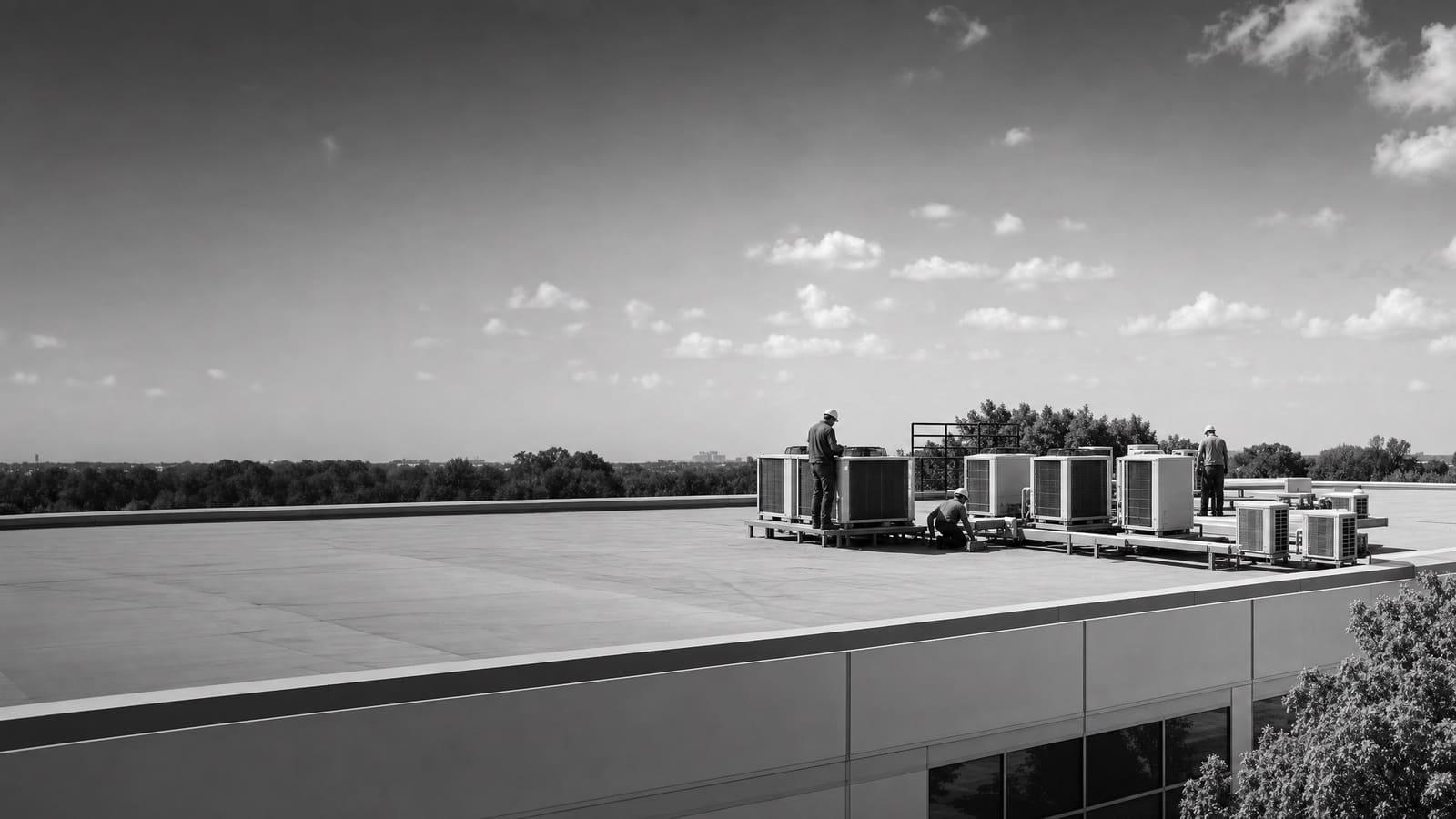
A commercial HVAC replacement covers load confirmation, equipment selection against real lead times, curb and roof work, rigging, utility tie-ins, and commissioning. Replacement usually beats another repair once a unit is past fifteen years, needs frequent service, or no longer holds the space on a design day. An old, inefficient rooftop unit can waste $900 to $3,700 a year in energy alone, so the decision often turns on operating cost rather than the invoice for the last breakdown.
A site review still has to verify tonnage against current use, curb and structural condition, crane reach from the lot, and whether electrical service and gas lines support the equipment under consideration.
THE OPERATING CHOICE
Three ways to handle an aging rooftop unit
Packaged rooftop units condition close to half of all commercial floor space in the country. For most buildings, that means the decision is not whether a rooftop unit is the right family of equipment. It is which of three paths fits the building right now.
The real split is between replacing on failure, replacing on plan, and not replacing yet. Swapping an inefficient unit for a high-efficiency one before it dies is often a better business outcome than waiting for the failure call, and better than a like-for-like swap at end of service life. But a controls retrofit is a legitimate third option. For units with life left in them, advanced controls can capture savings without triggering a capital event. Which path wins depends on the unit's age, its service history, and what the building is doing over the next five years.
WHAT MOVES THE NUMBER
What actually moves the installed price
No one can price a rooftop replacement from a tonnage number alone. These are the line items that separate a clean swap from a project, and each one should show up as its own number on the quote instead of disappearing into a lump sum.
COMPARING EQUIPMENT
How to compare equipment without guessing
Heat pump rooftop units are close cousins of the air-conditioning units most buildings already run. The cabinet, the ductwork, and the curb are familiar. The difference is that a heat pump runs its cycle in reverse to heat the space instead of burning gas or leaning on resistance elements. That similarity is why the switch is less exotic than it sounds, and why the things that go wrong are almost always infrastructure rather than the equipment itself.
Heating is the part to check honestly. Heat pump efficiency falls as outdoor temperature falls, and at low enough temperatures it trends toward parity with electric resistance heat. These units are best suited to mild-to-moderate winter heating. That does not disqualify a building with real winter load, since dual-fuel and cold-climate configurations exist for exactly that case, but it does mean winter design conditions and actual heating hours belong in the analysis before anyone signs.
Beyond that, the questions are practical. Does the panel have capacity. Does the roof have room. Is gas staying or going. Is the equipment available on your timeline. Does the crew doing the work install this configuration regularly. Add incentives to that list, because they can change the comparison, but only if they are confirmed before the order rather than discovered after.
SIDE BY SIDE
Simple swap or real project
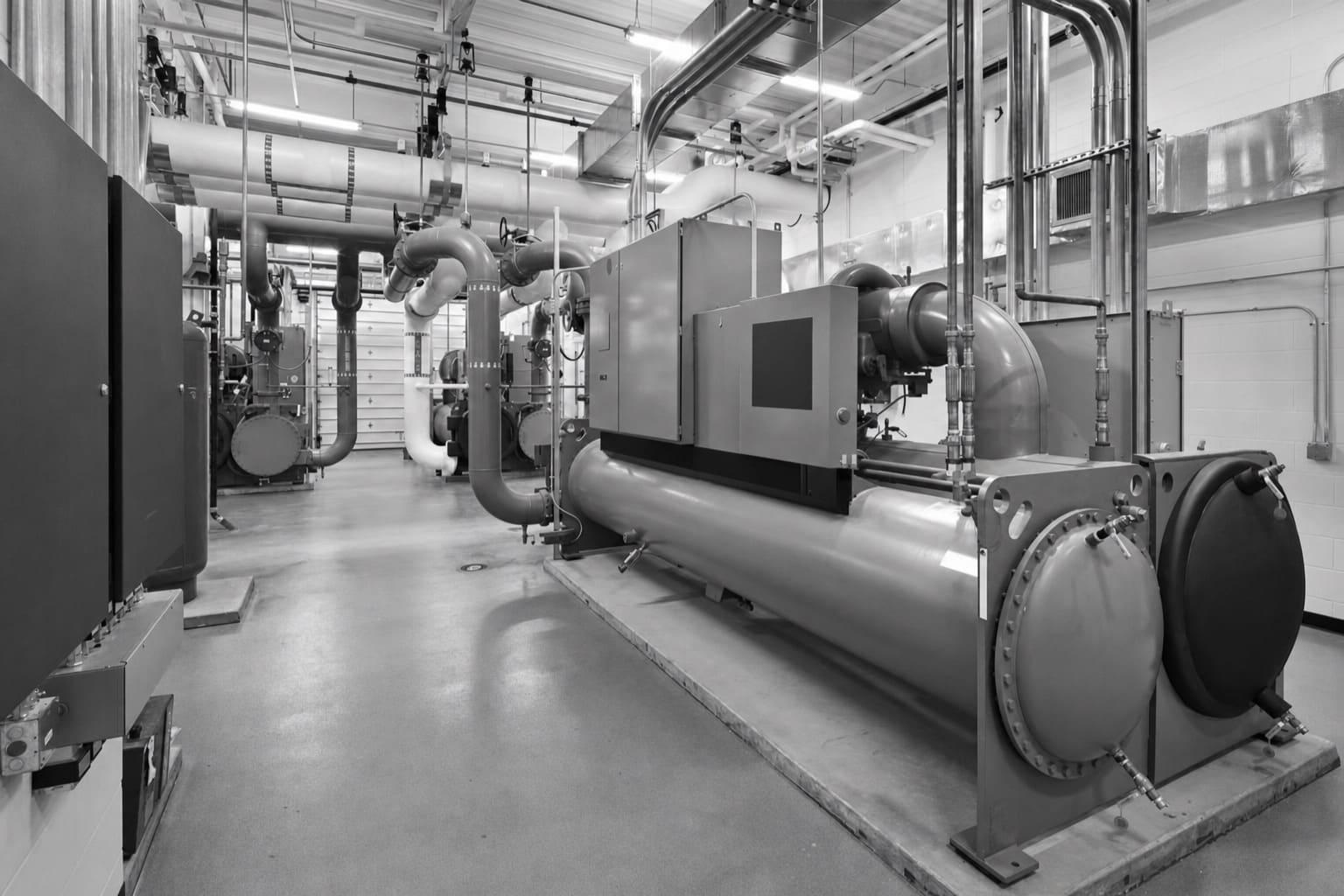
Two replacements with identical tonnage can differ enormously in cost and schedule. What separates them is almost never the unit. It is what the building makes you do to get the unit in place.
LOWER COMPLEXITY
Straight replacement
Same fuel, same tonnage, existing curb takes an adapter, clear crane reach from the lot, and electrical service that already carries the load. Permits stay mechanical and electrical, and the on-site work is short.
HIGHER COMPLEXITY
Conversion or resize
Fuel switch, larger tonnage, a new footprint, or a unit that has to be flown over an occupied section. Expect structural review, service upgrades, longer lead times, and phasing around tenant hours.
SCOPING THE WORK
What a site review has to settle
Sizing should come from how the space is used today, not from the nameplate on a unit installed twenty years ago. Occupancy changes, plug loads change, lighting changes, and envelope work changes the load. Carrying the old size forward carries the old sizing mistake forward with it, usually showing up as short cycling, humidity complaints, or a unit that never quite recovers on a hot afternoon.
The second thing a review settles is infrastructure. Electrical capacity is the item that most often turns a straightforward replacement into a longer project, especially when the plan moves heating from gas to electric. Physical constraints matter just as much: curb dimensions, roof structure, clearance around the unit, and whether a crane can actually reach the location without closing the part of the lot a tenant depends on.
The third is availability. Equipment lead time is a design input, not a footnote. A unit that fits perfectly and arrives in four months is the wrong answer for a building running on a failed compressor. Ask for availability next to price, and ask what the fallback equipment is if the first choice slips.
Have these ready before anyone prices it
Nameplate data, a photo of the curb and the roof around it, a recent utility bill, the panel schedule, and your operating hours. Those five items let a contractor price the job instead of padding it against unknowns.
OWNERSHIP
Two ownership questions worth settling first
A replacement is a capital event, and whoever benefits from it is not always whoever pays for it. Sort that out early, because it quietly determines which equipment makes sense.
The second question is timing. Facility managers commonly delay a rooftop replacement until the unit stops holding the space, needs constant service, or fails outright. That is understandable, and it is also the most expensive version of the project: emergency pricing, whatever equipment happens to be sitting in a warehouse, and no leverage on schedule. Replacing on plan costs less, and it is the only version that lets you compare equipment properly.
WHO PAYS
Lease structure
In a triple-net arrangement the tenant may carry the operating cost while the owner buys the equipment. That split is where efficiency upgrades quietly die, so agree on how savings are shared before specifying.
WHEN TO ACT
Planned versus failure
Waiting for failure removes every choice you had: equipment, timing, and price. A unit past fifteen years with a growing service log belongs in a budget cycle, not a repair queue.
PHASING AND LIFETIME COST
Phasing, standardizing, and the number that matters
Buildings with more than one rooftop unit rarely replace them all at once, and usually should not. A staged plan, worst performer first and the rest as budget and season allow, spreads the capital and lets the first unit prove the configuration before it becomes the standard. It also gives you a real installed cost to plan the next phase against instead of a vendor estimate.
Standardizing helps more than it appears to. When the units across a roof or a portfolio share a manufacturer and a control platform, spare parts get simpler, technicians get faster, and controls integration stops being a custom project every time. Across five units that advantage compounds.
On lifetime cost, the purchase price is the smaller half of the decision. An inefficient unit can waste thousands of dollars a year on its own, and high-efficiency rooftop designs have been built to cut energy use by as much as half against the older standard. Over the years the new unit sits on that roof, the gap between the cheap unit and the right unit is settled by the utility bill, not by the quote. Ask every bidder to show the annual energy assumption behind the equipment they are proposing.
THE QUOTE
Five things a comparable quote has to show
Two quotes are only comparable when they describe the same scope. If one is a page and the other is a line, you are not comparing price, you are comparing how much has been left out. Ask for these five items in writing.
01
Unit, tonnage, and efficiency tier
Model number, capacity, efficiency rating, and heating type, so the equipment can be checked rather than taken on faith.
02
Confirmed lead time
Availability in weeks stated next to the price, plus what happens to the schedule if that unit slips.
03
Curb, structural, and roof scope
Adapter or new curb, any structural review, and who repairs the roof around the opening.
04
Rigging and site plan
Crane size, staging area, lot closure hours, and which day the lift actually happens.
05
Commissioning and closeout
Startup readings, refrigerant charge, airflow, controls settings, permits, inspections, and the documentation that keeps the warranty valid.
Get a defensible number
Price the equipment and the building together.
Send the address, operating target, and target opening date. Flux will identify what must be verified before the project can be priced.
Get a free estimateQuestions
Straight answers.
When does replacement beat one more repair?
Once a unit is past fifteen years, needs frequent service, or no longer holds the space, repair spending stops buying reliability. An old, inefficient rooftop unit can also waste $900 to $3,700 a year in energy, which usually settles the math before the next breakdown does.
Is a heat pump rooftop unit a straight swap for a gas unit?
Mechanically it is close. Heat pump rooftop units are technologically similar to air-conditioning units and add reverse-cycle heating. What is not automatic is the infrastructure: electrical capacity, the decision about the existing gas line, and whether winter heating load fits a technology that is most efficient in mild-to-moderate conditions.
What if the unit still works but the bills are high?
Replacement is not the only lever. Owners can either replace older units with more efficient equipment or retrofit them with advanced controls, whichever makes better financial sense. A controls retrofit can capture savings now and move the capital cost into a planned year.
What happens to the refrigerant in the old unit?
Handling and recycling of refrigerant in stationary air-conditioning and heat pump equipment is federally regulated, so recovery from the old unit is a required part of the job. It should appear on the quote as scope, not as a surprise line afterward.
How do I compare bids that are far apart on price?
Line the scopes up before the numbers. Most large gaps come from curb and structural work, electrical capacity, rigging time, or commissioning being included in one bid and assumed away in the other. Ask the low bidder which of those five items their price covers.
Sources used for this guide
- [1]betterbuildingssolutioncenter.energy.gov — DOE Advanced Rooftop Unit Replacement Guidance
- [2]betterbuildingssolutioncenter.energy.gov — DOE Commercial Heat Pump Rooftop Unit Replacement Guidance
- [3]betterbuildingssolutioncenter.energy.gov — DOE High-Efficiency Commercial Rooftop Unit Toolkit
- [4]energy.gov — DOE Efficient Commercial Rooftop Air Conditioner Program
- [5]epa.gov — EPA Stationary HVAC Refrigerant Management