THE SHORT ANSWER
What a commercial HVAC replacement actually includes
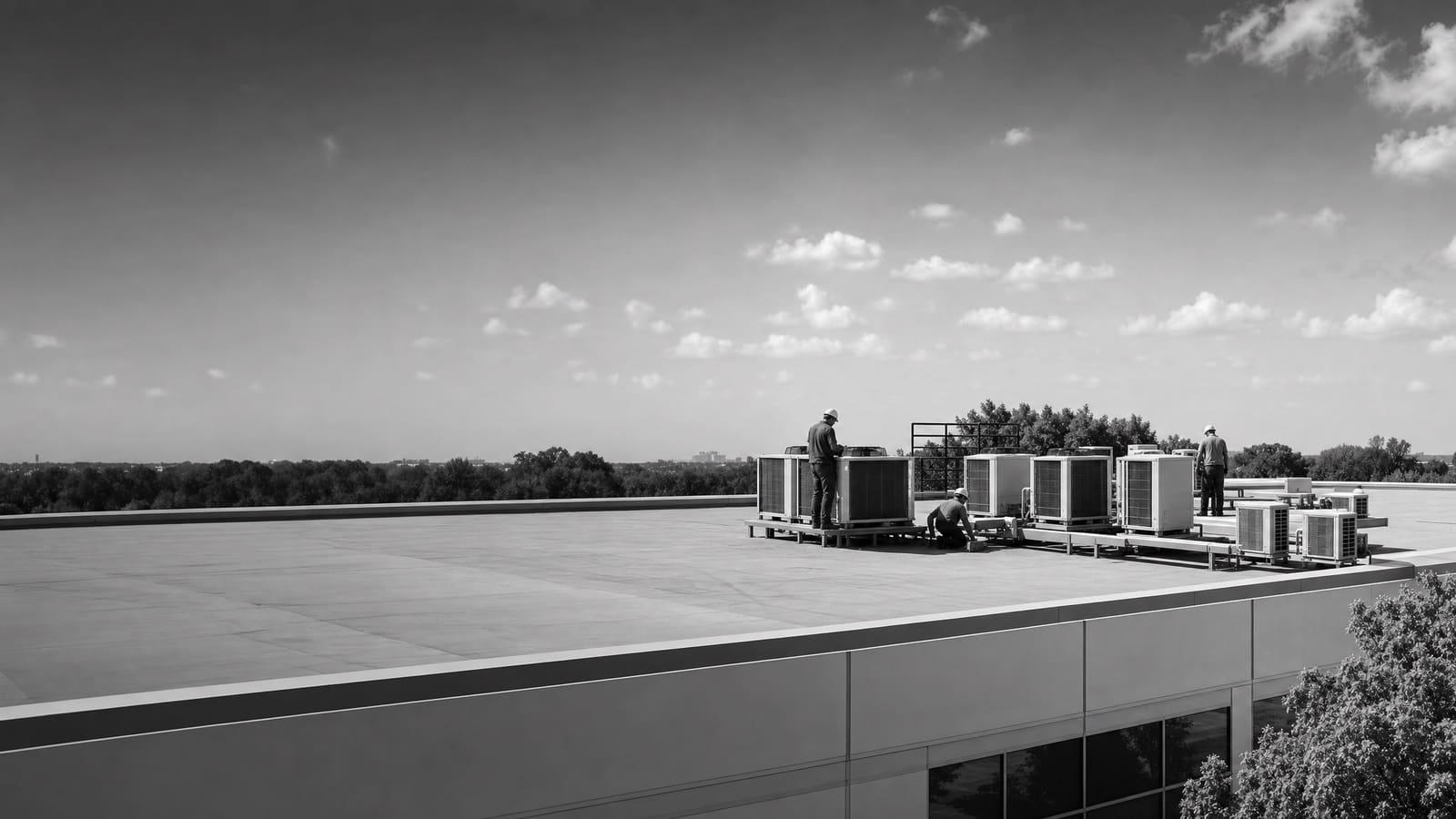
A commercial HVAC replacement is four jobs in one: confirm the load the building carries today, pick equipment you can actually get, set and connect the unit, then commission it against spec. Replacement usually beats one more repair once a unit is past about fifteen years. Old, inefficient rooftop units waste roughly $900 to $3,700 each per year in energy, so a second compressor repair on a tired unit buys time you end up paying for twice.
A site review still sets the number. It has to verify curb size and roof structure, crane reach and lot access, and whether the electrical service and gas line support the unit you want.
THREE WAYS TO GO
Your three real options when a unit is failing
Most buildings land on one of three paths. The honest answer depends on whether the space still does what it did when the old unit was chosen.
A like-for-like swap is the fastest way back to cooling. Same curb, same connections, simplest permit. It also carries forward whatever sizing mistake the old unit had.
Right-sizing means calculating the load from today's occupancy, lighting, and plug loads before anything is ordered. Twenty years changes a building. This is the path that fixes the hot corner nobody could ever explain.
A heat pump rooftop unit is the third option and a serious one here. Heat pump heating loses efficiency as outdoor temperatures drop, so these units suit mild to moderate winters. Across the West and South, current heat pump rooftop units can cover most or all of a commercial building's winter heating. The catch is infrastructure: an all-electric unit has to fit the electrical service you already have.
WHAT MOVES THE NUMBER
The lines that swing a rooftop replacement
Nobody can price your roof from a phone call. The same handful of lines decide whether a replacement lands near the equipment cost or well past it. Ask which of these a quote has verified and which it has only assumed.
IN PRACTICE
Buy the equipment, not just the install
Rooftop units condition close to half of all commercial floor space in the country, which makes this the most common capital decision a building owner ever repeats. It is also the one most often made under duress. Units over fifteen years old waste real money every month, and yet the usual pattern is to wait until the unit stops holding the space, needs constant service, or quits entirely. Replacing on your own schedule is almost always the cheaper version of the same project.
Efficiency tier is where the long money is. When the Department of Energy set a high-performance specification with manufacturers, the target was equipment using up to half the energy of the standard units of that era, and more than twenty models now beat that spec. You will not get every point of that on your roof. You will get a meaningful piece of it, and you get it for the entire life of the unit.
Availability is the third leg. Ask each bidder what is actually in stock regionally versus what has to be built. A slightly different model that ships now often beats the perfect model that ships in two months, especially when the building is running on one good compressor.
SCOPE CHECK
Simple swap or a bigger project
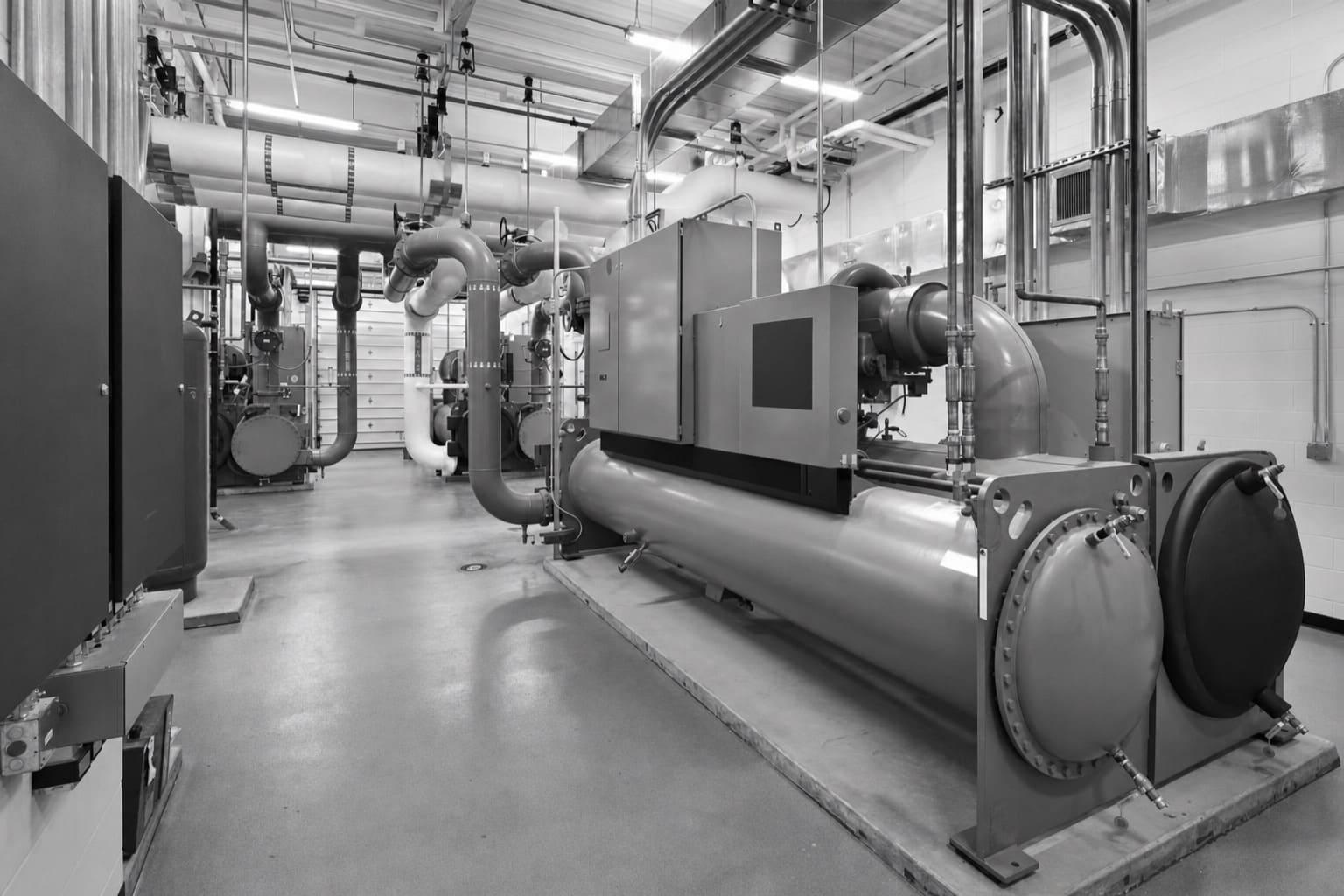
Before you budget, work out which project you actually have. The difference between these two is rarely the unit itself. It is what the unit lands on and what feeds it.
LOWER COMPLEXITY
Straight replacement
Same tonnage, same fuel, and a curb that either matches or takes a standard adapter. The roof is reachable from the lot, the electrical service is adequate, and the controls are simple. One crane morning, a permit, an inspection, done.
HIGHER COMPLEXITY
Changed load or changed fuel
Tonnage grows, the footprint changes, or you drop gas for an all-electric unit. Now you may add structural review, new feeders or panel capacity, a longer plan check, and controls integration that has to be scheduled around tenants.
BEFORE THE QUOTE
What a real site review has to answer
A serious estimator is checking infrastructure, not just tonnage. The first question is physical: does the new unit fit the curb and the space around it, and can a crane reach that spot from the lot without closing the whole drive aisle. The second is electrical. All-electric equipment draws more than the gas unit it replaces, so the panel, the feeder, and the available breaker space decide whether an electric option is even on the table before anyone talks about price.
The third is the gas line, which matters in both directions. Keeping gas heat means confirming the line and its sizing still suit the new unit. Going all-electric means planning how the line gets capped and who does it. After that comes the schedule question: when can the roof be worked on, how long can the space go without conditioning, and which tenants need warning.
The last one is people. Heat pump rooftop equipment is not exotic, but installing and servicing it well takes crews who have done it. Ask directly how many the bidder has set and who services them afterward.
Send three things before anyone quotes
The unit nameplate, a photo of the curb and the roof edge a crane has to reach over, and the panel the unit is fed from. Those three keep the first number close to the last one.
GARDEN GROVE SPECIFICS
Permits, inspection, and a mild-winter advantage
In California, a commercial rooftop changeout is permitted work. Mechanical upgrades and repairs require a permit, and the electrical connection is usually part of the same package. That is not a formality you can schedule around. Plan review and the closing inspection sit on the project timeline just as firmly as the equipment lead time does, and the installing contractor should be pulling both permits as part of the installed price.
The climate works in your favor on equipment choice. Heat pump rooftop units perform best where winters are mild to moderate, and across the West they can handle most or all of a commercial building's winter heating load. Southern California sits squarely in that group, so an electric option deserves a real look here rather than an automatic like-for-like gas replacement.
One decision this changes
Book the crane after the permit is in hand, not before. A unit staged on a roof while plan review runs is a stalled job, and the closing inspection needs room in the schedule too. Confirm current requirements with the city before you commit to a date.
OWNERSHIP MATH
Two things owners weigh after the install
The install is one week of attention. The unit is fifteen years of it. Two questions decide whether the decision still looks good in year three, and both are easier to answer before you order than after.
UTILITY BILLS
Model the operating cost, don't assume it
Whether an electric unit lowers your bill depends on what you pay for electricity against what you pay for gas. That comparison is local and it moves. Ask for the estimate in dollars per year at your rates, not a general claim about efficiency.
FLEET AND SERVICE
You are managing a roof, not a unit
Most commercial roofs carry several units of different ages and refrigerants. Federal rules govern how refrigerant is handled and recovered, so a mixed roof means mixed parts, mixed service procedures, and a spare-parts plan worth writing down.
PLANNING AHEAD
Phasing a roof full of aging units
If your building has four rooftop units installed the same year, they will fail around the same year too. That is a capital problem, not a maintenance problem, and it is far easier to solve on a calendar than in an emergency. Walk the roof, record every nameplate and install date, and sort the units by age. Anything past fifteen years goes on a replacement list with a date next to it.
From there you have two workable patterns. Replace everything at once and take one permit, one crane mobilization, and one disruption, which usually costs less per unit and is easier on tenants. Or replace one or two a year to spread the capital, accepting that you will pay for the crane more than once. Buildings with tight cash flow take the second path and start with the worst offender, since the oldest unit is also the one burning the most money each year.
Either way, standardize. Picking one platform across the roof means one set of filters, one set of controls, and technicians who already know the equipment. Check what incentives are open before you order, not after, since program terms and funding change and eligibility is usually decided by the equipment you specify.
THE QUOTE
Five things a comparable quote shows
Two quotes for the same roof can differ by a lot and both be honest. Usually one of them included something the other left for a change order. Make every bidder show these five in writing.
01
Model, tonnage, fuel, and efficiency tier
The exact unit being installed and what it runs on. Not "equivalent unit" or "or similar."
02
Curb, adapter, and roof work
Whether the curb is reused, adapted, or rebuilt, and who signs off if structure gets touched.
03
Crane day and lot plan
The rigging approach, how many stalls close, which morning, and who makes the weather call.
04
Permits, inspection, and refrigerant recovery
Who pulls the permits, who meets the inspector, and how the old refrigerant is recovered.
05
Startup and commissioning
Charge, airflow, and control settings verified against spec, with the readings documented at handoff.
Get a defensible number
Price the equipment and the building together.
Send the address, operating target, and target opening date. Flux will identify what must be verified before the project can be priced.
Get a free estimateQuestions
Straight answers.
When does replacing beat one more repair?
Age and repeat service calls are the signal. Units past about fifteen years waste substantial energy compared with current equipment, and old inefficient rooftop units can burn roughly $900 to $3,700 a year each. Once a unit needs frequent attention or no longer holds the space, another repair is usually rented time.
Does a heat pump rooftop unit make sense in Garden Grove?
It deserves a real look. Heat pump rooftop units work best where winters are mild to moderate, and across the West they can handle most or all of a commercial building's winter heating. The deciding factor is usually electrical capacity, so confirm the panel and service before ruling either option in or out.
Do I need a permit to replace a rooftop unit?
Yes. In California, mechanical upgrades and repairs require a permit, and the electrical connection is normally part of the same package. Your installing contractor should pull it and meet the inspector. Confirm current requirements with the city, and build plan review and inspection into the schedule.
What sets the schedule on a replacement?
Two things, and neither is the install itself. Equipment availability comes first, since a unit in regional stock moves far faster than one being built. The permit comes second. Ask every bidder for both dates in writing, then set the crane day after the permit is issued.
What happens to the refrigerant in the old unit?
It gets recovered, not vented. Federal rules govern how refrigerant in stationary air conditioning and heat pump equipment is handled and recycled, so recovery is regulated work that belongs in the installed price. On a roof with units of different ages, keep a record of what each one holds.
Sources used for this guide
- [1]betterbuildingssolutioncenter.energy.gov — DOE Advanced Rooftop Unit Replacement Guidance
- [2]betterbuildingssolutioncenter.energy.gov — DOE Commercial Heat Pump Rooftop Unit Replacement Guidance
- [3]betterbuildingssolutioncenter.energy.gov — DOE High-Efficiency Commercial Rooftop Unit Toolkit
- [4]energy.gov — DOE Efficient Commercial Rooftop Air Conditioner Program
- [5]epa.gov — EPA Stationary HVAC Refrigerant Management
- [6]californiacity-ca.gov — HVAC Permits