THE SHORT VERSION
What a commercial HVAC replacement actually covers
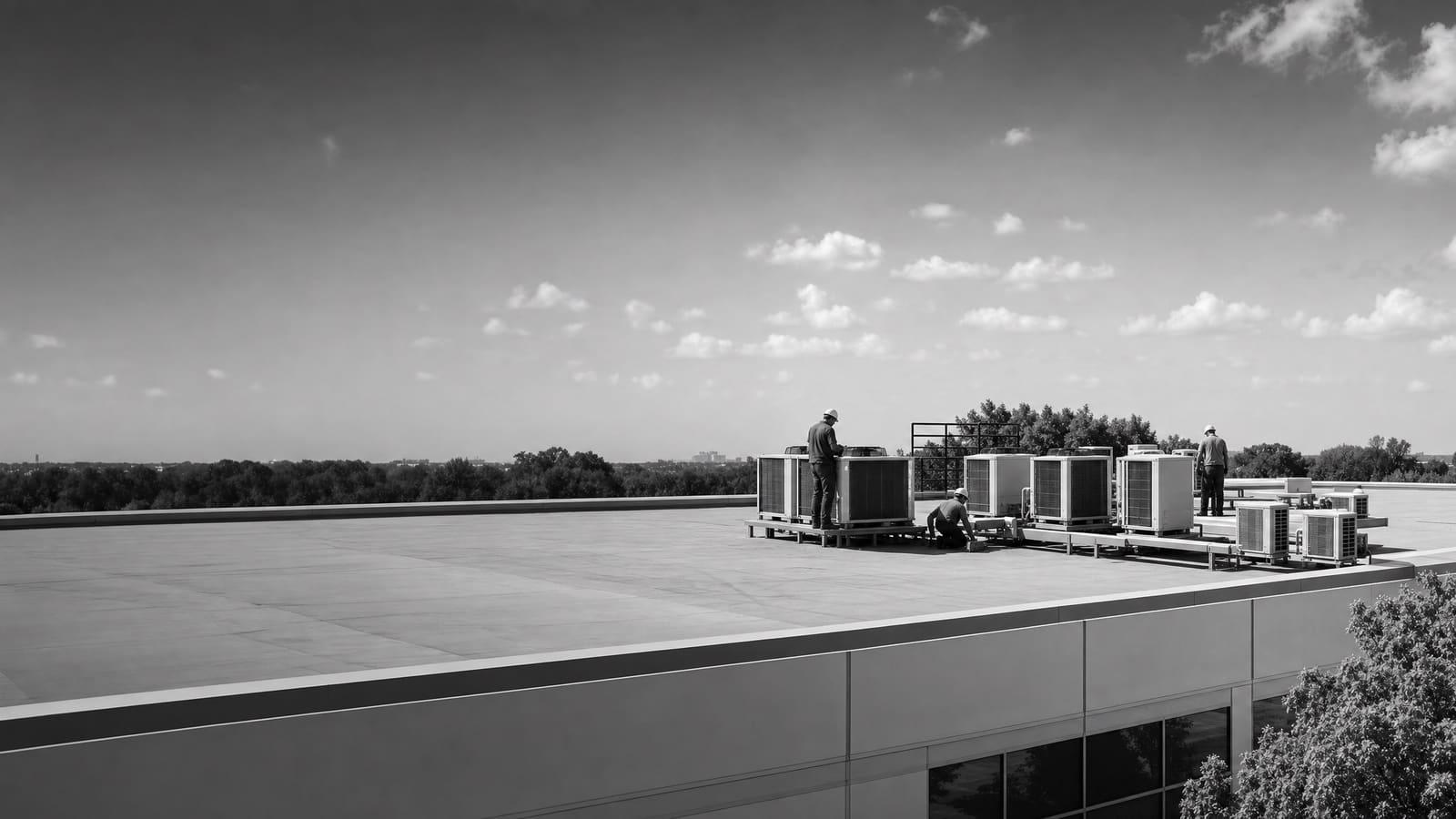
A commercial replacement covers the load check, equipment selection, curb and structural work, recovery of the old refrigerant charge, the crane set, gas and electrical and control connections, permits, and commissioning. Replacement beats one more repair once a unit is past fifteen years and needs service every season. DOE puts the yearly waste from an old, inefficient rooftop unit at $900 to $3,700, which is often more than the repair that keeps it running.
A site review has to confirm four things before a price is real: what the roof structure and existing curb can carry, spare capacity in the panel serving the roof, whether the gas line stays or goes, and where a crane can set up.
THREE PATHS
The choice you are actually making
Three paths cover most commercial replacements. The right one depends on what has changed since the old unit went in.
Like-for-like is the fastest way back to conditioned air. It reuses the curb, the fuel, and the connections. It also carries the old unit's sizing forward, so it only holds up when the space is used the way it was.
A high-efficiency replacement adds a real load calculation and a better efficiency tier. DOE built its high-performance rooftop specification around cutting energy use by up to half compared with the old minimum standard, and manufacturers responded with more than twenty models that exceed it.
A heat pump rooftop unit heats by running the cooling cycle in reverse. DOE describes today's units as fully capable of most or all winter heating demand across the West, which puts Fremont in the range where the electric option deserves a price rather than a shrug. Electrical capacity decides whether it is practical.
WHAT MOVES THE NUMBER
Six lines that decide the price
No two roofs price the same, but the same six lines move the number on nearly every commercial quote. The first two are usually knowable from photos. The rest need someone standing on the roof.
IN PRACTICE
Buying the replacement instead of reacting to it
Most commercial units get replaced the hard way. Something fails in season, the building needs air the same week, and the decision gets made at a parts counter. DOE describes the pattern plainly: facility managers hold on until the unit no longer conditions the space, needs constant service, or quits outright. That habit costs more than the equipment does. A single old, inefficient rooftop unit can waste $900 to $3,700 a year, and rooftop equipment cools close to half of all commercial floor space in the country.
Planning the replacement changes what you are able to buy. You get time to confirm the load against how the building is used now, not how it was used when the old unit was set. You get to compare a gas unit against a heat pump instead of taking whatever is on the truck this week. You get to schedule the crane around tenant hours rather than around a heat wave.
The practical trigger is age plus behavior. Once a unit passes fifteen years and starts needing service every season, put it on a replacement list and price it before it fails. A planned swap and an emergency swap use the same crane. They do not carry the same price.
SIDE BY SIDE
Simple swap or a bigger project
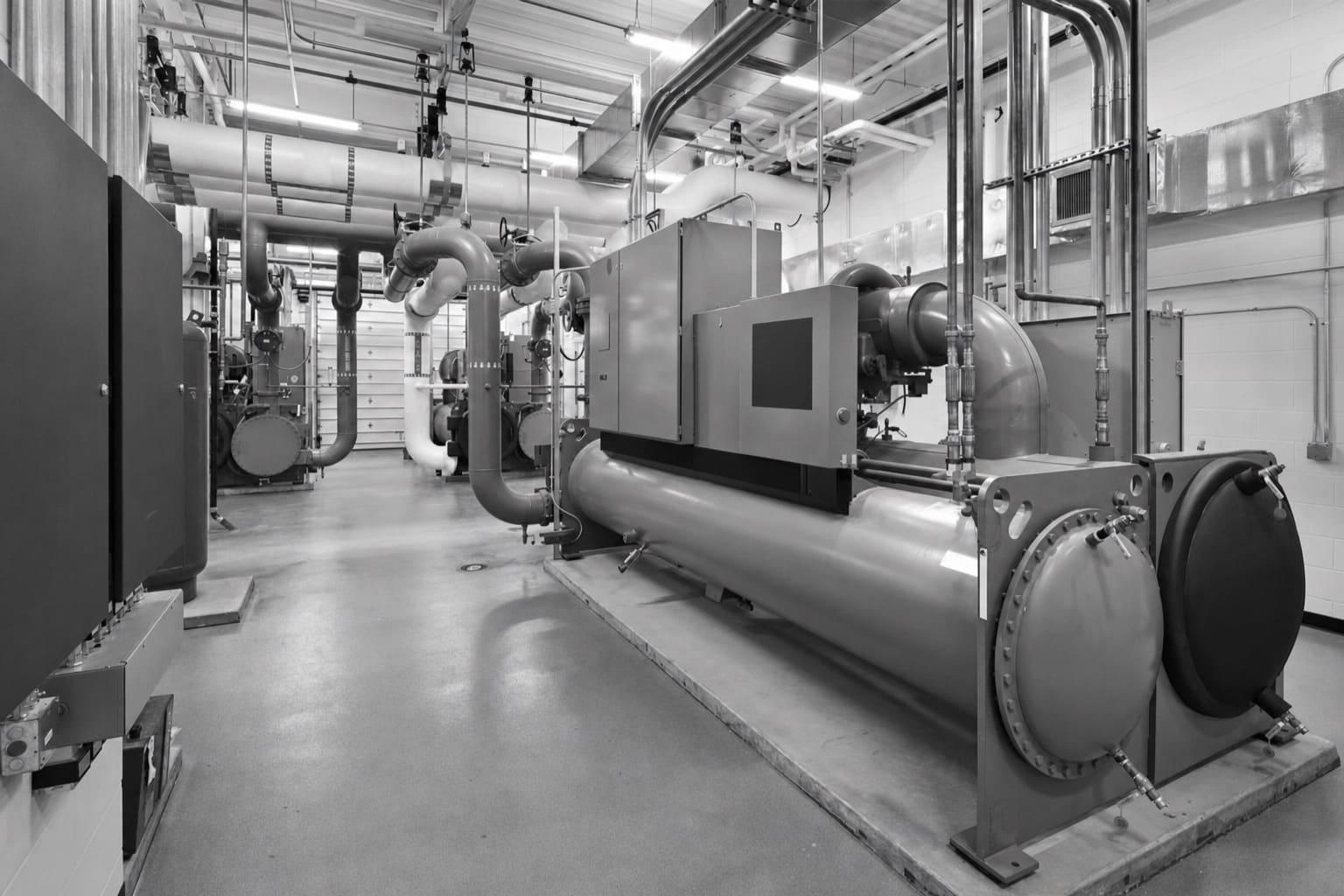
Two replacements with identical tonnage can be very different projects. What separates them is how much has to change around the unit, not the unit itself. Scope creep on a rooftop swap almost always arrives through the curb, the panel, or the parking lot.
LOWER COMPLEXITY
Straight replacement
Same tonnage, same fuel, and a curb the new unit meets with a standard adapter. The panel has spare capacity. The lot gives a crane clear reach on a weekend morning, and the permit scope stays mechanical and electrical.
HIGHER COMPLEXITY
Replacement plus change
Switching fuel, growing tonnage, or landing a larger footprint on an old curb. Electrical service needs upsizing, structural review enters the schedule, or the only workable crane position closes a drive aisle a tenant needs during business hours.
BEFORE YOU PRICE IT
What a real site review has to confirm
A quote is only as good as the walk that produced it. DOE's heat pump rooftop guidance lists the checks that decide whether a swap stays simple: electrical capacity, physical constraints on and around the roof, gas lines, equipment availability, and whether contractors in the area know the equipment. Every one of those becomes a line on the price.
Start with nameplates. Model, tonnage, heating type, refrigerant, and install date on each unit tell you what you are replacing and in what order. Photograph the electrical panel that serves the roof and note the service size and spare breaker space. Then walk the path a crane would use, and the path a unit would travel if a crane cannot reach the spot.
After that, look at the building instead of the equipment. Occupancy, plug load, lighting, and envelope work have all shifted the load since the last install. A unit sized to a twenty-year-old nameplate can be wrong in either direction. Oversized units short cycle and handle humidity poorly. Undersized units never catch up on the hottest afternoons.
Bring these to the walk
Nameplate photos for every unit, a panel photo with the service size visible, roof access and crane staging shots, tenant operating hours, and comfort complaints listed by zone. That package usually turns a rough estimate into a firm number.
FREMONT SPECIFICS
Permits and a mild-winter advantage
Two local conditions shape the decision here.
The first is the permit. California building departments run HVAC work through the mechanical permit process, and published permit checklists in California cities treat any mechanical upgrade or repair as permit work, listed alongside re-roofing. That second item matters on a rooftop swap. If the roof around the curb needs attention while the crane is already there, that is separate scope with its own review, and it is far cheaper to plan than to discover.
The second is the climate. DOE describes today's heat pump rooftop units as fully capable of most or all winter heating demand across the West, where winters stay mild to moderate. Fremont sits in that range, so the all-electric option is worth pricing rather than dismissing, provided the panel can carry it.
Confirm the permit path first
Ask Fremont's building department which permits your scope triggers and how inspections sequence against the crane date. A unit that lands on a Saturday still needs an inspection slot, and roof work at the curb may open a second permit.
OWNERSHIP
Who pays and who benefits
The same rooftop unit is a different decision depending on who holds the building and who pays the utility bill. An efficiency premium only pays back for the party on the meter, and the crane only shows up when the party holding capital says yes. Sort that out before comparing equipment tiers, because the answer decides whether the higher tier earns its cost or whether a straight replacement is the honest call. It also sets how long a payback window you can defend.
OWNER-OCCUPIED
You pay the bill
The efficiency premium comes back to you directly, so a higher tier and a proper load calculation usually earn their cost. You also control the schedule, which makes phased fleet replacement realistic instead of theoretical.
LEASED
A tenant pays the bill
Capital sits with the owner while the savings sit with the tenant. Check what the lease allows on recovery before you upgrade tiers, and coordinate the crane window against tenant operating hours and the parking they are entitled to.
OVER TIME
Phasing a fleet and buying for the next fifteen years
If you have more than one unit on the roof, stop treating each failure as its own event. Rank the fleet by age and service history, then decide each unit's path a year ahead. DOE's rooftop work gives owners two honest options: replace the old unit with an efficient one, or retrofit the existing unit with advanced controls, whichever makes better financial sense for that unit. A five-year-old unit with bad controls is a controls project. A seventeen-year-old unit with a failing compressor is a replacement.
Scale is what makes the effort worth it. More than two hundred organizations upgraded over forty-three thousand rooftop units through that campaign, cutting a combined $37 million a year from their energy bills.
Two habits help in practice. Standardize on a model family where you can, so filters, belts, boards, and service knowledge carry across the whole roof. And ask about utility incentives before the equipment is ordered, not after the crane leaves. The unit you set this year will likely still be running well into the 2040s, which makes the efficiency tier and the heating fuel long decisions rather than line items.
WHAT TO CHECK
Five things a comparable quote shows
Two quotes are only comparable when both spell out the same scope. If one of these is missing, you are not comparing prices. You are comparing assumptions.
01
The equipment line
Make, model, tonnage, efficiency tier, heating type, and refrigerant, with a stated availability date.
02
Curb and roof scope
Adapter versus new curb, any structural work, and who patches the roof around it.
03
The crane day
Rigging plan, staging position, stalls closed, and the hours the lot is affected.
04
Connections
Gas, electrical, condensate, and controls integration, including anything the panel needs.
05
Closeout
Permits, inspections, certified refrigerant recovery, startup readings, and commissioning documents for the warranty.
Get a defensible number
Price the equipment and the building together.
Send the address, operating target, and target opening date. Flux will identify what must be verified before the project can be priced.
Get a free estimateQuestions
Straight answers.
When is replacement better than one more repair?
Age plus repeat service is the signal. Units past fifteen years waste substantial energy compared with newer models, and DOE puts the annual waste from an old, inefficient rooftop unit at $900 to $3,700. When a unit that old needs a major component, the repair usually buys a season while the waste keeps running.
Is a heat pump rooftop unit a real option in Fremont?
It is worth pricing. DOE describes today's heat pump rooftop units as fully capable of most or all winter heating demand across the West, where winters are mild to moderate. The deciding factors are electrical capacity at the panel and whether you keep the gas line, which is why dual-fuel units exist alongside all-electric ones.
What happens to the refrigerant in the old unit?
Federal rules under Section 608 of the Clean Air Act govern how refrigerant is handled and recycled in stationary air conditioning and heat pump equipment. The charge has to be recovered properly rather than vented, and that work should appear on the quote instead of showing up as a surprise line later.
Should we replace like-for-like or resize the unit?
Confirm the load either way. If the space is used the way it was when the old unit went in, like-for-like is often right and keeps the project simple. If occupancy, plug load, lighting, or the envelope has changed, resizing fixes comfort problems that no repair on the old unit ever could.
Do we need a permit for a rooftop replacement in Fremont?
Plan on it. California building departments handle HVAC work through the mechanical permit process, and permit checklists in California cities treat any mechanical upgrade or repair as permit work, along with re-roofing. Confirm your exact scope and inspection sequence with Fremont's building department before you book the crane.
Sources used for this guide
- [1]betterbuildingssolutioncenter.energy.gov — DOE Advanced Rooftop Unit Replacement Guidance
- [2]betterbuildingssolutioncenter.energy.gov — DOE Commercial Heat Pump Rooftop Unit Replacement Guidance
- [3]betterbuildingssolutioncenter.energy.gov — DOE High-Efficiency Commercial Rooftop Unit Toolkit
- [4]energy.gov — DOE Efficient Commercial Rooftop Air Conditioner Program
- [5]epa.gov — EPA Stationary HVAC Refrigerant Management
- [6]californiacity-ca.gov — HVAC Permits